


End of Dual Carriageway Sign: A Complete Guide
The transition from a dual carriageway to a single carriageway represents one of the most significant changes in road layout that drivers encounter. This transition point requires clear, unmistakable warning signage to alert motorists that the protected, separated traffic environment they've been enjoying is about to end. The end of dual carriageway sign serves this critical function, providing advance notice that drivers will soon be sharing a single roadway with oncoming traffic. Understanding the purpose, placement, and regulatory requirements surrounding this warning sign is essential for highway authorities, facilities managers, and anyone responsible for traffic safety infrastructure.
Regulatory Framework and Standards
The end of dual carriageway sign operates within carefully defined regulatory frameworks that vary by jurisdiction but share common safety objectives. In the United Kingdom, the Traffic Signs Manual, Chapter 4 provides authoritative technical guidance on warning signs, including those that indicate the resumption of two-way traffic after a dual carriageway section.
UK Specifications and Requirements
British road authorities typically deploy sign diagram 513, which depicts the transition from dual to single carriageway using a simple but effective graphic representation. This sign features a prominent triangular format with a red border, consistent with other warning signs throughout the UK road network.
Key specifications include:
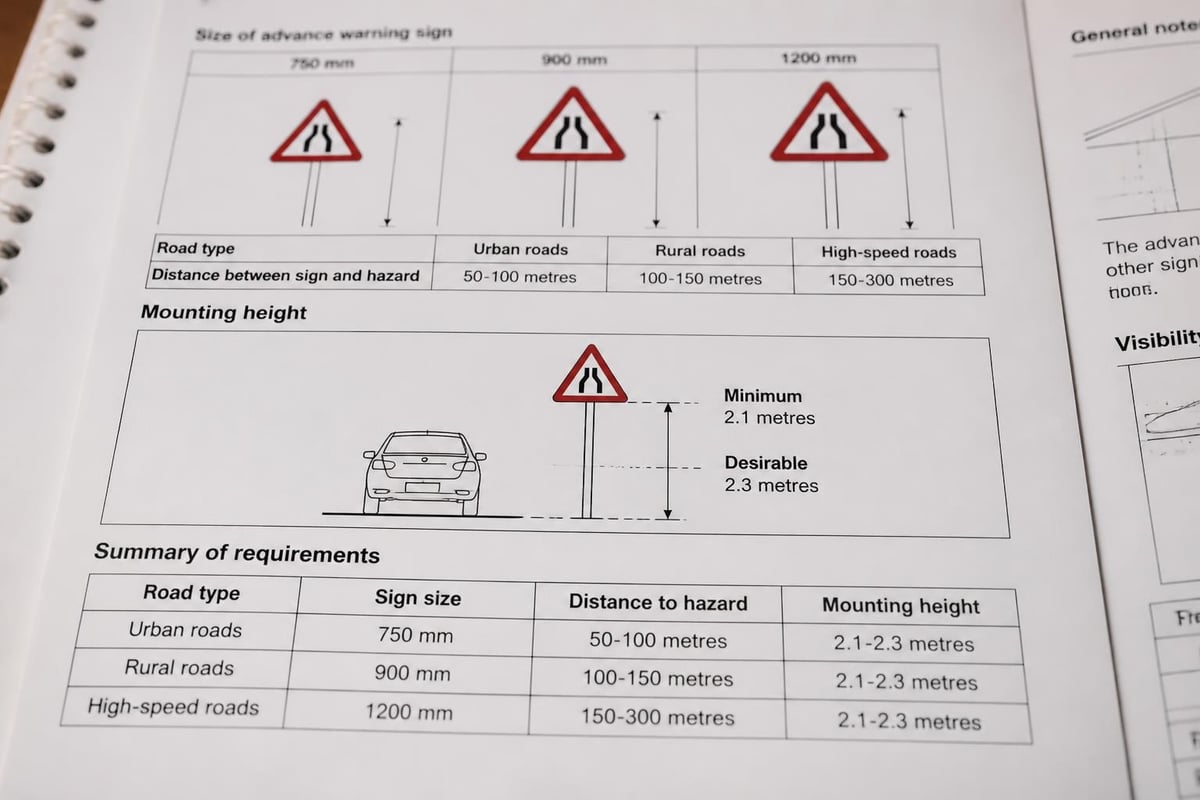
- Size: 750mm, 900mm, or 1200mm triangle depending on road speed and classification
- Placement: Typically 50-150 metres before the transition point on high-speed roads
- Mounting height: 1.5 to 2.2 metres to the bottom of the sign
- Reflectivity: Class R2 or Class R3 retroreflective material for visibility
The official driver information resource explains to motorists that this sign means they should prepare for oncoming traffic and adjust their driving behaviour accordingly.
North American Standards
In the United States, the Manual on Uniform Traffic Control Devices designates the W6-2 "Divided Highway Ends" sign as the standard warning device. This sign features a distinctive diamond-shaped yellow background with black symbols showing the transition from divided to undivided roadway.
The MUTCD specifies minimum sizes and placement criteria:
| Road Type | Minimum Sign Size | Typical Placement Distance |
|---|---|---|
| Conventional Roads | 750mm × 750mm | 150-225 metres |
| Expressways | 900mm × 900mm | 225-450 metres |
| Freeways | 1200mm × 1200mm | 450-750 metres |
Driver education materials, such as the Pennsylvania Driver's Manual, emphasize that this sign alerts drivers to upcoming two-way traffic conditions, requiring increased vigilance and potential speed reduction.
Design Philosophy and Visual Communication
The end of dual carriageway sign employs visual communication principles that transcend language barriers. Its effectiveness depends on immediate recognition and intuitive understanding of the message.
Symbolic Representation
The sign's core design element depicts two parallel lines merging into a single roadway. This simple graphic conveys the fundamental message: separated traffic lanes will soon become a shared carriageway. The use of geometric simplification ensures quick comprehension at highway speeds.
Research from the FHWA Highway Design Handbook demonstrates that older drivers particularly benefit from clear, high-contrast signage with simple geometric forms. The end of dual carriageway sign meets these criteria through its bold outline and unambiguous symbolism.
Colour Coding and Shape Psychology
Warning signs follow established colour conventions that create instant psychological associations:
- Red borders (UK): Universal warning colour demanding attention
- Yellow backgrounds (US): Caution and alertness
- Triangular shape (UK): Points upward, directing focus to important information
- Diamond shape (US): Standard warning configuration
These design choices aren't arbitrary. They form part of a comprehensive visual language that drivers learn to interpret automatically, reducing cognitive load during navigation.
Strategic Placement and Visibility Considerations
Proper placement of the end of dual carriageway sign is as crucial as the sign itself. The positioning must account for vehicle speeds, driver reaction times, and road geometry.
Advance Warning Distances
Highway engineers calculate placement distances using several factors:
- Posted speed limit: Higher speeds require greater advance warning
- Sight distance: Topography and curves affect visibility
- Traffic volume: Busy roads need earlier notification
- Weather patterns: Areas with frequent fog or precipitation may require supplementary signs
The standard formula considers that drivers travelling at 110 km/h cover approximately 30 metres per second. A driver needs time to perceive the sign, process its meaning, and adjust speed or position accordingly. This reaction sequence typically requires 3-5 seconds, informing the minimum placement distance.
Visibility Enhancement Techniques
Modern traffic safety practices employ multiple strategies to maximize sign effectiveness:
- Retroreflective materials: High-intensity sheeting ensures visibility in low-light conditions
- Sign illumination: Strategic lighting for critical transition points
- Advance warning sequences: Multiple signs at decreasing intervals
- Road surface treatments: Textured surfacing or rumble strips reinforce the message
Just as warning signs in workplace environments use high-visibility materials and strategic placement, road warning signs must overcome environmental challenges to maintain effectiveness.

Driver Behaviour and Response Patterns
The end of dual carriageway sign triggers specific behavioural responses from competent drivers. Understanding these responses helps authorities assess sign effectiveness and identify improvement opportunities.
Expected Driver Actions
When encountering this warning sign, drivers should:
- Reduce speed to match the upcoming road conditions
- Check mirrors and blind spots for surrounding traffic
- Move to the appropriate lane for the continuing route
- Increase following distance to accommodate reduced separation
- Heighten awareness for oncoming vehicles
Speed reduction patterns typically follow this progression:
- Initial speed on dual carriageway: 100-110 km/h
- Speed upon seeing warning sign: Begin gradual reduction
- Speed at transition point: 70-90 km/h
- Stabilized speed on single carriageway: 60-80 km/h (depending on conditions)
Common Driver Errors
Despite clear signage, certain driver errors occur repeatedly at dual carriageway termination points:
- Maintaining excessive speed: Failing to reduce velocity appropriately
- Late lane positioning: Waiting until the transition point to merge
- Inadequate gap assessment: Misjudging safe passing opportunities
- Distraction: Missing the sign due to mobile device use or other distractions
Transportation authorities frequently supplement the end of dual carriageway sign with additional interventions such as road markings, speed limit changes, and chevron signs to address these behavioural patterns.
International Variations and Conventions
While the fundamental message remains consistent globally, the end of dual carriageway sign manifests in different forms across jurisdictions.
European Standards
The European Commission's guidance on motorway safety references the Vienna Convention on Road Signs and Signals, which establishes international consistency for major warning signs. European countries generally employ triangular warning signs with red borders, though the internal symbols may vary slightly.
| Country | Sign Format | Distinctive Features |
|---|---|---|
| United Kingdom | Red triangle | Black symbol on white background |
| Germany | Red triangle | "Ende" text with road symbol |
| France | Red triangle | Simplified lane merging graphic |
| Netherlands | Red triangle | End of separated lanes symbol |
Commonwealth and Asian Variations
Countries following British road sign conventions typically adopt similar triangular warning signs. Australia, New Zealand, and South Africa all use variants of the UK design, though dimensions and placement standards may differ based on local driving conditions and vehicle mix.
Asian nations demonstrate greater variation, with some following European models and others developing unique signage systems. Japan, for instance, uses a distinctive blue colour scheme for informational signs while maintaining triangular yellow warning signs similar to European practice.
Practical Applications Beyond Public Highways
The principles underlying the end of dual carriageway sign extend to private road networks, industrial sites, and commercial facilities. Any location where internal roadways transition from separated to merged traffic can benefit from similar warning signage.
Industrial and Commercial Sites
Large manufacturing facilities, distribution centres, and business parks often incorporate internal road networks that mirror public highway characteristics. These private roads may include dual carriageway sections separating incoming and outgoing traffic flows.
Facilities managers should implement warning signage at transition points using:
- Adapted versions of standard road signs
- Road signs scaled appropriately for lower speed environments
- Supplementary general informational signs explaining site-specific traffic rules
Mining and Extraction Operations
Open-pit mines and quarries frequently develop extensive haul road networks. These roads may incorporate dual carriageway designs to separate loaded and empty vehicle movements. Warning signs indicating the end of separated traffic lanes become critical safety devices in these high-risk environments.
Site-specific considerations include:
- Larger sign dimensions to account for heavy vehicle operator sight lines
- Enhanced durability to withstand dust and vibration
- High-intensity illumination for 24-hour operations
- Multilingual text for diverse workforce populations
Maintenance and Lifecycle Management
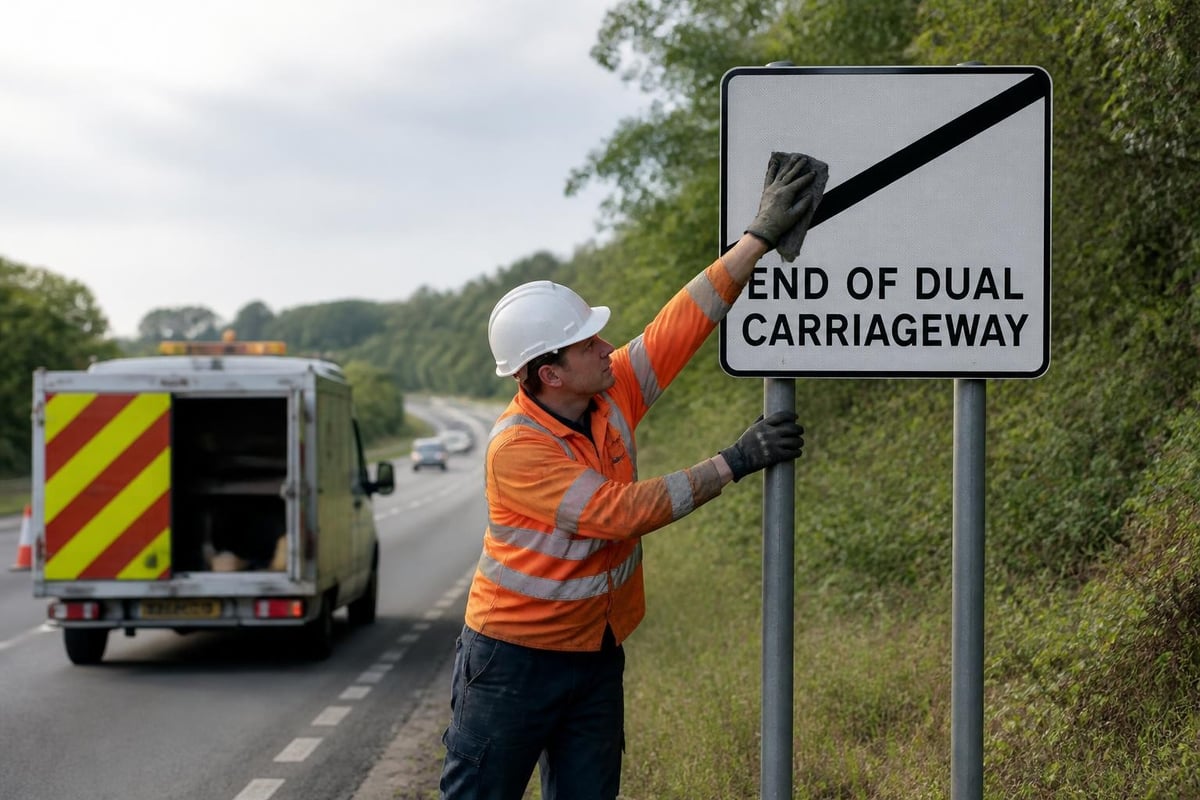
The end of dual carriageway sign requires ongoing maintenance to sustain its safety function throughout its operational life. Environmental exposure, vandalism, and material degradation all compromise sign effectiveness over time.
Inspection Protocols
Regular inspection schedules should assess:
- Retroreflective performance: Measured using retroreflectometers or visual inspection protocols
- Physical condition: Checking for dents, scratches, or graffiti
- Mounting integrity: Verifying post stability and fastener security
- Visibility clearance: Ensuring vegetation doesn't obscure the sign
- Colour retention: Assessing fade from UV exposure
The typical service life for a properly maintained road sign ranges from 7 to 12 years, depending on material quality and environmental conditions. Signs in coastal areas or industrial zones may require more frequent replacement due to accelerated corrosion.
Replacement Criteria
Transportation authorities establish replacement triggers based on measurable degradation:
| Condition | Measurement | Action Threshold |
|---|---|---|
| Retroreflectivity | Candelas per lux per m² | Below 70% of specification |
| Surface damage | Percentage of sign face | Greater than 15% affected |
| Colour fade | Visual comparison to standard | Noticeable deviation from spec |
| Structural integrity | Physical assessment | Any significant deformation |
Technology Integration and Future Developments
The end of dual carriageway sign is evolving alongside broader transportation technology advances. Digital signage, connected vehicle systems, and artificial intelligence are transforming how warning information reaches drivers.
Dynamic Warning Systems
Some jurisdictions now deploy variable message signs that can modify warnings based on real-time conditions. During adverse weather, the end of dual carriageway sign message might be supplemented with speed recommendations or enhanced warning graphics.
These systems offer several advantages:
- Adaptability: Messages change based on traffic conditions, weather, or incidents
- Attention capture: Changing displays attract more driver attention than static signs
- Information richness: Additional details beyond standard sign messages
- Data integration: Connection to traffic management systems for coordinated responses
Vehicle-to-Infrastructure Communication
Emerging connected vehicle technologies enable direct communication between road infrastructure and vehicle systems. The end of dual carriageway sign information could transmit wirelessly to vehicles, triggering:
- Dashboard warning displays
- Automatic speed reduction recommendations
- Navigation system alerts
- Advanced driver assistance system (ADAS) adjustments
This technology layer complements rather than replaces traditional signage, as visual signs remain essential for vehicles without connectivity and serve as redundant safety systems.
Material Selection and Environmental Considerations
The physical composition of the end of dual carriageway sign affects its performance, longevity, and environmental impact. Modern sign manufacturing balances durability requirements with sustainability objectives.
Substrate Materials
Sign faces are typically constructed from:
- Aluminum: Lightweight, corrosion-resistant, fully recyclable
- Steel: Higher strength for areas with vandalism concerns
- Composite materials: Fiberglass or polymer-based alternatives for specific applications
Aluminum dominates the market due to its excellent strength-to-weight ratio and resistance to environmental degradation. The material's recyclability also aligns with circular economy principles, as end-of-life signs can be reprocessed into new products.
Reflective Sheeting Technology
Modern retroreflective materials employ microscopic glass beads or prismatic structures to return light toward its source. The end of dual carriageway sign typically uses:
- Engineering Grade (Type I): Basic applications, shorter life expectancy
- High Intensity (Type III): Standard for most warning signs
- Diamond Grade (Type XI): Premium performance for critical locations
Higher-grade materials command premium prices but deliver superior performance and extended service life, often providing better total cost of ownership despite initial expense.
Procurement and Installation Best Practices
Organizations responsible for deploying the end of dual carriageway sign should follow systematic procurement and installation processes to ensure compliance and effectiveness.
Specification Development
Detailed specifications should address:
- Dimensional requirements: Sign size appropriate for road classification
- Material standards: Substrate and sheeting grade specifications
- Mounting specifications: Post type, height, and installation method
- Certification: Compliance with relevant national standards
- Warranty requirements: Minimum performance guarantees
Just as organizations source safety signs for workplace applications through qualified suppliers, road authorities should partner with manufacturers demonstrating proven compliance and quality systems.
Installation Quality Assurance
Proper installation ensures the sign performs as designed:
Critical installation parameters:
- Foundation depth and concrete specification for post stability
- Correct orientation and mounting height
- Proper sign face alignment (perpendicular to traffic flow)
- Secure fastening systems resistant to vibration and wind loading
- Vegetation clearance maintenance protocols
Installation teams should receive specific training on sign installation standards, ensuring consistent quality across large road networks. Documentation of installation dates, materials used, and inspector verification creates valuable records for maintenance planning.
Training and Public Awareness
The effectiveness of the end of dual carriageway sign depends ultimately on driver understanding and appropriate response. Education programs targeting new drivers and ongoing public awareness campaigns reinforce correct interpretation.
Driver Education Integration
Licensing authorities incorporate traffic sign recognition into driver education curricula. The end of dual carriageway sign features prominently in training materials because of the significant behavioural adjustment it requires.
Effective training approaches include:
- Visual recognition exercises using actual sign photographs
- Scenario-based learning with video simulation
- Discussion of appropriate speed reduction techniques
- Emphasis on increased hazard awareness after transition points
Public Information Campaigns
Periodic public awareness campaigns remind experienced drivers about proper responses to warning signs. These initiatives often coincide with seasonal hazard periods or follow collision data analysis identifying problem locations.
Campaign strategies might include:
- Social media content showing sign meaning and proper responses
- Variable message sign reminders on approach to high-risk transitions
- Press releases highlighting collision statistics and prevention measures
- Community engagement programs in areas with recent infrastructure changes
Similar to how mandatory signs in workplaces require worker education to achieve compliance, road warning signs need driver understanding to deliver safety benefits.
The end of dual carriageway sign represents a critical component of road safety infrastructure, warning drivers of significant changes in road layout and traffic patterns. Proper specification, placement, maintenance, and driver education ensure this warning sign continues protecting road users effectively. Whether managing public highways, private road networks, or industrial site traffic systems, selecting appropriate warning signage from qualified suppliers ensures compliance and safety. SafetySignsForSale provides comprehensive safety signage solutions across multiple applications, helping organizations meet their traffic management and safety obligations with quality products and expert guidance.