


Construction Signs: Essential Guide for Work Zone Safety
Construction sites present unique hazards that require clear, visible communication to protect workers, contractors, and the public. Properly implemented construction signs form the foundation of work zone safety, reducing accidents and ensuring compliance with regulatory standards. Whether managing a roadway project, building site, or infrastructure development, understanding the types, placement, and maintenance requirements of construction signs is essential for project managers, safety officers, and contractors alike.
Understanding Construction Sign Categories
Construction signs serve multiple critical functions across active work zones. The primary categories address distinct safety needs and regulatory requirements.
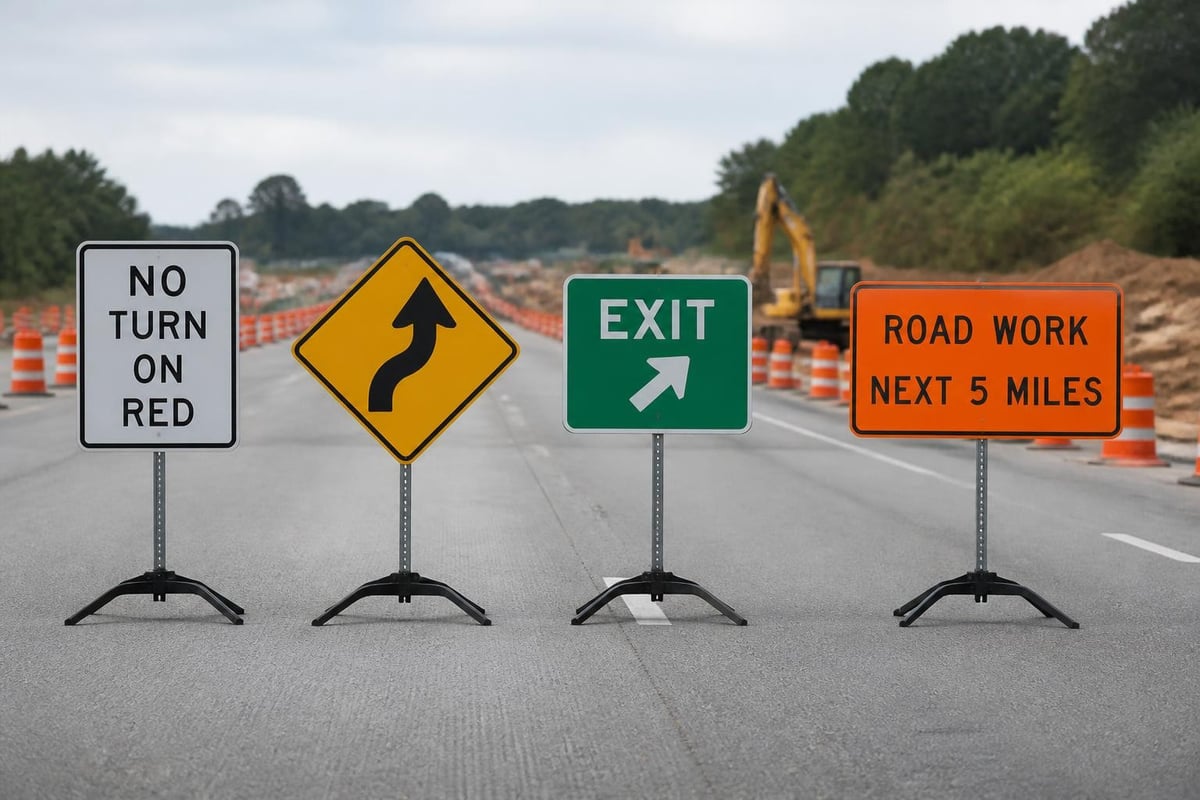
Regulatory signs communicate legal requirements and restrictions that drivers and pedestrians must obey. These include speed limits, lane closures, and access restrictions specific to the construction environment. Failure to comply with regulatory construction signs can result in fines and increased liability.
Warning signs alert approaching traffic and pedestrians to potential hazards ahead. These temporary installations might indicate uneven surfaces, heavy equipment operation, or sudden lane shifts. The distinctive orange background with black lettering makes warning construction signs immediately recognizable to motorists.
Guide signs provide directional information, helping traffic navigate detours and alternative routes around construction zones. Clear guidance reduces confusion and prevents vehicles from entering restricted areas.
Temporary Traffic Control Devices
The Manual on Uniform Traffic Control Devices establishes comprehensive standards for construction signs used in work zones. These specifications cover dimensions, colours, text size, and reflectivity requirements to ensure consistency across jurisdictions.
| Sign Type | Primary Function | Standard Colour | Typical Applications |
|---|---|---|---|
| Regulatory | Legal requirements | White/Red | Speed limits, closures |
| Warning | Hazard alerts | Orange/Black | Road work, equipment |
| Guide | Navigation | Orange/Black | Detours, exits |
| Informational | General notices | Orange/Black | Project details, dates |
Material Selection and Durability Standards
Choosing appropriate materials for construction signs directly impacts visibility, longevity, and cost-effectiveness. Modern construction signs utilize several substrate options, each offering distinct advantages.
Aluminium sheeting represents the industry standard for long-term construction projects. This material resists corrosion, maintains structural integrity in adverse weather, and supports high-quality reflective coatings. Aluminium construction signs typically last three to seven years when properly maintained.
Corrugated plastic provides a lightweight, economical alternative for short-duration projects. These signs install quickly and resist minor impacts, though they may fade more rapidly than aluminium counterparts. Budget-conscious projects often specify corrugated plastic for warning construction signs expected to remain in place for weeks rather than months.
Mesh fabric signs address wind resistance concerns in exposed locations. The perforated design reduces wind load while maintaining visibility, making these construction signs ideal for elevated installations and areas subject to strong gusts.
Reflectivity Requirements
All construction signs must incorporate retroreflective sheeting to ensure nighttime visibility. Three primary sheeting types meet different performance standards:
- Engineering Grade (Type I): Minimum acceptable reflectivity, suitable for low-speed work zones
- High Intensity (Type III): Enhanced visibility for moderate-speed roadways
- Diamond Grade (Type XI): Maximum reflectivity for high-speed motorways and extended service life
Research from the Transportation Research Board's evaluation of work-zone traffic control devices demonstrates that higher-grade reflective materials measurably improve driver response times and speed reduction in construction zones, particularly during low-light conditions.
Placement and Spacing Protocols
Effective construction signs require strategic positioning based on approach speeds, sight distances, and hazard severity. Placement protocols ensure adequate warning time for drivers to respond safely.
The advance warning area begins where the first construction signs appear. For high-speed roadways (exceeding 70 km/h), initial warning signs should appear 300 to 900 metres before the work zone. Urban construction sites with lower approach speeds may reduce this distance to 60 to 150 metres whilst maintaining adequate response time.
Longitudinal Spacing Guidelines
Construction signs within the work zone follow specific spacing requirements:
- Initial warning sign: Positioned at calculated distance based on approach speed
- Secondary warning: Placed approximately halfway between initial sign and transition area
- Regulatory signs: Installed at the point where restrictions begin
- Repeating warnings: Spaced at regular intervals through extended work zones
The Midwest Roadside Safety Facility's research on sign supports provides technical evidence for proper mounting heights and lateral placement to minimize collision risks whilst maintaining visibility.
Compliance and Inspection Requirements
Regular inspection ensures construction signs maintain effectiveness throughout the project lifecycle. Deteriorated or damaged signs compromise safety and expose project managers to liability concerns.
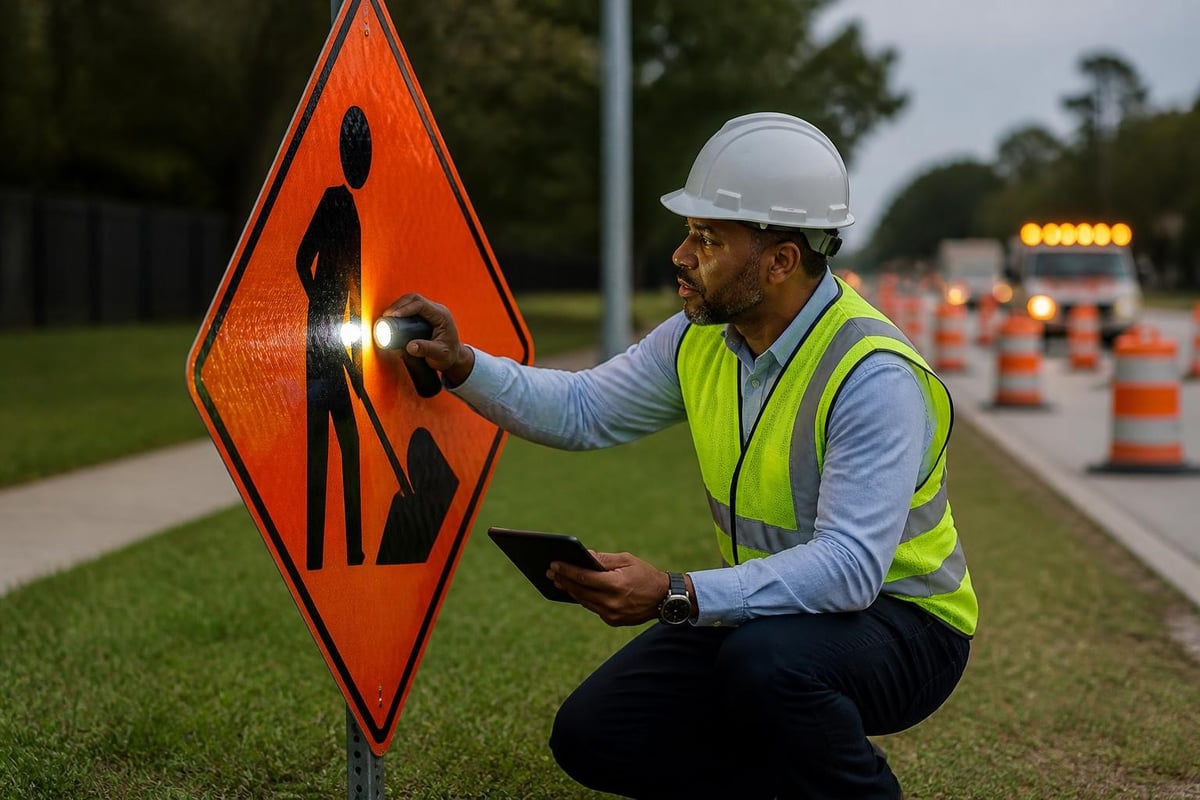
Daily visual inspections should verify that all construction signs remain upright, clean, and visible. Wind, vandalism, and equipment contact frequently displace or damage temporary installations, requiring immediate correction.
Weekly detailed assessments examine reflective performance, structural integrity, and message legibility. Construction signs exhibiting faded colours, cracked faces, or diminished reflectivity require prompt replacement. The Iowa Work Zone Safety Sign Package programme highlights that systematic sign inspection protocols reduce work zone incidents by maintaining consistent communication with approaching traffic.
Documentation and Record Keeping
Maintaining comprehensive records of construction signs serves multiple purposes:
- Demonstrates regulatory compliance during inspections
- Tracks replacement schedules and inventory requirements
- Provides evidence in incident investigations
- Supports budget planning for future projects
| Inspection Element | Frequency | Action Threshold |
|---|---|---|
| Position verification | Daily | Any displacement |
| Reflectivity check | Weekly | 50% degradation |
| Structural integrity | Weekly | Any damage |
| Comprehensive audit | Monthly | Per specifications |
Integration with Broader Safety Systems
Construction signs function as one component within comprehensive work zone safety programmes. Optimal protection requires coordination with additional safety elements including barriers, lighting, and personal protective equipment for workers.
Channelizing devices such as cones, drums, and barriers work alongside construction signs to physically guide traffic. The combination of visual messaging through signs and physical delineation creates redundant safety layers that accommodate various driver attention levels.
Flagger stations require specific construction signs indicating "Flagger Ahead" at appropriate distances. These installations prepare drivers for reduced speeds and manual traffic control, improving safety for workers directing vehicles through the work zone.
Nighttime and Low-Visibility Enhancements
Evening construction operations demand supplemental safety measures beyond standard construction signs. Temporary lighting illuminates critical warning signs whilst portable arrow boards and sequential warning lights enhance visibility.
Retroreflective vests worn by workers complement construction signs by ensuring personnel visibility. The comprehensive approach to visual communication, combining warning signs with proper worker PPE, creates multiple safety touchpoints.
Specialized Applications and Custom Requirements
Certain construction projects require specialized signs beyond standard traffic control devices. Understanding these applications ensures comprehensive hazard communication.
Utility work zones often necessitate custom construction signs warning of underground services, overhead cables, or restricted access for utility vehicles. These specialized messages prevent interference with critical infrastructure whilst protecting workers and equipment.
Pedestrian management in urban construction zones requires dedicated signage directing foot traffic around work areas. Construction signs indicating "Pedestrian Detour," "Footpath Closed," and directional arrows maintain safe passage whilst preventing unauthorized entry.
Multi-Phase Project Signing
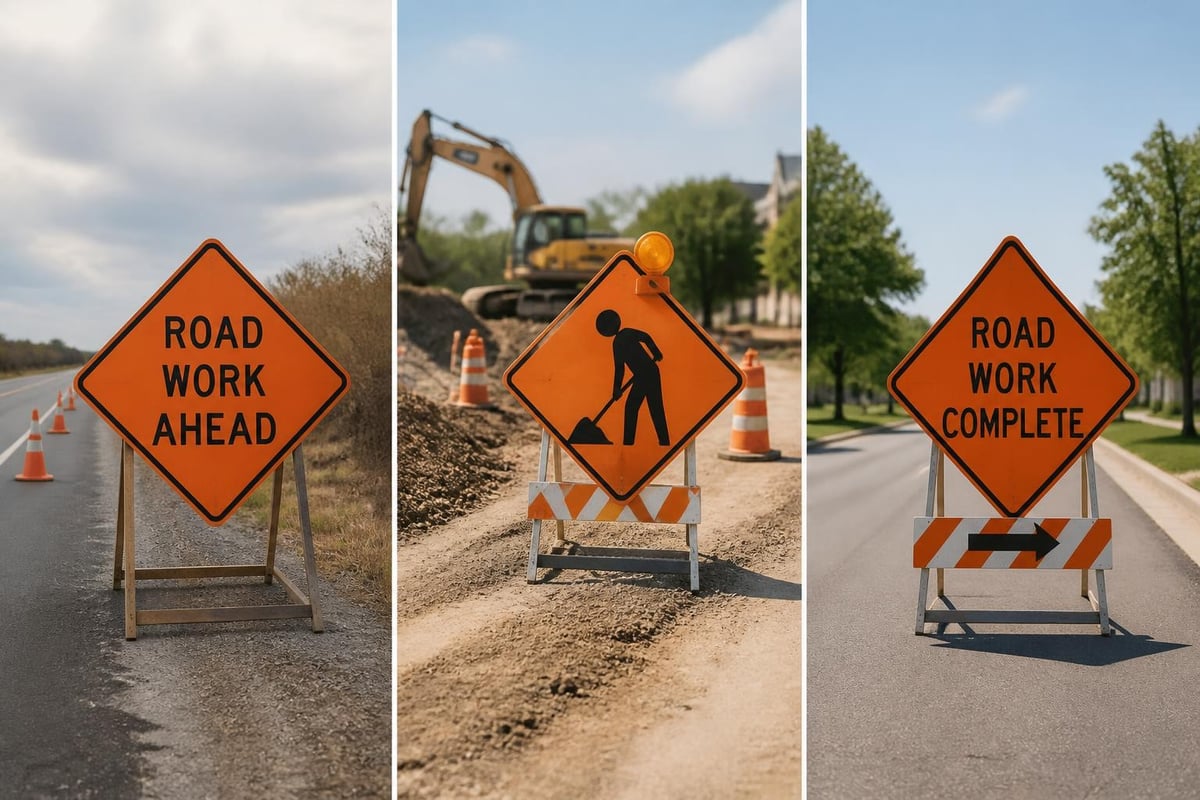
Long-duration construction projects passing through multiple phases require dynamic sign management. As work zones shift, construction signs must relocate accordingly to maintain accurate hazard communication.
Project phasing plans should specify:
- Sign inventory requirements for each phase
- Transition procedures between phases
- Storage protocols for signs temporarily out of use
- Inspection schedules accounting for repositioning
Training and Personnel Competency
Proper installation and maintenance of construction signs requires trained personnel who understand regulatory requirements and practical application techniques. Investment in workforce development directly correlates with work zone safety outcomes.
Installation training covers mounting techniques, spacing calculations, and verification procedures. Workers must understand how to secure signs against wind loads, position them within specified tolerances, and confirm visibility from required distances.
Maintenance protocols ensure personnel recognize deterioration indicators and understand replacement criteria. Regular competency assessments verify that teams maintain current knowledge as standards evolve and new products enter the market.
Organizations should develop standard operating procedures documenting construction signs installation, inspection, and maintenance processes. These documented protocols create consistency across multiple work zones and provide reference materials for new team members.
Emerging Technologies and Future Developments
The construction signs industry continues evolving with technological innovations enhancing visibility, durability, and communication effectiveness. Forward-thinking organizations monitor these developments to maintain competitive advantages whilst improving safety outcomes.
Solar-powered LED-enhanced signs provide active illumination without electrical infrastructure requirements. These construction signs offer superior visibility during nighttime operations and adverse weather conditions, though initial costs exceed traditional retroreflective alternatives.
Variable message signs allow dynamic content updates responding to changing conditions. Digital construction signs can display different messages for peak versus off-peak hours or adjust warnings based on detected traffic speeds and volumes.
Smart sign systems incorporating sensors detect when construction signs have been displaced or damaged, triggering alerts to maintenance teams. This proactive monitoring reduces the duration that compromised signs remain in service, maintaining consistent safety communication.
Sustainability Considerations
Environmental consciousness increasingly influences construction signs procurement decisions. Recycled aluminium substrates, eco-friendly inks, and extended service life materials reduce environmental impacts whilst potentially lowering total ownership costs.
Reusable sign systems featuring interchangeable panels minimize waste in organizations managing multiple concurrent projects. These modular construction signs accept different message inserts whilst retaining permanent frames and mounting hardware.
Procurement Strategies for Optimal Value
Acquiring construction signs requires balancing immediate budget constraints against long-term performance and compliance requirements. Strategic procurement maximizes safety outcomes whilst controlling expenses.
Volume purchasing agreements secure favorable pricing for organizations with ongoing construction sign requirements. Establishing relationships with reliable suppliers ensures product availability and consistent quality across multiple projects.
Standardization programmes reduce inventory complexity by limiting the variety of construction signs specifications. Organizations operating in similar environments benefit from identifying a core set of sign types, sizes, and materials meeting most applications.
Quality construction signs from established suppliers like SafetySignsForSale ensure compliance with relevant standards whilst providing durability that reduces replacement frequency. Investing in superior materials and manufacturing ultimately delivers better value than repeatedly replacing substandard products.
Lifecycle Cost Analysis
Evaluating construction signs based solely on acquisition costs overlooks significant factors affecting total ownership expenses:
- Service life: Premium materials lasting twice as long may cost 40% more initially but deliver superior value
- Maintenance requirements: Frequent replacements consume labour and logistics resources
- Compliance risk: Substandard signs create liability exposure far exceeding cost savings
- Performance reliability: Superior visibility and durability prevent incidents that generate substantial costs
| Cost Factor | Budget Option | Premium Option | Long-Term Impact |
|---|---|---|---|
| Initial purchase | £45 per sign | £75 per sign | 67% higher upfront |
| Expected lifespan | 18 months | 48 months | 167% longer service |
| Replacement cycles | 3.3 per 5 years | 1.25 per 5 years | 62% fewer changes |
| Total 5-year cost | £150 per position | £95 per position | 37% cost savings |
Risk Management and Liability Considerations
Inadequate construction signs create substantial liability exposure for contractors, property owners, and project managers. Understanding legal obligations and implementing comprehensive sign programmes protects organizations from preventable claims.
Duty of care requirements mandate that construction sites provide reasonable warnings about hazards. Courts consistently hold that properly designed and maintained construction signs represent fundamental aspects of this obligation. Failure to install appropriate warnings or allowing signs to deteriorate may constitute negligence in incident litigation.
Regulatory compliance serves as the minimum acceptable standard, not the optimal target. Organizations committed to safety excellence implement construction signs programmes exceeding baseline requirements, incorporating enhanced visibility features, redundant warnings, and proactive maintenance.
Documentation proving that construction signs met or exceeded applicable standards at the time of any incident provides critical defence evidence. Photograph installations, maintain inspection logs, and retain procurement records demonstrating compliance-oriented decision-making.
Comprehensive safety programmes integrating construction signs with road signs, barriers, and mandatory signs for worker protection create defensible safety systems that courts recognize as reasonable care.
Effective construction signs represent fundamental components of work zone safety, protecting workers and the public whilst ensuring regulatory compliance. Success requires understanding sign categories, material specifications, placement protocols, and maintenance requirements that keep these critical devices functioning properly throughout project lifecycles. Whether managing roadway improvements, building construction, or infrastructure development, prioritizing quality construction signs reduces incidents and demonstrates commitment to safety excellence. SafetySignsForSale provides comprehensive construction signs solutions meeting stringent safety standards, supporting organisations across South Africa with reliable products, expert guidance, and ongoing support for all work zone safety requirements.