


Symbols of Warning: Understanding Their Critical Role
Symbols of warning represent one of humanity's most effective methods of communicating danger across linguistic and cultural barriers. These universally recognized graphics serve as instant visual alerts that protect lives in workplaces, public spaces, and industrial environments worldwide. From the triangular yellow hazard signs found on construction sites to the skull and crossbones indicating toxic substances, these visual communication tools transcend language to deliver critical safety information. In 2026, as global supply chains expand and workforces become increasingly diverse, the role of standardized warning symbols has never been more vital for preventing accidents and ensuring regulatory compliance.
The Evolution and Standardization of Warning Symbols
The development of symbols of warning has followed a fascinating trajectory from rudimentary danger markers to sophisticated, internationally standardized visual language systems. Early industrial societies relied on text-heavy warning notices, which proved ineffective in environments with multilingual workforces or populations with varying literacy levels.
The modern era of warning symbols began in earnest during the mid-20th century when international bodies recognized the urgent need for visual communication that required no translation. The International Organization for Standardization (ISO) emerged as a leading authority, establishing frameworks that would govern how safety information should be presented visually.
ISO 3864: The Foundation of Modern Warning Design
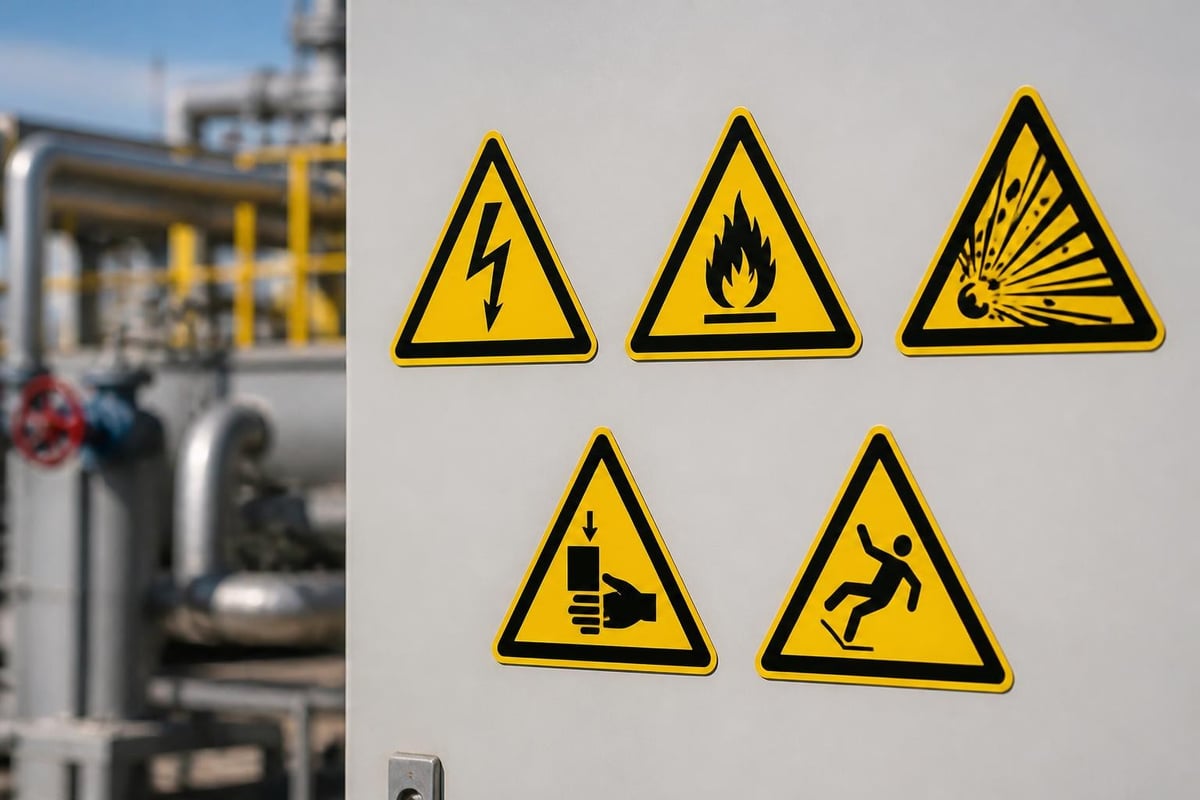
ISO 3864 provides comprehensive design principles covering colour, shape, and layout rules for safety and warning signs. This standard establishes the fundamental visual grammar that makes symbols of warning instantly recognizable regardless of where they're encountered.
Key elements defined by ISO 3864 include:
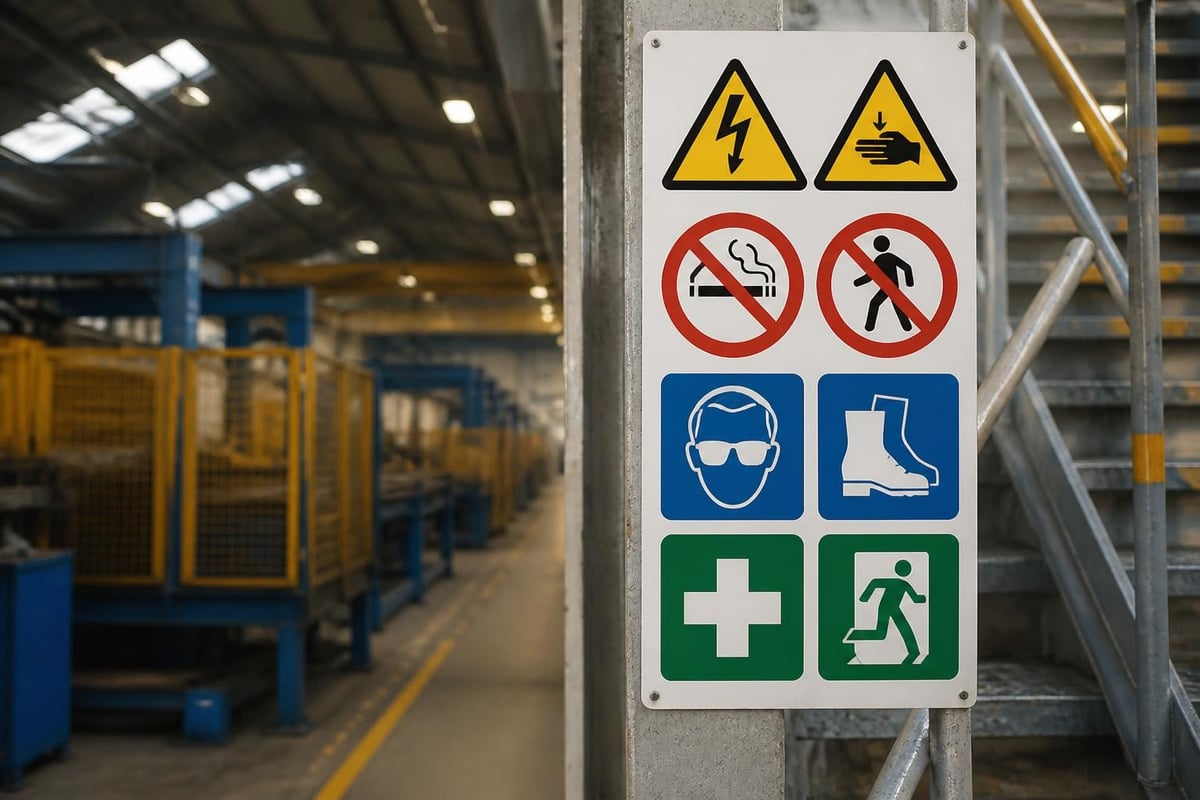
- Shape coding: Triangular borders for warning messages, circular shapes for mandatory actions, and diagonal lines for prohibitions
- Colour specifications: Precise hue, saturation, and brightness values for safety colours
- Contrast requirements: Minimum ratios between symbols and backgrounds for visibility
- Dimensional standards: Size relationships between graphic elements and borders
The standardization process has created a visual esperanto for workplace safety. When properly implemented, these symbols communicate hazards with remarkable efficiency, requiring mere fractions of a second for recognition and comprehension.
Categories and Applications of Warning Symbols
Different environments and hazards require specific types of symbols of warning, each designed to communicate particular risks with maximum clarity. Understanding these categories helps organizations select appropriate signage for their specific needs.
Chemical and Hazardous Material Warnings
The Globally Harmonized System (GHS) revolutionized how chemical hazards are communicated through diamond-shaped pictograms that appear on product labels, safety data sheets, and facility signage. These symbols cover nine distinct hazard classes, from explosives to environmental toxins.
The U.S. EPA's Household Hazardous Waste guidance demonstrates practical applications of GHS-style diamond symbols in community education and waste management, showing how these warning systems extend beyond industrial settings into public health communication.
| GHS Symbol | Hazard Category | Common Applications |
|---|---|---|
| Flame | Flammable materials | Fuel storage, solvents, aerosols |
| Exclamation mark | Irritants, sensitizers | Cleaning products, adhesives |
| Skull and crossbones | Acute toxicity | Pesticides, concentrated chemicals |
| Corrosion | Skin/material damage | Acids, caustic substances |
| Health hazard | Serious health effects | Carcinogens, respiratory sensitizers |
Physical Hazard Warnings
Physical dangers in workplaces require warning signs that alert personnel to immediate environmental risks. These symbols of warning address everything from slip hazards and falling objects to moving machinery and electrical dangers.
Common physical hazard symbols include:
- High voltage: Lightning bolt within a triangle, indicating electrical shock risk
- Slippery surface: Person falling backwards, warning of reduced traction
- Overhead load: Suspended weight symbol for crane operation areas
- Hot surface: Radiating heat lines from a hand, indicating burn hazards
- Confined space: Limited egress symbol for restricted areas
Biological and Radiation Hazards
Specialized symbols of warning communicate risks from biological agents and ionizing radiation. The three-blade biohazard symbol, introduced in the 1960s, has become synonymous with infectious materials and laboratory safety protocols.
Radiation warnings employ the distinctive trefoil design, though the International Atomic Energy Agency introduced a supplementary symbol in 2007 that adds a skull, running figure, and radiating waves to improve comprehension among populations unfamiliar with the traditional trefoil.
Healthcare facilities and research laboratories rely heavily on these specialized warnings, often incorporating them into first aid equipment and bio-hazardous waste containers to maintain strict containment protocols.
Colour Psychology and Recognition in Warning Systems
The strategic use of colour in symbols of warning leverages innate human responses to specific hues. This psychological dimension enhances the effectiveness of visual warnings by triggering subconscious alert mechanisms that prompt caution even before conscious processing occurs.
The Safety Colour Hierarchy
Yellow and black combinations dominate warning signage because this pairing offers maximum contrast whilst evoking natural danger patterns found in venomous insects and animals. Red signals immediate danger or prohibitions, commanding attention through its association with blood, fire, and urgent stop signals.
Standard safety colours and their applications:
- Yellow/amber: General warnings, caution advisories, physical hazards
- Red: Fire equipment, emergency stops, prohibitory signs, danger
- Blue: Mandatory actions, mandatory signs, required PPE
- Green: Safety equipment, first aid, emergency exits
- Orange: Extreme danger, radiation warnings, high-voltage equipment
The consistency of these colour applications across different warning contexts creates learned associations that strengthen recognition speed. Workers exposed to standardized colour coding can identify hazard categories peripherally, maintaining awareness even when not directly focusing on signage.
Design Principles for Effective Warning Communication
Creating effective symbols of warning requires balancing multiple factors including simplicity, cultural neutrality, scalability, and instant recognition. Professional designers and safety specialists collaborate to ensure warning graphics function across diverse contexts whilst maintaining regulatory compliance.
Simplification and Universal Comprehension
The most successful warning symbols distil complex hazards into their essential visual elements. A falling rocks symbol, for instance, uses just three or four geometric shapes to convey the concept of gravitational hazards from unstable terrain or overhead materials.
This reductionist approach ensures symbols remain recognizable at various sizes and viewing distances. Whether printed on a small chemical label or displayed on a large photoluminescent sign visible during power failures, the graphic must retain its meaning.
Cultural Considerations and Testing
Whilst symbols of warning aim for universal understanding, cultural context can influence interpretation. Extensive testing with diverse populations helps identify potential ambiguities or unintended meanings before symbols enter widespread use.
The World Health Organization's pictorial health warnings demonstrate evidence-based approaches to graphic warning design and implementation, particularly regarding public health communications that must resonate across varied demographic groups.
Testing methodologies include:
- Comprehension surveys across age groups, educational backgrounds, and cultural contexts
- Recognition speed assessments under various lighting and viewing conditions
- Retention studies measuring long-term symbol recall and meaning association
- Field validation in actual workplace environments with target populations
Implementation Best Practices for Warning Signage
Selecting appropriate symbols of warning represents only the first step; proper placement, sizing, visibility, and maintenance determine whether these safety tools achieve their protective purpose in real-world applications.
Strategic Placement and Visibility
Warning symbols must appear within the natural sight lines of personnel approaching hazardous areas. This requires careful analysis of traffic patterns, task positions, and environmental factors that might obscure signage.
| Location Type | Recommended Mounting Height | Visibility Distance Required |
|---|---|---|
| Doorway warnings | 1.5–2.0 metres | 3–5 metres |
| Equipment hazards | At operator eye level | 1–3 metres |
| Area perimeter warnings | 1.8–2.2 metres | 10–15 metres |
| Overhead hazards | Below threat level | 5–10 metres |
Complementary safety measures often accompany symbols of warning to create layered protection. Facilities may combine fire-fighting signs with actual fire equipment and fire extinguishers, ensuring both awareness and immediate access to emergency response tools.
Material Selection for Durability
Environmental conditions dramatically affect warning sign longevity. Outdoor installations face UV degradation, temperature extremes, and weather exposure, whilst industrial environments may involve chemical exposure, high humidity, or mechanical impact.
Material considerations include:
- Aluminium composite: Weather-resistant, lightweight, suitable for outdoor applications
- PVC and vinyl: Cost-effective, chemical-resistant, indoor use
- Stainless steel: High durability, corrosion resistance, harsh environments
- Photoluminescent substrates: Emergency visibility without power, evacuation routes
- Reflective materials: Low-light visibility for vehicle areas and road signs
Regular inspection schedules ensure symbols of warning remain legible and properly positioned. Faded colours, physical damage, or obscured visibility compromise safety effectiveness and may constitute regulatory violations during workplace audits.
Industry-Specific Warning Applications
Different sectors require specialized approaches to implementing symbols of warning, reflecting unique hazard profiles, regulatory requirements, and operational contexts that characterize various industrial environments.
Manufacturing and Industrial Settings
Heavy manufacturing facilities face diverse simultaneous hazards requiring comprehensive warning systems. Assembly lines might display warnings for moving machinery, pinch points, noise exposure, and material handling hazards within a single production area.
Personal protective equipment requirements often correlate directly with warning signage, creating visual reinforcement loops. A high-decibel noise warning naturally pairs with mandatory hearing protection symbols, whilst chemical handling areas display both substance-specific hazards and required protective gear like face shields.
Healthcare and Laboratory Environments
Medical facilities and research laboratories employ extensive biological hazard symbols, radiation warnings, and chemical safety graphics. These environments require particular attention to containment protocols, with warning symbols appearing on storage areas, waste disposal systems, and treatment spaces.
The integration of warning symbols with emergency equipment like eyewash stations and safety showers creates intuitive safety infrastructure. Personnel instantly recognize both the hazard nature and the appropriate emergency response through coordinated visual systems.

Construction and Public Spaces
Temporary and changing hazard conditions characterize construction sites, requiring flexible warning systems that can be repositioned as work progresses. High-visibility colours and weather-resistant materials ensure symbols of warning remain effective despite outdoor exposure and rough handling.
Public-facing environments like retail spaces, entertainment venues, and transport hubs use simplified warning symbols that accommodate varied populations including children, elderly persons, and visitors unfamiliar with specialized industrial warnings. These applications prioritize immediate comprehension over technical precision.
Training and Cultural Integration
Effective implementation of symbols of warning extends beyond physical installation to encompass workforce education, reinforcement programs, and organizational safety culture development.
Onboarding and Continuous Education
New employee orientation should include comprehensive symbol familiarization, covering both general safety graphics and facility-specific warnings. Interactive training using actual signage locations helps personnel connect abstract symbol meanings with concrete workplace hazards.
Training program elements:
- Symbol identification exercises with timed recognition challenges
- Hazard scenario matching connecting symbols to appropriate responses
- Site walks highlighting warning locations and their contextual meanings
- Assessment protocols verifying comprehension before unsupervised work begins
- Refresher sessions addressing new symbols or updated standards
Multilingual and Literacy Considerations
Whilst symbols of warning function as visual language, supplementary text labels in multiple languages can enhance comprehension, particularly for complex or unfamiliar hazards. This layered approach accommodates diverse literacy levels whilst maintaining the speed advantages of graphic communication.
Organizations operating across multiple regions must ensure warning systems meet both local regulatory requirements and international standards. General informational signs might incorporate region-specific text whilst maintaining standardized graphic elements for consistency.
Regulatory Compliance and Legal Considerations
Proper implementation of symbols of warning carries significant legal implications beyond ethical safety responsibilities. Regulatory frameworks at national and international levels mandate specific warning requirements across different industries and hazard categories.
Compliance Frameworks
Multiple regulatory bodies govern warning symbol usage depending on industry sector and geographical location. South African workplaces must comply with the Occupational Health and Safety Act, which references international standards for safety signage whilst allowing for local implementation guidance.
Key compliance areas include:
- Minimum symbol sizes based on viewing distances and hazard severity
- Mandatory placement locations for specific hazard types
- Inspection and maintenance schedules ensuring continued visibility
- Documentation requirements proving appropriate warnings were displayed
- Employee training records demonstrating symbol comprehension
Liability and Due Diligence
Absence or inadequacy of symbols of warning can constitute negligence in accident investigations and legal proceedings. Courts examine whether reasonable warnings were provided commensurate with known or foreseeable hazards when determining liability in workplace injury cases.
Organizations demonstrate due diligence through documented hazard assessments, systematic warning implementation, regular audits, and responsive updating when new hazards emerge or standards evolve. This proactive approach both protects personnel and establishes defensible safety practices.
Emerging Technologies and Future Developments
The fundamental principles underlying symbols of warning remain constant, but technological advances are creating new opportunities for enhanced hazard communication and dynamic warning systems responsive to changing conditions.
Digital and Interactive Warning Systems
Smart facilities increasingly integrate digital displays capable of showing contextually relevant warnings based on current operations, detected hazards, or environmental conditions. These systems maintain standardized symbol designs whilst adding real-time information layers.
Augmented reality applications overlay warning symbols onto physical environments through worker-worn devices, providing personalized hazard alerts based on individual locations, clearance levels, and task assignments. This technology particularly benefits maintenance personnel navigating complex facilities with varying hazard zones.
Sustainable and Enhanced Visibility Materials
Material science innovations deliver warning signs with improved longevity, reduced environmental impact, and enhanced visibility characteristics. New photoluminescent compounds provide brighter, longer-lasting emergency lighting without electricity consumption.
Retroreflective technologies adapted from road safety applications now appear in industrial warning signage, dramatically improving visibility in low-light conditions or areas dependent on artificial lighting subject to failure during emergencies.
Measuring Warning Effectiveness
Organizations committed to continuous safety improvement regularly assess whether their symbols of warning achieve intended protective outcomes through both quantitative metrics and qualitative feedback mechanisms.
Performance Indicators
Warning system effectiveness metrics include:
- Incident rates in warned versus unwarned areas (controlling for hazard exposure)
- Near-miss reporting frequency related to warned hazards
- Compliance observations during safety walks and audits
- Employee comprehension scores in symbol recognition assessments
- Response time measurements in emergency drill scenarios
Declining incident rates in areas with comprehensive warning systems provide evidence of effectiveness, though multiple factors influence safety outcomes. Statistical analysis must account for confounding variables like simultaneous training initiatives, equipment upgrades, or procedural changes.
Continuous Improvement Processes
Feedback loops incorporating frontline worker observations, incident investigations, and external audit findings drive refinements to warning systems. Personnel working daily in hazardous environments often identify placement issues, visibility problems, or comprehension gaps that inform strategic improvements.
Regular reviews ensure symbols of warning remain aligned with current operations, particularly in dynamic environments where processes, equipment, or materials change frequently. Outdated or irrelevant warnings create confusion and may diminish overall signage credibility, reducing attention paid to legitimate current hazards.
Understanding and properly implementing symbols of warning creates safer workplaces whilst ensuring regulatory compliance and reducing organizational liability. From standardized colour coding and shape conventions to strategic placement and material selection, every element contributes to these critical safety tools' effectiveness. Whether you need comprehensive safety signs, specialized fire safety equipment, or complete hazard communication systems, SafetySignsForSale provides industry-compliant solutions backed by expert guidance to protect your workforce and meet your safety obligations.