


Safety Symbols: Essential Guide for Workplace Protection
Safety symbols form the foundation of visual communication in workplaces worldwide, transcending language barriers to deliver critical safety information at a glance. These standardised pictograms, colours, and shapes protect workers by clearly identifying hazards, mandatory actions, and emergency equipment locations. Understanding and implementing appropriate safety symbols isn't merely a regulatory requirement-it's a fundamental responsibility that directly impacts worker welfare, operational efficiency, and legal compliance across every industry sector.
Understanding the Core Purpose of Safety Symbols
Safety symbols serve as an immediate, universal method of communicating essential safety information without relying on written language. In environments where workers speak different languages or where quick recognition is critical, these visual markers become indispensable tools for preventing accidents and saving lives.
The primary function of these symbols extends beyond simple hazard identification. They guide behaviour, indicate required protective equipment, mark emergency exits and safety equipment, and establish clear protocols during routine operations and emergency situations. Research consistently demonstrates that workers respond faster to visual symbols than to text-based warnings, particularly in high-stress or emergency scenarios.
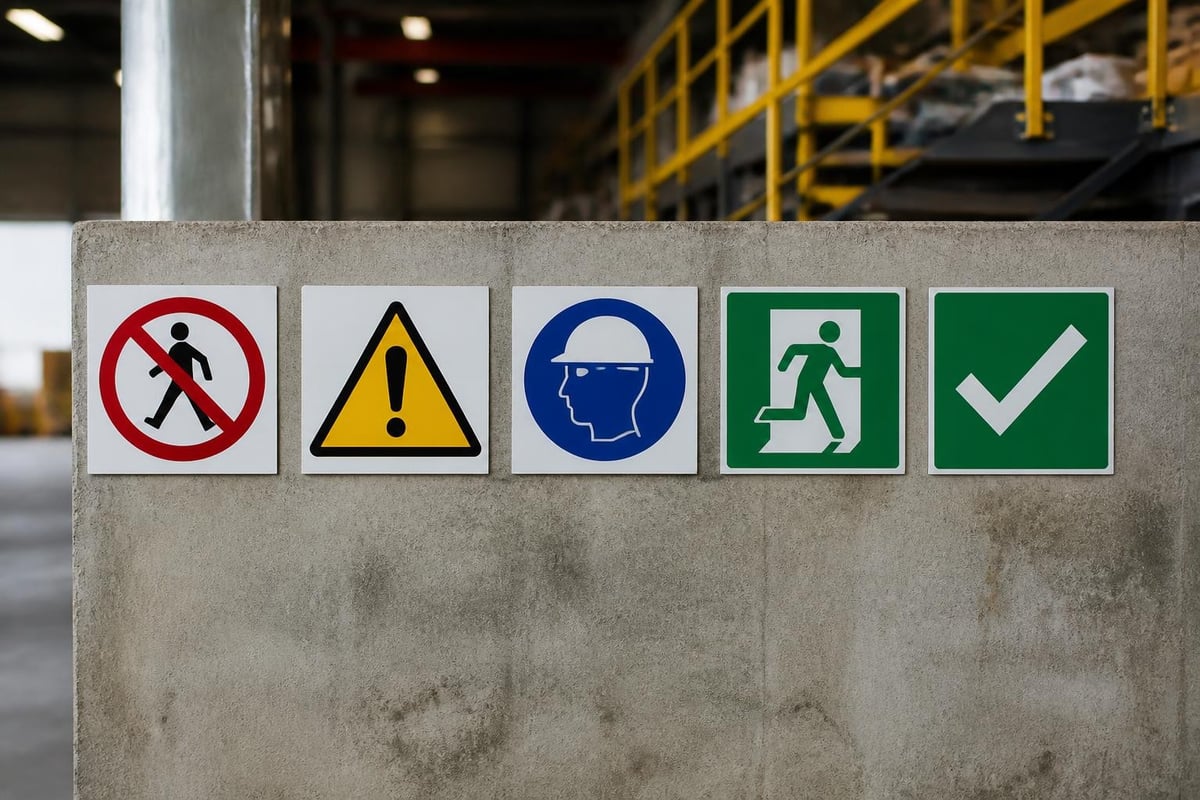
Modern workplaces deploy safety symbols across multiple contexts:
- Hazard identification: Chemical dangers, electrical risks, trip hazards, and biological threats
- Behavioural directives: Actions workers must take or avoid in specific areas
- Emergency preparedness: Locations of fire extinguishers, first aid stations, eyewash facilities, and emergency exits
- Equipment operation: Safe handling procedures and operational warnings on machinery
- Environmental protection: Disposal requirements and environmental hazard indicators
The Standardisation Framework
International and regional standards ensure consistency in safety symbol design, colour coding, and application. The ANSI Z535 series governs safety sign and tag design in North America, establishing technical specifications for colours, formats, and symbol construction. This standardisation ensures that a worker trained in one facility can immediately recognise and respond to safety symbols in any compliant workplace.
European workplaces follow Directive 92/58/EEC, which harmonises safety signage across member states. The European Commission's guidelines provide comprehensive direction on implementing workplace safety signs, ensuring consistent protection standards regardless of geographic location within the EU. This regulatory framework covers everything from minimum dimensions to placement heights and illumination requirements.
Categories of Safety Symbols and Their Applications
Safety symbols fall into distinct categories, each serving specific communication purposes through standardised colour schemes and geometric shapes.
Prohibition Symbols
Prohibition symbols use a red circular band with a diagonal line to indicate forbidden actions. The background is typically white with black pictograms. These symbols prevent dangerous behaviours that could lead to immediate harm or long-term health consequences.
| Symbol Type | Typical Use | Industries |
|---|---|---|
| No Smoking | Areas with flammable materials | Manufacturing, chemical plants, refineries |
| No Entry | Restricted zones, hazardous areas | Construction, industrial facilities |
| No Mobile Phones | Explosive atmospheres | Oil and gas, mining operations |
| No Pedestrians | Vehicle-only routes | Warehouses, distribution centres |
Warning Symbols
Warning symbols employ a yellow triangular shape with black borders and pictograms. These alert workers to potential hazards that require caution and awareness. The triangular shape itself signals danger, whilst the yellow colour enhances visibility even in challenging lighting conditions.
Common warning symbols address:
- Electrical hazards and high voltage equipment
- Toxic substances and chemical exposure risks
- Slippery surfaces and fall hazards
- Moving machinery and crush points
- Radiation exposure zones
- Biological hazards and infectious materials
Mandatory Action Symbols
Blue circular symbols with white pictograms indicate required actions or personal protective equipment (PPE). These symbols establish non-negotiable safety requirements for entering or working in specific areas.
PPE requirements communicated through mandatory symbols include:
- Safety helmets in construction zones
- Eye protection near grinding or chemical operations
- Hearing protection in high-noise environments
- Respiratory protection in dust or fume-laden areas
- Safety footwear in heavy-lifting zones
- High-visibility clothing in traffic areas
Emergency and First Aid Symbols
Green rectangular or square symbols with white pictograms mark safety equipment locations and emergency routes. These symbols guide workers to critical resources during emergencies, making them life-saving elements of facility design.

Emergency symbols identify:
- Fire exit routes and emergency doors
- First aid stations and medical facilities
- Emergency eyewash and shower stations
- Assembly points for evacuations
- Emergency telephone locations
- Automated external defibrillators (AEDs)
Fire Safety Symbols
Fire safety symbols combine red backgrounds with white pictograms to mark fire-fighting equipment and related safety features. These symbols must be instantly recognisable during high-stress emergency situations.
The NFPA 704 diamond system represents a specialised approach to communicating fire hazards, using a four-colour diamond to indicate health, flammability, instability, and special hazards through numerical ratings. This system enables emergency responders to quickly assess risks when approaching an incident involving hazardous materials.
| Equipment | Symbol Characteristics | Placement Requirements |
|---|---|---|
| Fire Extinguishers | Red background, white extinguisher pictogram | Maximum 30m travel distance |
| Fire Hose Reels | Red background, white hose reel pictogram | Clearly visible, unobstructed access |
| Fire Alarm Call Points | Red background, white flame or hand pictogram | Near exit routes, 1.4m height |
| Fire Blankets | Red background, white blanket pictogram | Kitchen areas, laboratories |
Implementing Effective Safety Symbol Programmes
Successful implementation extends far beyond simply mounting signs on walls. A comprehensive approach considers visibility, placement, maintenance, and worker training to ensure maximum effectiveness.
Strategic Placement Principles
Position safety symbols where workers naturally look when entering areas or approaching hazards. Mounting height typically ranges between 1.5 and 2.0 metres, though specific standards may dictate precise requirements based on symbol type and local regulations.
Consider sightlines and potential obstructions:
- Entry points: Place relevant symbols at all entrances to hazardous areas
- Point of hazard: Position warning symbols immediately adjacent to the specific danger
- Decision points: Install directional safety symbols where workers must choose between routes
- Evacuation routes: Ensure emergency symbols remain visible even during power failures
- Equipment locations: Mark all safety equipment with appropriate symbols at consistent heights
Size and Visibility Standards
Symbol size must correlate with viewing distance. Larger symbols serve areas where workers may be positioned far from the sign, whilst smaller symbols suffice for close-proximity hazards. Minimum size requirements ensure legibility, but best practice often calls for exceeding minimum standards to enhance recognition speed.
Illumination requirements vary based on symbol type and location. Emergency route symbols often require photoluminescent materials or electrical illumination to remain visible during power outages. Regular testing verifies that illuminated symbols function correctly and that photoluminescent materials maintain adequate charge and glow duration.
Material Selection and Durability Considerations
Environmental conditions dictate appropriate materials for safety symbols. Indoor office environments permit different materials than outdoor construction sites or chemical processing facilities.
Material Options and Applications
| Material | Advantages | Best Applications | Limitations |
|---|---|---|---|
| Rigid Plastic | Weather-resistant, durable, easy to clean | Outdoor use, high-traffic areas | Can crack under extreme impact |
| Aluminium | Highly durable, professional appearance | Permanent installations, harsh environments | Higher cost, requires drilling |
| Vinyl Stickers | Low cost, easy application | Temporary needs, smooth surfaces | Limited durability, can peel |
| Photoluminescent | Glow-in-dark capability | Emergency routes, power-failure scenarios | Requires light exposure to charge |

Consider exposure to chemicals, extreme temperatures, UV radiation, moisture, and physical impact when selecting materials. Marine-grade materials suit coastal facilities, whilst chemical-resistant options serve laboratories and processing plants. Temperature extremes in foundries or cold storage facilities require specialised materials that maintain integrity and legibility across wide temperature ranges.
Training Workers to Recognise and Respond to Safety Symbols
Even perfectly designed and positioned safety symbols fail without adequate worker training. Comprehensive programmes ensure all personnel understand symbol meanings, required responses, and the consequences of non-compliance.
Essential Training Components
Effective training addresses multiple learning styles through varied delivery methods:
- Visual presentations showing real-world symbol applications
- Hands-on demonstrations of correct PPE usage indicated by symbols
- Scenario-based exercises simulating emergency responses
- Regular refresher sessions to maintain awareness
- Assessment tools to verify comprehension and retention
New employee orientation must include thorough safety symbol familiarisation before workers enter production areas. Language barriers dissolve when training emphasises visual recognition over text-based learning, making symbols particularly valuable in diverse workforces.
Creating a Safety-Conscious Culture
Safety symbols function most effectively within organisations that prioritise safety at every level. Leadership commitment, worker engagement, and continuous improvement create environments where safety symbols integrate naturally into daily operations rather than serving as mere regulatory decorations.
Regular safety audits should assess:
- Symbol visibility and condition
- Compliance with placement standards
- Worker recognition and comprehension rates
- Appropriateness for current hazards
- Consistency with updated regulations
Regulatory Compliance and Legal Obligations
Employers face legal obligations to provide adequate safety signage under various health and safety regulations. Non-compliance exposes organisations to enforcement actions, financial penalties, and increased liability during incident investigations.
Documentation proves essential for demonstrating compliance. Maintain records of:
- Symbol installation dates and locations
- Training completion for all workers
- Inspection and maintenance schedules
- Updates reflecting operational or regulatory changes
- Incident investigations referencing signage adequacy
Regular compliance reviews identify gaps before inspectors or accidents expose deficiencies. Proactive management of safety symbol programmes demonstrates organisational commitment to worker protection and strengthens legal positions should incidents occur despite preventive measures.
Adapting Safety Symbols for Specific Industries
Different sectors face unique hazards requiring specialised safety symbols beyond standard offerings. Construction sites emphasise fall protection and overhead hazards, whilst healthcare facilities focus on biological risks and radiation exposure. Manufacturing plants might require extensive machine-specific warnings, and logistics operations prioritise vehicle-pedestrian separation.
Industry-specific considerations include:
- Healthcare: Infection control, radiation zones, biohazard materials, oxygen storage
- Construction: Overhead work, excavations, confined spaces, crane operations
- Manufacturing: Machine guards, lockout/tagout points, chemical storage, noise zones
- Warehousing: Forklift routes, loading docks, racking load limits, pedestrian walkways
- Laboratories: Chemical compatibility, fume hoods, eye protection, emergency showers
Custom symbols may supplement standard offerings when unique operational hazards lack established pictograms. However, custom designs should follow established colour and shape conventions to maintain intuitive recognition patterns workers have learned from standard symbols.
Future Trends in Safety Symbol Development
Technological advancement continues shaping how safety symbols communicate critical information. Digital displays enable dynamic symbols that adapt to changing conditions, showing different warnings based on current operational states or environmental sensors.
Augmented reality systems overlay safety information directly onto workers' fields of view through smart glasses, potentially eliminating traditional physical signage in some applications. However, these technologies supplement rather than replace conventional safety symbols, which remain essential for universal accessibility and power-independent operation.
International harmonisation efforts gradually reduce regional variations in safety symbol design, creating truly universal visual languages. This convergence benefits multinational organisations operating across jurisdictions and workers moving between regions or countries throughout their careers.
Effective safety symbol implementation protects workers whilst ensuring regulatory compliance across all operational environments. From selecting appropriate materials to strategic placement and comprehensive training, every element contributes to creating safer workplaces where hazards are clearly communicated and proper precautions become second nature. Whether you're establishing safety protocols for a new facility or updating existing signage to meet current standards, SafetySignsForSale offers the complete range of compliant safety symbols, fire equipment, PPE, and first aid supplies your organisation needs to maintain the highest protection standards. Browse our extensive product catalogue today and ensure your workplace communicates safety effectively through proper signage.