


Give Way Sign: Essential Guide for Safety & Compliance
The give way sign represents one of the most critical regulatory road signs in modern traffic management systems worldwide. This distinctive triangular sign instructs drivers to yield priority to other road users, preventing collisions at intersections, roundabouts, and merging points. Understanding the proper application, placement, and legal requirements of give way signs is essential for facilities managers, health and safety officers, and anyone responsible for private road networks, commercial properties, or industrial sites.
Legal Framework and Regulatory Standards
The give way sign operates under strict regulatory frameworks that vary by jurisdiction, yet share common principles of traffic priority. In the United Kingdom, official Highway Code guidance establishes clear driver obligations when approaching these regulatory devices. The triangular red-bordered sign with white interior communicates an absolute requirement to yield to traffic on the priority road.
International Design Variations
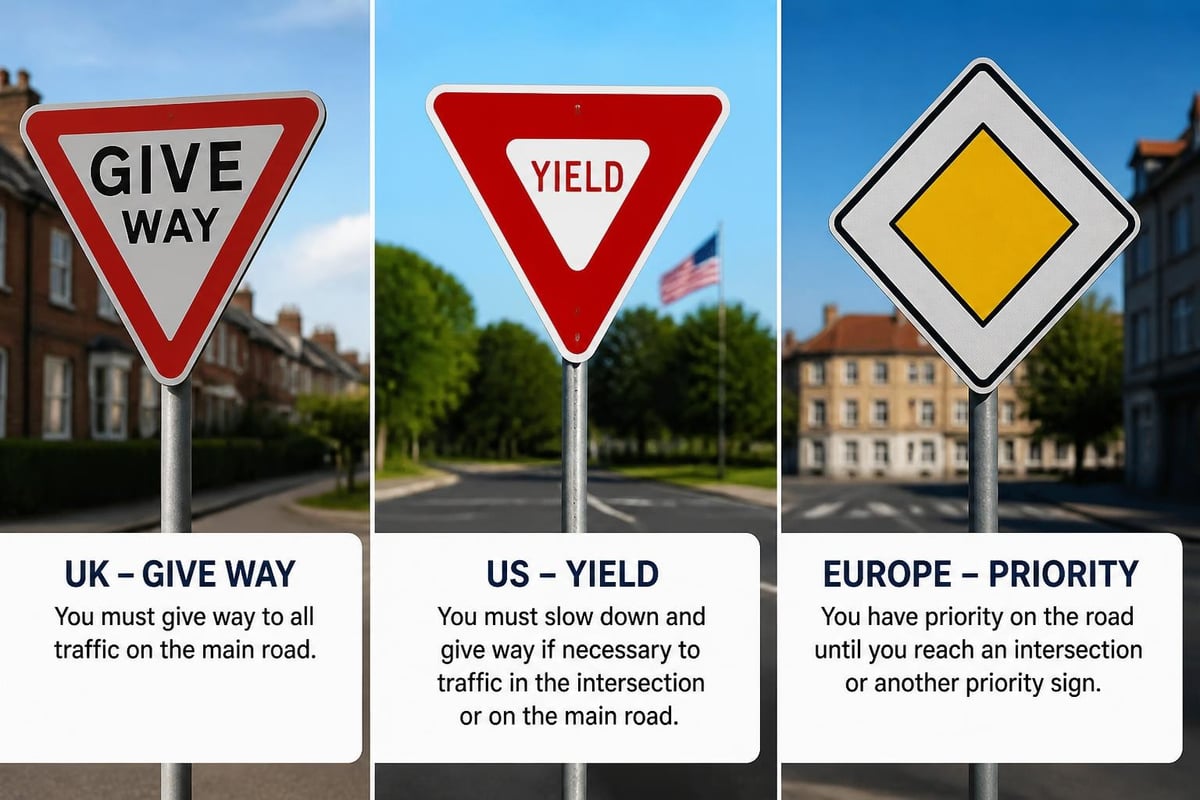
Different regions have adopted distinct terminology and design standards for this essential traffic control device:
- United Kingdom and Commonwealth: "Give Way" text on inverted triangle
- United States and Canada: "YIELD" text on inverted triangle
- European Union: Priority road symbol without text
- Australia and New Zealand: "Give Way" following British conventions
The Australian Road Rules define precise legal obligations for drivers encountering give way signs, including complete stopping requirements when necessary to prevent collisions. These statutory requirements carry significant penalties for non-compliance, making proper signage placement a legal necessity.
Technical Specifications
The Traffic Signs Manual Chapter 3 provides comprehensive technical guidance for British implementations. Key specifications include:
| Specification | Standard Requirement |
|---|---|
| Shape | Inverted equilateral triangle |
| Border colour | Retroreflective red |
| Background | White or retroreflective white |
| Text height | Proportional to sign size |
| Mounting height | 750mm to 900mm (edge of carriageway) |
| Visibility distance | Minimum 60 metres |
Placement Strategies for Maximum Effectiveness
Proper give way sign placement determines whether the device successfully controls traffic flow and prevents accidents. The positioning must account for approach speeds, sight lines, and potential obstructions that might reduce visibility.
Critical Placement Considerations
Site assessments should evaluate multiple factors before installing a give way sign. Approach visibility forms the primary concern, ensuring drivers can detect the sign at sufficient distance to decelerate safely. The MUTCD 11th Edition specifies minimum sight distances based on approach speed, providing definitive specifications for placement decisions.
Essential placement factors include:
- Clear sight lines from the approach direction
- Adequate lighting for night-time visibility
- Absence of visual clutter or competing signage
- Appropriate mounting height above ground level
- Distance from the junction allowing safe deceleration
- Complementary road markings reinforcing the message
Private road networks serving industrial facilities, commercial parks, or residential estates require the same rigorous placement standards as public highways. SafetySignsForSale provides road signs meeting these exacting standards for private property applications.
Road Marking Integration
The give way sign achieves maximum effectiveness when paired with appropriate road markings. The characteristic double broken line across the approach lane reinforces the sign's message through both visual and tactile feedback. These markings typically appear 2-3 metres before the junction line, providing drivers with advance warning.
Modern installations increasingly incorporate:
- High-friction surfacing at the give way line
- Thermoplastic markings with enhanced retroreflectivity
- Coloured surfacing to highlight the priority junction
- Rumble strips providing auditory warning
- Advanced warning signs at high-speed approaches
Private Road and Facility Applications
Many organisations overlook the importance of proper traffic control signage on private property. Industrial sites, shopping centres, business parks, and residential developments all benefit from clear give way sign implementation at internal junctions.

Liability and Duty of Care
Property owners and facility managers carry legal duties to maintain reasonably safe premises for visitors, employees, and contractors. Inadequate traffic control signage can expose organisations to negligence claims following collisions or pedestrian incidents. Installing appropriate give way signs demonstrates compliance with health and safety obligations.
Key liability considerations:
- Employers' duty to protect employee safety during work travel
- Public liability for visitor safety on private roads
- Compliance with insurance policy requirements
- Evidence of reasonable precautions in incident investigations
The comprehensive safety signs range available through professional suppliers ensures facilities can source compliant signage for all traffic control requirements.
Integration with Pedestrian Controls
Modern facility design increasingly requires give way signs to interact with pedestrian crossings, cycle lanes, and shared-use areas. The NZ Transport Agency guidance addresses these complex interactions, particularly where vehicle priority must yield to vulnerable road users.
Material Selection and Durability
The give way sign must withstand years of exposure to harsh environmental conditions whilst maintaining retroreflectivity and colour fastness. Material selection significantly impacts lifecycle costs and safety performance.
Performance Requirements
| Material Type | Typical Lifespan | Key Advantages | Common Applications |
|---|---|---|---|
| Engineer Grade | 7-10 years | Cost-effective, adequate reflectivity | Low-speed private roads |
| High Intensity | 10-12 years | Enhanced night visibility | Public highways, busy junctions |
| Diamond Grade | 12+ years | Superior performance, longest life | High-speed approaches, critical locations |
| Fluorescent | 7-10 years | Enhanced daytime conspicuity | Temporary works, construction zones |
The substrate material also requires careful consideration. Aluminium signs offer excellent durability and resistance to corrosion, making them suitable for coastal or industrial environments. Composite materials provide lightweight alternatives for temporary installations or areas requiring frequent sign repositioning.
Maintenance and Inspection Protocols
Regular inspection ensures give way signs maintain effectiveness throughout their service life. Deteriorated signs with faded colours or reduced retroreflectivity create safety hazards and potential liability issues.
Recommended inspection schedule:
- Monthly visual inspections for obvious damage
- Quarterly cleaning to remove dirt and debris
- Annual retroreflectivity testing using approved equipment
- Immediate replacement of damaged or deficient signs
- Documentation of inspection findings and remedial actions
Many organisations integrate sign inspection into routine facility maintenance programmes, ensuring consistent coverage across their property portfolio. This systematic approach prevents signage degradation from creating safety gaps.
Temporary Traffic Management Applications
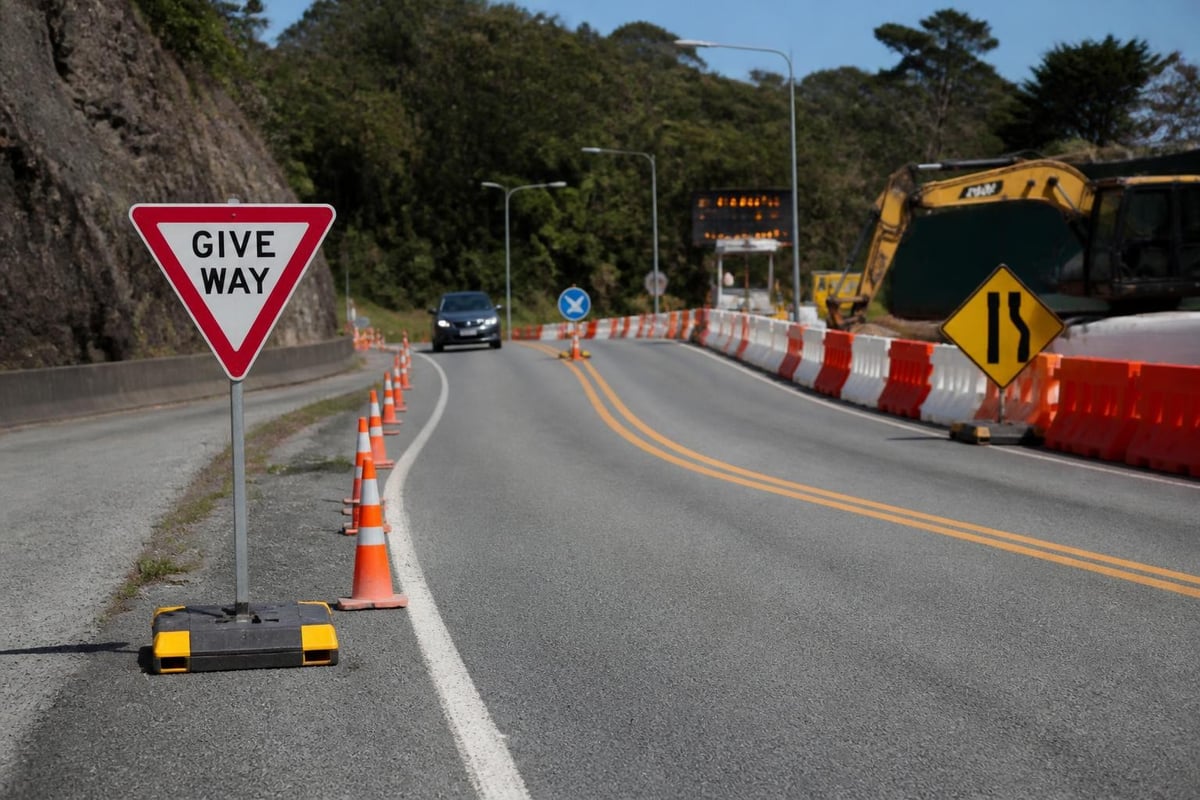
Construction sites, event venues, and maintenance operations frequently require temporary give way sign installations to manage altered traffic patterns. These applications demand the same regulatory compliance as permanent installations whilst accommodating rapid deployment and removal.
Portable Sign Systems
Temporary give way signs typically mount on portable bases allowing quick positioning without ground anchors. These systems must resist wind loading and vehicle wash effects whilst maintaining stability. Weighted bases filled with water or sand provide the necessary mass without permanent installation requirements.
Critical specifications for temporary installations include:
- Minimum base weight of 15kg per sign
- Retroreflective sign faces meeting permanent sign standards
- Fluorescent backgrounds for enhanced daytime visibility
- Quick-release mounting allowing rapid repositioning
- Weather-resistant materials suitable for outdoor storage
The warning signs category supplements give way signs in temporary traffic management schemes, providing advance notification of changed conditions ahead.
Compliance Verification and Auditing
Organisations managing multiple sites or extensive road networks benefit from systematic compliance auditing of traffic control signage. These audits identify deficient or missing give way signs before they contribute to incidents.
Audit Methodology
Professional signage audits follow structured methodologies ensuring comprehensive coverage:
- Desktop review of site plans and traffic management drawings
- Physical inspection of all junctions and merging points
- Retroreflectivity testing of existing signs
- Assessment of sight lines and visibility conditions
- Documentation of deficiencies with prioritised remediation plans
- Follow-up verification of completed improvements
Many facilities lack formal traffic management plans despite operating complex internal road networks. Developing these plans based on audit findings creates a framework for ongoing compliance management and continuous improvement.
Documentation Requirements
Maintaining comprehensive records demonstrates due diligence and supports incident investigation processes. Essential documentation includes:
- Sign installation records with dates and locations
- Inspection and maintenance logs
- Retroreflectivity test results
- Incident reports involving traffic control deficiencies
- Remediation action tracking
- Supplier compliance certificates
Digital asset management systems increasingly replace paper-based records, enabling searchable databases with photographic evidence and GPS coordinates for each sign location. These systems simplify compliance demonstration during regulatory inspections or insurance audits.
Training and Awareness Programmes
The most compliant give way sign installation achieves limited effectiveness if road users fail to understand or observe its requirements. Comprehensive training programmes ensure employees, contractors, and regular visitors recognise and respect traffic control devices.
Employee Education Strategies
Organisations with significant vehicle movements should incorporate traffic sign recognition into induction training for all site users. This education extends beyond drivers to pedestrians and cyclists who may interact with vehicular traffic.
Effective training components include:
- Recognition of standard traffic control signs
- Legal obligations at give way locations
- Consequences of non-compliance
- Site-specific traffic management rules
- Reporting procedures for damaged or missing signs
Regular refresher training maintains awareness, particularly when introducing new traffic control measures or experiencing incident clusters at specific locations. The mandatory signs range supports broader safety communication programmes within facilities.
Visitor and Contractor Management
Many incidents on private property involve visitors unfamiliar with site-specific traffic patterns. Clear give way sign placement combined with visitor briefings reduces these risks substantially. Contractor management systems should require traffic control compliance confirmation before authorising site access.
Future Developments in Traffic Control Technology
Emerging technologies promise enhanced give way sign effectiveness through active warning systems and vehicle-to-infrastructure communication. These developments will supplement rather than replace traditional passive signage for the foreseeable future.
Intelligent Sign Systems
Solar-powered LED enhancement systems now supplement traditional reflective give way signs at high-risk locations. These active systems illuminate during hours of darkness or poor visibility, significantly improving detection distances. Some advanced implementations incorporate radar detection, activating enhanced warnings only when approaching vehicles exceed safe speeds.
The latest MUTCD releases document approved applications for these hybrid devices, establishing standards for their deployment alongside conventional signs. Facility managers should monitor these developments as costs decrease and performance evidence accumulates.
Connected Vehicle Integration
Future autonomous and semi-autonomous vehicles will receive give way sign information through digital mapping and roadside infrastructure communication. However, the physical give way sign will remain essential for human drivers and as a redundant safety system should electronic systems fail.
This dual-mode operation requires facilities to maintain traditional signage standards whilst preparing infrastructure for future connected vehicle requirements. Forward-thinking organisations are documenting sign locations in digital formats compatible with emerging mapping standards.
Procurement and Installation Best Practices
Acquiring compliant give way signs requires careful supplier selection and specification development. The proliferation of substandard imported products in recent years emphasises the importance of verification procedures.
Supplier Qualification Criteria
Professional procurement processes should evaluate potential suppliers against specific criteria:
| Criterion | Verification Method |
|---|---|
| Product compliance certification | Request test reports from accredited laboratories |
| Retroreflectivity specifications | Compare against regulatory minimum standards |
| Material durability claims | Review warranty terms and expected lifespan |
| Installation guidance provision | Assess quality of supplied documentation |
| After-sales support | Evaluate replacement part availability |
Established suppliers with comprehensive product ranges offer advantages beyond individual sign procurement. SafetySignsForSale's extensive safety sign inventory enables coordinated facility-wide safety signage programmes ensuring visual consistency.
Installation Quality Control
Even premium-quality give way signs fail to perform effectively when poorly installed. Installation contractors should demonstrate relevant qualifications and experience with traffic control device installation.
Quality control checkpoints include:
- Verification of correct sign orientation and positioning
- Confirmation of mounting height compliance
- Assessment of sign visibility from approach direction
- Testing of mounting security and wind resistance
- Photographic documentation of completed installation
- As-built drawings updating facility records
Many organisations develop approved contractor lists following quality assessment processes, ensuring consistent installation standards across multiple sites or projects.
Understanding give way sign regulations, placement requirements, and compliance standards enables organisations to maintain safe road networks whilst meeting their legal duties. Whether managing public highways, private facility roads, or temporary traffic schemes, proper implementation of these essential regulatory devices prevents collisions and protects vulnerable road users. SafetySignsForSale supplies compliant give way signs alongside comprehensive safety signage, fire equipment, PPE, and first aid supplies, supporting organisations across all industries in meeting their safety requirements through quality products and expert guidance.