


Mandatory Signage: Requirements and Compliance Guide
Workplaces across every sector share a common legal obligation: displaying appropriate mandatory signage to protect employees, visitors, and contractors. These critical visual communication tools form the backbone of safety management systems, ensuring everyone understands required actions, prohibited behaviours, and emergency procedures. From construction sites to corporate offices, manufacturing facilities to retail spaces, understanding and implementing the correct mandatory signage isn't simply good practice-it's a legal requirement that can prevent accidents, save lives, and protect organisations from substantial liability.
Understanding Mandatory Signage Requirements
Mandatory signage refers to specific visual indicators that instruct individuals to perform particular actions or follow designated procedures within a defined area. Unlike warning or prohibition signs, which alert people to dangers or forbidden activities, mandatory signage commands positive action.
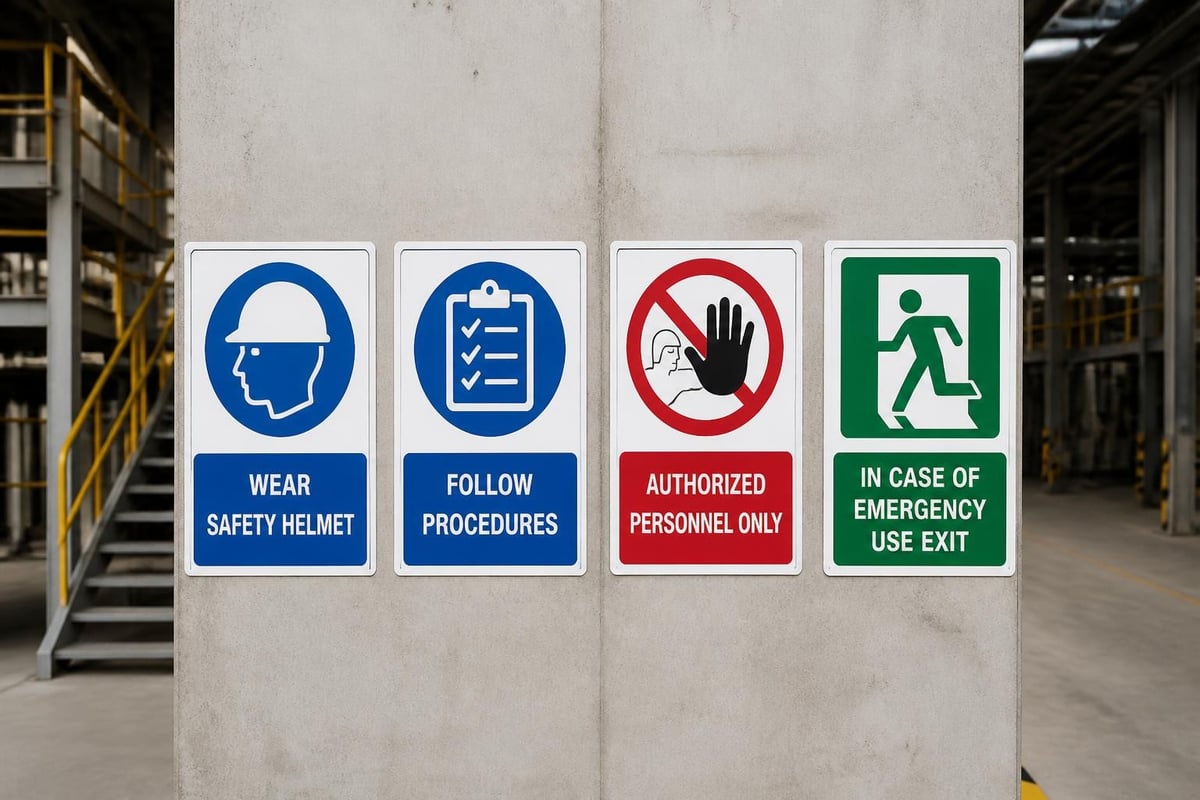
The visual characteristics of these signs follow internationally recognised conventions. Most mandatory signage features a blue circular background with white pictograms or text, making them instantly distinguishable from other safety communications. This colour coding system ensures universal recognition, regardless of language barriers or literacy levels.
Legal Frameworks Governing Mandatory Signage
Multiple regulatory bodies establish the standards for mandatory signage across different jurisdictions. In the United Kingdom, the Health and Safety (Safety Signs and Signals) Regulations 1996 provides comprehensive guidance on implementing safety signage across workplaces, including specific requirements for maintenance and strategic placement.
European Union member states operate under Directive 92/58/EEC, with the European Commission providing detailed guidelines that clarify minimum legal requirements and their relationship to ISO standardisation efforts. These frameworks ensure consistency whilst allowing member states to implement additional protective measures suited to local circumstances.
United States facilities must navigate a complex landscape of federal, state, and local requirements. The 2010 ADA Standards for Accessible Design establishes specific requirements for tactile and visual signage specifications, including raised characters, Braille integration, and precise mounting specifications that ensure accessibility for individuals with disabilities.
Common Types of Mandatory Signage in Modern Workplaces
Personal protective equipment (PPE) mandatory signage represents the most prevalent category across industrial and commercial settings. These signs communicate essential requirements for specific areas, ensuring workers don proper protection before entering designated zones.
Personal Protective Equipment Signs
| PPE Type | Common Applications | Typical Locations |
|---|---|---|
| Eye protection required | Laboratories, workshops, manufacturing floors | Entry points to hazardous areas |
| Hard hat area | Construction sites, warehouses, loading bays | Overhead hazard zones |
| High-visibility clothing | Roadworks, logistics facilities, outdoor sites | Traffic interaction areas |
| Hearing protection mandatory | Factories, airports, heavy machinery zones | High-decibel environments |
| Respiratory protection | Spray booths, chemical handling, confined spaces | Atmospheric hazard areas |
| Safety footwear required | Industrial facilities, construction sites | General production areas |
Each type of mandatory signage serves a specific protective function, addressing documented risks identified through proper workplace assessment procedures. Organisations must conduct thorough evaluations to determine which signs are legally required and where they should be positioned for maximum effectiveness.
Procedural and Access Control Signs
Beyond PPE requirements, mandatory signage encompasses procedural instructions that maintain operational safety and security. These include signs directing individuals to report to reception, follow specific one-way systems, use designated entry points, or obtain authorisation before proceeding.
Access control mandatory signage plays an increasingly important role in modern facilities, where security concerns intersect with safety requirements. Signs mandating security checks, visitor registration, or authorisation verification help organisations maintain controlled environments whilst meeting their duty of care obligations.
Fire safety represents another critical category, with mandatory signage directing specific actions during emergencies. Instructions to keep fire doors closed, maintain clear escape routes, or assemble at designated muster points all fall within this essential classification.

Strategic Placement and Visibility Considerations
Simply purchasing compliant mandatory signage proves insufficient without proper placement strategy. Signs must be positioned where they can be easily seen and understood by everyone who needs the information, considering sightlines, lighting conditions, and potential obstructions.
Height requirements vary depending on the sign type and regulatory framework. The GSA P100 Federal Building Standards provides detailed guidance on mounting heights and clearances for accessibility compliance, ensuring signs remain visible and readable for individuals with varying physical capabilities.
Key Placement Principles
- Entry point visibility: Position mandatory signage before individuals enter areas where requirements apply
- Eye-level mounting: Install signs at appropriate heights (typically 1,400-1,600mm to centre line for standard viewing)
- Adequate illumination: Ensure sufficient lighting or use photoluminescent materials for low-light conditions
- Repetition in large areas: Provide regular reminders throughout expansive spaces where initial signs may be forgotten
- Obstacle-free viewing: Maintain clear sightlines without interference from equipment, furniture, or temporary obstructions
- Weather protection: Use appropriate materials and mounting systems for outdoor mandatory signage exposed to environmental conditions
Multiple sign clusters require careful organisation to avoid visual confusion. When several types of mandatory signage apply to a single location, arrange them logically using standardised sign holders or panels that maintain hierarchy and readability.
Size, Material, and Durability Standards
Mandatory signage effectiveness depends significantly on appropriate sizing for viewing distance and environmental conditions. Regulatory frameworks often specify minimum dimensions, but practical considerations may require larger formats.
Sizing Guidelines by Viewing Distance
| Maximum Viewing Distance | Minimum Sign Dimension | Typical Applications |
|---|---|---|
| Up to 5 metres | 100mm x 100mm | Office environments, small workshops |
| 5-10 metres | 150mm x 150mm | Retail spaces, medium facilities |
| 10-15 metres | 200mm x 200mm | Warehouses, production floors |
| 15-25 metres | 300mm x 300mm | Large industrial sites, logistics centres |
| Over 25 metres | 400mm+ | Outdoor sites, extensive facilities |
Material selection directly impacts mandatory signage longevity and compliance maintenance. Indoor environments generally accommodate self-adhesive vinyl or rigid plastic signs, whilst outdoor and industrial settings demand more robust solutions.
Corrosion-resistant aluminium provides excellent durability for harsh environments, resisting chemical exposure, temperature fluctuations, and physical impact. Stainless steel offers premium longevity in particularly demanding applications, though at increased cost.
Photoluminescent materials deserve special consideration for emergency-related mandatory signage, charging in ambient light and glowing during power failures. These materials ensure critical instructions remain visible when conventional lighting fails, supporting evacuation procedures and emergency response.
Integration with Broader Safety Management Systems
Effective mandatory signage never exists in isolation but forms part of comprehensive safety management frameworks. Signs complement training programmes, written procedures, supervision systems, and engineering controls that collectively maintain workplace safety.
Documentation requirements accompany mandatory signage implementation. Organisations should maintain records showing:
- Risk assessments identifying signage needs
- Regulatory compliance mapping against applicable standards
- Sign specifications, locations, and installation dates
- Training records demonstrating employee understanding
- Inspection and maintenance schedules
- Replacement and update procedures
This documentation proves essential during regulatory inspections, insurance assessments, and incident investigations. Properly maintained records demonstrate due diligence and systematic approaches to legal compliance.
Training and Communication Programmes
Installing mandatory signage accomplishes little without ensuring everyone understands its meaning and importance. Comprehensive induction programmes should cover all relevant signs, explaining both the requirements and underlying reasons.
Refresher training maintains awareness, particularly when introducing new mandatory signage or after incidents suggesting compliance weaknesses. Visual confirmation during workplace inspections provides supervisors with opportunities to reinforce expectations and address non-compliance promptly.
Language diversity in modern workplaces presents particular challenges for text-based mandatory signage. Whilst pictograms provide universal communication, supplementary multilingual text or graphic-based instructions may be necessary where pictograms alone prove insufficient.
Maintenance, Inspection, and Updates
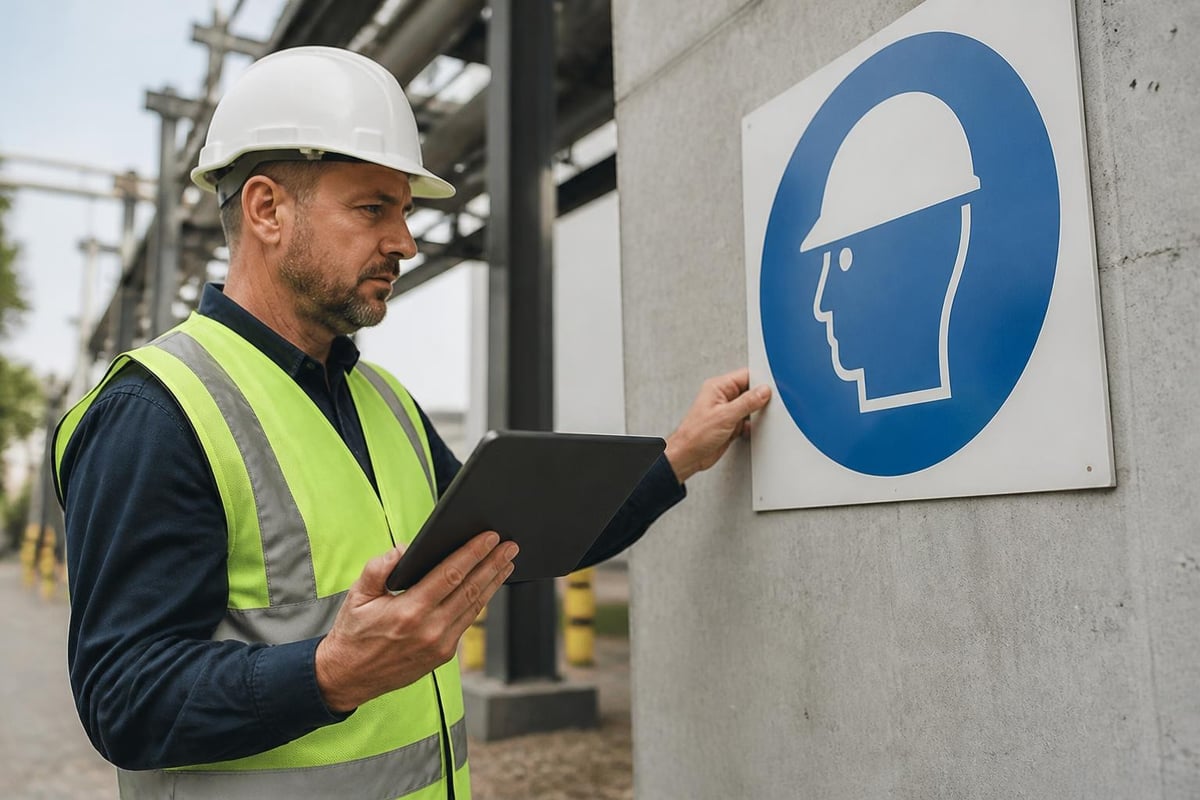
Mandatory signage deteriorates through environmental exposure, physical contact, and simple ageing. Faded colours, damaged surfaces, or obscured messages undermine both legal compliance and practical effectiveness.
Regular inspection programmes should assess:
- Visibility: Can signs be clearly seen from relevant approach angles and distances?
- Legibility: Remain text and pictograms sharp and readable without degradation?
- Condition: Are signs free from damage, graffiti, or covering by unauthorised materials?
- Relevance: Do displayed signs still reflect current requirements and workplace configurations?
- Compliance: Do specifications match current regulatory standards and best practices?
Quarterly visual inspections typically suffice for most indoor environments, whilst monthly checks suit harsh industrial or outdoor locations where deterioration accelerates. Document all inspections, recording findings and remedial actions taken.
Regulatory Updates and Revision Requirements
Safety regulations evolve continuously, with authorities updating standards to reflect new research, technological developments, and lessons learned from incidents. Organisations must monitor relevant regulatory changes affecting mandatory signage requirements.
The NFPA regularly revises emergency signage requirements through its life safety code updates, affecting exit and emergency directional signs in buildings across numerous jurisdictions. Staying current with these revisions ensures continued compliance and optimal emergency preparedness.
Workplace modifications trigger mandatory signage reviews. Reconfigured layouts, new processes, changed hazards, or altered access routes all necessitate reassessment of existing signs and potential additions or relocations.
Industry-Specific Mandatory Signage Applications
Different sectors face unique mandatory signage requirements reflecting their particular hazards and operational characteristics. Understanding industry-specific obligations ensures targeted compliance approaches.
Construction and Heavy Industry
Construction sites demand extensive mandatory signage addressing PPE requirements, access restrictions, and procedural controls. Hard hat areas, high-visibility clothing zones, and authorised personnel restrictions represent baseline requirements, supplemented by specific signs addressing particular site hazards.
Confined space entry, working at height, and hot work activities each require dedicated mandatory signage communicating special procedures and additional protective measures beyond standard site requirements.
Healthcare and Laboratory Settings
Medical facilities implement mandatory signage addressing infection control, sterile areas, and patient safety procedures. Hand hygiene requirements, PPE specifications for clinical areas, and restricted access to sensitive departments all require clear communication through appropriate signs.
Laboratories face particular challenges with chemical hazards, biological materials, and radiation sources. Mandatory signage addressing decontamination procedures, emergency protocols, and specialised protective equipment ensures safe operations.
Manufacturing and Logistics
Production environments typically deploy comprehensive mandatory signage systems covering machine operation, material handling, and process-specific requirements. Lockout/tagout procedures, quality control checkpoints, and pedestrian/vehicle separation all benefit from clear mandatory instructions.
Warehouses and distribution centres emphasise high-visibility clothing, segregated traffic routes, and loading bay procedures through strategic mandatory signage placement.
Cost Considerations and Budget Planning
Implementing compliant mandatory signage involves initial capital expenditure and ongoing maintenance costs. Budget planning should encompass multiple cost elements to ensure sustainable programmes.
Initial implementation costs include:
- Sign purchase (quantities, sizes, materials, specifications)
- Installation labour and mounting hardware
- Survey and planning consultancy
- Staff training development and delivery
- Documentation system establishment
Recurring expenses comprise:
- Replacement schedules for deteriorated signs
- Inspection programme administration
- Cleaning and maintenance activities
- Regulatory compliance monitoring
- Periodic training refreshers
Whilst premium materials command higher initial prices, their extended lifespan often delivers superior value compared to frequent replacement of economy alternatives. Life-cycle cost analysis provides clearer investment perspectives than simple purchase price comparisons.
Bulk purchasing arrangements and standardised specifications across multiple sites generate economies of scale, reducing per-unit costs whilst ensuring consistency. Working with established suppliers familiar with regulatory requirements streamlines procurement and reduces compliance risks.
Digital Augmentation and Future Developments
Traditional static mandatory signage increasingly integrates with digital technologies that enhance communication effectiveness and operational flexibility. Electronic displays allow dynamic messaging that adapts to changing conditions, specific shifts, or temporary situations.
QR codes applied to mandatory signage enable immediate access to detailed procedures, training materials, or multilingual instructions through smartphone scanning. This augmentation extends basic sign functionality without compromising instant visual communication.
Building management systems now incorporate mandatory signage monitoring, with sensors detecting damage, obscuration, or tampering and automatically alerting maintenance teams. This technology ensures rapid remediation and continuous compliance.
Augmented reality applications represent emerging frontiers, overlaying digital mandatory instructions onto physical environments through smart glasses or mobile devices. Whilst currently niche applications, these technologies may eventually supplement or enhance traditional signage approaches.
Despite technological advances, physical mandatory signage retains irreplaceable advantages. Immediate visibility without devices, operation during power failures, and universal accessibility across all age groups and technical capabilities ensure traditional signs remain foundational safety tools.
Understanding mandatory signage requirements and implementing comprehensive compliance programmes protects your workforce whilst satisfying legal obligations across jurisdictions and industries. Whether you're establishing new facilities, updating existing sites, or maintaining regulatory compliance, selecting appropriate signs from qualified suppliers ensures both safety and legal protection. SafetySignsForSale provides extensive mandatory signage solutions across all categories, materials, and specifications, supported by expert guidance to help you identify and implement the right signs for your specific requirements.