


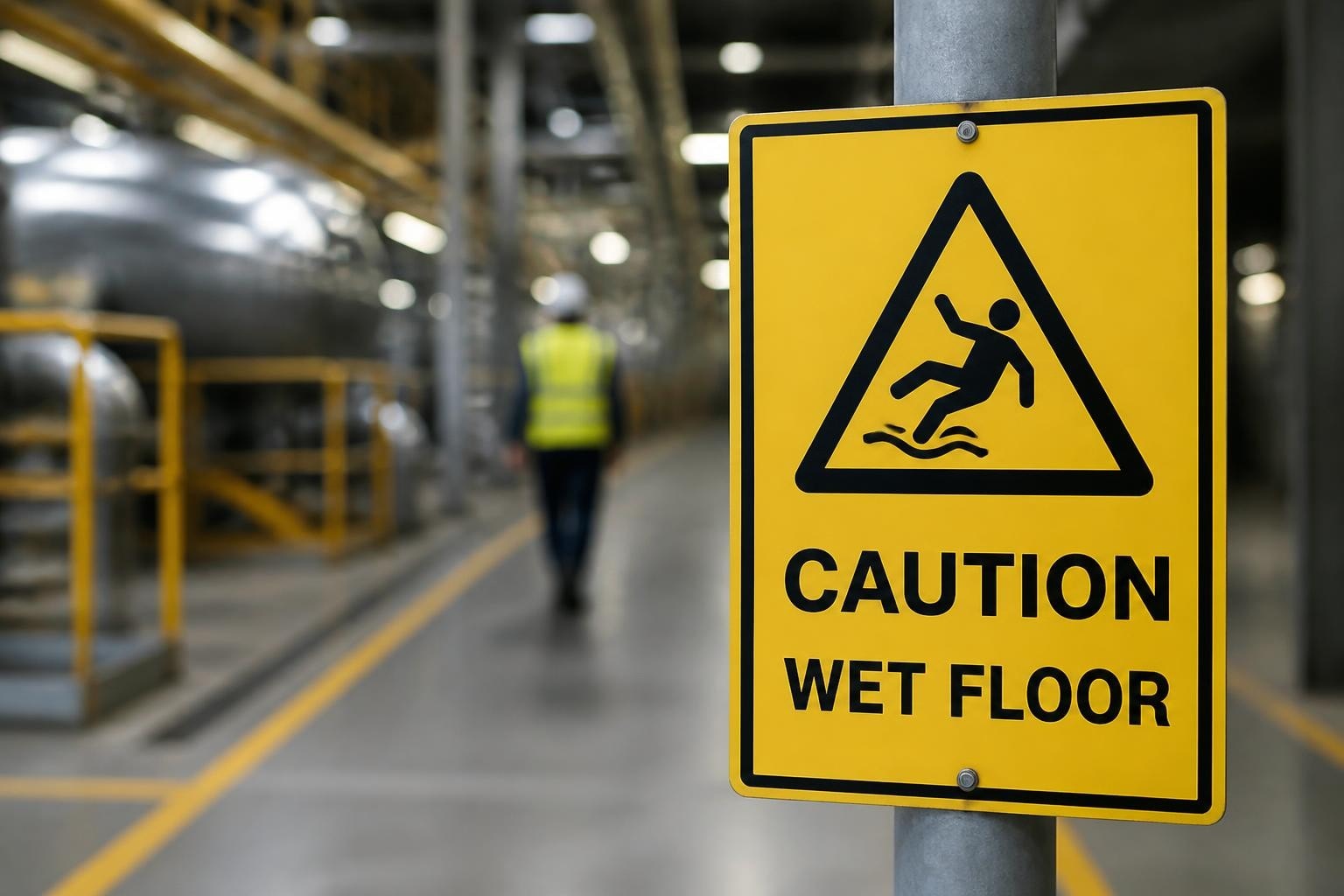
Caution Sign: Types, Uses & Safety Standards in 2026
Understanding the proper application of a caution sign is essential for maintaining safety across various environments, from construction sites to manufacturing facilities. These vital communication tools serve as the first line of defence against potential hazards, alerting workers and visitors to risks that might otherwise go unnoticed. In 2026, with evolving safety regulations and increased emphasis on workplace protection, the strategic deployment of these warning devices has never been more critical for organisations seeking to maintain compliance whilst safeguarding their personnel.
The Essential Role of Caution Signage in Modern Safety Systems
A caution sign functions as a visual warning mechanism designed to communicate potential hazards before they result in injury or property damage. Unlike prohibition or mandatory signs, caution signage specifically addresses moderate-risk situations where awareness and attention can prevent accidents.
The effectiveness of these warning devices depends on several interconnected factors: visibility, placement, design clarity, and contextual appropriateness. According to the UK Health & Safety Executive's guidance on warning signs, proper sign selection must account for the specific hazard, the audience's familiarity with the environment, and the severity of potential consequences.
Key functions include:
- Alerting personnel to non-immediate hazards requiring attention
- Communicating specific risks such as slippery surfaces, overhead loads, or moving machinery
- Reinforcing safety protocols and operational procedures
- Meeting regulatory requirements for workplace safety compliance
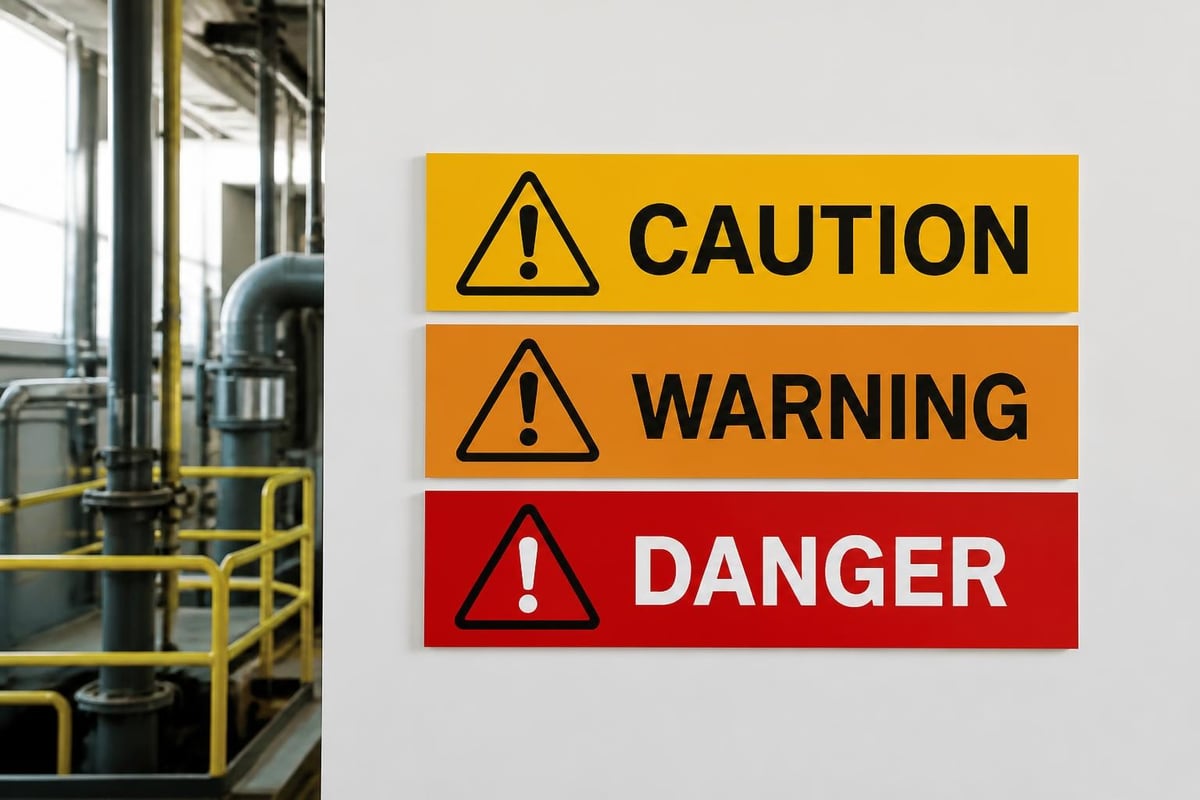
The distinction between warning levels is crucial. A caution sign typically addresses hazards that could result in minor to moderate injury if proper precautions aren't observed, whereas danger signs indicate immediate threats with severe consequences.
Standardised Design Elements and Colour Conventions
Safety signage effectiveness relies heavily on universal recognition through standardised design elements. The caution sign employs specific colours and shapes that communicate urgency and hazard type at a glance, even from considerable distances or in challenging lighting conditions.
Colour Standards and Visual Recognition
The traditional caution sign utilises a yellow or amber background with black text and symbols. This colour combination provides maximum contrast and visibility across various lighting conditions. The yellow colouration triggers an immediate psychological response associated with alertness and attention, making it ideal for hazard communication.
Modern standards, including those outlined in international safety regulations, specify exact colour values to ensure consistency across manufacturers and applications. This standardisation enables workers who move between different facilities or industries to recognise hazards instantly.
| Sign Type | Primary Colour | Secondary Colour | Typical Shape | Hazard Level |
|---|---|---|---|---|
| Caution | Yellow/Amber | Black | Triangle | Moderate |
| Warning | Yellow/Amber | Black | Triangle | Moderate-High |
| Danger | Red | White/Black | Rectangle | Severe |
| Prohibition | Red Circle | White/Black | Circle with slash | Mandatory compliance |
Typography and Symbol Selection
Text on a caution sign must be immediately legible from the maximum anticipated viewing distance. Industry standards recommend sans-serif fonts with high stroke-weight contrast and minimum letter heights calculated based on viewing distance. For example, lettering should measure at least 25mm high for every 7.5 metres of viewing distance.
Symbols and pictograms complement or replace text, transcending language barriers and improving comprehension speed. The Oregon Department of Transportation's temporary traffic control standards emphasise that symbols should be simple, universally recognisable, and free from ambiguity.
Industry-Specific Applications and Regulatory Requirements
Different industries face unique hazard profiles requiring tailored caution sign applications. Understanding these sector-specific needs ensures appropriate risk communication and regulatory compliance.
Manufacturing and Industrial Environments
Manufacturing facilities present numerous moderate-hazard scenarios requiring caution signage. Moving machinery, material handling areas, chemical storage zones, and environmental hazards such as temperature extremes all necessitate clear visual warnings.
Common manufacturing applications:
- Machine operation zones warning of pinch points or rotating components
- Material storage areas indicating overhead loads or unstable stacking
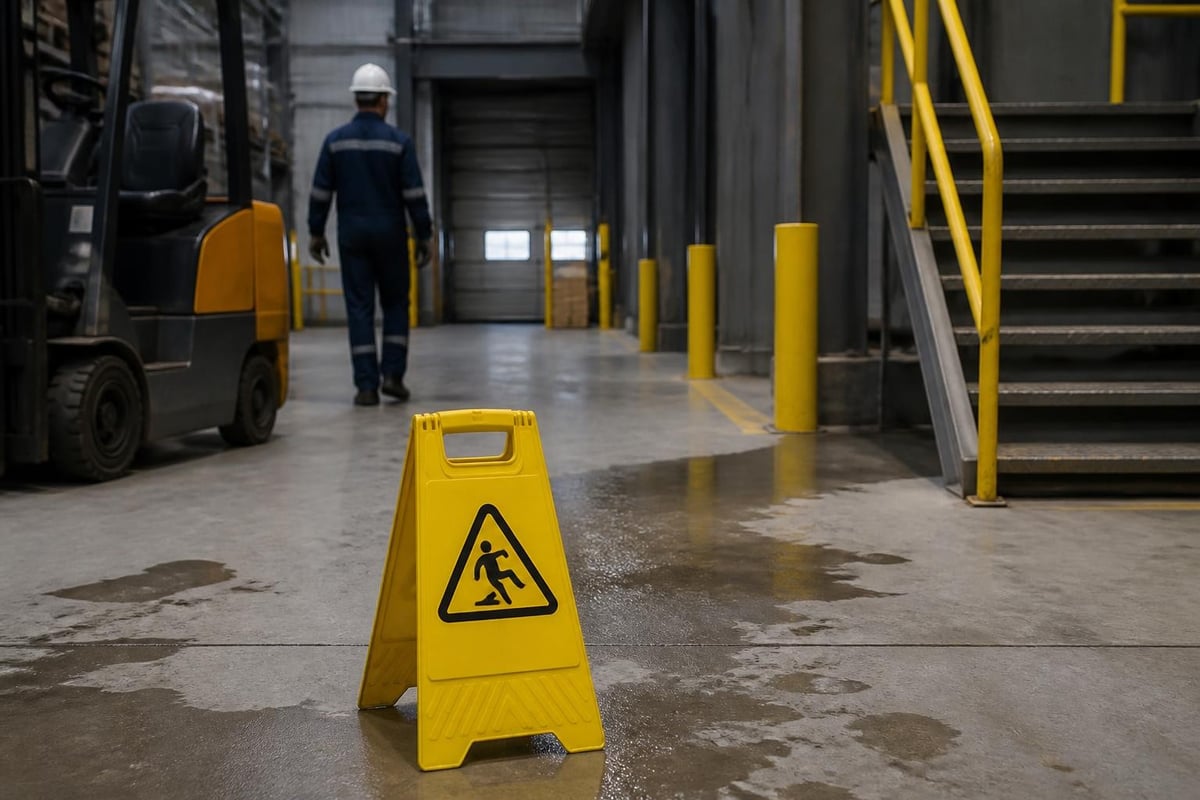
- Floor surface warnings for wet, uneven, or slippery conditions
- Chemical handling areas requiring protective equipment
- Temperature extremes in processing or storage zones
These facilities often integrate caution signs with mandatory signs requiring specific protective equipment and prohibitory signs restricting access to authorised personnel only.
Construction and Temporary Work Zones
Construction sites present dynamic environments where hazards change daily or even hourly. The Federal Highway Administration's Manual on Uniform Traffic Control Devices provides comprehensive guidance on deploying temporary warning signage that protects both workers and the public.
Temporary caution sign installations must account for:
- Changing site conditions and evolving hazard profiles
- Visibility from multiple approach angles
- Weather resistance and durability for outdoor exposure
- Easy relocation as work progresses
- Retroreflectivity for nighttime visibility
Research published by the National Academies Press on road systems human factors demonstrates that properly positioned and maintained temporary signage reduces accident rates significantly, particularly when signs provide specific information about the nature and location of hazards.
Healthcare and Public Facilities
Healthcare environments require a sophisticated approach to caution signage, balancing infection control, chemical hazards, radiation risks, and patient safety considerations. The VA Signage Design Manual offers detailed guidance on implementing effective warning systems in complex healthcare settings.
A caution sign in medical facilities might address biological hazards, radiation zones, oxygen storage areas, or areas where specific protocols must be observed. These signs often work in conjunction with general informational signs providing directional guidance and operational information.
Material Selection and Environmental Considerations
The physical construction of a caution sign directly impacts its effectiveness and longevity. Material selection must account for environmental conditions, expected service life, and specific application requirements.
Durability and Weather Resistance
Outdoor caution signs face exposure to ultraviolet radiation, temperature fluctuations, precipitation, and potentially corrosive atmospheres. Materials must resist fading, cracking, and deterioration whilst maintaining legibility throughout their service life.
Common material options include:
- Aluminium: Lightweight, corrosion-resistant, suitable for permanent outdoor installations
- Rigid plastic (PVC or polypropylene): Cost-effective, versatile, appropriate for indoor or sheltered outdoor use
- Vinyl and adhesive films: Flexible application options, suitable for smooth surfaces and temporary installations
- Reflective sheeting: Essential for traffic and roadway applications requiring nighttime visibility
Manufacturing facilities with aggressive chemical environments may require specialised materials resistant to specific substances. Similarly, food processing facilities need materials approved for use in food-safe environments that withstand regular sanitisation.
Visibility Enhancement Technologies
Standard caution signs rely on ambient light for visibility, but many applications benefit from enhanced visibility features. Photoluminescent signs absorb ambient light and emit a visible glow during power failures or low-light conditions, making them particularly valuable for emergency egress routes and critical safety equipment locations.
Retroreflective materials return light to its source, making signs dramatically more visible to vehicle operators at night. These materials are essential for road signs and any caution sign intended to warn motorists or operators of moving equipment.
Strategic Placement and Visibility Optimisation
Even the most well-designed caution sign fails if positioned inappropriately. Effective placement requires careful consideration of viewing angles, approach paths, lighting conditions, and potential obstructions.
Viewing Distance and Sight Lines
Signs must be positioned where viewers can observe, comprehend, and react to the warning before encountering the hazard. This requires calculating appropriate viewing distances based on approach speeds and the complexity of the message being communicated.
For pedestrian environments, a caution sign should typically be visible from at least 3-5 metres before the hazard. Vehicular applications require significantly greater distances, potentially 50-100 metres or more depending on travel speeds and stopping requirements.
Placement best practices:
- Position signs perpendicular to the primary viewing angle
- Ensure unobstructed sight lines from all reasonable approach paths
- Mount at appropriate heights (typically 1.5-2.1 metres for pedestrian viewing)
- Avoid backlighting situations that reduce contrast and legibility
- Supplement with multiple signs for large areas or complex hazard zones
Integration with Comprehensive Safety Systems
A caution sign functions most effectively as part of a comprehensive safety communication system. Facilities should integrate warning signage with fire-fighting signs, emergency equipment markers, and wayfinding systems to create intuitive, layered safety guidance.
For example, a chemical storage area might feature caution signs warning of specific chemical hazards, mandatory signs requiring appropriate PPE, and informational signs directing personnel to emergency eyewash stations and safety equipment.
Maintenance, Inspection, and Lifecycle Management
Installing a caution sign represents only the beginning of effective safety communication. Ongoing maintenance and systematic inspection ensure continued effectiveness throughout the sign's service life.
Regular Inspection Protocols
Safety signage deteriorates over time due to environmental exposure, physical damage, and general wear. Organisations should implement systematic inspection programmes to identify and address signage issues before they compromise safety.
Inspection checklist items:
- Legibility of text and symbols from maximum viewing distance
- Colour fading or deterioration affecting contrast and visibility
- Physical damage including cracks, dents, or deformation
- Secure mounting with all fasteners intact and properly tightened
- Freedom from obstructions such as vegetation, equipment, or stored materials
- Appropriate positioning relative to current hazard locations
Inspection frequency should reflect environmental conditions and traffic patterns. High-traffic areas or harsh outdoor environments may require monthly reviews, whilst protected indoor installations might need only quarterly assessments.
Replacement and Upgrading Considerations
Even properly maintained signs eventually require replacement. Organisations should establish clear criteria for when a caution sign has reached the end of its effective service life and needs replacement rather than repair.
Beyond simple replacement, periodic reviews should assess whether existing signage adequately addresses current hazards and complies with evolving regulations. Changes in operations, new equipment installations, or updated safety standards may necessitate supplemental or replacement signage.
Customisation and Specialised Messaging
Whilst standardised caution signs address many common hazards, organisations frequently encounter situations requiring customised messaging to communicate specific risks unique to their operations.
Creating Effective Custom Messages
Custom caution signs must balance specificity with clarity. Overly detailed messages become difficult to read and comprehend quickly, whilst excessively generic warnings fail to communicate the actual hazard effectively.
Effective custom messages identify three key elements: the hazard itself, the potential consequence, and the action required to avoid harm. For example, "CAUTION: Low Clearance – 2.1m – Tall Vehicles Use Alternative Route" provides complete information enabling appropriate decision-making.
Multilingual Considerations
Diverse workforces may require caution signs incorporating multiple languages or relying primarily on universally understood symbols. Whilst symbols offer language independence, careful selection ensures the intended message translates across cultural contexts without ambiguity.
When incorporating multiple languages, equal prominence for all languages prevents the perception that safety information varies by linguistic group. This might require larger sign formats to accommodate additional text whilst maintaining legibility standards.
Training and Safety Culture Integration
The most effective caution sign cannot substitute for comprehensive safety training and a strong organisational safety culture. Signage functions as a reminder and reinforcement tool, but personnel must understand both the hazards being communicated and appropriate protective responses.
Incorporating Signage into Safety Training
New employee orientation should include specific training on the organisation's safety signage system, explaining the meaning of different sign types, colours, and symbols. Employees should understand that a caution sign indicates a moderate hazard requiring attention and care, distinguishing it from more severe warning levels.
Training should cover:
- Recognition of different sign types and their severity implications
- Appropriate responses to various hazard warnings
- Reporting procedures for damaged, missing, or inappropriate signage
- Understanding of site-specific custom signs and symbols
- Integration with other safety systems and protocols
Regular refresher training ensures continued awareness and reinforces the importance of heeding safety signage. This is particularly crucial when introducing new signs or updating existing systems.
Fostering a Safety-Conscious Environment
Organisations with strong safety cultures view a caution sign as a valuable tool supporting broader safety objectives rather than merely a compliance checkbox. Leadership demonstrates commitment by responding promptly to signage deficiencies, soliciting worker input on hazard identification, and recognising personnel who contribute to safety improvements.
Worker engagement in signage decisions improves effectiveness. Frontline personnel who work with hazards daily often identify signage gaps or propose improvements that might escape management notice. This participatory approach builds ownership and reinforces the message that safety represents a shared responsibility.
Technological Advances and Future Developments
Safety signage continues evolving alongside technological capabilities. Whilst traditional static caution signs remain the foundation of visual hazard communication, emerging technologies offer enhanced capabilities for specific applications.
Digital displays enable dynamic messaging that adapts to changing conditions. A digital caution sign might display different warnings based on current operations, environmental conditions, or detected hazards. These systems excel in environments with variable hazards that change throughout the workday or across different operational modes.
Smart sensors integrated with signage systems can automatically activate warnings when hazards arise. For example, floor moisture sensors might trigger a "wet floor" caution sign automatically, ensuring timely warnings without requiring manual sign placement.
Augmented reality systems represent an emerging frontier, overlaying hazard warnings and safety information directly into workers' field of view through smart glasses or similar devices. Whilst these technologies supplement rather than replace physical signage, they offer potential for enhanced situational awareness in complex environments.
Selecting Appropriate Signage for Specific Applications
Choosing the right caution sign for a particular application requires assessing multiple factors including hazard type, environment, audience, and regulatory requirements. A systematic selection process ensures optimal effectiveness whilst maintaining compliance.
Begin by conducting a thorough hazard assessment identifying all potential risks requiring visual warnings. Categorise hazards by severity to determine whether a caution sign is appropriate or whether a more severe warning level is necessary.
Consider the audience's characteristics including familiarity with the environment, literacy levels, language diversity, and visual capabilities. This assessment guides decisions about symbol usage, text complexity, and potential need for multilingual content.
Environmental factors including indoor versus outdoor placement, exposure to weather or chemicals, lighting conditions, and viewing distances all influence material selection and design specifications.
Review applicable regulations and standards for your industry and jurisdiction. Certain hazards may have specific signage requirements mandated by regulatory authorities. Compliance with recognised standards such as those from the Health & Safety Executive ensures legal compliance whilst leveraging proven safety approaches.
For organisations seeking comprehensive signage solutions, working with experienced suppliers who understand industry-specific requirements and regulatory frameworks streamlines the selection process whilst ensuring appropriate choices for each application.
Implementing effective caution signage requires balancing standardised design principles with application-specific considerations, all whilst maintaining compliance with evolving safety regulations. Whether addressing workplace hazards, managing construction zones, or ensuring public safety, the strategic deployment of well-designed, properly maintained caution signs represents a fundamental component of comprehensive safety systems. SafetySignsForSale provides the expertise, product range, and support necessary to implement signage solutions that protect your personnel, meet regulatory requirements, and reinforce your organisation's commitment to safety excellence across all operational environments.