


Fire Extinguisher Guide: Types, Uses & Maintenance 2026
Protecting lives and property from fire hazards requires more than just awareness; it demands the right equipment, proper training, and consistent maintenance. A fire extinguisher stands as the first line of defence against small fires, yet many organisations and individuals remain uncertain about which type to choose, how to use them effectively, and what maintenance protocols to follow. Understanding these critical elements can mean the difference between containing a minor incident and facing catastrophic loss. This comprehensive guide explores everything you need to know about fire extinguishers, from selecting the appropriate unit for your specific risks to meeting regulatory requirements and ensuring your equipment remains ready when needed most.
Understanding Fire Extinguisher Classifications
Fire extinguishers are not one-size-fits-all devices. Each unit is designed to combat specific types of fires based on the fuel source involved.
The Five Fire Classes
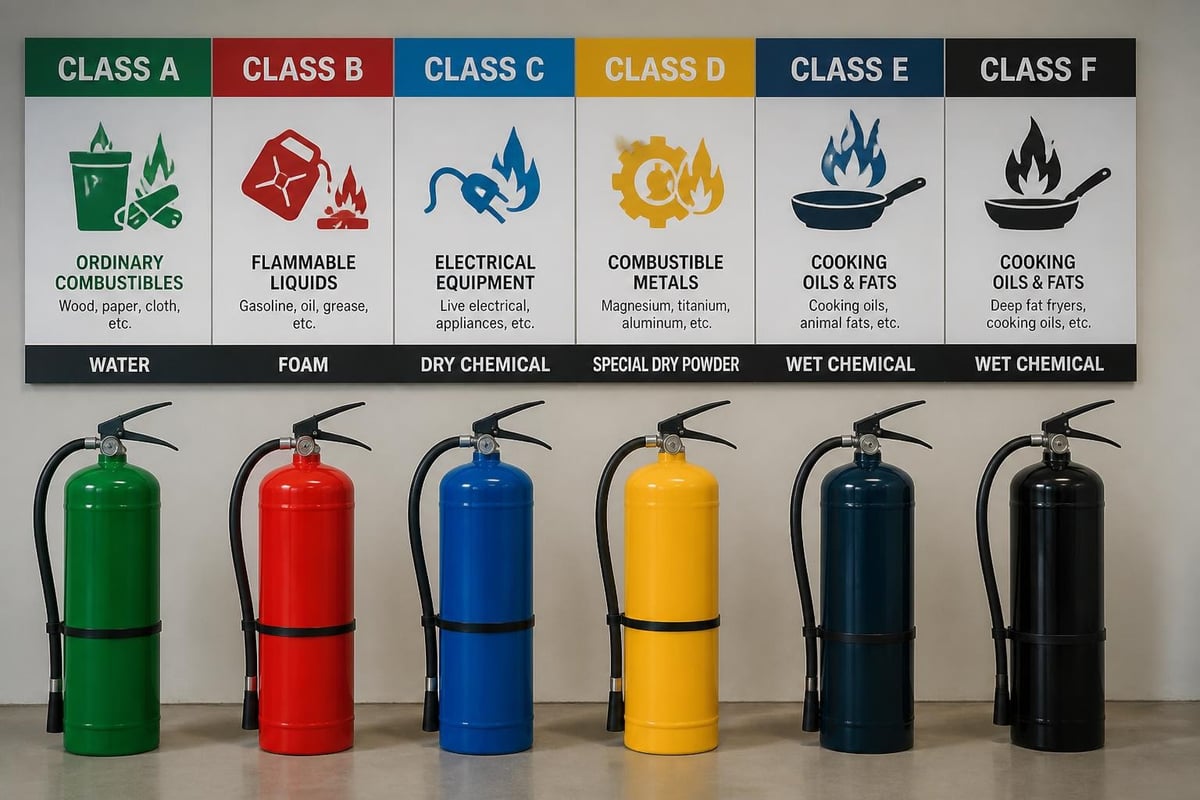
Fire classification systems categorise fires according to their combustible materials:
- Class A: Ordinary combustibles such as wood, paper, cloth, and most plastics
- Class B: Flammable liquids including petrol, oil, paint, and solvents
- Class C: Flammable gases like propane, butane, and methane
- Class D: Combustible metals such as magnesium, titanium, and sodium
- Class F: Cooking oils and fats typically found in commercial kitchens
Understanding these classifications proves essential when selecting appropriate fire suppression equipment for your premises. Using the wrong type of fire extinguisher can prove ineffective or even dangerous, potentially spreading the fire or causing injury.
Matching Extinguisher Types to Fire Classes
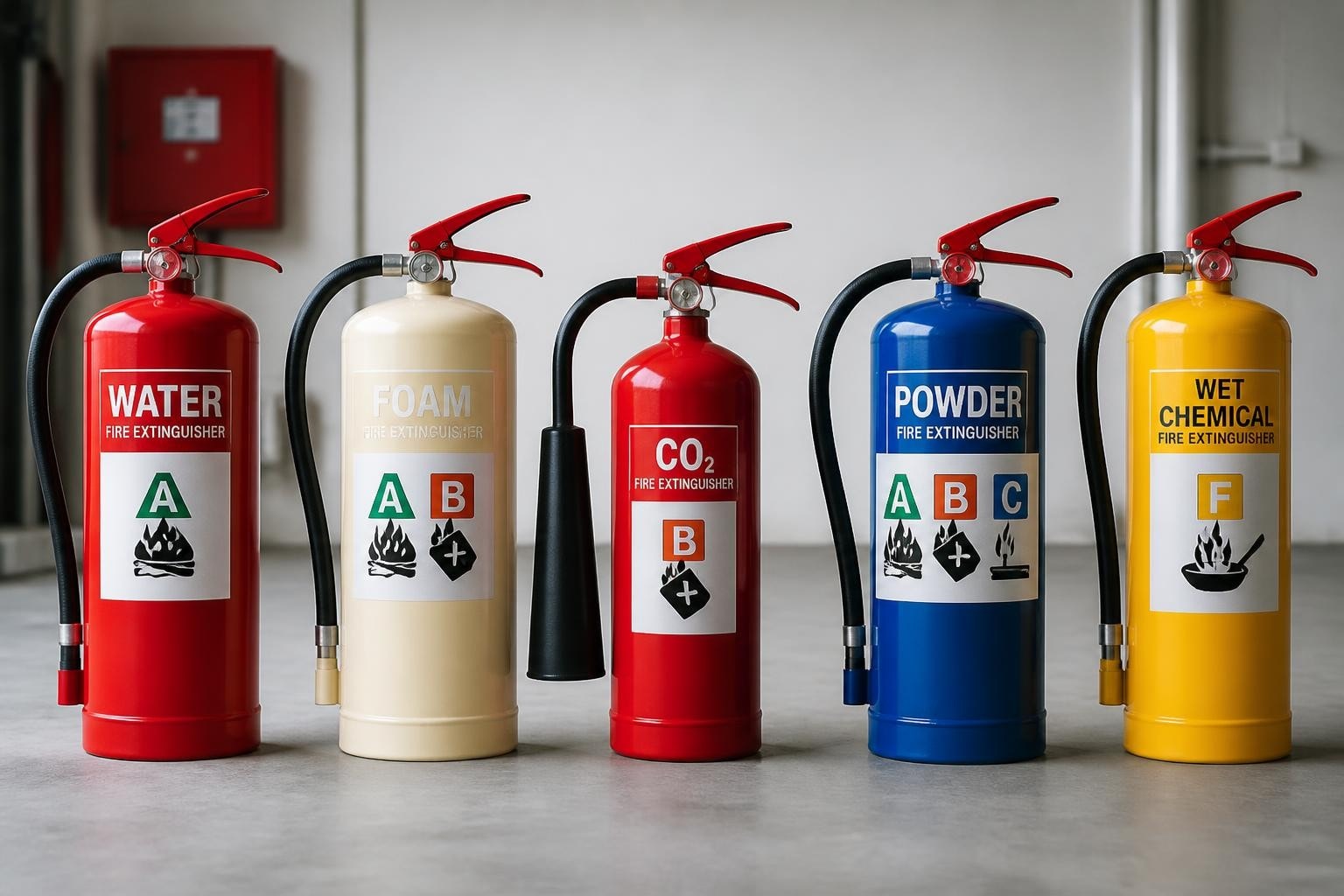
Each fire extinguisher type contains a specific suppression agent designed for particular fire classes:
| Extinguisher Type | Suitable Fire Classes | Primary Uses | Limitations |
|---|---|---|---|
| Water | Class A | Offices, warehouses, textile facilities | Conducts electricity; unsafe for electrical fires |
| Foam | Class A, B | Workshops, storage areas with mixed risks | Not suitable for electrical fires when wet |
| CO₂ (Carbon Dioxide) | Class B, electrical | Server rooms, laboratories, electrical equipment | Limited cooling effect; re-ignition risk |
| Dry Powder | Class A, B, C, electrical | Versatile - vehicles, workshops, general use | Creates visibility issues; messy cleanup |
| Wet Chemical | Class F | Commercial kitchens, catering facilities | Designed specifically for cooking oil fires |
The NFPA 10 standard provides detailed guidance on selecting portable fire extinguishers based on occupancy hazards and fire risks.
Selecting the Right Fire Extinguisher for Your Needs
Choosing appropriate fire suppression equipment requires careful assessment of your environment's specific risks and regulatory requirements.
Conducting a Fire Risk Assessment
Before purchasing any fire extinguisher, conduct a thorough evaluation of your premises:
- Identify all potential fire hazards and their locations
- Determine which fire classes each area might experience
- Assess the size of spaces and potential fire load
- Consider the presence of electrical equipment
- Review any special hazards such as chemical storage or cooking facilities
This systematic approach ensures you select equipment that addresses your actual risks rather than relying on generic solutions.
Sizing and Capacity Considerations
Fire extinguishers come in various sizes, typically measured in kilograms for powder and foam units, or litres for water-based models. Larger capacity units provide longer discharge times and greater fire-fighting capability, but they also increase weight and may prove difficult for some users to handle effectively.
Common capacity ranges include:
- Small portable units: 1-2 kg (ideal for vehicles, small offices)
- Standard portable units: 3-6 kg (most common for general workplace use)
- Large portable units: 9-12 kg (high-risk areas, industrial settings)
The U.S. Fire Administration guidance recommends that individuals should only attempt to fight fires when the extinguisher is properly sized for the potential fire and the user has received appropriate training.
Rating Systems Explained
Every fire extinguisher carries a rating that indicates its fire-fighting capability. Class A ratings use numbers (e.g., 4A, 13A) that roughly correspond to the equivalent amount of water in fire-fighting effectiveness. Class B ratings also use numbers representing the approximate square footage of fire the unit can extinguish.
For example, a 13A rating means the extinguisher has the fire-fighting capability of approximately 13 litres of water on Class A fires. A 89B rating indicates effectiveness on approximately 89 square feet of Class B fire.
Proper Fire Extinguisher Use and Safety Procedures
Owning a fire extinguisher provides little protection without knowledge of proper operation techniques and safety protocols.
The PASS Method
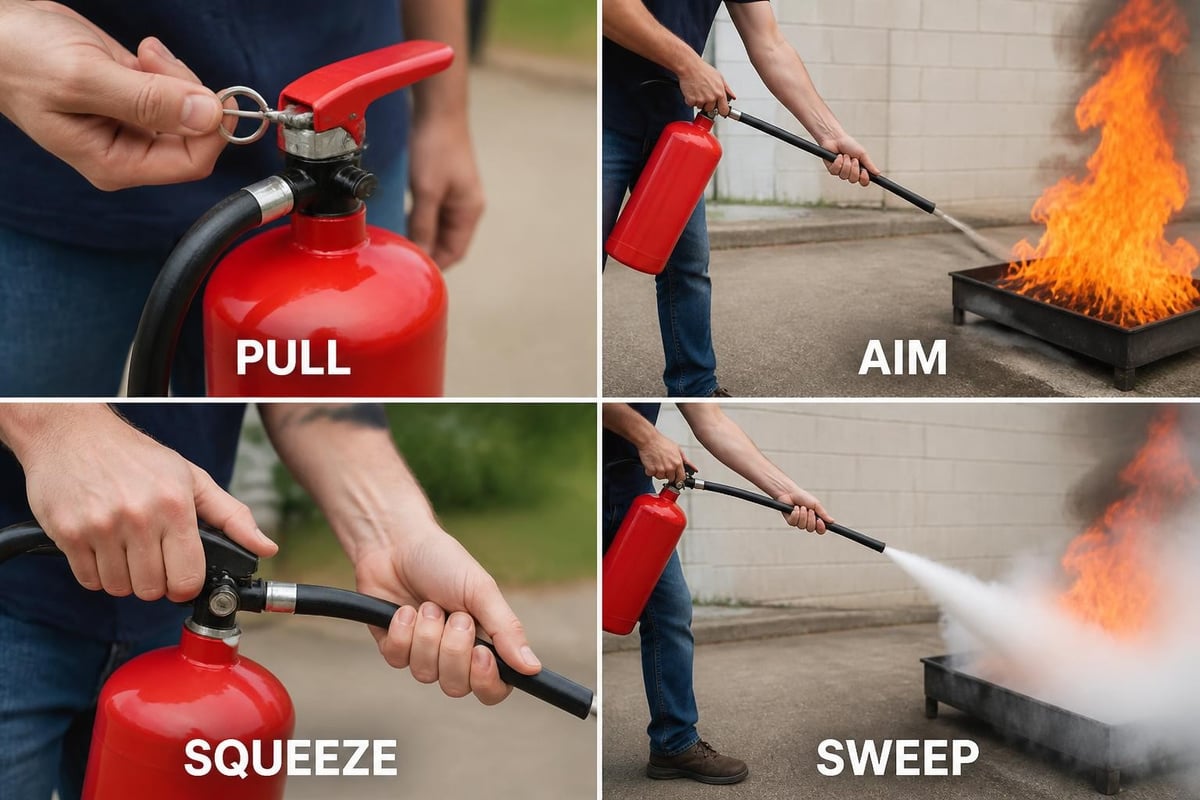
The universally recognised technique for fire extinguisher operation follows the PASS acronym:
P - Pull the safety pin to break the tamper seal A - Aim the nozzle or hose at the base of the fire, not the flames S - Squeeze the handle to release the extinguishing agent S - Sweep from side to side at the fire's base until it appears extinguished
This method maximises effectiveness whilst minimising exposure to heat and smoke. Practice using this technique during training exercises to build muscle memory for emergency situations.
When to Fight and When to Evacuate
The American Red Cross fire safety guidance emphasises that individuals should only attempt to extinguish a fire when specific conditions are met:
- The fire is small and contained (approximately the size of a waste bin)
- You have a clear escape route behind you
- The appropriate type of fire extinguisher is immediately available
- You have received training in fire extinguisher use
- The fire department has been called
- The building alarm has been activated
If any of these conditions are not met, immediate evacuation is the safest course of action. No property is worth risking lives.
Common Mistakes to Avoid
Even trained individuals can make critical errors during fire emergencies:
- Aiming at flames rather than the fire's base reduces effectiveness significantly
- Standing too close exposes the user to dangerous heat and toxic smoke
- Fighting fires that are too large or spreading rapidly wastes precious evacuation time
- Using the wrong extinguisher type can worsen the situation, particularly with electrical or cooking oil fires
- Turning your back on a "extinguished" fire allows re-ignition without warning
Regular training sessions help reinforce proper techniques and build confidence for actual emergencies.
Installation and Placement Requirements
Strategic positioning of fire extinguishers ensures accessibility during emergencies whilst meeting regulatory standards.
Mounting Height and Accessibility Standards
Proper installation follows specific guidelines to ensure extinguishers remain visible and accessible:
- Units weighing less than 18 kg should be mounted with the top no higher than 1.5 metres from the floor
- Heavier units should be mounted with the top no higher than 1 metre from the floor
- The bottom of any fire extinguisher should be at least 10 cm above the floor
- Mounting brackets must secure the unit firmly without damaging the cylinder
These standards ensure that people of varying heights and physical capabilities can reach and remove extinguishers quickly during emergencies.
Coverage and Travel Distance
The NFPA 10 standard specifies maximum travel distances based on hazard classification:
| Hazard Level | Class A Travel Distance | Class B Travel Distance |
|---|---|---|
| Light Hazard | 23 metres | 9-15 metres |
| Ordinary Hazard | 23 metres | 9-15 metres |
| Extra Hazard | 23 metres | 9-15 metres |
These distances ensure that occupants never need to travel excessive distances to reach fire suppression equipment during an emergency.
Signage and Visibility
Fire extinguishers must be clearly identified through appropriate signage, particularly in large or complex buildings. Photoluminescent or reflective signs placed above extinguisher locations ensure visibility even in smoke-filled or low-light conditions. Clear corridor sightlines and unobstructed access paths prevent delays when seconds count.
Maintenance and Inspection Protocols
A fire extinguisher provides protection only when properly maintained and ready for immediate use.
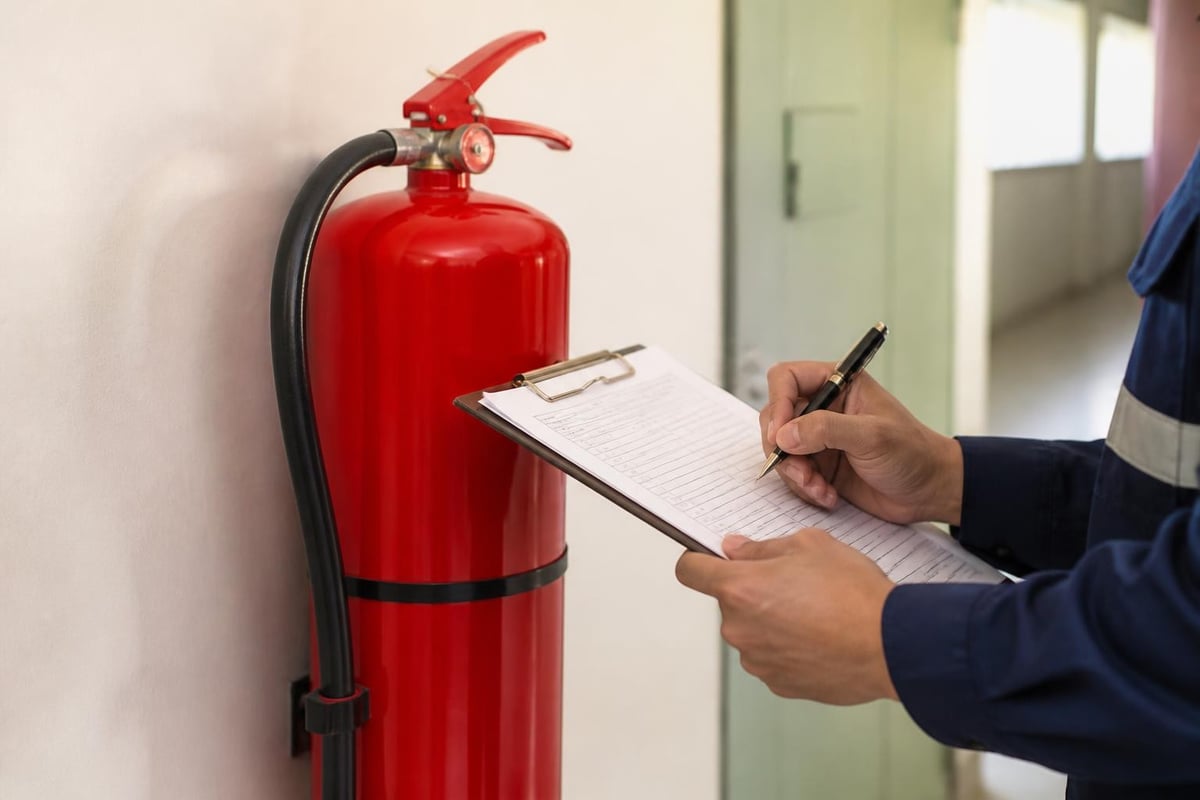
Monthly Visual Inspections
Basic monthly checks can be performed by designated personnel without specialised training:
- Verify the extinguisher is in its designated location
- Check that access remains unobstructed
- Confirm the pressure gauge reads in the operational range (green zone)
- Inspect for physical damage, corrosion, or leakage
- Ensure the operating instructions remain legible
- Verify the tamper seal and safety pin are intact
Document each inspection with dates and initials to demonstrate compliance and identify developing issues.
Annual Professional Servicing
Qualified technicians must perform comprehensive annual inspections that go beyond visual checks. These inspections verify:
- Internal pressure levels match manufacturer specifications
- Hose assemblies remain free from cracks or blockages
- Operating mechanisms function smoothly without excessive force
- Extinguishing agent weight matches the label specification
- All seals, gaskets, and components show no deterioration
The NIST guidance on fire protection systems provides detailed maintenance intervals for various fire protection equipment, including portable extinguishers.
Six-Year Internal Examinations and Hydrostatic Testing
Fire extinguishers require more intensive maintenance at specific intervals:
Six-Year Internal Examination: Stored pressure extinguishers must be opened and internally inspected every six years to check for internal corrosion, agent contamination, or component deterioration.
Hydrostatic Testing: Pressure vessels undergo hydrostatic testing at intervals ranging from 5 to 12 years depending on cylinder type and extinguishing agent. This test verifies the cylinder can safely withstand operating pressures.
These services require specialised equipment and training, making professional service essential. UL fire extinguisher testing and certification standards ensure units meet rigorous safety and performance criteria.
Regulatory Compliance and Standards
Understanding applicable regulations ensures your fire protection programme meets legal requirements and industry best practices.
Workplace Safety Regulations
Different jurisdictions impose specific requirements for workplace fire extinguisher provision. Generally, employers must:
- Provide adequate and appropriate fire extinguishers based on fire risks
- Ensure extinguishers are properly installed and maintained
- Train employees in fire extinguisher use and emergency procedures
- Maintain accurate records of inspections and maintenance
- Replace or service units according to manufacturer and regulatory timelines
Failure to meet these obligations can result in enforcement actions, fines, and potential liability in the event of fire-related injuries or property damage.
Industry-Specific Requirements
Certain industries face additional fire extinguisher requirements beyond general workplace standards:
Commercial Kitchens: Must install Class F wet chemical extinguishers near cooking equipment and ensure staff receive specific training in their use.
Aviation: The FAA Advisory Circular AC 20-42D specifies requirements for aircraft hand fire extinguishers, including minimum ratings and approved types.
Chemical Facilities: Require specialised extinguishers and often need higher capacity units due to increased fire hazards.
Healthcare Facilities: May restrict certain extinguisher types in patient care areas due to contamination concerns.
Environmental Considerations
Fire extinguisher selection increasingly involves environmental impact assessment. The EPA guidance on fire suppression agents addresses concerns regarding halon, hydrofluorocarbons (HFCs), and per- and polyfluoroalkyl substances (PFAS).
Modern alternatives include:
- Clean agents with lower global warming potential
- Water mist systems for specific applications
- Dry chemical agents with reduced environmental persistence
- CO₂ systems where appropriate for the fire risk
Proper disposal of old or damaged extinguishers also requires attention to environmental regulations, particularly for units containing pressurised gases or specialised chemical agents.
Training and Competency Development
Equipment alone provides insufficient protection without trained personnel who can respond effectively during emergencies.
Initial Training Requirements
Comprehensive fire extinguisher training should cover:
- Fire behaviour and the fire triangle (fuel, oxygen, heat)
- Fire classification systems and extinguisher types
- Hands-on practice using actual extinguishers
- When to fight fires and when to evacuate
- Evacuation procedures and assembly points
- Raising the alarm and contacting emergency services
Practical exercises using training extinguishers or controlled fire scenarios build confidence and competence that theoretical instruction alone cannot provide.
Refresher Training Frequency
Skills deteriorate without regular reinforcement. Best practice recommends annual refresher training to:
- Reinforce proper techniques and safety protocols
- Update personnel on any changes to equipment or procedures
- Provide additional hands-on practice opportunities
- Address questions or concerns that have arisen since initial training
- Maintain awareness and readiness for emergency response
This regular training investment significantly improves response effectiveness during actual fire emergencies.
Specialised Training for High-Risk Environments
Facilities with elevated fire risks or specialised fire extinguisher systems may require advanced training programmes. Industrial settings with combustible metal hazards, chemical processing facilities, or marine environments each present unique challenges that standard training may not adequately address.
Tailored programmes should incorporate:
- Specific hazards present in the work environment
- Specialised extinguisher types and operation techniques
- Enhanced decision-making protocols for complex fire scenarios
- Integration with broader emergency response plans
- Coordination with professional fire services
Record Keeping and Documentation
Maintaining comprehensive records demonstrates compliance, facilitates accountability, and supports continuous improvement of fire safety programmes.
Essential Documentation
Fire protection programmes should maintain detailed records of:
Inspection Records: Monthly visual inspection logs with dates, findings, and corrective actions taken.
Service Records: Annual maintenance reports from qualified technicians, including test results and component replacements.
Hydrostatic Test Records: Documentation of pressure tests with dates, test pressures, and pass/fail results.
Training Records: Attendance lists, training content covered, and competency assessments for all personnel.
Incident Reports: Documentation of any fire extinguisher use, including fire cause, response effectiveness, and lessons learned.
Retention Requirements
Regulatory authorities typically require organisations to retain fire safety records for specified periods, often ranging from three to seven years. Electronic record-keeping systems can simplify storage, retrieval, and compliance demonstration during inspections or audits.
Digital systems offer additional benefits including automated maintenance reminders, trend analysis capabilities, and integration with broader safety management platforms.
Cost Considerations and Life Cycle Management
Effective fire protection requires balancing upfront investment with ongoing maintenance costs and operational lifespan.
Initial Investment Factors
Fire extinguisher costs vary significantly based on:
- Type and capacity of extinguishing agent
- Cylinder construction materials (steel, aluminium, composite)
- Additional features such as wheeled units or specialised nozzles
- Certification and compliance with specific standards
- Quantity purchased and supplier relationships
Whilst budget constraints exist in every organisation, fire protection equipment should never be selected solely on initial cost. The lowest-price option may prove more expensive over time through higher maintenance costs, shorter service life, or inadequate performance.
Ongoing Maintenance Budgeting
Annual operating costs for fire extinguisher programmes include:
- Monthly inspection labour (internal staff time)
- Annual professional servicing fees
- Six-year internal examinations
- Hydrostatic testing at prescribed intervals
- Training programme delivery and materials
- Record keeping and compliance administration
Organisations should budget approximately 10-15% of initial equipment cost annually for maintenance and compliance activities.
Replacement versus Refurbishment
Fire extinguishers do not last indefinitely. Decision points for replacement include:
- Failure of hydrostatic testing
- Excessive internal corrosion discovered during examination
- Obsolete extinguishing agent no longer available
- Physical damage beyond economical repair
- Technological advances offering superior performance
Generally, well-maintained units can provide 10-15 years of service before replacement becomes necessary, though some specialised types may require earlier replacement.
Selecting, maintaining, and properly using fire extinguishers forms a critical component of comprehensive workplace safety programmes, protecting both people and property from fire hazards. Whether you need to equip a single office or an entire industrial complex, SafetySignsForSale supplies a complete range of fire extinguishers, complementary safety signage, and related fire safety equipment to meet your specific requirements. Their extensive product selection and expertise across various industries ensure you receive the right solutions backed by quality products and reliable service.