


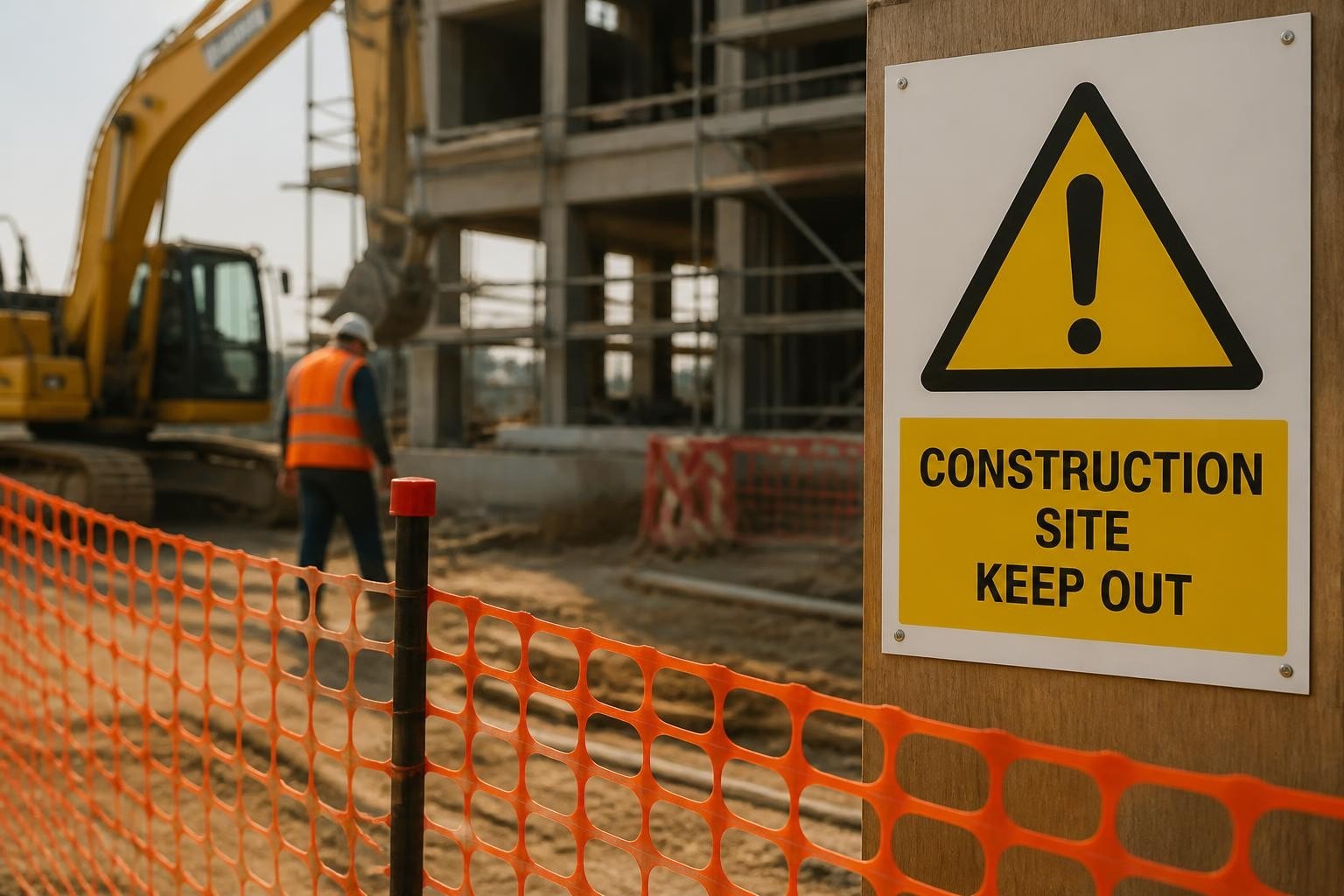
Construction Site Warning Signs: Essential Safety Guide
Construction sites represent some of the most hazardous working environments, where risks change daily as projects progress through different phases. Effective hazard communication is not merely a regulatory requirement but a critical component of accident prevention. Construction site warning signs serve as the first line of defence, alerting workers and visitors to dangers ranging from overhead hazards to underground utilities, heavy machinery operations to confined spaces. Understanding the proper selection, placement and maintenance of these signs can mean the difference between a safe worksite and a preventable tragedy.
The Regulatory Framework for Construction Warning Signage
The legal requirements governing construction site warning signs are comprehensive and vary by jurisdiction, though they share common objectives of protecting workers and the public. In the United States, OSHA construction regulations on signs, signals, and barricades establish baseline requirements for accident-prevention tags and signs on construction projects. These regulations specify design standards, colour codes and placement requirements that contractors must follow to maintain compliance.
The regulatory landscape extends beyond general workplace safety to include specific requirements for work zones adjacent to public areas. Traffic control signage near roadways must conform to the Manual on Uniform Traffic Control Devices, which provides authoritative standards for temporary traffic-control devices. Understanding these overlapping requirements helps project managers create comprehensive signage plans that address all applicable regulations.
Key regulatory considerations include:
- Minimum sign dimensions and viewing distances
- Standardised colour coding (red for danger, yellow for caution, green for safety information)
- Required pictogram elements for multilingual comprehension
- Illumination or reflectivity requirements for low-light conditions
- Documentation and inspection protocols
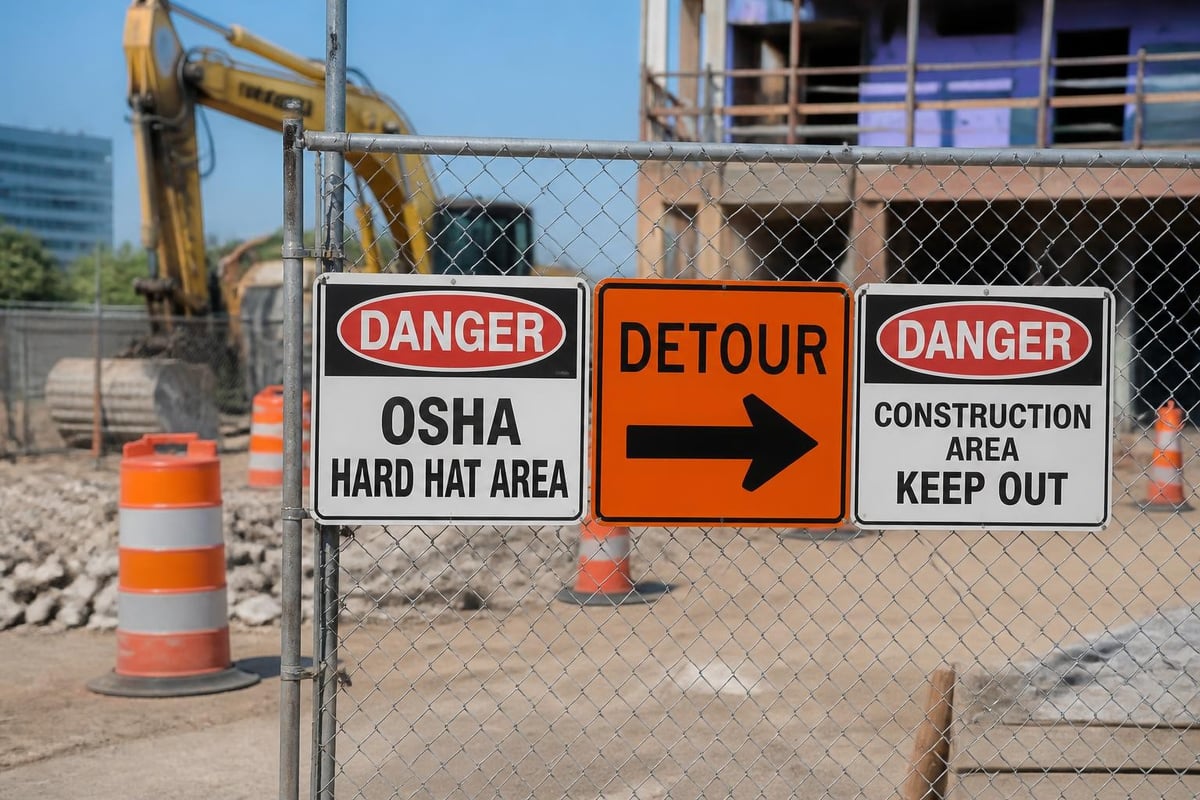
Essential Categories of Construction Site Warning Signs
Construction projects require multiple categories of warning signage, each addressing specific hazards and communicating different levels of risk. Understanding these categories helps safety managers develop comprehensive signage strategies that cover all potential dangers.
Danger Signs
Danger signs represent the highest level of warning, reserved for situations where immediate hazards could result in serious injury or death. These signs feature white text on a red background and address threats such as high voltage electrical equipment, structural instability, or explosive materials. The placement of danger signs must be immediately visible to anyone approaching the hazardous area, with multiple signs used when approach routes vary.
Warning Signs
Warning signs indicate hazards that could cause moderate to serious injury if proper precautions are not taken. Typically featuring black text on an orange or yellow background, these construction site warning signs address risks like moving machinery, overhead loads, slippery surfaces, or pinch points. The language must be specific and actionable, telling workers exactly what hazard exists and what precautions to take.
Caution Signs
Caution signs address potential hazards that may result in minor to moderate injury. These signs help workers maintain awareness of risks such as low headroom, uneven surfaces, or areas requiring personal protective equipment. While less critical than danger signs, caution signage remains essential for comprehensive hazard communication.
| Sign Category | Colour Scheme | Typical Applications | Required Action |
|---|---|---|---|
| Danger | Red & White | Electrical hazards, confined spaces, structural collapse zones | Immediate halt; authorised personnel only |
| Warning | Orange/Yellow & Black | Moving equipment, falling objects, chemical exposure | Proceed with specific precautions |
| Caution | Yellow & Black | Slip/trip hazards, PPE requirements, minor equipment risks | Exercise general awareness |
| Notice | Blue & White | General information, procedures, non-hazard instructions | Follow posted guidelines |
Strategic Placement and Visibility Considerations
The effectiveness of construction site warning signs depends entirely on their visibility and placement. A perfectly designed sign serves no purpose if workers cannot see it at the critical moment when they approach a hazard. Strategic placement requires careful analysis of site traffic patterns, sightlines and environmental conditions.
Height and Mounting Position
Signs must be mounted at eye level whenever possible, typically between 1.5 and 2 metres above the walking surface. This height ensures visibility without requiring workers to look up or down, which may be difficult when carrying materials or operating equipment. For overhead hazards, supplementary signs at ground level provide advance warning before workers enter the danger zone.
Distance and Viewing Angles
Construction site warning signs should be visible from sufficient distance to allow workers to stop or change course. The Work Zone Policy and resources provided by the Federal Highway Administration offers valuable guidance on advance warning distances for traffic-related hazards. As a general principle, signs should be visible from at least 15 metres in indoor environments and 30 metres or more in outdoor settings.
Placement best practices include:
- Position signs perpendicular to the primary approach direction
- Install multiple signs when hazards are accessible from different routes
- Ensure adequate illumination or use reflective materials for low-light conditions
- Mount signs on stable surfaces that won't vibrate or move in wind
- Avoid placing signs where they create additional hazards or obstruct pathways
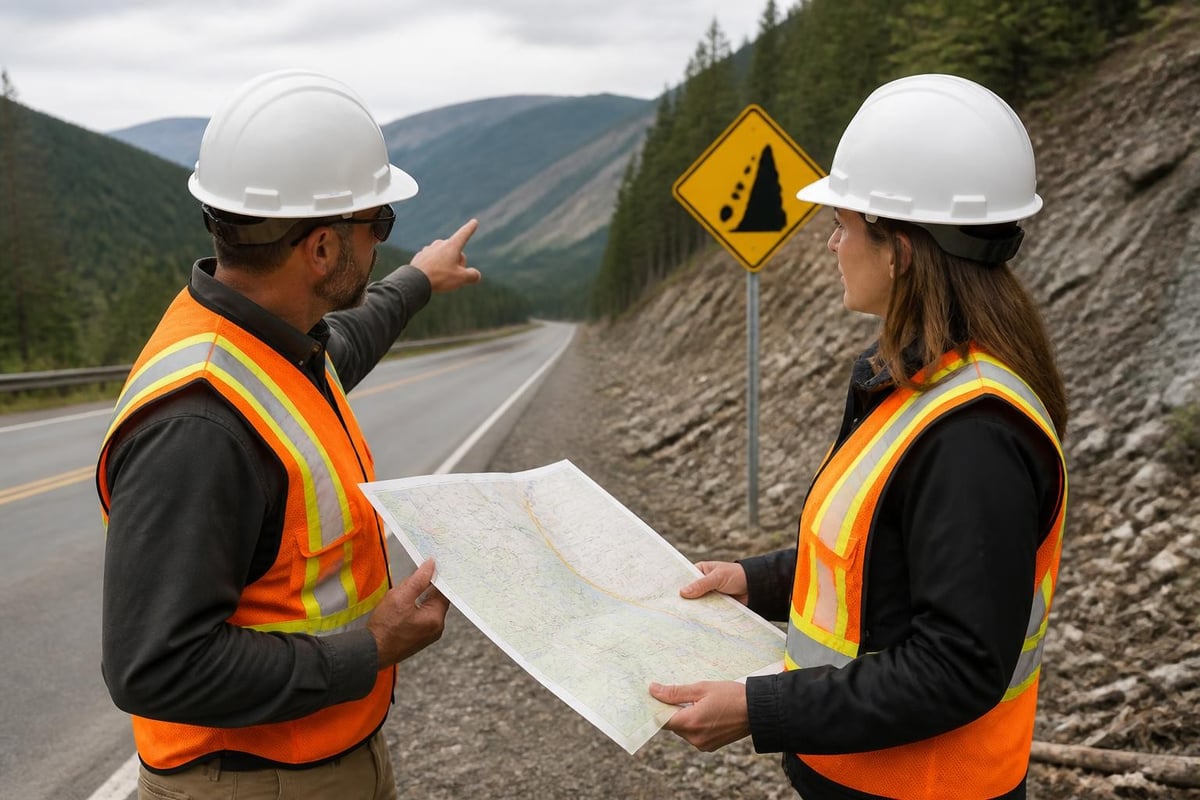
Specialised Signage for Common Construction Hazards
Different construction activities generate specific hazards that require targeted warning signage. Understanding these specialised applications helps safety managers address the unique risks present at various stages of a project.
Excavation and Underground Utilities
Excavation work presents multiple dangers, from cave-ins to underground electrical lines and gas mains. Construction site warning signs in excavation zones must alert workers to both the obvious risk of open trenches and the hidden dangers of buried utilities. Signs should indicate the depth of excavations, required shoring or sloping angles, and the presence of marked utility lines. Colour-coded utility markers work in conjunction with warning signs to create a comprehensive communication system.
Overhead Work and Falling Object Zones
Wherever work occurs above ground level, falling object zones must be clearly marked. These construction site warning signs need placement both at the perimeter of the danger area and at access points where workers might enter from below. The signage should specify the nature of overhead work (scaffolding, crane operations, demolition) and any time restrictions on access to the area below.
Heavy Equipment Operating Areas
Mobile equipment represents one of the leading causes of construction fatalities. Designated equipment operating zones require prominent signage warning pedestrians to stay clear. These signs often incorporate flashing lights or reflective strips to enhance visibility, particularly in dusty conditions or during dawn and dusk operations. The CPWR work zone safety resources provide excellent guidance on protecting workers in areas with vehicle traffic.
Confined Spaces and Permit-Required Areas
Confined space entry represents a complex hazard requiring multiple layers of control. Construction site warning signs at confined space entrances must clearly identify the space as requiring permits, list the specific hazards present (oxygen deficiency, toxic atmospheres, engulfment risks), and direct workers to the permit and entry procedures. These signs often include a status indicator showing whether the space is currently occupied and by whom.
Multi-Language and Pictogram Considerations
Modern construction sites often employ workers from diverse linguistic backgrounds, making multilingual signage essential for effective hazard communication. However, simply translating text into multiple languages is not sufficient; the design must remain legible and comprehensible regardless of language proficiency.
Pictogram Effectiveness
Standardised pictograms provide universal hazard communication that transcends language barriers. The most effective construction site warning signs combine internationally recognised symbols with minimal text. Research from the UK HSE on warning signs demonstrates that well-designed pictograms improve comprehension rates across all worker demographics, including those with limited literacy skills.
When selecting pictograms, consistency with international standards such as ISO 7010 ensures workers recognise symbols from previous sites or training. Custom pictograms should be avoided unless absolutely necessary, as unfamiliar symbols can cause confusion and delay recognition of hazards.
Text Hierarchy and Readability
When text is included on construction site warning signs, it should follow a clear hierarchy:
- Signal word (Danger, Warning, Caution) in the largest, most prominent text
- Hazard identification in clear, concise language
- Consequence statement describing the potential injury
- Avoidance instructions telling workers how to stay safe
Font selection matters significantly for outdoor visibility. Sans-serif fonts like Arial or Helvetica provide better readability at distance and in poor lighting compared to decorative or serif fonts. Minimum letter heights should be 15mm for every 7.5 metres of intended viewing distance.
Temporary vs Permanent Signage Systems
Construction projects evolve continuously, with hazards changing as work progresses through different phases. This dynamic environment requires a flexible approach to warning signage that balances permanent installations with temporary systems.
Permanent Site Perimeter Signs
Certain construction site warning signs remain relevant throughout the entire project duration. Perimeter fencing typically includes permanent signage warning the public to keep out, identifying the project and contractor, and providing emergency contact information. These signs must withstand prolonged exposure to weather, vandalism attempts and accidental impacts from equipment.
Phase-Specific Temporary Signs
Most construction hazards are temporary, existing only during specific work activities. Excavations get backfilled, overhead work concludes, and equipment moves to new areas. Temporary signage systems using portable stands, magnetic mounts or reusable brackets allow signs to be relocated or removed as conditions change. This flexibility ensures that signage remains accurate and credible; workers quickly learn to ignore signs that warn of non-existent hazards.
| Sign Type | Typical Duration | Mounting Method | Maintenance Frequency |
|---|---|---|---|
| Site perimeter | Entire project | Permanent fence attachment | Monthly inspection |
| Excavation warnings | Days to weeks | Portable barricade stands | Daily verification |
| Equipment operation zones | Shifts or days | Weighted bases, sandbags | Per shift |
| Overhead work areas | Weeks to months | Semi-permanent posts | Weekly inspection |
Maintenance and Inspection Protocols
Even the best-designed construction site warning signs become ineffective if they are damaged, dirty or obscured. Establishing regular maintenance and inspection protocols ensures that signage remains visible and legible throughout its service life.
Daily Walk-Through Inspections
Site supervisors should incorporate signage checks into daily site inspections. This quick review verifies that signs remain in position, haven't been damaged overnight, and accurately reflect current site conditions. Particular attention should be paid after severe weather events, which can displace or damage signs.
Weather and Environmental Degradation
Outdoor construction site warning signs face constant assault from sun, rain, wind and temperature fluctuations. UV exposure fades colours, reducing contrast and making text harder to read. Rain and humidity can cause adhesives to fail, leading to delamination of protective coatings. Regular cleaning removes accumulated dirt and grime that obscures messages.
Maintenance schedule recommendations:
- Daily: Verify sign presence and position in active work areas
- Weekly: Clean signs and check for damage or fading
- Monthly: Inspect mounting hardware and replace damaged signs
- Seasonally: Review entire site signage plan and update as needed
- After weather events: Immediate inspection and repair
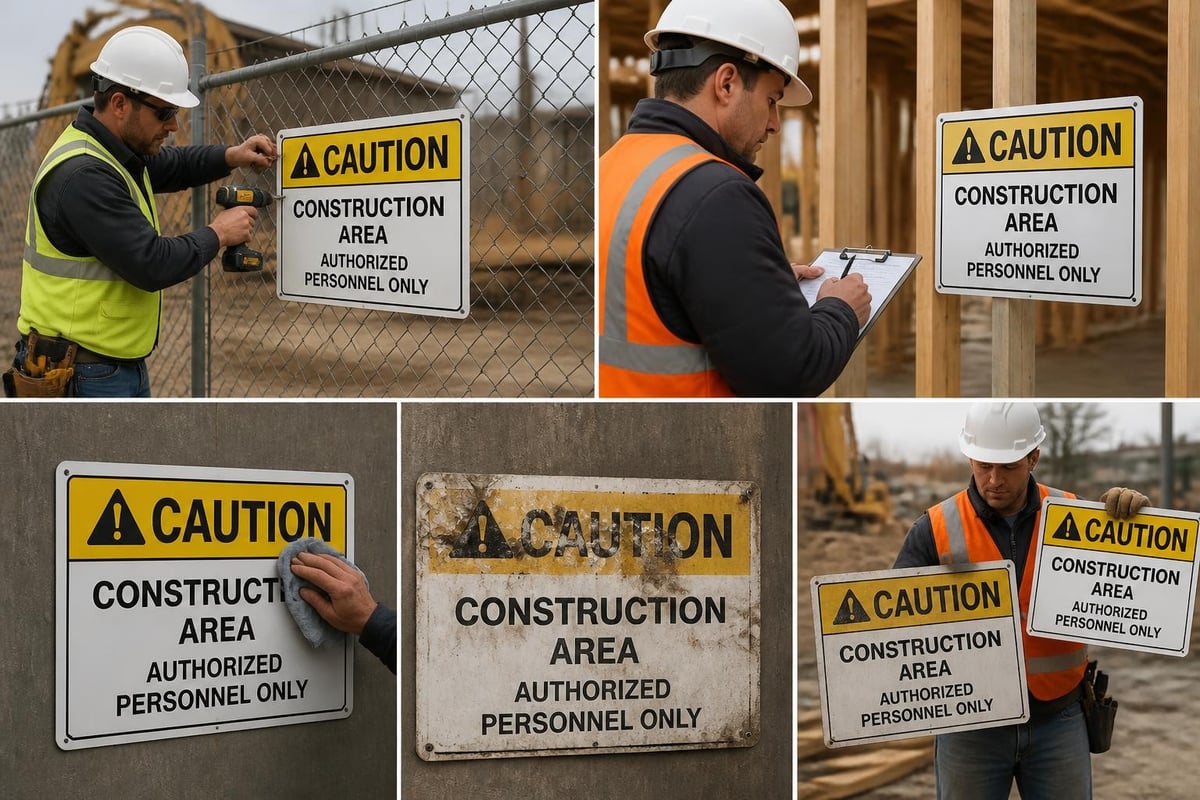
Integration with Overall Site Safety Systems
Construction site warning signs represent just one component of a comprehensive safety programme. Maximum effectiveness requires integration with training, hazard assessments, safety meetings and other protective measures.
Coordination with Site Orientation
New workers arriving on site should receive orientation that includes a review of the signage system used on that particular project. This training explains what different colours and symbols mean, where to find additional safety information, and what actions are required when encountering various sign types. When workers understand the signage system, compliance improves dramatically.
Documentation for Regulatory Compliance
Maintaining records of sign placement, inspection and maintenance demonstrates due diligence during regulatory inspections or incident investigations. Photographic documentation of signage at different project phases provides valuable evidence that appropriate warnings were in place. This documentation also aids in continuous improvement, allowing safety managers to analyse whether signage was optimally placed or if adjustments would improve future projects.
Accessibility Considerations
When construction sites are adjacent to public areas or when signs must serve visitors with disabilities, additional accessibility requirements apply. The U.S. Access Board guidance on accessible signage provides technical specifications for contrast ratios, tactile characters and mounting heights that ensure signs are usable by people with vision impairments. While not all construction site warning signs require this level of accessibility, those at public interfaces should meet these enhanced standards.
Technology-Enhanced Warning Systems
Traditional static signs remain essential, but emerging technologies offer supplementary warning capabilities that can enhance safety on modern construction sites. These systems complement rather than replace conventional construction site warning signs.
Digital Display Integration
Electronic message boards allow real-time updates to warnings as conditions change. These displays are particularly valuable at site entrances, where they can communicate current hazards, required PPE, and access restrictions. Digital signs can also display different messages at different times, such as warning of blasting operations only when they are actually scheduled.
Proximity Warning Systems
Some high-risk equipment now incorporates proximity warning technology that alerts operators and nearby workers when they enter danger zones. These systems work in conjunction with construction site warning signs to provide layered protection. The signs establish the primary hazard communication, while the proximity alerts provide immediate warning when someone enters the danger area.
QR Code Integration
Quick Response codes on warning signs can link workers to detailed safety procedures, equipment specifications, or emergency response protocols. A worker encountering an unfamiliar hazard can scan the code with a smartphone to access comprehensive information in their preferred language. This technology bridges the gap between the limited information that fits on a physical sign and the detailed guidance workers sometimes need.
Economic and Liability Considerations
Investing in quality construction site warning signs represents not just a regulatory obligation but sound business practice. The costs of proper signage pale in comparison to the potential expenses of workplace accidents, regulatory penalties and litigation.
Direct Cost Analysis
The expense of purchasing, installing and maintaining warning signs is relatively modest within the context of total project costs. A comprehensive signage programme for a medium-sized commercial construction project might represent less than 0.1% of the total budget. However, the failure to provide adequate warnings can result in penalties, work stoppages and increased insurance premiums that far exceed this investment.
Liability Protection
Proper construction site warning signs provide important legal protection when incidents occur. Courts consistently recognise that employers have a duty to warn workers and visitors of known hazards. Documented evidence of appropriate warning signage demonstrates that the contractor took reasonable steps to communicate dangers. Conversely, the absence of required signs or poorly maintained signage can be introduced as evidence of negligence in civil litigation.
Insurance Implications
Many construction insurance policies include requirements for site safety programmes, including adequate hazard warning systems. Failure to maintain proper signage may void coverage or result in reduced settlements when claims occur. Insurance carriers increasingly conduct site inspections that specifically evaluate warning sign adequacy, and deficiencies can lead to policy modifications or non-renewal.
Training Workers to Respond to Warning Signs
The most sophisticated construction site warning signs achieve nothing if workers do not understand them or fail to modify their behaviour appropriately. Effective training transforms passive signage into active hazard control.
Initial Safety Orientation
Every worker's first day on site should include comprehensive orientation covering the signage system. This training should explain the hierarchy of sign types, demonstrate how to interpret pictograms and symbols, and clarify what actions different signs require. Interactive methods such as site walks that point out actual signs in context improve retention compared to classroom-only instruction.
Competency Assessment
Understanding should be verified through assessment, whether formal testing or practical demonstration. Workers should be able to correctly identify different sign types, explain what hazards they indicate, and describe appropriate precautions. This verification ensures that language barriers or literacy limitations do not prevent workers from receiving critical safety information.
Reinforcement Through Toolbox Talks
Regular toolbox talks provide opportunities to reinforce signage awareness and address any confusion workers have encountered. These brief safety meetings can highlight new signs added to the site, explain why certain signs have been relocated, or discuss near-misses that occurred when workers failed to heed warnings. Consistent reinforcement maintains awareness as projects progress and helps prevent the complacency that develops over time.
Effective construction site warning signs form a critical foundation for workplace safety, providing essential hazard communication that protects workers and visitors throughout all project phases. By understanding regulatory requirements, selecting appropriate sign types, ensuring strategic placement and maintaining signage systems properly, contractors can create safer work environments whilst demonstrating compliance and reducing liability exposure. Whether you're managing a small renovation or a major infrastructure project, SafetySignsForSale offers the comprehensive range of warning signs, barricades and safety equipment needed to meet your construction site requirements and keep your workforce protected.