


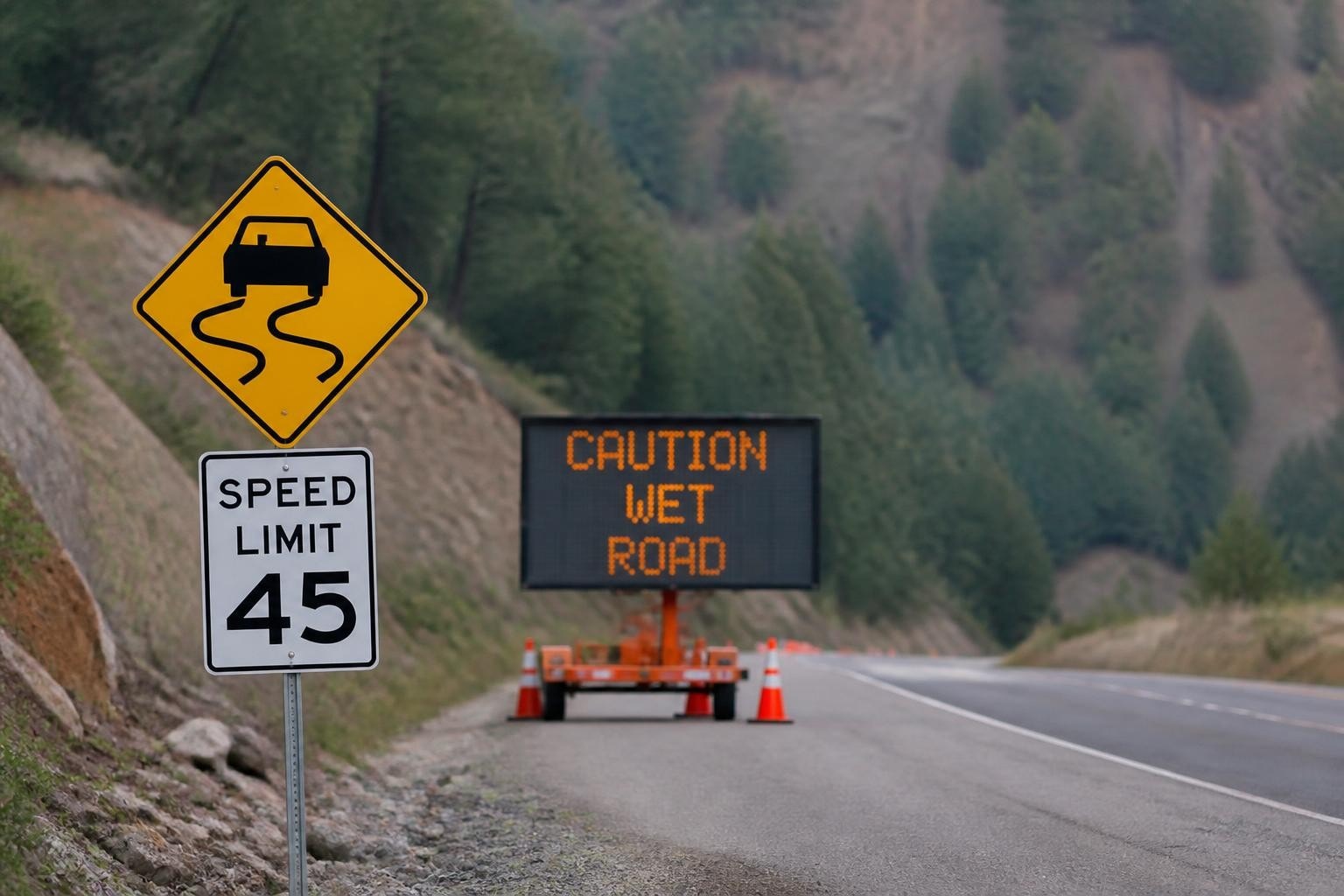
Danger Signs on Road: Essential Guide for Safety
Danger signs on road networks serve as the silent guardians of motorist safety, communicating critical warnings about hazards ahead before drivers encounter them. These visual cues represent a sophisticated language of shapes, colours, and symbols that transcend literacy barriers and international boundaries. Understanding the principles behind effective danger signage is essential for organisations responsible for road safety, workplace transport routes, and industrial sites. The correct selection, placement, and maintenance of these warning systems can mean the difference between a routine journey and a preventable accident.
The Critical Function of Warning Signage
Road danger signs fulfil multiple simultaneous roles within traffic management systems. They provide advance warning of hazards, allowing drivers adequate time to adjust speed, change lanes, or prepare for unexpected conditions. This early notification is particularly crucial on high-speed routes where reaction distances extend significantly.
Beyond immediate hazard communication, danger signs on road infrastructure also establish legal responsibilities. When properly installed according to recognised standards, they demonstrate due diligence from road authorities and private landowners. Courts routinely examine signage adequacy when determining liability in accident litigation.
The psychological impact of warning signs deserves equal consideration. Research demonstrates that well-designed danger signage creates heightened awareness states in drivers, triggering more cautious behaviour patterns. However, this effect diminishes when signs proliferate unnecessarily, leading to habituation and reduced compliance.
International Standards and Regulatory Frameworks
The Manual on Uniform Traffic Control Devices (MUTCD) establishes comprehensive guidelines for warning signs across the United States, with the 11th Edition (December 2023) representing the current standard. This document details specifications for the W-series warning signs, covering everything from dimensional requirements to retroreflectivity standards.
Different jurisdictions adopt varying approaches to danger sign standardisation. European systems typically employ the Vienna Convention framework, whilst Commonwealth nations often reference British Standards. The British Standards Institution specifications provide detailed requirements and test methods for road traffic signs and temporary warning devices.
Key Standard Elements
Regulatory frameworks address several critical components:
- Colour specifications – Yellow backgrounds for warning signs in most jurisdictions, with precise Pantone or reflective sheeting grades
- Shape conventions – Diamond configurations for hazard warnings, triangular formats in European contexts
- Symbol design – Pictorial representations tested for rapid comprehension across demographic groups
- Size graduations – Dimensional standards scaled to road speed and traffic volume
- Mounting heights – Vertical placement parameters ensuring visibility without obstruction
International harmonisation efforts continue, though complete global uniformity remains elusive. The World Health Organization's Global Status Report on Road Safety 2023 highlights signage within broader road-safety interventions and demonstrates the correlation between consistent warning systems and reduced collision rates.

Categories of Road Danger Signage
Permanent Hazard Warnings
These fixed installations communicate inherent risks within the road environment itself. Sharp curves, steep gradients, narrow bridges, and intersection configurations represent conditions requiring constant alertness from drivers. Danger signs on road sections with permanent hazards typically feature robust construction methods suitable for multi-year service life.
Common permanent warning categories include:
- Geometric warnings (curves, intersections, roundabouts)
- Gradient alerts (steep inclines, descent hazards)
- Width restrictions (narrow passages, bridge clearances)
- Surface condition advisories (slippery when wet, uneven pavement)
Temporary Construction and Maintenance Warnings
Work zone signage represents a distinct subset requiring rapid deployment and frequent relocation. These danger signs on road construction sites must withstand harsh conditions whilst maintaining visibility in challenging environments. Temporary warning systems often incorporate ballasted bases, quick-fold stands, and high-intensity reflective materials.
The sequencing of temporary warnings follows prescribed patterns:
- Advance warning signs positioned at calculated distances before work zones
- Transition area markers guiding lane changes and speed reductions
- Activity area identification showing specific hazards present
- Termination indicators signalling return to normal conditions
Variable and Conditional Warnings
Modern danger signs on road networks increasingly incorporate dynamic elements. Variable message boards communicate changing conditions such as fog, ice, accidents, or congestion. These systems require sophisticated sensor integration and real-time data processing.
Wildlife crossing warnings present unique challenges, as discussed in Transport Scotland's position statement on wildlife signs. Static wildlife warnings can lose effectiveness through habituation, whilst speed-activated or seasonal deployment strategies show improved results.
Strategic Placement Principles
Effective danger sign positioning requires careful analysis of sight distances, vehicle speeds, and hazard severity. Placement too close to hazards provides insufficient reaction time, whilst excessive advance warning allows drivers to forget the alert before encountering the danger.
Distance Calculation Methodology
| Road Speed (mph) | Minimum Advance Distance | Preferred Distance |
|---|---|---|
| 25 | 175 feet | 250 feet |
| 35 | 250 feet | 350 feet |
| 45 | 350 feet | 500 feet |
| 55 | 500 feet | 750 feet |
| 65+ | 750 feet | 1,000+ feet |
These distances assume normal visibility and dry pavement. Adverse conditions, limited sight lines, or complex hazards necessitate adjustments.
Visibility Optimisation
Danger signs on road corridors must remain visible across varying lighting conditions, weather events, and seasonal vegetation growth. Retroreflective sheeting provides night-time visibility by returning vehicle headlight illumination to the driver. Different sheeting types offer varying performance characteristics:
Engineer Grade sheeting suits low-speed, low-traffic applications where sign proximity allows easy reading. High-Intensity materials serve moderate-speed roads with regular traffic volumes. Diamond Grade or Prismatic sheeting delivers maximum retroreflectivity for motorways and high-speed rural routes.
Mounting height significantly impacts detection distance. Standard practice positions warning sign centres 1.5 to 2.1 metres above the carriageway edge. Higher mounting accommodates sight-line obstructions, whilst lower placement may improve visibility on curved approaches.

Material Selection and Durability
The physical construction of danger signs on road installations determines service life and maintenance requirements. Substrate materials range from aluminium sheet for permanent installations to corrugated plastic for temporary applications.
Substrate Comparison
| Material | Typical Lifespan | Weight | Cost | Best Applications |
|---|---|---|---|---|
| Aluminium | 10-15 years | Medium | High | Permanent installations |
| Steel | 15-20 years | Heavy | Medium | High-wind areas |
| Fibreglass | 12-18 years | Light | High | Coastal/corrosive environments |
| Corrugated Plastic | 2-5 years | Very Light | Low | Temporary/portable use |
Environmental factors heavily influence material performance. Coastal installations face salt-spray corrosion requiring either fibreglass construction or enhanced protective coatings on metal substrates. Industrial areas with chemical exposure demand specialised treatments. High-wind zones necessitate structural reinforcement and secure mounting systems.
Reflective Technology Evolution
Modern reflective sheeting employs microprism or glass-bead technology. Microprismatic films deliver superior retroreflectivity with better angularity, maintaining performance when vehicles approach from varying positions. These materials also demonstrate improved colour saturation and durability compared to traditional glass-bead products.
Fluorescent backgrounds enhance daytime visibility for critical warnings. Fluorescent yellow-green materials show measurably higher conspicuity than standard yellow, particularly in dawn and dusk conditions. Many jurisdictions now mandate fluorescent backgrounds for pedestrian crossings, school zones, and emergency vehicle warnings.
Maintenance and Compliance Verification
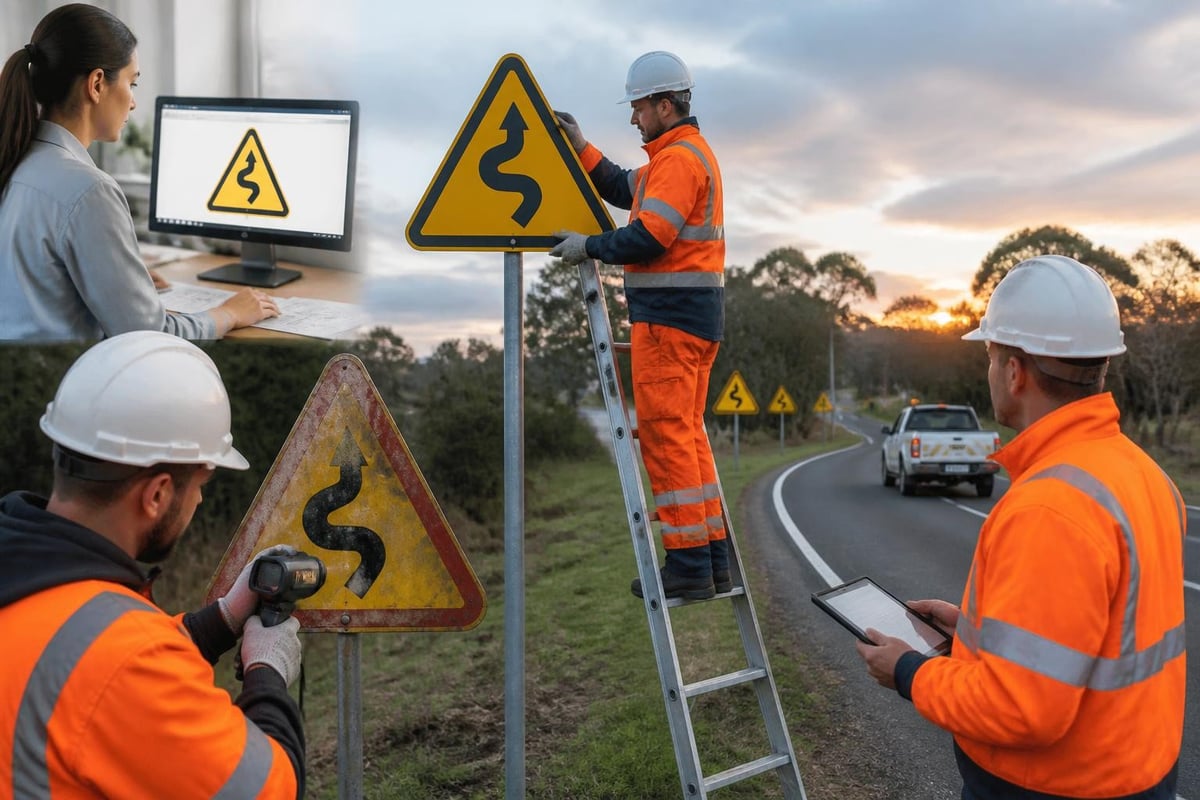
Even properly specified danger signs on road networks deteriorate over time. Systematic inspection programmes identify degraded signage before effectiveness diminishes to dangerous levels. Retroreflectivity measurement provides objective assessment of night-time visibility.
Inspection Protocols
Comprehensive sign inventory systems track installation dates, materials used, and inspection histories. Regular assessment cycles typically operate on these frequencies:
- Monthly – High-priority corridors and construction zones
- Quarterly – Major arterial routes and motorways
- Annually – Secondary roads and rural networks
- Biannually – Low-traffic local roads
Inspectors evaluate multiple performance factors including retroreflectivity, colour retention, physical damage, orientation accuracy, and vegetation encroachment. Retroreflectometers quantify remaining reflective capability against minimum maintained levels specified in standards.
Replacement triggers vary by jurisdiction but generally activate when retroreflectivity falls below 50% of initial specification. Proactive replacement based on expected service life often proves more cost-effective than reactive programmes responding to individual sign failures.
Specialised Warning Applications
Certain hazard scenarios require tailored signage approaches beyond standard warning repertoires. School zones, railway crossings, and animal collision hotspots demand enhanced visual hierarchies.
Educational Precinct Warnings
School zone danger signs on road approaches employ distinctive features:
- Fluorescent yellow-green backgrounds for maximum conspicuity
- Supplementary time-of-day panels indicating active restriction periods
- Flashing beacons during school arrival and departure times
- Reduced speed limit notifications with enhanced retroreflectivity
The sequential deployment of school warnings follows clear patterns, with initial alerts positioned sufficiently distant for speed reduction, followed by reinforcement signs and finally regulatory speed limits at the zone boundary.
Railway Grade Crossing Systems
Rail crossing warnings integrate multiple sign types within graduated warning sequences. Advance warning signs featuring the crossbuck symbol alert drivers to upcoming intersections. Pavement markings reinforce the message through visual redundancy. Active warning devices (lights, bells, gates) provide final-stage alerts when trains approach.
Modern installations increasingly incorporate predictive systems activating warnings based on actual train proximity rather than fixed timing sequences, reducing unnecessary delays whilst maintaining safety margins.
Emerging Technologies and Future Developments
Connected vehicle technology promises revolutionary changes in danger communication. Vehicle-to-Infrastructure (V2I) systems transmit hazard data directly to onboard displays, supplementing or eventually replacing physical signage.
Dynamic warning signs equipped with sensors detect approaching vehicles and activate only when needed, addressing habituation concerns whilst reducing energy consumption. Solar-powered LED-enhanced signs provide active illumination rather than passive retroreflection, dramatically improving visibility in fog or heavy precipitation.
Augmented reality head-up displays may eventually overlay warning information directly onto windscreens, positioned precisely relative to actual hazards. However, physical danger signs on road infrastructure will remain essential for decades, serving vehicles lacking advanced technology and providing redundancy when electronic systems fail.
Design Considerations for Private Roads and Industrial Sites
Organisations managing private road networks face similar obligations to public authorities regarding danger signage. Industrial facilities, logistics centres, warehouses, and business parks must implement warning systems protecting employees, visitors, and delivery drivers.
Private road danger signs on industrial sites often require customisation addressing site-specific hazards:
- Heavy plant movements – Forklift crossing warnings, wide-load zones
- Pedestrian interaction – Designated walkways, vehicle-priority areas
- Loading dock approaches – Height restrictions, turning radius limitations
- Environmental hazards – Slippery surfaces from process spillage, dust obscuration zones
Site-specific sign design must balance standardisation with clarity. Using recognised symbol conventions aids comprehension, whilst custom text supplements communicate unique circumstances. Multilingual workforces may necessitate text-free pictorial warnings or multi-language panels.
Legal Obligations and Liability
Private landowners bear responsibility for adequate warning provision on access routes they control. Inadequate signage becomes particularly problematic when accidents occur, with investigating authorities examining whether reasonable precautions existed.
Documented hazard assessments should identify risks requiring signage intervention. Regular review processes ensure warning systems remain current as operations evolve. Photographic records prove sign presence and condition at specific times, valuable evidence if disputes arise.
Integration with Broader Safety Systems
Danger signs on road networks function most effectively within comprehensive safety programmes rather than as isolated interventions. Complementary measures amplify warning effectiveness:
- Road surface treatments – High-friction surfacing at curve approaches, rumble strips before hazard zones
- Sight-line management – Vegetation clearance, reflector post installation
- Lighting enhancement – Illumination of complex junctions or frequent accident locations
- Speed management – Traffic calming integration with warning signage
The hierarchy of controls principle applies to road safety as comprehensively as workplace safety. Elimination (removing the hazard), engineering controls (guardrails, improved geometry), and administrative measures (speed limits, signage) work synergistically.
Warning signs represent administrative controls within this hierarchy, effective but requiring driver compliance. They work best supporting engineering improvements rather than substituting for them. A sharp curve improved through widening and banking requires less reliance on warning signage than one left geometrically deficient.
Procurement and Quality Assurance
Organisations sourcing danger signs on road applications must verify compliance with applicable standards. Supplier certifications, material test reports, and retroreflectivity specifications provide quality assurance.
Key procurement specifications should address:
- Substrate material and thickness – Minimum gauge requirements for wind resistance
- Reflective sheeting type – Appropriate grade for application and expected service life
- Ink or vinyl specification – UV-resistant formulations maintaining colour fastness
- Mounting hardware – Corrosion-resistant posts, brackets, and fasteners
- Warranty coverage – Performance guarantees for retroreflectivity and structural integrity
Batch testing of deliveries confirms specification compliance. Simple field tests verify basic quality, whilst laboratory analysis provides definitive performance data. Establishing relationships with reputable suppliers ensures consistent quality across multiple orders.
Understanding the principles, standards, and best practices surrounding danger signs on road systems enables organisations to implement effective warning strategies that protect lives and reduce liability exposure. Whether managing public highways, private industrial roads, or commercial premises, the selection of appropriate signage, correct placement, quality materials, and systematic maintenance creates layers of protection for all road users. SafetySignsForSale offers a comprehensive range of road safety signs, warning signage, and complementary safety equipment designed to meet regulatory requirements across diverse applications, backed by expert guidance to ensure your signage programme delivers maximum effectiveness.