


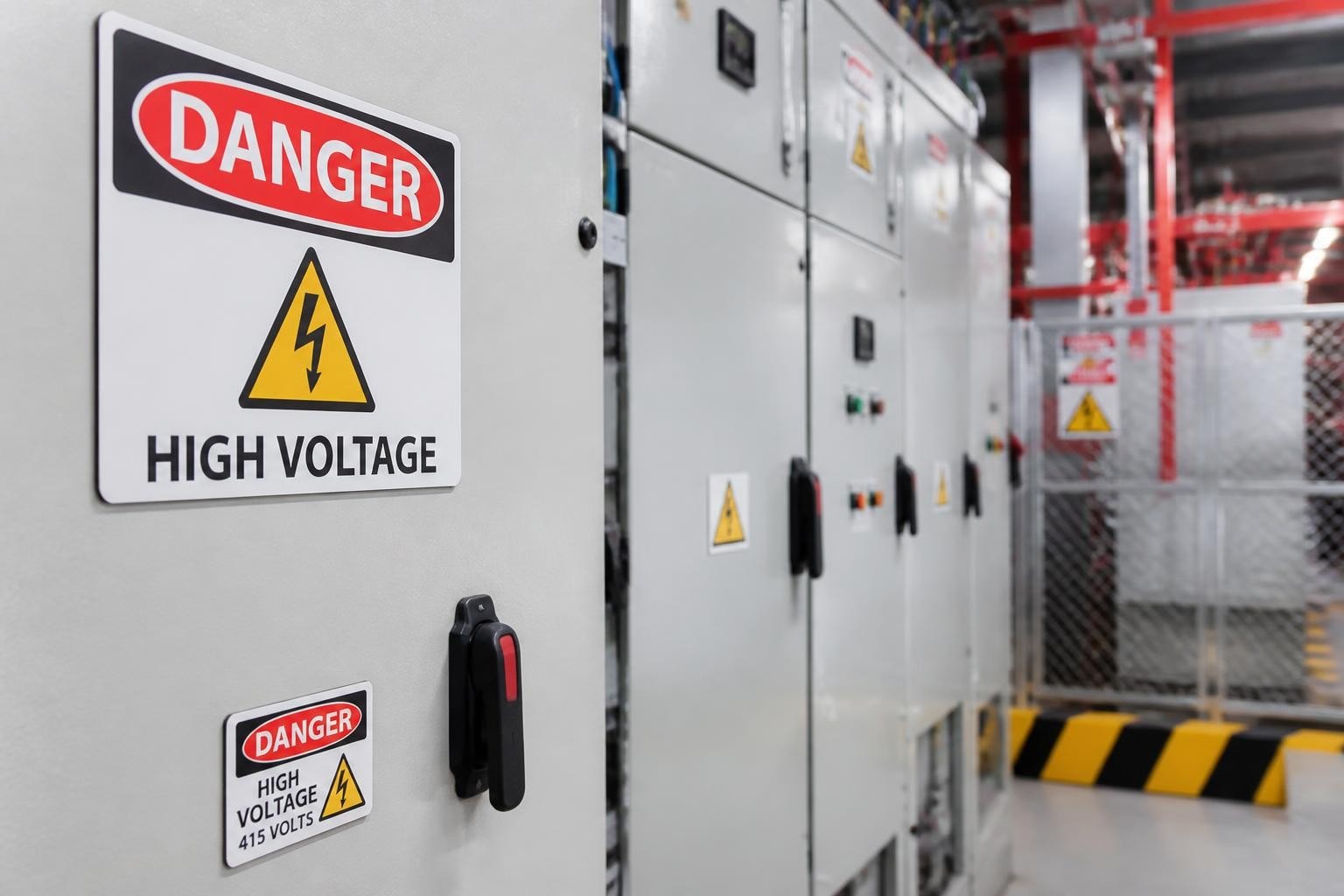
Danger Electrical Hazard Signs: Complete Guide 2026
Electrical hazards represent one of the most severe risks in industrial, commercial, and construction environments. Proper identification and warning of these dangers through clear, compliant signage is not merely a regulatory requirement but a fundamental component of workplace safety management. Danger electrical hazard signs serve as the first line of defence, alerting workers and visitors to potentially fatal risks associated with high-voltage equipment, exposed circuits, and energised systems. Understanding the types, standards, placement requirements, and maintenance of these critical safety markers ensures organisations protect their personnel whilst maintaining compliance with health and safety regulations.
Understanding Danger Electrical Hazard Signs
Danger electrical hazard signs communicate the presence of electrical energy that poses an immediate threat to life or health. These signs differ from general warning signs by indicating severe hazards requiring immediate attention and precautionary measures.
The primary purpose of danger electrical hazard signs extends beyond simple notification. They establish clear boundaries around hazardous zones, provide voltage information, and indicate required protective equipment. In facilities with multiple electrical systems, these signs create a visual safety hierarchy that helps workers identify risk levels at a glance.
Key Components of Effective Electrical Hazard Signs
Essential information elements include:
- Voltage levels and system capacity
- Arc-flash boundary distances
- Required personal protective equipment (PPE)
- Emergency contact information
- Specific hazard warnings (e.g., "High Voltage", "No Entry", "Authorised Personnel Only")
Modern danger electrical hazard signs incorporate standardised symbols and colour coding to ensure universal recognition. The International Organization for Standardization (ISO) and regional safety authorities have established design parameters that maximise visibility and comprehension across language barriers.
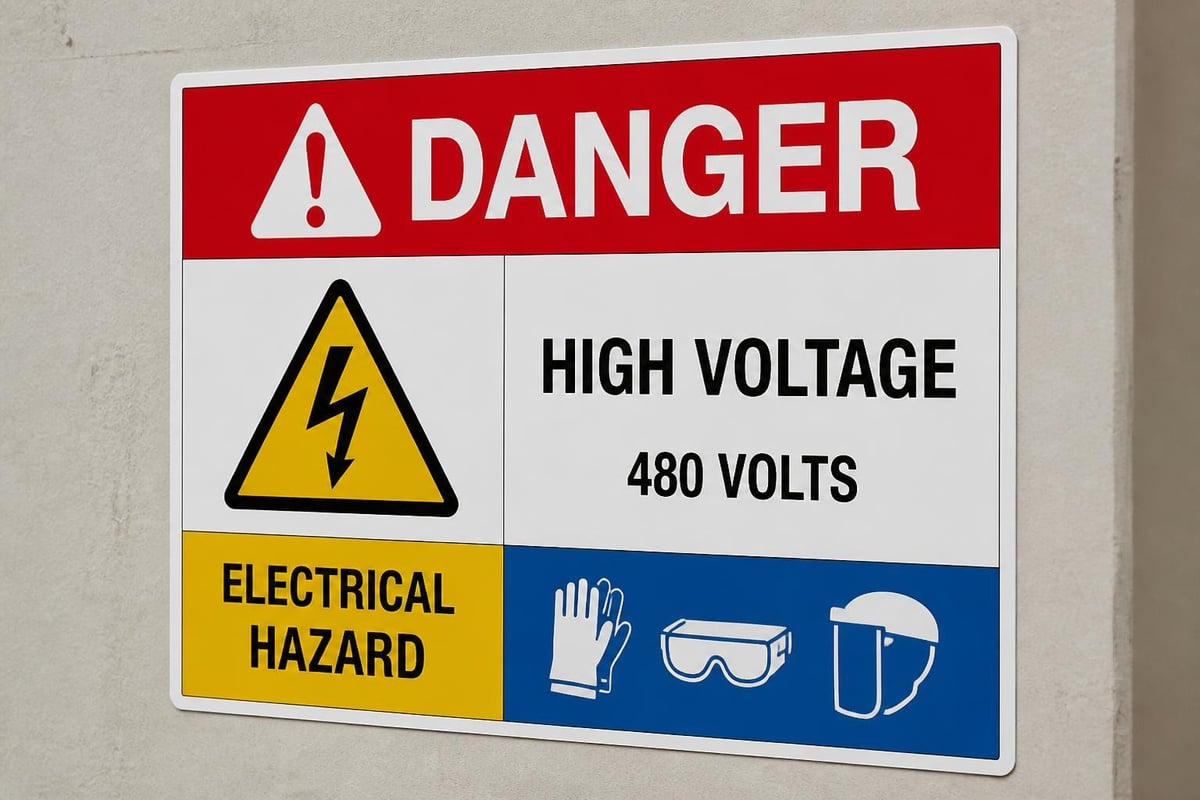
| Sign Element | Purpose | Standard Requirement |
|---|---|---|
| Signal Word | Indicates hazard severity | "DANGER" for immediate threats |
| Colour Scheme | Red/black/white for danger level | ISO 3864 compliance |
| Voltage Information | Specifies electrical capacity | Numerical values in kV or V |
| Pictogram | Universal hazard symbol | Lightning bolt or shock symbol |
| Instruction Text | Specific warnings or procedures | Clear, concise language |
Regulatory Standards and Compliance Requirements
Compliance with electrical safety signage standards protects organisations from liability whilst ensuring worker safety. The NFPA 70E standard provides comprehensive guidance on electrical safety in the workplace, including specific requirements for danger electrical hazard signs and arc-flash labelling.
In the United Kingdom, the Health and Safety Executive (HSE) establishes clear parameters for work near electricity and the placement of appropriate warning signage. These regulations mandate specific sign sizes, placement heights, and visibility requirements based on the nature and severity of electrical hazards.
Arc-Flash Labelling Requirements
Arc-flash incidents represent one of the most catastrophic electrical hazards, releasing tremendous heat and energy capable of causing severe burns, blindness, and death. The IEEE 1584 standard provides calculation methods for determining incident energy levels, which directly inform the content and specifications of arc-flash labels.
Arc-flash labels must include:
- Available incident energy at the working distance
- Arc-flash boundary distance
- Minimum required arc rating of protective clothing
- Nominal system voltage
- Limited or restricted approach boundaries
Organisations should conduct comprehensive arc-flash studies to determine precise labelling requirements for each piece of electrical equipment. NASA's arc-flash labelling procedure demonstrates best practices for implementing detailed versus generic labels based on equipment risk assessment.
Types of Danger Electrical Hazard Signs
The diversity of electrical hazards necessitates various sign types, each designed to communicate specific risks and required precautions. Understanding these categories helps facilities managers select appropriate signage for different applications.
High-Voltage Warning Signs
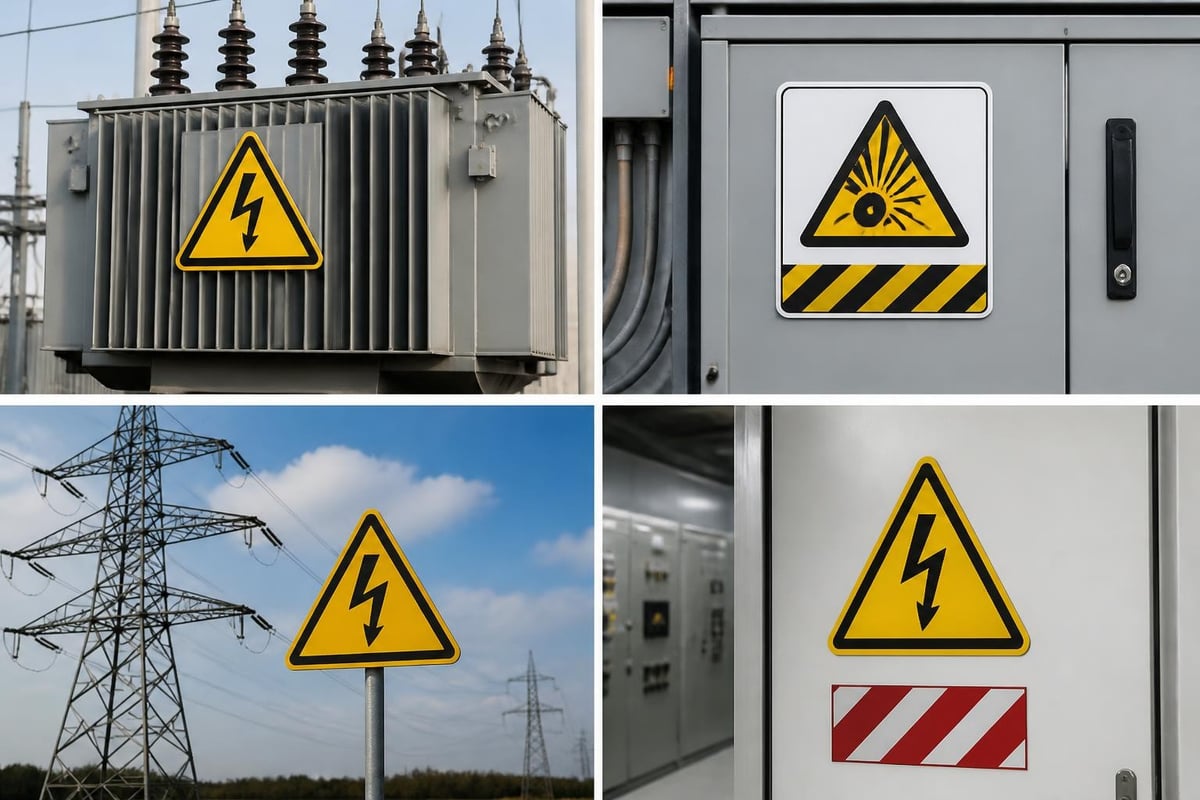
High-voltage danger electrical hazard signs mark equipment operating above designated voltage thresholds, typically 1,000 volts or greater. These signs feature prominent voltage specifications and often include multiple languages in international facilities. Placement locations include transformer yards, substations, overhead power lines, and industrial switchgear rooms.
Electrical Panel and Switchboard Signs
Electrical distribution panels require clear identification to prevent unauthorised access and ensure qualified electricians can quickly locate systems during emergencies. These danger electrical hazard signs typically combine voltage information with access restrictions and arc-flash data.
Overhead Line Hazard Signs
Overhead electrical lines present unique hazards, particularly in construction and outdoor work environments. Signs warning of overhead dangers must be positioned at approach points and include minimum clearance distances for vehicles and equipment.
| Sign Type | Application | Key Information |
|---|---|---|
| High-Voltage Warning | Substations, transformers | Voltage level, keep-out distance |
| Arc-Flash Boundary | Switchgear, panels | Incident energy, PPE requirements |
| Overhead Line Warning | Construction sites | Clearance height, voltage |
| Restricted Access | Electrical rooms | Authorisation requirements |
| Buried Cable Warning | Excavation areas | Cable depth, contact information |
Material Selection and Durability Considerations
The effectiveness of danger electrical hazard signs depends heavily on material quality and environmental suitability. Signs exposed to harsh conditions require robust construction to maintain legibility throughout their service life.
Material Options and Applications
Aluminium composite panels provide excellent durability for outdoor electrical installations, resisting corrosion whilst maintaining dimensional stability. These materials suit substation environments and external transformer locations exposed to weather extremes.
Rigid PVC substrates offer cost-effective solutions for indoor electrical rooms and panel identification. The material's electrical insulation properties add an additional safety layer, though UV resistance may limit outdoor applications.
Photoluminescent materials serve dual purposes in electrical safety, providing standard hazard warnings whilst glowing during power failures. These photoluminescent signs prove particularly valuable in electrical rooms where illumination may fail during the very incidents requiring emergency response.
Self-adhesive vinyl labels suit temporary applications and equipment labels requiring frequent updates. However, environmental degradation limits their longevity compared to rigid panel alternatives.
Environmental Factors Affecting Sign Performance
Temperature extremes, moisture, chemical exposure, and UV radiation all impact sign longevity. Facilities managers should assess environmental conditions at each installation point when selecting danger electrical hazard signs.
Industrial environments with chemical processes require materials resistant to corrosive atmospheres. Coastal facilities need signs that withstand salt spray without deteriorating. Indoor climate-controlled spaces permit broader material choices, focusing on cost-effectiveness whilst maintaining compliance.
Strategic Placement and Visibility Requirements
Proper positioning ensures danger electrical hazard signs fulfil their protective function. Placement decisions should consider viewing angles, approach paths, lighting conditions, and potential obstructions.
Placement Best Practices
Install signs at all entry points to electrical hazard zones, ensuring personnel encounter warnings before entering dangerous areas. Multiple signs may be necessary for large spaces with several access routes.
Mounting height recommendations typically range between 1.5 and 2.0 metres from ground level, positioning signs at average eye height for standing workers. However, site-specific conditions may require adjustments.
Distance and visibility calculations ensure signs remain legible from appropriate distances. As a general principle, sign letter height should measure 25 millimetres for every 7.5 metres of intended viewing distance.
- Identify all electrical hazard zones through comprehensive facility assessment
- Map approach paths and entry points requiring signage
- Calculate required sign sizes based on viewing distances
- Verify adequate illumination or specify photoluminescent materials
- Install signs perpendicular to primary approach angles
- Document sign locations in facility safety plans
Additional safety signs should complement electrical hazard warnings, creating comprehensive safety communication systems. Combining danger electrical hazard signs with mandatory signs specifying required PPE reinforces protective behaviours.
Integration with Personal Protective Equipment Requirements
Danger electrical hazard signs frequently specify PPE requirements for personnel working near energised equipment. This integration between signage and protective equipment creates a systematic approach to electrical safety.
PPE Specification on Electrical Hazard Signs
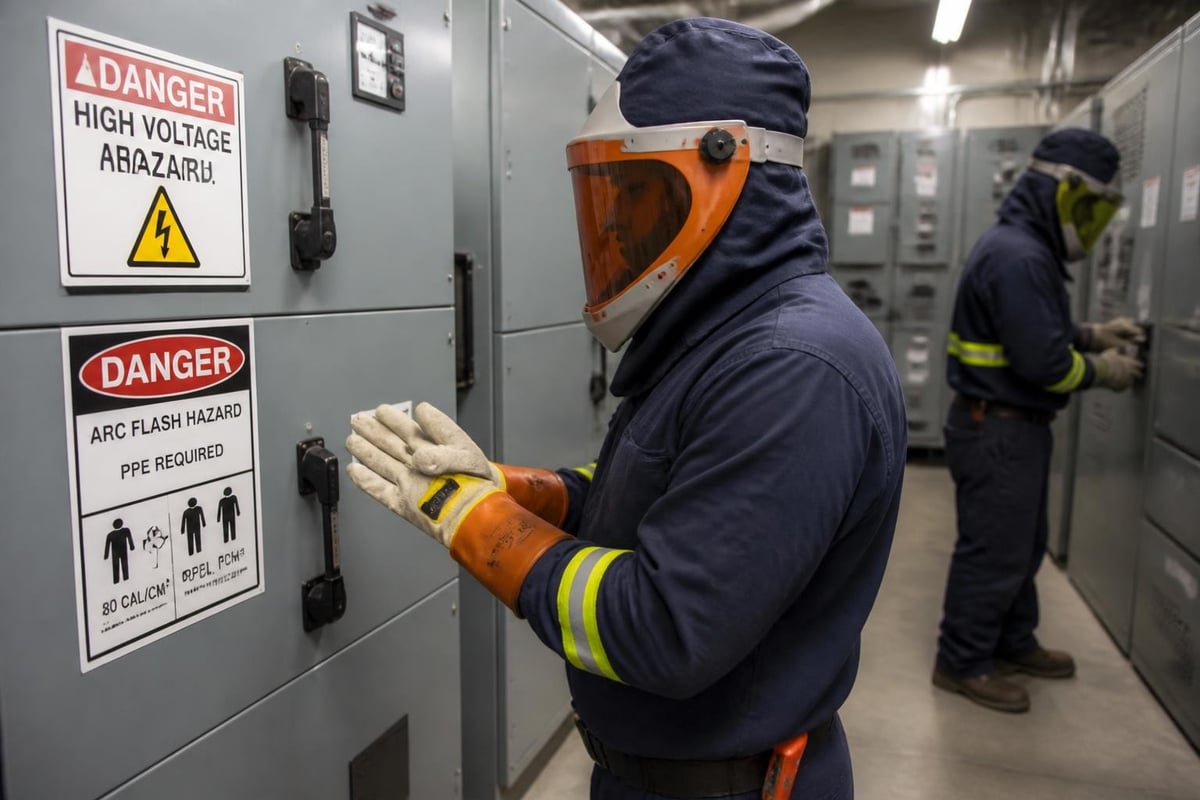
Arc-flash labels should clearly indicate the minimum arc rating of protective clothing required for specific equipment. This information enables workers to select appropriate gear from PPE inventories before beginning work.
Voltage-rated gloves, arc-rated face shields, flame-resistant clothing, and insulated tools all represent critical protective equipment specified on electrical hazard signage. The clarity and specificity of these requirements directly influence worker compliance and safety outcomes.
Facilities should maintain accessible PPE storage near electrical work areas, with clear labelling systems connecting sign requirements to available equipment. This practical arrangement reduces the temptation to proceed without proper protection.
Maintenance and Inspection Protocols
Danger electrical hazard signs require regular inspection and maintenance to ensure continued effectiveness. Environmental degradation, physical damage, and regulatory updates all necessitate systematic sign management programmes.
Inspection Frequency and Criteria
Monthly visual inspections should verify sign legibility, mounting security, and absence of obstruction. Maintenance personnel should document findings and address deficiencies promptly.
Annual comprehensive reviews align signage with current electrical system configurations, ensuring voltage ratings, arc-flash calculations, and boundary information remain accurate. Electrical system modifications often invalidate existing signage, creating compliance gaps and safety risks.
Cleaning and restoration maintain sign visibility in dusty or contaminated environments. Appropriate cleaning methods depend on sign materials, with harsh chemicals potentially damaging certain substrates or printed surfaces.
| Inspection Aspect | Frequency | Action Required |
|---|---|---|
| Physical condition | Monthly | Replace damaged signs immediately |
| Legibility | Monthly | Clean or replace faded signs |
| Information accuracy | Annual | Update after system modifications |
| Mounting security | Quarterly | Tighten or replace fasteners |
| Obstruction check | Monthly | Clear viewing lines |
Training and Awareness Programmes
The most professionally designed and positioned danger electrical hazard signs prove ineffective without proper worker training. Comprehensive electrical safety training should incorporate sign recognition, interpretation, and response protocols.
Educating Personnel on Sign Meanings
New employee orientation must include thorough coverage of electrical hazard signage, ensuring workers understand the severity of dangers indicated. Many organisations underestimate the potential for sign misinterpretation, particularly amongst personnel from diverse linguistic backgrounds.
Practical exercises demonstrating real electrical hazards and corresponding signage reinforce theoretical training. Controlled demonstrations of arc-flash events (through video or simulation) illustrate the catastrophic potential of disregarding danger electrical hazard signs.
Training programmes should address:
- Signal word hierarchy (Danger, Warning, Caution)
- Voltage level interpretation and associated risks
- Arc-flash boundary compliance requirements
- Required PPE selection based on sign specifications
- Emergency response procedures for electrical incidents
- Reporting requirements for damaged or missing signs
Periodic refresher training maintains awareness and updates personnel on signage system changes. Annual sessions provide opportunities to address near-miss incidents and reinforce the life-saving function of proper sign compliance.
Customisation and Special Applications
Standard danger electrical hazard signs address common scenarios, but unique facilities often require customised solutions. Specialised industrial processes, unusual voltage configurations, and multi-hazard environments demand tailored signage approaches.
Bilingual and Multilingual Signs
Workforces increasingly reflect diverse linguistic backgrounds, necessitating multilingual danger electrical hazard signs in many facilities. Effective multilingual signs balance comprehensibility with visual clarity, avoiding cluttered designs that reduce impact.
Pictogram-based designs provide universal communication whilst supplementary text addresses language diversity. This layered approach ensures primary hazard communication transcends language barriers whilst providing detailed information for literate workers.
Facility-Specific Hazard Communication
Unique electrical systems may require custom signage beyond standard offerings. Facilities with unusual voltage levels, DC systems, or battery banks need precisely worded danger electrical hazard signs reflecting specific conditions.
Chemical plants with electrical hazards near flammable atmospheres require combined hazard signs addressing multiple simultaneous risks. These applications benefit from professional safety consultation to ensure comprehensive hazard communication without overwhelming information density.
Digital Integration and Smart Safety Systems
Modern facilities increasingly incorporate digital technologies into safety management, including electronic versions of danger electrical hazard signs. These systems offer dynamic updating capabilities and integration with access control systems.
Electronic Sign Boards
Digital display panels near electrical equipment can provide real-time hazard information, adapting warnings based on current system status. When equipment transitions from de-energised maintenance mode to operational status, electronic signs automatically update to reflect changed conditions.
These systems integrate with first aid equipment locations and emergency response protocols, providing comprehensive safety information at critical decision points. However, backup power systems must ensure continued operation during electrical failures.
Mobile Device Integration
Quick Response (QR) codes on danger electrical hazard signs enable workers to access detailed safety information through mobile devices. This approach provides extensive procedural guidance without cluttering physical signage, maintaining visual impact whilst offering depth for those requiring additional detail.
Cost Considerations and Budgeting
Implementing comprehensive electrical hazard signage programmes requires significant investment, though costs pale compared to potential incident expenses. Strategic budgeting ensures adequate coverage whilst optimising resource allocation.
Initial Installation Investment
Comprehensive facility assessment and initial sign installation represent the largest expenditure. Facilities should budget for professional arc-flash studies, which determine precise labelling requirements and prevent costly errors.
Budget components include:
- Professional electrical hazard assessment
- Sign design and manufacturing
- Installation labour and materials
- Training programme development
- Documentation and compliance records
Economies of scale favour standardised sign designs across multiple locations. However, customisation requirements for unique hazards prevent complete standardisation in most industrial facilities.
Ongoing Maintenance Costs
Annual budgets should allocate funds for sign replacement, system updates following electrical modifications, and periodic comprehensive reviews. Proactive replacement prevents degraded signs from creating compliance gaps.
Establishing relationships with reliable suppliers streamlines procurement and ensures consistent quality. SafetySignsForSale provides comprehensive catalogues enabling facilities managers to quickly identify appropriate solutions for diverse applications.
Industry-Specific Applications
Different industries face unique electrical hazard profiles, necessitating tailored approaches to danger electrical hazard signs. Understanding sector-specific requirements ensures appropriate hazard communication.
Manufacturing and Industrial Facilities
Manufacturing environments typically feature extensive electrical distribution systems, automated machinery with multiple power sources, and production equipment operating at various voltages. These facilities require comprehensive signage programmes addressing machine-specific hazards alongside general electrical infrastructure warnings.
Production areas benefit from colour-coded systems identifying different voltage levels, enabling quick visual differentiation between low-voltage control circuits and high-voltage power supplies.
Construction and Temporary Installations
Construction sites present dynamic electrical hazards as systems evolve throughout project phases. Temporary power distribution requires danger electrical hazard signs that adapt to changing configurations whilst maintaining consistent protective functions.
Overhead line warnings prove particularly critical in construction, where crane operations and elevated work platforms create electrocution risks. Signs specifying minimum clearance distances prevent fatal contact incidents.
Healthcare and Critical Infrastructure
Hospitals and data centres cannot tolerate power interruptions, creating unique electrical safety challenges. These facilities often maintain energised systems during maintenance, elevating risks and requiring particularly robust danger electrical hazard signs.
Emergency power systems, uninterruptible power supplies, and backup generators all require specific hazard identification. Integration with fire equipment signage ensures comprehensive emergency preparedness.
Future Trends in Electrical Hazard Signage
Evolving technologies and regulatory frameworks continuously shape danger electrical hazard signs. Anticipating future developments enables proactive adaptation and maintained compliance.
Augmented Reality Applications
Emerging augmented reality (AR) systems overlay digital information onto physical environments, potentially revolutionising electrical hazard communication. Workers wearing AR-enabled safety glasses could receive real-time hazard alerts, equipment status information, and procedural guidance whilst viewing electrical systems.
These technologies supplement rather than replace physical danger electrical hazard signs, providing enhanced information layers whilst maintaining fundamental visual warnings for all personnel.
Standardisation and International Harmonisation
Global commerce increasingly demands harmonised safety standards facilitating international operations. Ongoing efforts to align electrical safety signage requirements across jurisdictions simplify compliance for multinational organisations whilst improving overall safety outcomes through proven best practices.
Effective electrical safety management demands comprehensive danger electrical hazard signs that clearly communicate risks, specify protective requirements, and withstand environmental challenges throughout their service life. By selecting appropriate materials, ensuring strategic placement, maintaining signage integrity, and integrating warnings with broader safety systems, organisations protect their most valuable asset: their people. Whether you require standard electrical hazard signs, customised arc-flash labels, or complete facility safety signage solutions, SafetySignsForSale offers the expertise and product range to meet your electrical safety communication needs whilst ensuring full regulatory compliance.