


Emergency Signs: Essential Guide for Safety & Compliance
Emergency signs represent one of the most critical elements of workplace safety infrastructure, serving as the first line of communication during crises when every second counts. These visual markers guide occupants to safety, indicate the location of life-saving equipment, and communicate vital information when verbal instructions may be impossible to hear or understand. From manufacturing facilities to healthcare settings, properly designed and positioned emergency signs can mean the difference between orderly evacuation and chaos during fire, chemical spills, medical emergencies, or natural disasters.
Understanding the Core Categories of Emergency Signs
Emergency signs encompass a broad spectrum of visual communication devices, each serving distinct purposes within comprehensive safety systems. The primary categories include evacuation and egress signage, equipment location indicators, hazard warnings, and assembly point markers.
Evacuation and Exit Route Signage
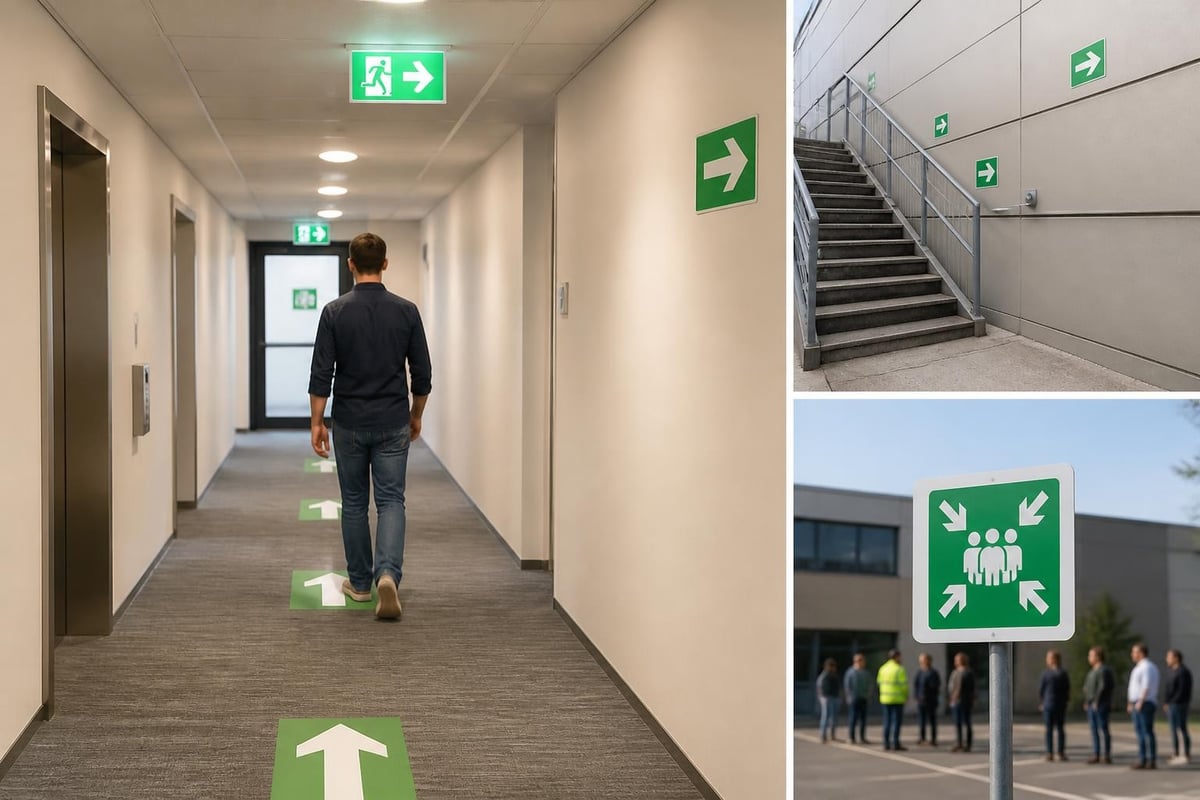
Exit signs remain the most recognizable form of emergency signage, typically featuring illuminated green panels with white pictograms or text. These markers must be visible from any point within a building, creating a continuous visual path towards safe egress routes. According to current NFPA Life Safety Code requirements, exit signs must maintain specific luminance levels and placement standards to ensure visibility through smoke or during power failures.
Directional arrows supplement basic exit signs, particularly in complex buildings where the nearest exit may not be immediately obvious. These wayfinding elements create a logical flow that prevents bottlenecks and confusion during evacuations.
Key specifications for effective exit signage include:
- Minimum height requirements for visibility over crowds
- Contrast ratios between background and foreground elements
- Emergency backup power supply duration (typically 90 minutes minimum)
- Weatherproof construction for external escape routes
- Photoluminescent options that glow without electricity
Equipment Location Signs
Emergency equipment loses its value if personnel cannot locate it quickly under stress. Fire extinguisher signs, first aid station markers, automated external defibrillator (AED) indicators, and emergency shower locations all require clear, standardized signage that can be recognised instantly.
The visual hierarchy of equipment signs typically employs color-coding systems recognised across industries. Red signifies fire-fighting equipment, green indicates first aid and safety resources, whilst yellow denotes caution or hazard zones requiring personal protective equipment.
| Equipment Type | Standard Colour | Pictogram Style | Mounting Height |
|---|---|---|---|
| Fire Extinguisher | Red background, white symbol | Flames and extinguisher | 1.2-1.5m from floor |
| First Aid Kit | Green background, white cross | Medical cross or box | 1.5-2m from floor |
| AED Station | Green background, white heart/lightning | Heart with electricity symbol | Eye level (1.5-1.7m) |
| Emergency Eyewash | Green background, white symbol | Eye and water stream | Adjacent to station |
| Emergency Exit | Green background, white figure | Running person, arrow | Above door frame |
Hazard and Warning Signs
Whilst evacuation signs direct people away from danger, hazard warnings prevent entry into dangerous areas or alert personnel to specific risks. These emergency signs communicate immediate threats such as electrical hazards, confined spaces, chemical storage areas, or radiation zones.
Warning signs typically employ the internationally recognised triangular format with yellow background and black border. The severity of the hazard often determines additional elements such as flashing lights, audible alarms, or supplementary text explaining required precautions.
Regulatory Compliance and Legal Requirements
Emergency signs are not merely recommendations but legally mandated safety features across most jurisdictions. The regulatory landscape encompasses international standards, national legislation, and industry-specific requirements that collectively establish minimum performance criteria.
UK Health and Safety Regulations
The Safety Signs and Signals Regulations 2001 establish comprehensive requirements for emergency signage throughout British workplaces. These regulations mandate that employers conduct risk assessments to determine where signs are necessary, ensure signs meet minimum visibility standards, and maintain signage in serviceable condition.
Specific requirements address:
- Sign dimensions relative to viewing distance
- Illumination levels in normal and emergency conditions
- Colour specifications matching BS EN ISO 7010 standards
- Pictogram design for international comprehension
- Supplementary text in appropriate languages
Enforcement falls under the Health and Safety Executive (HSE), which conducts inspections and can issue improvement notices or prosecute non-compliant organisations. Penalties for inadequate emergency signage have increased substantially, particularly following incidents where poor wayfinding contributed to injuries or fatalities.
Healthcare-Specific Emergency Signage
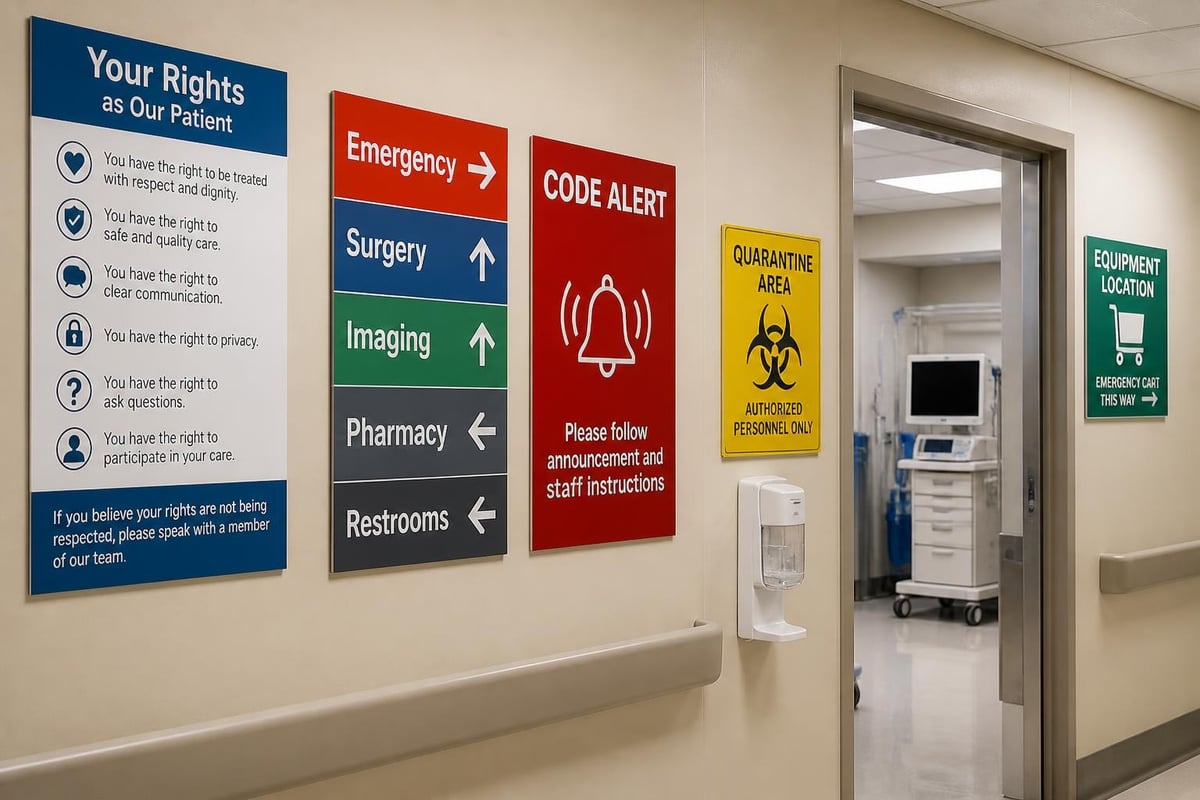
Medical facilities face unique emergency signage challenges due to patient vulnerability, complex layouts, and regulatory scrutiny. The CMS updated model signage guidance under EMTALA specifies required emergency department postings that inform patients of their rights to emergency medical screening regardless of ability to pay.
Healthcare emergency signs must accommodate diverse populations including those with limited English proficiency, visual impairments, or cognitive disabilities. Multi-language signs, tactile elements, and high-contrast designs become essential rather than optional features.
Strategic Placement and Visibility Optimisation
The most brilliantly designed emergency signs fail if positioned where they cannot be seen during actual emergencies. Placement strategy must account for smoke accumulation patterns, crowd movement dynamics, lighting failures, and the physiological effects of stress on human perception.
Height and Mounting Considerations
Exit signs must be mounted above door frames at minimum heights that prevent obstruction by crowds or equipment. The standard recommendation places exit signs between 2.0 and 2.4 metres from the finished floor, though specific requirements vary based on ceiling height and room dimensions.
Floor-level escape route marking has gained prominence following research into smoke behaviour during fires. When smoke fills upper portions of buildings, occupants instinctively crouch or crawl where visibility may be better. Photoluminescent strips along escape routes at ankle height provide guidance when ceiling-mounted signs become obscured.
Optimal placement checklist:
- Visible from any point within the space requiring 180-degree coverage
- Unobstructed by doors in open position, suspended equipment, or seasonal decorations
- Adequately spaced to create continuous visual path (typically maximum 30-metre intervals)
- Supplementary signs at corridor intersections and direction changes
- Redundant coverage in critical areas to account for potential obstructions
Lighting and Photoluminescent Technology
Emergency signs must remain visible during power failures when panic increases and decision-making deteriorates. Traditional solutions employ battery-backup systems maintaining illumination for prescribed durations, whilst photoluminescent materials offer passive alternatives requiring no electricity.
Photoluminescent signs absorb ambient light during normal conditions and emit a sustained glow during darkness. Modern formulations provide visibility for 8-12 hours following light exposure, exceeding the duration of most emergency situations. This technology particularly suits locations where battery maintenance proves challenging or where sustainability goals prioritise energy-free solutions.
Design Standards and Pictogram Selection
Effective emergency signs transcend language barriers through universally recognised pictograms that communicate meaning instantly. The ISO 7010 standard establishes a comprehensive library of safety symbols designed for global comprehension, gradually replacing older national standards with inconsistent imagery.
Symbol Standardisation and Recognition
Research into symbol comprehension demonstrates that standardised pictograms achieve significantly higher recognition rates than text-based signs, particularly among international populations or during high-stress situations when reading comprehension diminishes. The running person exit symbol, for instance, achieves near-universal recognition regardless of cultural background or language proficiency.
Consistency across all emergency signs within a facility reinforces learning and speeds recognition. Mixing multiple design standards or creating custom symbols undermines the intuitive understanding that standardised systems provide.
| Sign Function | ISO 7010 Code | Symbol Description | Minimum Size |
|---|---|---|---|
| Emergency Exit | E001/E002 | Running figure, right/left arrow | 150mm × 150mm |
| First Aid | E003 | White cross on green | 150mm × 150mm |
| Assembly Point | E007 | Group of figures | 200mm × 200mm |
| Fire Extinguisher | F001 | Extinguisher silhouette | 100mm × 100mm |
| AED Location | E010 | Heart with lightning bolt | 150mm × 150mm |
Colour Psychology and Contrast Ratios
Emergency signs exploit colour psychology to trigger immediate cognitive responses. Green universally signals safety, permission to proceed, or the location of safety resources. Red demands attention and indicates either danger or the location of fire-fighting equipment. Yellow warns of hazards requiring caution or personal protection.
Contrast ratios between pictograms and backgrounds must meet minimum standards ensuring visibility under degraded conditions. The luminance contrast between foreground and background elements should exceed 50% according to current accessibility standards, whilst color-blind individuals must be able to distinguish signs through shape and pattern rather than colour alone.
Industry-Specific Applications and Requirements
Different industries face unique emergency scenarios requiring specialised signage approaches beyond standard evacuation systems. Understanding sector-specific needs ensures emergency signs address actual risks rather than providing generic coverage.
Manufacturing and Industrial Facilities
Industrial environments present complex hazards including chemical spills, confined spaces, machinery lockout points, and process-specific emergencies. Emergency signs in these settings must identify equipment shutdown locations, emergency isolation valves, chemical shower stations, and hazardous material storage areas.
The WHO Emergency Response Framework provides valuable guidance on emergency communication systems applicable to industrial settings, particularly where hazardous materials or large-scale incidents require coordinated response protocols.
Many manufacturing facilities implement zone-based emergency signage systems where different areas display unique assembly points and escape routes. This approach prevents mass convergence at single exits whilst ensuring accountability during headcounts.
Educational Institutions
Schools and universities require emergency signs that accommodate varying age groups, high occupant densities, and infrequent visitors unfamiliar with layouts. Lockdown procedures, severe weather shelters, and special assistance areas necessitate signage beyond traditional fire evacuation systems.
Age-appropriate design becomes crucial in primary schools where young children may not comprehend standard adult-oriented signs. Simplified pictograms, color-coding systems, and even cartoon-style graphics can enhance understanding amongst younger populations whilst maintaining compliance with fundamental safety standards.
Retail and Public Assembly Spaces
High-occupancy venues face unique challenges during emergencies when large crowds must evacuate efficiently through limited exits. Cinema complexes, shopping centres, sports stadiums, and entertainment venues require robust wayfinding systems that function when filled to capacity.
Retail emergency signs must account for seasonal decorations, promotional displays, and frequently changing layouts that might obstruct sightlines. Many facilities implement ceiling-suspended signs providing visibility over temporary obstacles and crowd heads.
Maintenance, Testing, and Documentation Requirements
Emergency signs deteriorate through environmental exposure, physical damage, and simple aging. Systematic maintenance programmes ensure signs remain functional when needed, whilst documentation demonstrates compliance during inspections.
Inspection Frequencies and Checklists
Monthly visual inspections should verify that all emergency signs remain visible, undamaged, and appropriately illuminated. Illuminated signs require functional tests confirming battery backup systems activate during simulated power failures.
Comprehensive maintenance schedule:
- Weekly: Visual verification of exit sign illumination in high-traffic areas
- Monthly: Full facility walkthrough documenting all emergency signage condition
- Quarterly: Battery backup testing for illuminated signs (30-second test)
- Annually: Extended battery discharge test (90-minute duration), photoluminescent charging verification
- Bi-annually: Professional assessment of signage adequacy following layout changes
Documentation and Compliance Records
Maintaining detailed records of emergency sign installations, inspections, repairs, and replacements provides evidence of due diligence during regulatory audits or post-incident investigations. Digital asset management systems can track individual signs through their lifecycle, scheduling maintenance and triggering replacement before failures occur.
Records should include installation dates, manufacturer specifications, test results, deficiency remediation, and photographs documenting proper placement. This documentation proves particularly valuable when employee turnover results in lost institutional knowledge about facility safety systems.
Emerging Technologies and Future Developments
Emergency signage technology continues evolving beyond static signs towards dynamic, intelligent systems that adapt to specific emergency scenarios. These innovations promise enhanced effectiveness whilst introducing new considerations around reliability and maintenance.
Dynamic Digital Emergency Signs
LED-based emergency signs can display different information depending on emergency type, showing exit routes during fires whilst indicating shelter locations during severe weather or security threats. Integration with building management systems enables signs to direct occupants away from affected areas towards safer alternatives.
The primary concern with digital emergency signs involves ensuring reliability during actual emergencies when power failures or system malfunctions might render them useless. Redundant power supplies, fail-safe modes defaulting to standard exit information, and backup static signs mitigate these risks.
Smartphone Integration and Personal Guidance
Building emergency apps can provide personalised evacuation guidance through occupant smartphones, complementing traditional emergency signs with turn-by-turn directions accounting for real-time conditions. These systems track individual locations and guide them along optimal routes whilst providing status updates and reunion information.
Such technologies supplement rather than replace physical emergency signs, which remain essential for visitors without app access, during network failures, or when occupants cannot safely consult devices whilst evacuating.
Implementing comprehensive emergency signage requires understanding regulatory requirements, selecting appropriate sign types, ensuring proper placement, and maintaining systems throughout their operational life. Whether you're establishing safety systems in a new facility or upgrading existing infrastructure to meet current standards, SafetySignsForSale provides the complete range of compliant emergency signs, expert guidance on regulatory requirements, and practical support for creating effective safety communication systems that protect your people and demonstrate your commitment to workplace safety.