


Traffic Board Signs: Standards & Selection Guide 2026
Traffic board signs represent a critical component of road safety infrastructure, serving as visual communication tools that guide, warn, and regulate road users across diverse environments. From motorways to industrial estates, these signs provide essential information that prevents accidents, manages traffic flow, and ensures compliance with regulatory requirements. Understanding the various types, materials, placement strategies, and standards governing traffic board signs enables organisations to create safer environments whilst meeting legal obligations.
Understanding Traffic Board Signs and Their Classification
Traffic board signs fall into several distinct categories, each serving specific purposes within transportation networks and private properties. The primary classifications include regulatory signs, warning signs, and informational signs, though additional categories exist for temporary traffic control and special circumstances.
Regulatory signs establish rules that road users must follow, including speed limits, stop requirements, and directional restrictions. These signs typically feature circular shapes with red borders, though stop signs maintain their distinctive octagonal design. Non-compliance with regulatory signage can result in penalties and increased liability exposure.
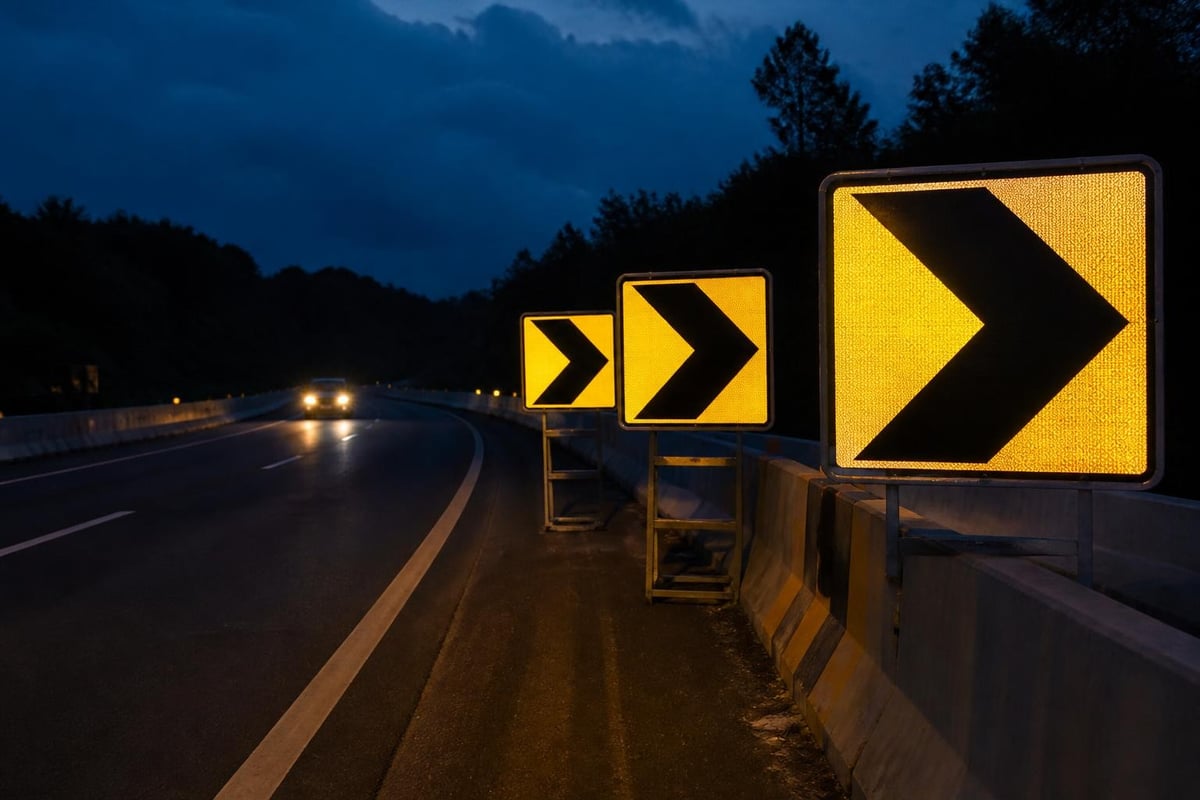
Warning signs alert drivers to potential hazards ahead, such as sharp curves, pedestrian crossings, or construction zones. The triangular shape with red borders makes these signs immediately recognisable, triggering heightened awareness amongst road users.
Material Specifications for Different Applications
The selection of appropriate materials directly impacts the longevity, visibility, and cost-effectiveness of traffic board signs. Different environments demand specific material properties to withstand weather conditions, vandalism, and long-term exposure.
| Material Type | Durability Rating | Typical Lifespan | Best Applications |
|---|---|---|---|
| Aluminium Composite | High | 10-15 years | Permanent installations, high-traffic areas |
| Corrugated Plastic | Medium | 3-5 years | Temporary signage, construction zones |
| Rigid PVC | Medium-High | 7-10 years | Car parks, private roads |
| Steel (Galvanised) | Very High | 15-20+ years | Motorways, extreme weather locations |
Reflective sheeting grades further influence performance characteristics. Engineering-grade sheeting provides adequate visibility for low-speed environments, whilst high-intensity prismatic sheeting ensures visibility from greater distances on high-speed routes. The Manual on Uniform Traffic Control Devices provides detailed specifications for reflectivity requirements based on speed limits and ambient lighting conditions.
Regulatory Compliance and Standard Requirements
Organisations deploying traffic board signs must navigate complex regulatory frameworks that vary by jurisdiction and application. In the United Kingdom, traffic signs on public roads must comply with the Traffic Signs Regulations and General Directions (TSRGD), which prescribe exact dimensions, colours, and placement criteria.
For private property and industrial sites, greater flexibility exists, yet adherence to recognised standards demonstrates due diligence and reduces liability exposure. Many organisations voluntarily adopt public road standards for internal traffic management to maintain consistency and clarity.
Dimensional Standards and Visibility Requirements
Sign size directly correlates with visibility distance and approach speed. The relationship follows established principles where higher speeds demand larger signs to provide adequate reaction time.
- Low-speed zones (below 30 mph): Minimum 450mm for warning triangles, 600mm for regulatory circles
- Medium-speed zones (30-50 mph): 600mm for triangles, 750mm for circles
- High-speed zones (above 50 mph): 900mm for triangles, 1200mm for circles
- Motorways and dual carriageways: 1200-1500mm depending on specific requirements
The Transport for London Streetscape Guidance offers comprehensive recommendations for urban environments where clutter reduction and visual integration require careful balancing with safety imperatives.
Strategic Placement and Sightline Considerations
Effective traffic board signs placement requires analysis of multiple factors including approach angles, obstruction points, and driver decision-making requirements. Poorly positioned signs create confusion, increase accident risk, and may fail legal scrutiny following incidents.
Mounting height typically ranges between 1.5 and 2.5 metres from ground level to sign base, though specific circumstances may warrant deviation. This range ensures visibility for vehicle operators whilst avoiding conflicts with pedestrians and cyclists.
Lateral placement must account for shoulder widths, verge conditions, and potential vehicle encroachment. Signs positioned too close to carriageways face increased damage risk, whilst excessive setback reduces visibility and effectiveness.
Advance Warning Distance Calculations
Warning signs require sufficient advance placement to allow drivers adequate reaction and response time. The calculation incorporates multiple variables including vehicle speed, road gradient, weather conditions, and required action complexity.
| Road Speed | Minimum Advance Distance | Recommended Distance |
|---|---|---|
| 20 mph | 25 metres | 35 metres |
| 30 mph | 45 metres | 60 metres |
| 40 mph | 70 metres | 90 metres |
| 50 mph | 100 metres | 135 metres |
| 60 mph | 140 metres | 180 metres |
| 70 mph | 185 metres | 240 metres |
Complex junctions, restricted visibility locations, and adverse weather regions demand distances towards or exceeding the recommended values. Defensive placement strategies acknowledge real-world conditions rather than ideal theoretical scenarios.
Maintenance Programmes and Inspection Protocols
Traffic board signs deteriorate through various mechanisms including weather exposure, vandalism, material fatigue, and accidental damage. Systematic inspection and maintenance programmes prevent sign failure and ensure continued compliance with visibility standards.
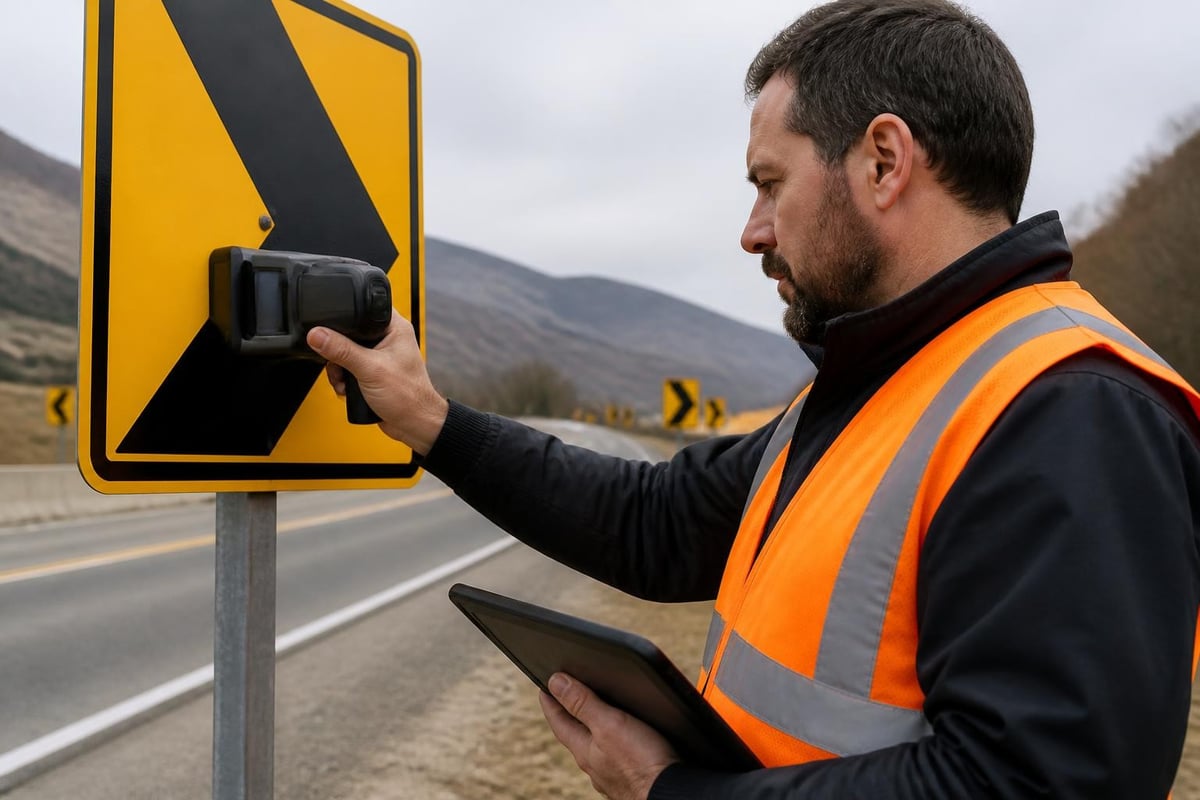
Regular inspection intervals should occur quarterly for high-traffic locations and semi-annually for lower-risk areas. Inspections assess retroreflectivity, structural integrity, colour retention, and message clarity.
Key inspection criteria include:
- Retroreflective performance: Using retroreflectometers to measure luminance coefficients
- Physical damage: Checking for dents, cracks, holes, or bent mounting hardware
- Colour accuracy: Ensuring colour values remain within specified tolerances
- Legibility: Verifying text and symbols remain sharp and unobscured
- Stability: Confirming posts and mounting systems maintain secure installation
Retroreflectivity Degradation Patterns
Understanding typical degradation patterns enables proactive replacement before signs fall below minimum performance thresholds. Retroreflectivity doesn't decline linearly; instead, deterioration often accelerates after crossing specific threshold points.
Coastal environments, industrial zones with airborne contaminants, and areas experiencing extreme temperature fluctuations exhibit faster degradation rates. Historical performance data from similar environments provides valuable predictive information for replacement scheduling.
Temporary Traffic Management Applications
Temporary traffic board signs serve essential functions during roadworks, events, and emergency situations. These applications demand different characteristics compared to permanent installations, prioritising rapid deployment, high visibility, and cost-effective short-term performance.
Portable sign systems incorporate weighted bases, folding frames, and easily transported panels. These systems must withstand wind loading whilst remaining stable without permanent fixing methods. Wind resistance calculations become critical for larger signs, particularly in exposed locations.
Duration-appropriate materials match expected deployment periods. Week-long installations may utilise corrugated plastic, whilst multi-month projects justify more durable materials to reduce replacement costs and maintain consistent appearance.
The Institute of Transportation Engineers provides technical resources addressing temporary traffic control sign management, including emerging technologies and connected vehicle implications for dynamic signage systems.
Illumination and Enhancement Technologies
Enhanced visibility technologies extend traffic board signs effectiveness beyond passive retroreflection. Active illumination, LED integration, and solar-powered systems address specific challenging environments.
- Internal illumination: Backlit signs for permanent installations requiring 24/7 visibility
- External spotlighting: Adjustable fixtures highlighting critical signs in low-light conditions
- LED borders: Active attention-drawing elements for high-risk locations
- Solar-powered systems: Off-grid solutions for remote locations lacking electrical infrastructure
- Variable message displays: Electronic signs conveying time-sensitive information
Specialised Applications and Sector-Specific Requirements
Different industries require tailored approaches to traffic board signs based on unique operational characteristics, risk profiles, and regulatory environments. Manufacturing facilities, logistics operations, and construction sites each present distinct challenges.
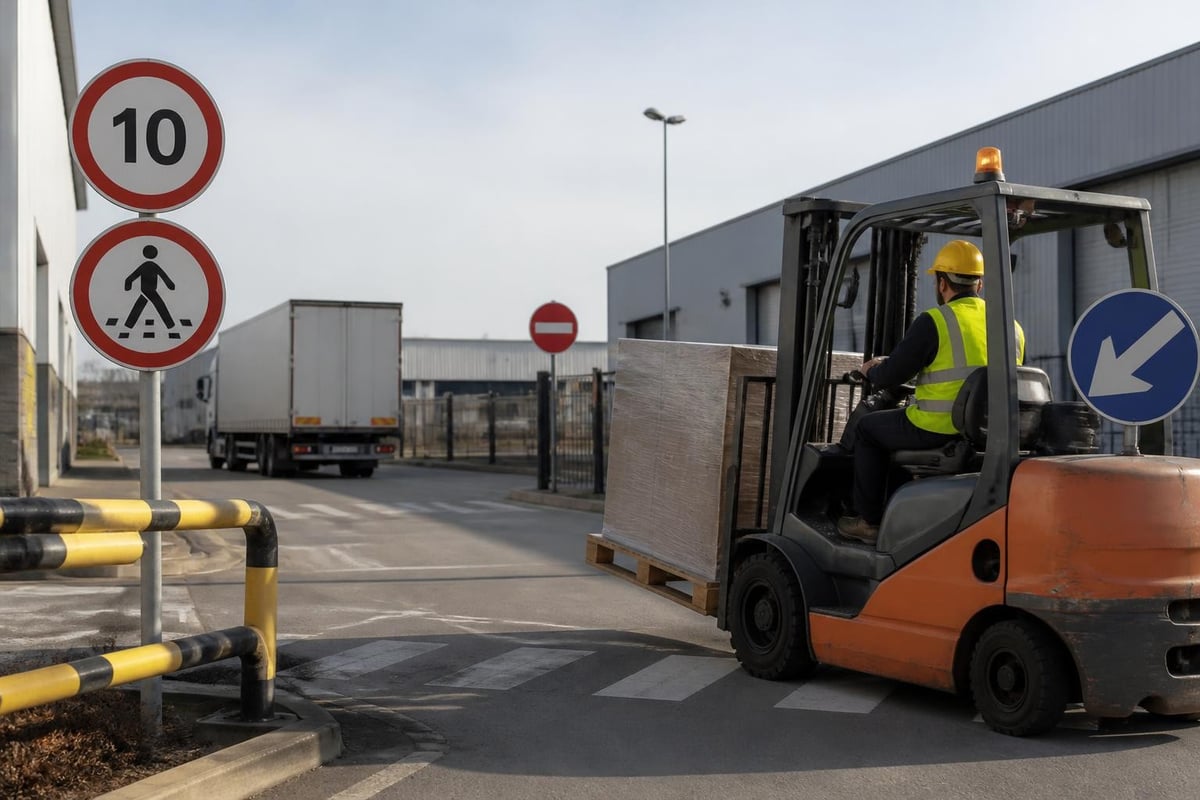
Industrial estates often feature complex internal road networks supporting heavy goods vehicles, fork-lift traffic, and pedestrian movements. Clear segregation signage, maximum height warnings, and loading bay designation become critical safety elements.
Construction sites require comprehensive temporary traffic management addressing constantly evolving conditions. Phased construction programmes demand regular sign repositioning, updating, and modification as work progresses through different zones.
| Sector | Primary Sign Types | Key Compliance Drivers |
|---|---|---|
| Manufacturing | Speed limits, segregation, height restrictions | Health & Safety Executive requirements |
| Logistics | Loading bay designation, traffic flow, vehicle type restrictions | Vehicle operator licensing conditions |
| Construction | Temporary route guidance, hazard warnings, access control | CDM Regulations, principal contractor duties |
| Retail | Parking management, pedestrian priority, disabled access | Equality Act compliance, planning conditions |
Integration with Broader Safety Management Systems
Traffic board signs function most effectively when integrated within comprehensive safety management approaches rather than standalone interventions. Coordinated strategies encompassing signage, road markings, physical barriers, and procedural controls create layered protection systems.
Risk assessment methodologies identify specific hazards requiring traffic sign interventions. Hierarchy of controls principles suggest eliminating hazards where possible before relying on warning signs. However, residual risks inevitably require clear communication through appropriate signage.
Digital Integration and Smart Infrastructure Developments
Emerging technologies increasingly influence traffic board signs deployment and management. Digital inventories, GPS-tagged assets, and predictive maintenance algorithms represent the evolution from reactive to proactive sign management strategies.
Asset management systems track individual signs throughout lifecycles from procurement through installation, maintenance interventions, and eventual replacement. Centralised databases enable compliance reporting, budget forecasting, and performance trend analysis.
Connected sign technologies communicate with vehicles and central management systems, creating dynamic response capabilities. Variable message signs adapt content based on real-time conditions, traffic volumes, and incident detection.
Future developments point towards vehicle-to-infrastructure communication where traffic board signs broadcast digital signals supplementing or eventually replacing visual messages. However, traditional passive signage will remain essential for decades as vehicle fleets gradually transition.
Cost-Benefit Analysis and Investment Justification
Organisations often struggle with appropriate investment levels in traffic board signs, particularly when balancing competing budget priorities. Structured cost-benefit analysis frameworks support evidence-based decision-making.
Direct costs include sign purchase, installation labour, mounting hardware, and ongoing maintenance. Indirect costs encompass accident-related expenses, regulatory penalties for non-compliance, and reputational damage following serious incidents.
Benefits quantification requires estimating accident reduction, improved traffic flow efficiency, and liability reduction. Historical incident data combined with industry benchmarks provides baseline information for calculating potential returns on signage investments.
Procurement Strategies and Supplier Selection
Selecting appropriate suppliers for traffic board signs impacts product quality, compliance assurance, and long-term value. Multiple factors beyond initial purchase price influence total cost of ownership and performance outcomes.
Certification and accreditation verify manufacturers' quality systems and product testing protocols. Suppliers demonstrating compliance with relevant British Standards and international equivalents provide greater assurance of regulatory conformity.
Material authenticity represents a significant consideration as substandard reflective sheeting or substrate materials compromise performance and longevity. Reputable suppliers provide material certification and traceability documentation.
Key supplier evaluation criteria include:
- Product range breadth covering standard and bespoke requirements
- Technical support for specification development and compliance verification
- Lead times and stock availability for urgent replacements
- Installation services or partnership with qualified contractors
- Warranty terms and post-installation support provisions
Effective traffic board signs implementation requires balancing regulatory compliance, material selection, strategic placement, and ongoing maintenance within practical budget constraints. Organisations prioritising systematic approaches to sign management create safer environments whilst demonstrating appropriate duty of care. Whether you require standard regulatory signage, specialised warning boards, or comprehensive traffic management solutions, SafetySignsForSale offers extensive product ranges and expert guidance to meet your specific requirements across industrial, commercial, and institutional applications.