


Scaffolding Tags: Essential Guide for Site Safety
Scaffolding tags represent a critical component of construction site safety management, serving as visible indicators of inspection status and structural integrity. These colour-coded identification systems provide workers with immediate information about whether a scaffold structure is safe to use, under construction, or requires attention. Understanding the proper implementation and management of scaffolding tags is essential for businesses operating in construction, maintenance, and industrial sectors where work at height is routine.
Understanding Scaffolding Tags and Their Purpose
Scaffolding tags function as a communication tool between site managers, inspectors, and workers. They display crucial information including inspection dates, the next scheduled inspection, and the current safety status of the structure.
The primary purpose of these tags is to prevent accidents by clearly indicating which scaffolding structures have been properly inspected and approved for use. Without a visible tagging system, workers may unknowingly access incomplete or damaged scaffolding, leading to potentially fatal incidents.
Key information displayed on scaffolding tags typically includes:
- Inspector name and signature
- Date of inspection
- Next inspection due date
- Maximum safe working load
- Any specific restrictions or conditions
Legal Requirements and Compliance
The Work at Height Regulations 2005 establish clear expectations for scaffolding inspection and documentation. These regulations require that scaffolding be inspected by a competent person before first use, after any circumstances liable to jeopardize safety, and at regular intervals not exceeding seven days.
Scaffolding tags serve as visible proof that these inspections have been carried out. They demonstrate compliance during site audits and provide workers with confidence that the structure meets current safety standards.
The UK government's scaffolding rules emphasize the importance of proper documentation and communication of inspection results. Failure to maintain proper tagging systems can result in enforcement notices, prosecution, and substantial financial penalties.
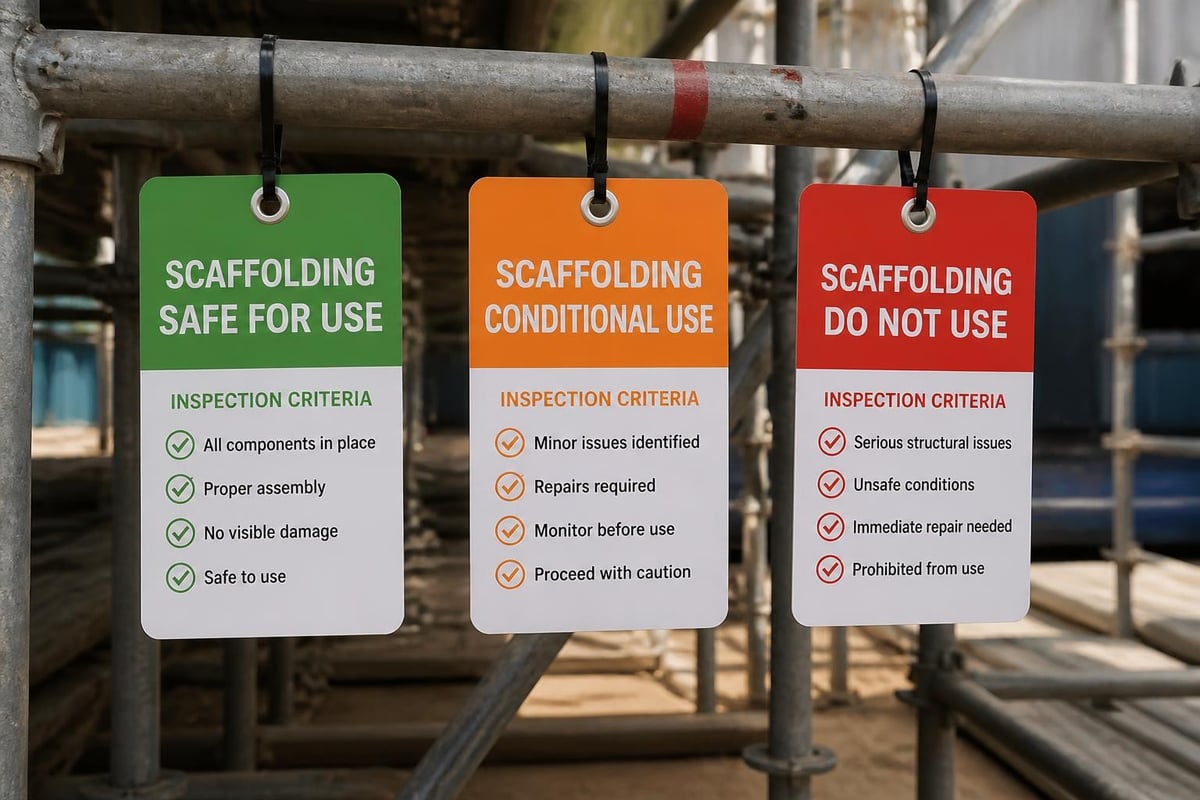
The Colour-Coded Tag System
The industry-standard scaffolding tags employ a traffic light colour system that enables instant recognition of safety status from a distance. This visual approach eliminates language barriers and ensures rapid decision-making in busy construction environments.
| Tag Colour | Status | Meaning | Worker Action |
|---|---|---|---|
| Green | Safe | Scaffold inspected and approved for use | Access permitted within stated limits |
| Amber | Caution | Scaffold incomplete or restricted use only | Check restrictions before access |
| Red | Danger | Scaffold unsafe or under construction | No access under any circumstances |
Green Tag Implementation
Green scaffolding tags indicate that a structure has been thoroughly inspected by a competent person and found to be safe for its intended purpose. Workers can access green-tagged scaffolding with confidence, provided they adhere to the stated maximum load and any specific conditions noted on the tag.
The green tag must clearly display the next inspection date. As scaffolding requires inspection at least every seven days, workers should verify this date before commencing work at height.
Amber Tag Protocols
Amber tags represent a conditional status. The scaffolding may be partially complete, undergoing modifications, or subject to specific usage restrictions. These tags require workers to read the detailed conditions before proceeding.
Common scenarios for amber tagging include:
- Scaffolding suitable for light duties only
- Structures awaiting final components
- Platforms restricted to specific trades or activities
- Temporary modifications pending full inspection
Workers must never assume they can access amber-tagged scaffolding without authorization. Site supervisors should provide clear briefings about any structures carrying amber tags.
Red Tag Enforcement
Red scaffolding tags absolutely prohibit access. These tags indicate serious safety concerns, incomplete structures, or scaffolding undergoing dismantling. Ignoring a red tag constitutes a serious safety violation that may result in dismissal and potential prosecution.
Inspection Procedures and Tag Management
Competent persons conducting scaffolding inspections follow systematic procedures to assess structural integrity, stability, and compliance with design specifications. The scaffolding tags serve as the official record of these inspections.

Pre-Use Inspections
Before any scaffolding structure is placed into service, a comprehensive inspection must verify that it matches design specifications and meets all safety requirements. The inspector checks foundation stability, platform completeness, guardrail installation, access provisions, and tie-in points.
Upon satisfactory completion of this inspection, the competent person attaches a green scaffolding tag with full documentation. This tag authorizes worker access and initiates the regular inspection schedule.
Regular Seven-Day Inspections
Current regulations mandate inspections at intervals not exceeding seven days. These routine checks verify that the scaffolding remains in safe condition and that no unauthorized modifications have occurred.
The seven-day inspection typically examines:
- Foundation settlement or movement
- Tie-in integrity and spacing
- Platform condition and fixings
- Guardrail security
- Access ladder condition
- Weather-related damage
Following each inspection, the competent person updates the scaffolding tags with the new inspection date and their signature, resetting the seven-day cycle.
Post-Incident and Modification Inspections
Any event that could compromise scaffolding safety triggers an immediate inspection requirement. These circumstances include severe weather, impact damage, unauthorized alterations, or near-miss incidents.
Similarly, any planned modifications to existing scaffolding necessitate a fresh inspection before the structure returns to service. During modification work, the scaffolding tags must be changed to red to prevent access.
Best Practices for Tag Implementation
Effective scaffolding tags programs require more than simply attaching coloured cards to structures. Organizations must establish comprehensive systems for tag management, inspector training, and worker education.
Tag Placement and Visibility
Scaffolding tags should be positioned at all access points to ensure every worker encounters them before ascending the structure. Tags must be securely attached to prevent loss in adverse weather whilst remaining easily readable.
For large or complex scaffolding installations, multiple tags at different locations ensure that workers cannot access the structure without seeing the current safety status. All tags on a single structure must display consistent information and colour coding.
Weather Protection and Durability
Construction sites expose scaffolding tags to rain, wind, sunlight, and temperature extremes. High-quality tags manufactured from weatherproof materials maintain legibility throughout their service life.
Laminated tags, enclosed tag holders, and UV-resistant inks ensure that critical safety information remains visible regardless of environmental conditions. Organizations should inspect tag condition during routine scaffolding checks and replace deteriorated tags immediately.
Record Keeping and Documentation
Whilst scaffolding tags provide on-site communication, organizations must maintain complementary inspection records. These written or electronic records provide detailed information about structural assessments, identified defects, remedial actions, and inspector qualifications.
The PASMA guidance on scaffold towers emphasizes the importance of maintaining comprehensive documentation alongside visible tagging systems. These records prove invaluable during incident investigations and regulatory audits.
Training and Competency Requirements
The effectiveness of scaffolding tags depends entirely on proper implementation by competent inspectors and understanding by site workers. Organizations must invest in comprehensive training programs for both groups.
Inspector Qualifications
Competent persons conducting scaffolding inspections require specific knowledge and experience. They must understand structural principles, recognize potential defects, interpret design drawings, and apply relevant regulations.
Industry-recognized qualifications such as CISRS (Construction Industry Scaffolders Record Scheme) provide structured training pathways. Organizations should verify inspector credentials and ensure regular refresher training maintains competency.
Worker Awareness Programs
Every person working at height must understand the scaffolding tags system and their responsibility to check tag status before access. Site inductions should include clear explanations of the colour-coded system and the consequences of non-compliance.
Effective worker training covers:
- Recognition of tag colours and meanings
- Verification of inspection dates
- Reporting procedures for missing or damaged tags
- Understanding load limits and restrictions
- Consequences of accessing prohibited scaffolding
Regular toolbox talks and visual reminders around site reinforce these critical safety messages throughout project duration.
Common Challenges and Solutions
Organizations implementing scaffolding tags systems frequently encounter practical challenges that can undermine safety effectiveness. Proactive identification and resolution of these issues maintains system integrity.
Missing or Damaged Tags
Wind, rain, and site activities can dislodge or destroy scaffolding tags. A missing tag creates ambiguity about safety status and may result in workers accessing uninspected structures.
Site protocols should treat missing tags as red tags, prohibiting access until a competent person conducts a fresh inspection and installs replacement tags. Supervisors conducting daily site walks should verify tag presence and condition.
Expired Inspection Dates
Busy construction schedules sometimes result in scaffolding remaining in use beyond the seven-day inspection deadline. This represents a compliance failure and exposes workers to unacceptable risk.
Automated reminder systems, visual inspection schedules, and dedicated scaffold management responsibilities help prevent deadline lapses. When inspections are overdue, scaffolding tags must be changed to red until a competent person completes the required assessment.
Unauthorized Tag Removal or Alteration
Some incidents involve workers removing red tags to access scaffolding they incorrectly believe to be safe. This behavior represents gross misconduct and requires immediate disciplinary action.
Tamper-evident tag designs, security ties, and clear warnings about consequences help deter tag interference. CCTV monitoring of scaffold access points may be appropriate on high-risk or high-security sites.
Integration with Broader Safety Systems
Scaffolding tags operate most effectively when integrated into comprehensive construction safety management systems. They complement other safety signage, permit-to-work procedures, and hazard communication methods.
Coordination with Safety Signage
Construction sites employ numerous safety signs addressing various hazards. Scaffolding tags should coordinate with general warning signs, mandatory action signs, and prohibition notices to create consistent safety messaging.
Organizations supplying comprehensive safety equipment can ensure visual consistency across all site signage, enhancing recognition and compliance. Clear wayfinding to safe access points reduces the temptation to use prohibited scaffolding.
Permit-to-Work Integration
High-risk sites may incorporate scaffolding access into formal permit-to-work systems. These permits require workers to verify scaffold tag status, confirm training, and acknowledge specific hazards before commencing work.
The scaffolding tags provide essential input to permit decisions, with only green-tagged structures eligible for standard work permits. Red-tagged scaffolding requires special authorization from senior management if access is absolutely necessary for emergency purposes.
Digital Tag Systems
Some organizations now implement digital scaffolding tags using QR codes or NFC technology. Workers scan these tags with mobile devices to access detailed inspection reports, load calculations, design drawings, and safety briefings.
Digital systems offer advantages including automatic inspection reminders, comprehensive audit trails, and real-time status updates across multiple sites. However, they require reliable mobile coverage and worker access to suitable devices.

Industry-Specific Considerations
Different sectors face unique challenges in implementing scaffolding tags systems. Understanding these variations ensures appropriate solutions for specific operational environments.
Industrial Maintenance Sites
Process plants, refineries, and manufacturing facilities often maintain semi-permanent scaffolding for ongoing maintenance access. These structures require particularly rigorous tagging and inspection regimes due to extended service lives.
Industrial sites may implement enhanced tag systems incorporating additional information about chemical exposures, hot work restrictions, or isolation requirements relevant to specific plant areas.
Residential Construction
House building and small commercial projects typically involve simpler scaffolding configurations with shorter erection periods. However, the rapid pace of residential construction makes rigorous tag management equally critical.
Smaller contractors must establish clear responsibilities for inspection and tagging, ensuring that limited resources do not compromise safety standards. Simple, robust tagging systems suit these fast-moving environments.
Heritage and Conservation Work
Scaffolding around historic buildings often remains in place for extended periods during careful restoration work. These projects may face additional constraints regarding scaffold design and fixings to protect architectural features.
Enhanced documentation and photographic records supplement standard scaffolding tags on heritage sites, providing evidence that scaffold operations protect valuable structures whilst maintaining worker safety.
Procurement and Tag Selection
Organizations establishing or improving scaffolding tags programs must select appropriate products that balance durability, visibility, and cost-effectiveness.
Material Specifications
High-quality scaffolding tags utilize weather-resistant materials that maintain legibility throughout typical inspection cycles. Rigid plastic tags offer superior durability compared to card-based alternatives, withstanding rough handling and adverse conditions.
UV-stable inks prevent fading in direct sunlight, whilst waterproof construction ensures information remains visible after heavy rain. Organizations should specify tags meeting IP ratings appropriate for outdoor construction use.
Customization Options
Many suppliers offer customized scaffolding tags incorporating company branding, specific inspection criteria, or additional safety messages relevant to particular industries. These customizations can enhance worker engagement and reinforce corporate safety culture.
However, customization must never compromise the clear communication of safety status. The colour-coding and essential information should always dominate the tag design, with branding elements remaining secondary.
Holder and Attachment Systems
Secure attachment methods prevent tag loss whilst allowing straightforward replacement during inspections. Purpose-designed tag holders protect against weather whilst maintaining visibility and accessibility.
Wire ties, plastic cable ties, or integrated fixing holes enable reliable attachment to scaffold tubes, frames, or access gates. The attachment method should resist casual removal whilst permitting authorized updates by competent inspectors.
Implementing effective scaffolding tags systems protects workers, demonstrates regulatory compliance, and supports professional construction safety management across all site types and scales. Whether you operate large industrial facilities or smaller commercial projects, investing in high-quality safety communication tools delivers measurable risk reduction and operational confidence. SafetySignsForSale provides comprehensive scaffolding tags alongside the complete range of safety signage, PPE, and safety equipment necessary for compliant, professional construction operations.