


Falling Rocks Sign: Essential Guide for Road Safety
Roadway hazards take many forms, but few are as potentially devastating as falling rocks. A falling rocks sign serves as a critical warning device that alerts motorists to areas where rockfall presents a genuine danger. These distinctive warning signs appear along highways, mountain roads, and cliff-adjacent routes worldwide, providing drivers with advance notice to exercise heightened caution. Understanding the purpose, regulations, and proper application of these signs is essential for road authorities, safety professionals, and anyone responsible for maintaining safe transport corridors.
Understanding the Falling Rocks Sign and Its Purpose
The falling rocks sign represents a standardized warning designed to communicate a specific geological hazard to road users. Unlike temporary construction warnings or general caution signs, this particular device addresses a permanent or semi-permanent environmental risk.
Regulatory Standards and Design Specifications
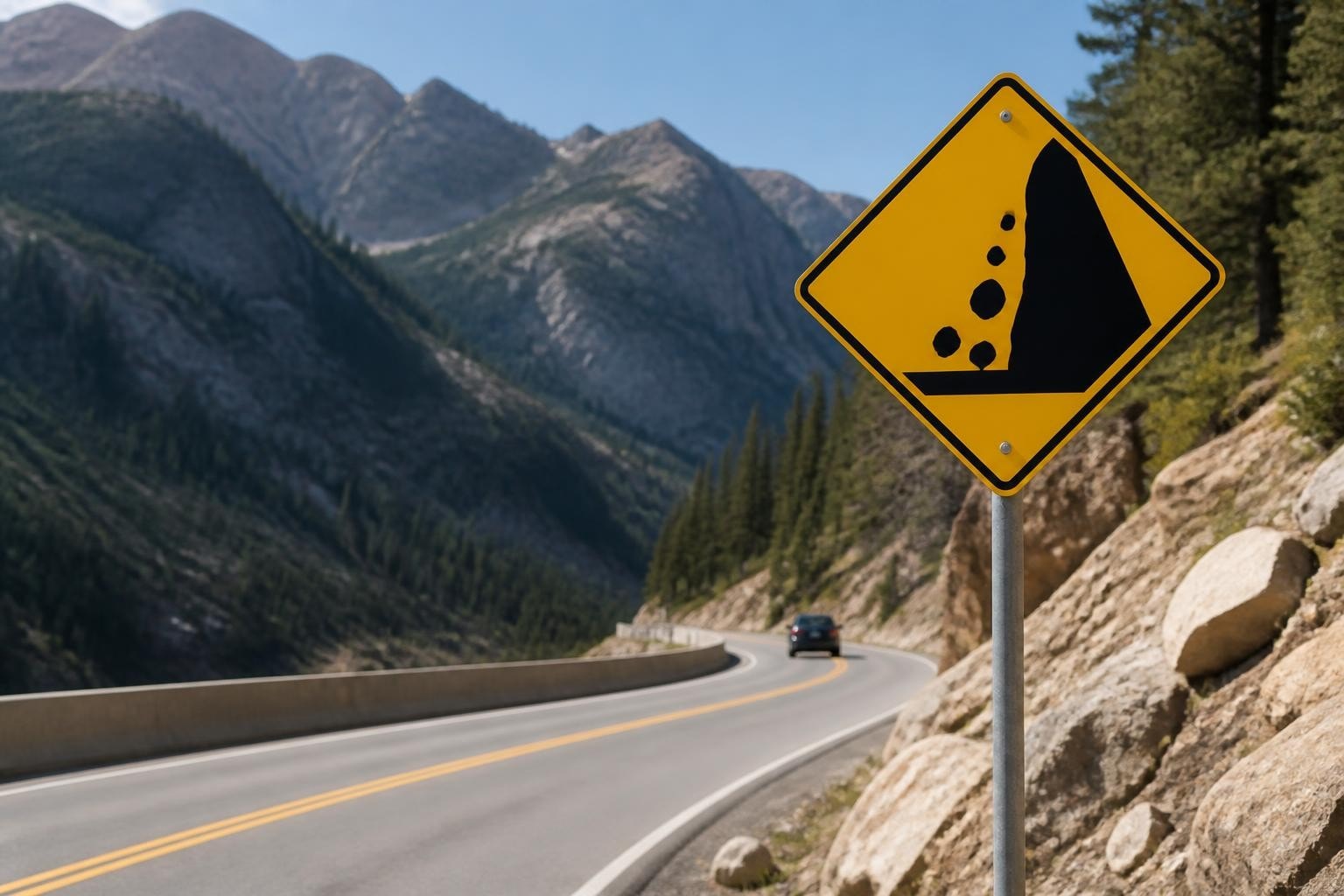
In the United States, the Official Manual on Uniform Traffic Control Devices (MUTCD) defines the FALLEN ROCKS (W8-14) warning sign as the standardised device for alerting motorists to rockfall hazards. The 11th Edition, released in December 2023, provides comprehensive guidance on design, dimensions, and application criteria.
Key specifications include:
- Distinctive black pictogram on yellow background
- Diamond-shaped configuration (standard warning sign shape)
- Minimum size requirements based on road type and speed
- Retroreflective sheeting for night-time visibility
- Specific placement distances before hazard zones
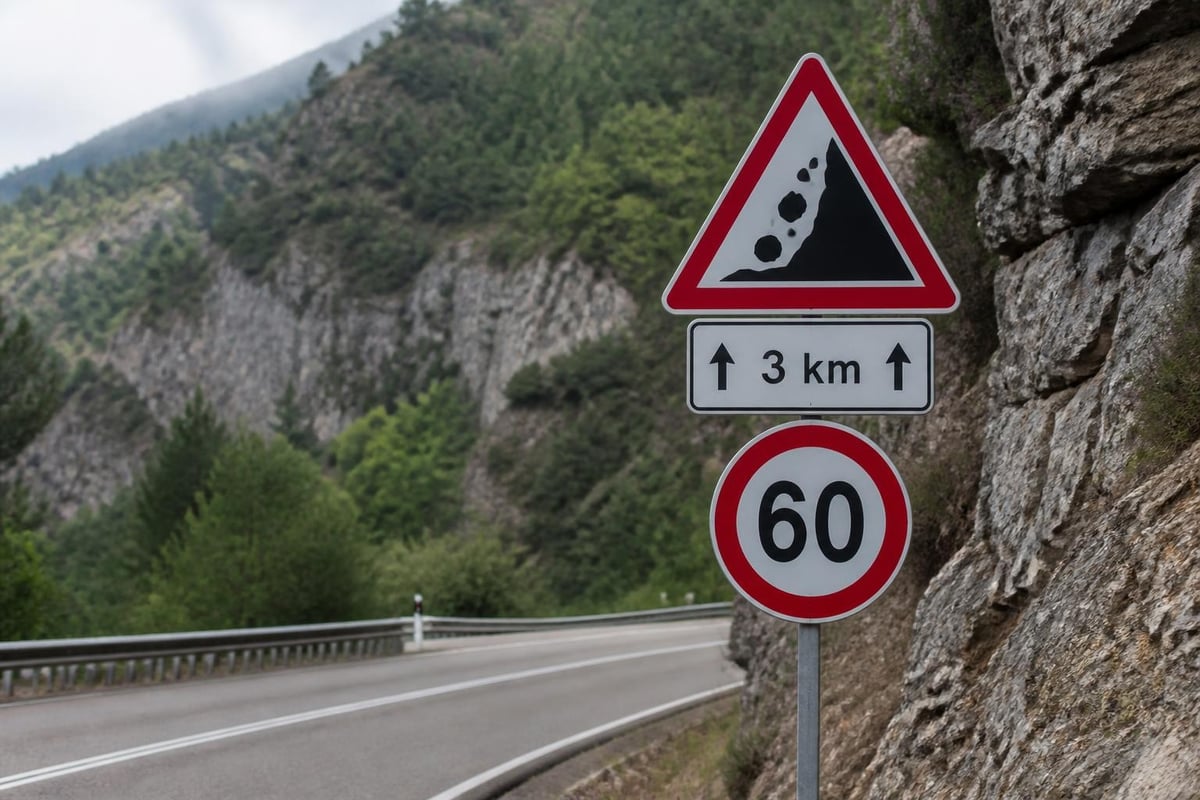
The United Kingdom takes a similar approach, with Chapter 4 of the Traffic Signs Manual detailing variants for 'risk of falling or fallen rocks' warnings. These international standards demonstrate the universal recognition of rockfall as a significant road safety concern.
Geological Context and Hazard Assessment
Understanding when a falling rocks sign is warranted requires knowledge of geological processes. The U.S. Geological Survey's Landslide Handbook provides essential context on rockfall mechanisms, including:
- Weathering and erosion patterns in rock faces
- Freeze-thaw cycles that destabilise cliff structures
- Seismic activity triggering rockfall events
- Heavy rainfall saturating unstable slopes
- Road construction exposing vulnerable geological formations
Road authorities must conduct thorough hazard assessments before installing warning signage. These evaluations examine historical rockfall incidents, geological surveys, slope stability analyses, and maintenance records to determine appropriate warning locations.
| Assessment Factor | Evaluation Criteria | Signage Threshold |
|---|---|---|
| Incident History | Documented rockfall events | 2+ events per year |
| Slope Angle | Gradient above roadway | >45 degrees |
| Rock Type | Weathering susceptibility | High fracture density |
| Maintenance Records | Debris clearance frequency | Weekly or more often |
Strategic Placement and Visibility Considerations
Proper placement of a falling rocks sign requires careful consideration of sightline distances, driver reaction times, and hazard zone characteristics. Simply installing a sign is insufficient; it must be positioned where drivers can see it, process the information, and adjust their behaviour accordingly.
Distance and Advance Warning Principles
The effectiveness of warning signs depends heavily on providing adequate advance notice. Highway design standards specify minimum distances based on posted speed limits and stopping sight distance calculations.
Recommended advance placement distances:
- Roads with 60 km/h speed limits: 75-100 metres before hazard
- Roads with 80 km/h speed limits: 150-200 metres before hazard
- Roads with 100 km/h speed limits: 250-300 metres before hazard
- Mountain roads with reduced visibility: Additional signs at greater distances
Multiple signs may be necessary for extended hazard zones. The first falling rocks sign alerts drivers to the upcoming danger, whilst subsequent signs remind them they remain within the hazard area. This layered approach reinforces the warning message and maintains driver vigilance.
Environmental and Visual Factors
Natural environmental conditions can significantly impact sign visibility and effectiveness. Vegetation growth, seasonal changes, weather conditions, and natural lighting all affect how well motorists perceive warning signs.
Road authorities must implement regular inspection programmes to ensure warning signs remain visible and unobstructed. Quarterly inspections typically suffice for most locations, but areas with rapid vegetation growth may require monthly maintenance visits.
Effectiveness Research and Driver Response
The actual effectiveness of static warning signs, including the falling rocks sign, has been the subject of considerable research. Understanding how drivers respond to these warnings helps inform better signage strategies and complementary safety measures.
Behavioural Studies and Response Patterns
Research from the Western Transportation Institute examined how motorists react to occasional hazard warnings. Their findings reveal important insights about driver behaviour and sign effectiveness.
Key research findings:
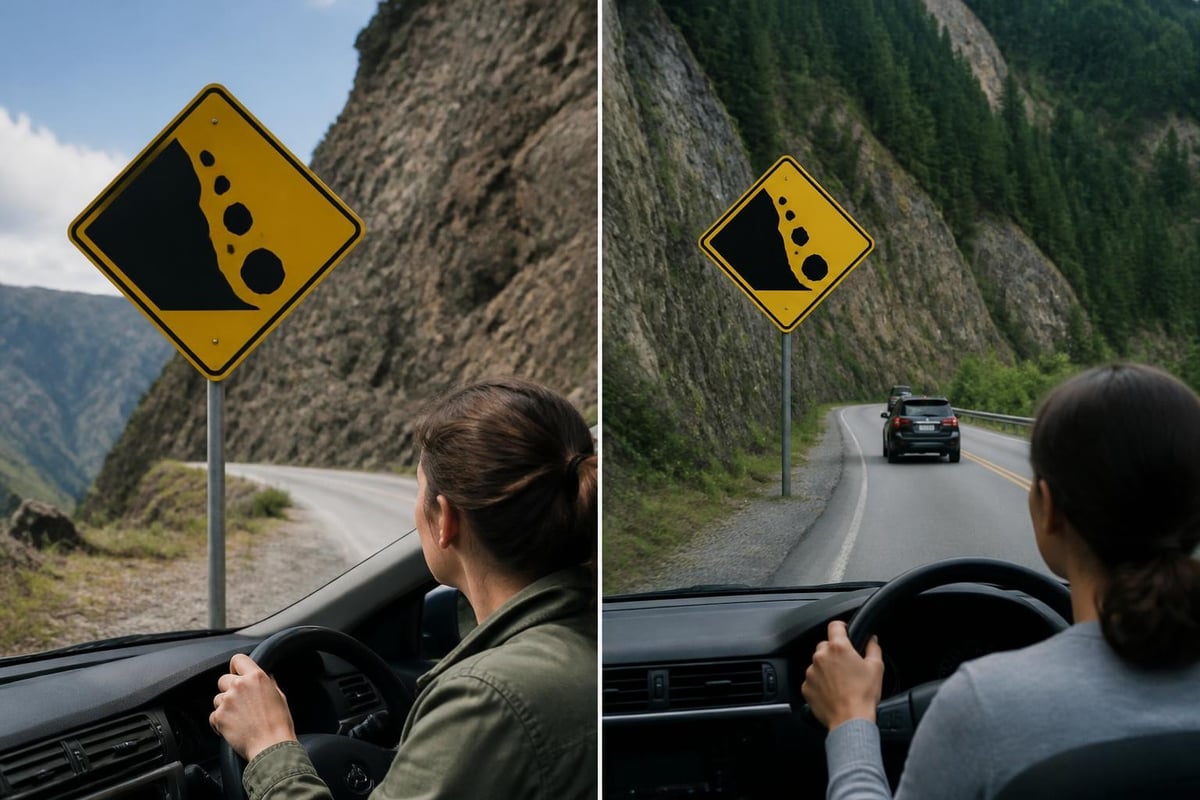
- Initial exposure to a falling rocks sign produces heightened alertness
- Repeated daily exposure can lead to sign habituation and reduced response
- Drivers unfamiliar with a route show stronger reactions to warnings
- Speed reduction varies from 5-15 km/h when approaching signed hazard zones
- Local residents often disregard familiar warnings they encounter regularly
These findings highlight a fundamental challenge: maintaining sign effectiveness for regular route users whilst adequately warning occasional travellers. Some jurisdictions address this through variable message signs that activate during high-risk periods or seasonal installations that prevent habituation.
Case Studies from High-Risk Areas
The National Park Service at Yosemite provides an excellent case study in rockfall hazard management. Yosemite Valley experiences regular rockfall events, some producing rock masses weighing thousands of tonnes. Their multi-layered approach combines static signage with dynamic warnings, hazard zoning, and public education programmes.
This comprehensive strategy demonstrates that a falling rocks sign works best as part of an integrated safety system rather than a standalone measure. Additional elements include barrier installations, active monitoring systems, and closure protocols during high-risk periods.
Material Selection and Durability Standards
The physical construction of a falling rocks sign must withstand harsh environmental conditions whilst maintaining visibility and legibility for years. Material selection directly impacts long-term effectiveness and total cost of ownership.
Substrate and Sheeting Options
Modern warning signs utilise advanced materials engineered for durability and performance. The substrate provides structural integrity, whilst the sheeting ensures visibility under all lighting conditions.
| Material Component | Options | Typical Lifespan | Best Application |
|---|---|---|---|
| Substrate | Aluminium | 15-20 years | General highway use |
| Substrate | Steel | 20-25 years | High vandalism areas |
| Sheeting | Engineer Grade | 7-10 years | Low-speed roads |
| Sheeting | High Intensity | 10-12 years | Medium-speed roads |
| Sheeting | Diamond Grade | 12-15 years | High-speed motorways |
Retroreflective sheeting technology has evolved significantly in recent years. Diamond Grade and similar premium materials use microprismatic technology that returns light directly to its source, dramatically improving night-time visibility compared to earlier glass bead systems.
Weather Resistance and Coating Systems
Mountain environments where falling rocks signs are most commonly deployed present extreme conditions. Temperature fluctuations, UV exposure, precipitation, and wind loading all degrade sign materials over time.
Protective coatings and weatherproofing treatments extend sign life and maintain appearance. Powder-coated aluminium signs typically outperform painted alternatives in corrosion resistance. UV-stabilised sheeting prevents colour fading, ensuring the distinctive yellow warning background remains vibrant and attention-grabbing.
Installation Best Practices and Mounting Systems
Proper installation determines whether a falling rocks sign will perform its intended function throughout its service life. Mounting height, orientation, and structural support all influence effectiveness and longevity.
Height and Positioning Standards
Standard practice positions warning signs at 2.1-2.4 metres above the roadway surface, measured to the bottom edge of the sign. This height balances visibility for all vehicle types whilst minimising vandalism risk and maintaining clear sightlines.
Installation considerations include:
- Mounting signs perpendicular to traffic flow for maximum visibility
- Avoiding placement where shadows reduce daytime contrast
- Ensuring adequate clearance from vegetation and structures
- Positioning signs outside the clear zone where practical
- Using breakaway posts in high-speed environments
The supporting structure must resist wind loading whilst meeting safety standards for roadside hardware. Breakaway or yielding supports prevent fixed-object collisions from producing catastrophic results should a vehicle strike the sign installation.
Complementary Signage and Pavement Markings
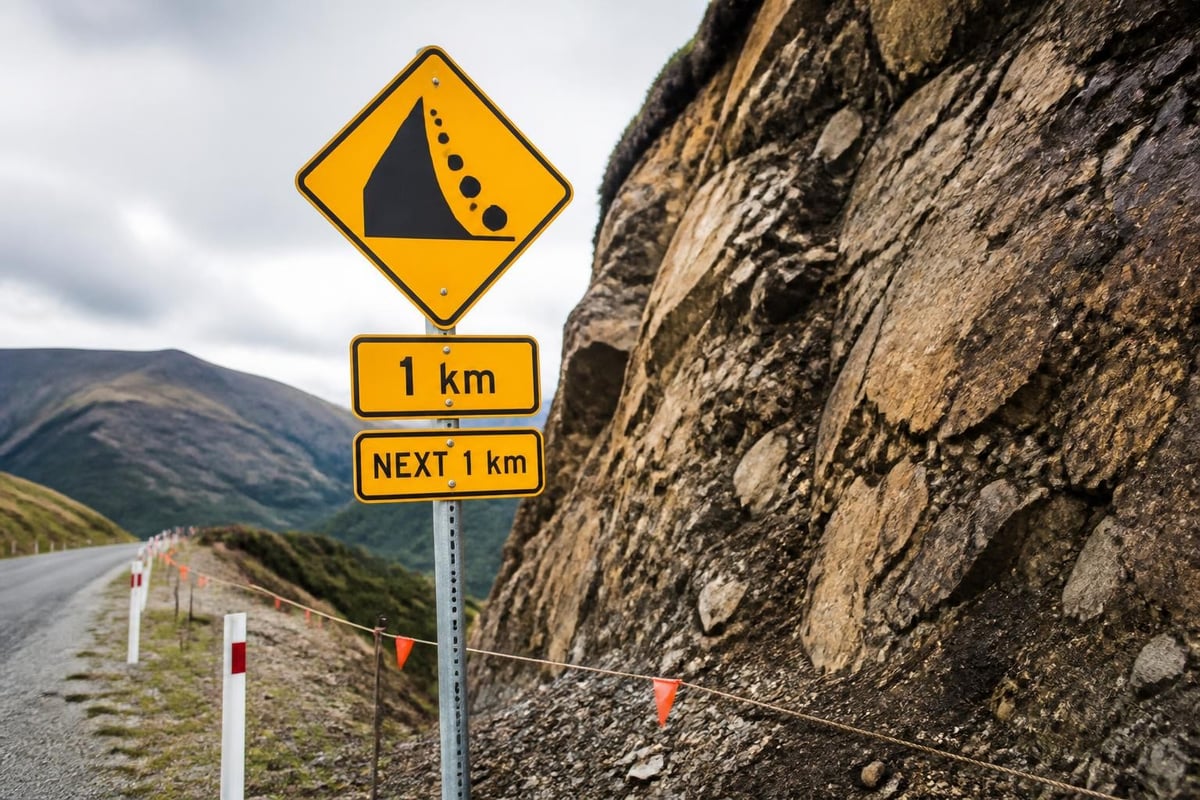
A falling rocks sign often works most effectively when paired with supplementary warning devices. Advisory speed plaques, hazard markers, and pavement markings reinforce the warning message through multiple communication channels.
Some jurisdictions install sequential warning systems that begin with advisory signs indicating "Next 5 km," followed by the primary falling rocks sign, and concluding with "End rockfall zone" markers. This comprehensive approach clearly defines hazard boundaries and maintains driver awareness throughout extended danger areas.
Maintenance Programmes and Inspection Protocols
Even the highest-quality falling rocks sign requires regular maintenance to remain effective. Systematic inspection and upkeep programmes ensure warning signs continue protecting road users throughout their service life.
Routine Inspection Schedules
Professional maintenance programmes establish regular inspection intervals based on environmental conditions and sign importance. High-priority routes warrant more frequent inspections than secondary roads.
Typical inspection protocol:
- Visual assessment of sign face for damage, fading, or obstruction
- Retroreflectivity measurement using handheld devices
- Structural evaluation of mounting posts and hardware
- Vegetation clearance around sign installation
- Documentation of condition and necessary repairs
- Immediate repair or replacement of deficient signs
Many road authorities now use mobile retroreflectivity measurement systems that assess sign visibility whilst travelling at normal speeds. These automated systems identify signs requiring replacement before they fall below minimum visibility standards.
Replacement Criteria and Asset Management
Establishing clear replacement criteria ensures failing signs are retired before they become ineffective. Retroreflectivity measurements provide objective data for replacement decisions, supplementing visual inspections that can miss gradual degradation.
Most jurisdictions mandate replacement when retroreflectivity falls below specified minimums. For yellow warning signs, typical thresholds range from 50-75 candelas per lux per square metre, depending on sheeting grade and road classification. Asset management systems track installation dates, inspection results, and maintenance history to predict replacement needs and optimise budget allocation.
International Standards and Symbol Variations
Whilst the concept of warning drivers about rockfall hazards is universal, the specific symbols and designs used vary internationally. Understanding these variations is important for suppliers serving global markets and for travellers encountering unfamiliar signage systems.
ISO and Regional Design Standards
The International Organization for Standardization publishes ISO 7010 W078, which defines a standardised rockfall/landslide warning symbol. This pictogram shows rocks falling down a slope, providing an immediately recognisable hazard representation that transcends language barriers.
Different regions adapt this basic concept to their specific regulatory frameworks. European countries generally follow Vienna Convention standards, whilst North American jurisdictions adhere to MUTCD specifications. Asian and African nations often blend international standards with local requirements.
| Region | Standard | Symbol Design | Colour Scheme |
|---|---|---|---|
| USA | MUTCD W8-14 | Falling rocks profile | Black on yellow |
| UK | TSRGD diagram 7010 | Falling rocks profile | Black on yellow |
| EU | Vienna Convention | Rock symbol variant | Black on yellow |
| ISO | 7010 W078 | Stylised rockfall | Black on yellow |
The consistency in colour scheme reflects universal recognition that yellow backgrounds communicate warning and caution. This standardisation helps ensure motorists recognise warning intent even when travelling in unfamiliar territories.
Integration with Modern Technology Systems
Contemporary road safety increasingly incorporates technology-enhanced warning systems. Traditional static signs like the falling rocks sign are being supplemented or replaced with dynamic messaging and real-time monitoring in high-risk corridors.
Variable Message Signs and Active Warning Systems
Variable message signs (VMS) can display falling rocks warnings only during elevated risk periods, reducing habituation effects whilst maintaining alertness during actual danger. These systems integrate weather monitoring, seismic sensors, and visual inspection data to activate warnings when conditions favour rockfall events.
Active warning systems represent the cutting edge of rockfall hazard management. These installations use sensors to detect actual rockfall events and immediately activate flashing beacons or digital messages, providing real-time warnings that static signs cannot deliver.
Technology integration components:
- Weather stations monitoring precipitation and freeze-thaw cycles
- Seismic sensors detecting ground movement and rockfall impacts
- Remote cameras enabling visual verification without site visits
- Solar power systems supporting off-grid installations
- Wireless communication linking sensors to warning devices
Whilst these advanced systems offer superior performance, they require significantly higher initial investment and ongoing maintenance compared to traditional static signs. Cost-benefit analysis determines whether technology enhancement justifies the additional expense for specific locations.
Procurement Considerations for Safety Professionals
Safety professionals responsible for specifying and purchasing falling rocks signs must balance multiple factors including regulatory compliance, durability, cost, and supplier reliability. Making informed procurement decisions ensures road authorities receive appropriate products at fair value.
Specification Development and Tender Requirements
Comprehensive specifications eliminate ambiguity and ensure suppliers provide conforming products. Key specification elements include material grades, sheeting types, dimensions, mounting hardware, and certification requirements.
Specifications should reference applicable standards by number and edition, ensuring all parties work from identical requirements. For example: "Sign shall comply with MUTCD 11th Edition specifications for W8-14 FALLEN ROCKS warning sign, constructed from 2.0mm aluminium substrate with High Intensity Grade prismatic sheeting."
Quality certifications provide additional assurance. ISO 9001 certification indicates suppliers maintain quality management systems, whilst product-specific certifications verify sheeting meets retroreflectivity standards and accelerated weathering tests.
Supplier Evaluation and Quality Assurance
Selecting reliable suppliers involves evaluating multiple factors beyond price. Delivery reliability, technical support, product warranties, and after-sales service all contribute to total value.
SafetySignsForSale offers a comprehensive range of road signs alongside their broader selection of safety signs suitable for various applications. When evaluating suppliers, consider their industry experience, product range, and ability to provide technical guidance on sign selection and application.
Request samples before placing large orders, particularly when working with new suppliers. Physical inspection verifies material quality, printing clarity, and construction workmanship that specifications and photographs cannot fully convey. Testing samples under field conditions provides valuable performance insights before committing to substantial purchases.
Understanding the proper application, installation, and maintenance of falling rocks signs ensures these critical warning devices continue protecting road users in hazardous areas. From regulatory compliance and material selection to placement strategies and emerging technologies, multiple factors influence warning sign effectiveness. Whether you're managing a mountain highway, developing a new road project, or maintaining existing infrastructure, selecting the right warning signage is essential for road user safety. SafetySignsForSale supplies a comprehensive range of warning signs, road signs, and safety equipment designed to meet regulatory standards and provide long-term performance in demanding environments, helping you maintain safe transport corridors across your network.