


First Aid Box Signs: Complete Guide for 2026
First aid box signs serve as critical visual markers that guide people to emergency medical supplies when seconds count. These distinctive green and white signs are not merely decorative elements but essential safety features that comply with international standards and legal requirements. Whether managing a manufacturing facility, retail space, or office environment, understanding the proper implementation of first aid box signs ensures that employees, visitors, and emergency responders can quickly locate life-saving equipment during critical situations. The effectiveness of your workplace safety infrastructure depends significantly on how well these signs communicate vital information whilst adhering to recognised design principles and regulatory frameworks.
Understanding First Aid Box Sign Regulations
The regulatory landscape governing first aid box signs has evolved considerably, with standardisation becoming increasingly important across jurisdictions. In the United Kingdom, the Health and Safety Executive provides comprehensive guidance on first aid requirements, including specific signage obligations for employers. These regulations mandate that first aid boxes must be clearly marked and easily identifiable through standardised safety signs.
The ISO 7010 standard has become the international benchmark for safety signs, including those designating first aid equipment locations. This standard specifies that first aid box signs must feature a white cross or pictogram on a green background, ensuring universal recognition regardless of language barriers. The green colour symbolises safety and emergency assistance, whilst the white provides maximum contrast for visibility.
Legal Obligations for Employers
Businesses across various sectors must comply with specific requirements when implementing first aid signage. The regulatory framework demands that:
- All first aid boxes must be clearly identified with appropriate signage
- Signs must be positioned where they can be seen from various approaches
- Visibility requirements apply even in low-light conditions
- Regular maintenance of signs ensures continued legibility
Compliance extends beyond simply affixing signs to walls. Employers must conduct risk assessments to determine optimal placement, considering factors such as workplace layout, employee distribution, and potential hazards. The HSE guidance document L64 provides detailed specifications for safety signs and signals, offering technical guidance on colour specifications, sizing requirements, and positioning strategies.
Design Standards and Visual Specifications
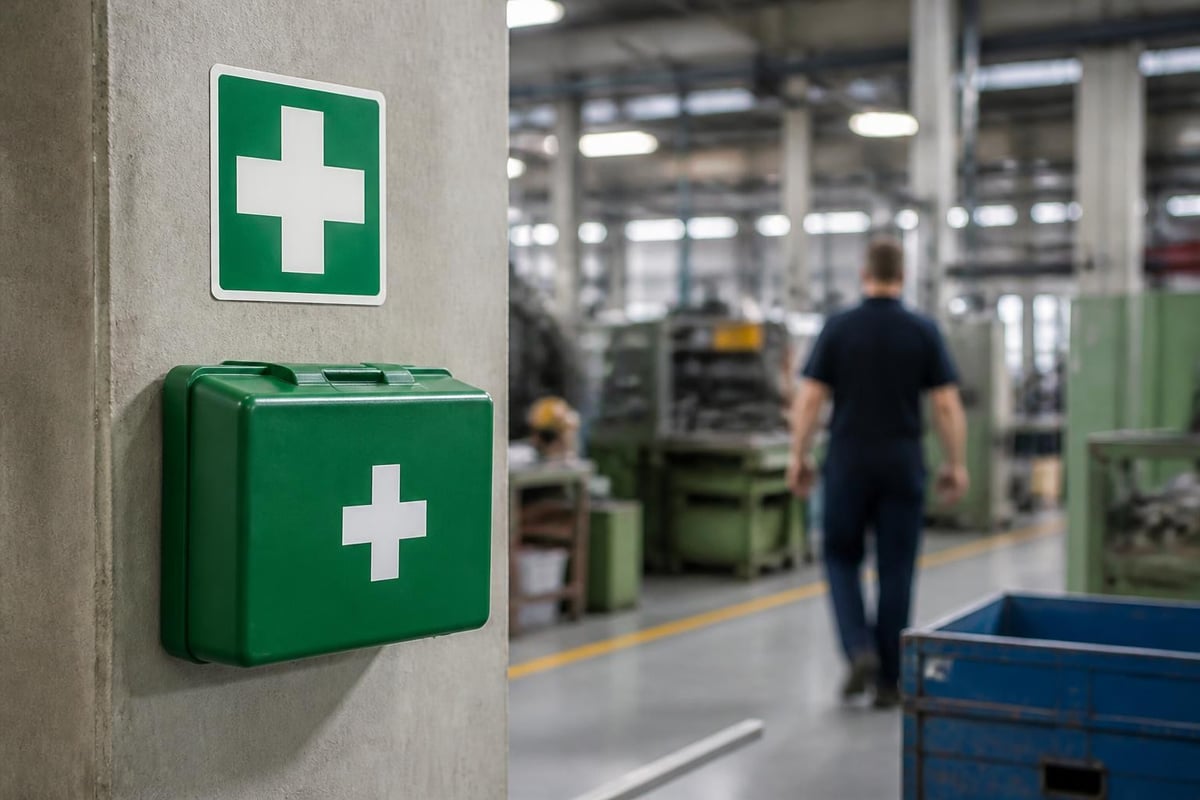
First aid box signs must adhere to precise design specifications to ensure immediate recognition during emergencies. The standardised format includes specific proportions, colour values, and symbol dimensions that have been tested for maximum visibility and comprehension. These design elements work together to create signs that transcend language barriers and cultural differences.
The green background colour must meet specific Pantone or RAL colour standards, typically RAL 6032 (signal green). This particular shade has been selected for its high visibility and association with safety across diverse environments. The white cross or pictogram must occupy a defined percentage of the sign's total area, ensuring adequate contrast and recognisability from distance.
Material and Durability Considerations
Selecting appropriate materials for first aid box signs directly impacts their longevity and effectiveness:
| Material Type | Durability | Typical Lifespan | Best Applications |
|---|---|---|---|
| Rigid PVC | High | 7-10 years | Indoor environments, protected areas |
| Self-adhesive vinyl | Moderate | 3-5 years | Temporary installations, smooth surfaces |
| Aluminium | Very High | 10+ years | Outdoor locations, industrial settings |
| Photoluminescent | High | 5-8 years | Low-light areas, emergency routes |
The choice between standard and photoluminescent materials depends largely on environmental conditions. Photoluminescent signs offer distinct advantages in facilities where power failures might occur, as they continue to glow in darkness after exposure to light. This characteristic makes them particularly valuable in warehouses, manufacturing plants, and multi-storey buildings where emergency lighting might be compromised.
Strategic Placement and Visibility
Effective placement of first aid box signs requires careful consideration of traffic patterns, sightlines, and accessibility requirements. Simply installing signs directly above first aid boxes represents only the baseline requirement. Comprehensive signage strategies incorporate directional markers, particularly in large facilities where first aid stations may not be immediately visible from all locations.
The positioning height matters considerably. Signs mounted at eye level (approximately 1.5 to 2 metres from the floor) offer optimal visibility for standing adults, but consideration must also be given to wheelchair users and children in environments such as schools or public buildings. WorkSafeBC provides valuable guidance on communicating first aid procedures, including accessibility considerations for diverse workforces.
Multi-Point Signage Systems
Large facilities benefit from implementing layered signage approaches:
- Primary location signs mounted directly at first aid box positions
- Directional wayfinding signs positioned at corridor intersections and decision points
- Floor-level markers for areas with high visual clutter at eye level
- Ceiling-suspended signs in open-plan spaces with few wall-mounting opportunities
- Illuminated or photoluminescent options for low-light environments
This hierarchical approach ensures that individuals can navigate to first aid supplies quickly, regardless of their starting position within the facility. In complex buildings, integrating first aid box signs with broader emergency wayfinding systems creates cohesive safety infrastructure that serves multiple purposes during crisis situations.
First Aid Room Designation
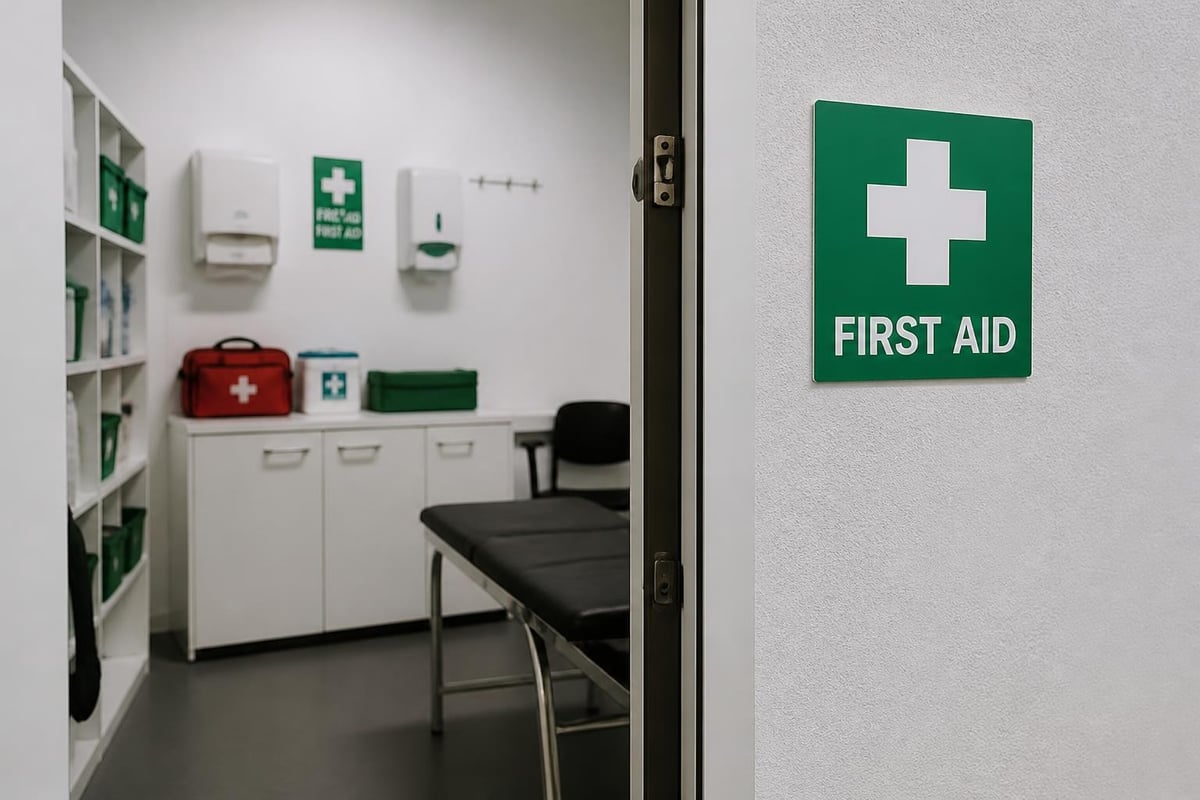
Beyond marking individual first aid boxes, many workplaces require designated first aid rooms that must also be clearly identified. These dedicated spaces serve as treatment areas for more serious injuries and require more prominent signage than simple box markers. The general informational signs category includes various options suitable for identifying medical facilities within workplace environments.
First aid room signs typically feature larger dimensions than box markers, often incorporating supplementary information such as "First Aid Room" text alongside the standard cross symbol. This textual addition aids comprehension whilst maintaining the universal pictogram that communicates the room's purpose to non-English speakers.
Room Identification Requirements
Proper first aid room signage encompasses several elements:
- Prominent door signage visible from approaching corridors
- Supplementary text in multiple languages where workforces are diverse
- Appropriate sizing proportional to corridor width and viewing distances
- Durability specifications suitable for high-traffic areas
The relationship between first aid equipment storage and signage requires coordination. Well-organised first aid rooms contain clearly labelled cabinets, medical kits, and specialised equipment such as eyewash products, all supported by internal signage that helps trained first aiders locate specific supplies quickly during emergencies.
Public Access and Specialised Applications
Recent developments in public safety have introduced new categories of first aid equipment requiring distinct signage approaches. Public Access Trauma (PAcT) kits represent a significant evolution in emergency preparedness, particularly relevant for venues that may experience major incidents. The ProtectUK guidance on PAcT kits outlines specific signage recommendations for these specialised resources.
PAcT kit signage differs from standard first aid box signs through additional visual elements that communicate the kit's enhanced capabilities. These markers help differentiate between basic first aid supplies and trauma-focused equipment containing items such as tourniquets and haemostatic dressings. The distinction becomes critical during major incidents when emergency services need to quickly identify available resources.
Industry-Specific Considerations
Different sectors face unique challenges when implementing first aid box signs:
Manufacturing and Industrial Settings
These environments often feature high noise levels, visual clutter from machinery, and potential visibility obstructions. Signs in these contexts benefit from larger dimensions, enhanced contrast, and strategic placement above equipment sightlines. The ISEA standards provide valuable frameworks for ensuring first aid kit contents and labelling meet industry-specific requirements.
Retail and Hospitality Environments
Customer-facing businesses must balance aesthetic considerations with safety requirements. First aid box signs in these settings often utilise more refined designs whilst maintaining regulatory compliance. The challenge involves making signage sufficiently prominent for emergency use without creating visual discord with brand environments.
Educational Institutions
Schools and universities require signage positioned with consideration for younger users and visitors unfamiliar with facility layouts. Supplementary directional signage becomes particularly important in these sprawling campuses where multiple first aid stations serve different buildings and activity areas.
Integration with Broader Safety Signage
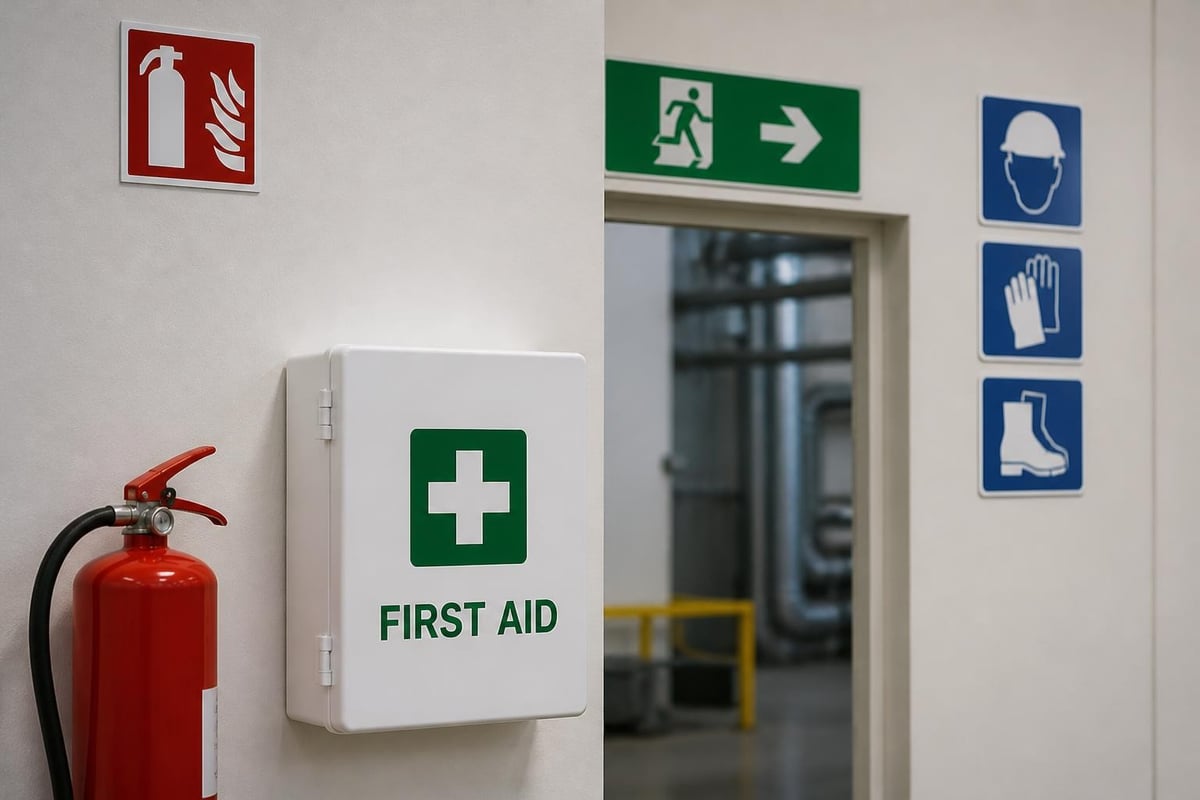
First aid box signs function most effectively when integrated within comprehensive safety signage systems. This holistic approach recognises that emergencies rarely occur in isolation and that people seeking first aid supplies may also need to navigate to assembly points, emergency exits, or fire equipment.
The colour-coding system underlying safety signage creates intuitive relationships between different sign types. Green indicates safe conditions and emergency assistance, red signals fire equipment and prohibitions, yellow warns of hazards, and blue denotes mandatory actions. Understanding these relationships helps facilities managers create coherent visual environments where different sign categories complement rather than compete with one another.
Coordinating First Aid and Fire Safety Markers
Many facilities require coordination between first aid and fire-fighting signs:
| Safety Element | Colour Scheme | Typical Placement | Coordination Consideration |
|---|---|---|---|
| First Aid Box | Green/White | Near work areas | Avoid positioning directly adjacent to fire equipment |
| Fire Extinguisher | Red/White | Strategic intervals | Maintain clear visual distinction from first aid markers |
| Emergency Exit | Green/White | Escape routes | Different pictogram prevents confusion with first aid |
| Assembly Point | Green/White | External locations | Clear differentiation through distinct symbols |
This coordination extends to personal protective equipment storage areas and mandatory signs that might be positioned near first aid stations. The objective involves creating visual hierarchies that guide people efficiently without overwhelming them with competing information.
Maintenance and Replacement Schedules
First aid box signs require regular inspection and maintenance to ensure continued effectiveness. Environmental factors such as ultraviolet light exposure, humidity, temperature fluctuations, and cleaning chemicals gradually degrade sign materials, reducing visibility and legibility. Establishing systematic maintenance protocols prevents signage deterioration from compromising safety infrastructure.
Professional facilities management incorporates first aid box signs within broader asset maintenance programmes. Regular inspections should assess:
- Physical condition including cracks, warping, or delamination
- Colour fastness ensuring green backgrounds remain vibrant
- Adhesive integrity for self-adhesive signs
- Mounting security verifying signs remain firmly attached
- Visibility from expected viewing distances and angles
Documentation of these inspections creates accountability and provides evidence of due diligence during safety audits. Replacement typically becomes necessary when signs show significant fading, damage, or when regulatory standards change, requiring updates to comply with new specifications.
Updating for Regulatory Changes
Safety sign standards evolve periodically as new research emerges regarding visual perception, comprehension, and accessibility. When ISO 7010 updates occur or national regulations introduce new requirements, existing first aid box signs may require replacement to maintain compliance. Progressive organisations monitor regulatory developments and plan proactive updates rather than reactive responses to enforcement notices.
The transition from older BS 5499 standards to ISO 7010 symbols exemplifies this evolution. Whilst many legacy signs remain legally acceptable during transition periods, best practice involves systematic upgrades that align with current international standards. This approach ensures universal recognition, particularly important in multicultural workplaces serving diverse populations.
Multilingual and Accessibility Considerations
Modern workplace demographics increasingly demand signage solutions that transcend language barriers whilst remaining accessible to individuals with varying abilities. First aid box signs traditionally rely on pictograms precisely because symbols communicate universally. However, supplementary text can enhance comprehension, particularly when multiple languages represent the workforce composition.
Facilities serving international populations often incorporate text in several languages beneath or alongside the standard pictogram. This approach maintains the immediate recognition value of the universal symbol whilst providing additional clarity for those who benefit from textual confirmation. The challenge involves balancing comprehensive information with visual simplicity, ensuring signs remain uncluttered and quickly comprehensible.
Considerations for Visual Impairments
Accessibility extends beyond language to include individuals with visual impairments:
- Tactile elements such as raised symbols assist those with partial vision
- Braille labelling provides information for blind individuals
- High-contrast designs aid people with colour vision deficiencies
- Adequate sizing ensures visibility for those with reduced acuity
- Strategic lighting enhances sign visibility without creating glare
These accessibility features transform first aid box signs from purely visual markers into multi-sensory guidance systems. The investment in accessible signage demonstrates organisational commitment to inclusive safety whilst potentially satisfying disability discrimination legislation requirements that mandate reasonable accommodations.
Digital Integration and Smart Facilities
Emerging technologies are beginning to influence how first aid box signs function within broader facility management systems. Smart buildings increasingly incorporate digital directories, mobile applications, and augmented reality systems that supplement physical signage. These technologies don't replace traditional first aid box signs but rather enhance their effectiveness through additional information layers.
Mobile applications can guide employees to the nearest first aid station based on their current location, whilst digital building directories provide visual routes overlaid on facility maps. However, these digital solutions depend on functioning technology and user familiarity with systems. Physical first aid box signs remain the primary, fail-safe markers that function regardless of power availability or technological literacy.
Internet of Things (IoT) Applications
Advanced facilities management systems now incorporate sensors that monitor first aid box contents, automatically alerting maintenance personnel when supplies require replenishment. These systems can integrate with physical signage by adding digital displays that confirm kit availability status. A small LED indicator on the sign might show green when the box is fully stocked and flash red when inventory falls below minimum thresholds.
This integration between traditional signage and smart building systems represents the evolution of safety infrastructure rather than its replacement. The fundamental requirement for clear, visible first aid box signs persists, enhanced rather than superseded by technological innovations.
Training and Awareness Programmes
Even the most compliant, well-designed first aid box signs achieve limited effectiveness if employees lack awareness of their purpose and location. Comprehensive safety training programmes must incorporate specific instruction regarding first aid equipment locations, reinforcing the visual information provided by signage. This training creates mental maps that enable rapid response during emergencies when stress levels impair calm navigation.
Effective training approaches include:
- Facility orientation for new employees highlighting first aid locations
- Regular refresher sessions maintaining awareness amongst existing staff
- Emergency drills that incorporate first aid box locations in scenarios
- Visual aids showing facility layouts with marked first aid stations
- Multilingual resources ensuring comprehension across diverse workforces
The relationship between signage and training operates synergistically. Signs provide the visual infrastructure that training reinforces through repetition and practical application. Together, these elements create robust emergency preparedness that transcends either component individually.
Designated First Aid Personnel
Organisations with appointed first aiders benefit from ensuring these individuals possess intimate knowledge of all first aid box locations and contents. Their training should include specific instruction regarding the signage system, enabling them to guide others during emergencies. This knowledge transforms designated first aiders into human extensions of the signage system, capable of directing people when visual markers might be obscured or unfamiliar.
The coordination between safety signs and trained personnel creates redundancy in safety systems. If someone cannot locate a first aid box through signage alone, trained personnel provide alternative guidance. This layered approach acknowledges that emergencies create stressful conditions where backup systems prove invaluable.
Cost-Benefit Analysis of Quality Signage
Investment in premium first aid box signs might appear discretionary when basic options meet minimum regulatory requirements. However, quality signage delivers measurable returns through enhanced durability, superior visibility, and reduced replacement frequency. The total cost of ownership calculation should consider lifespan, maintenance requirements, and effectiveness rather than simply initial purchase price.
Premium materials and construction methods deliver:
Extended Service Life
High-quality signs manufactured from durable materials withstand environmental stresses, maintaining legibility for significantly longer periods than budget alternatives. This longevity reduces replacement frequency and associated labour costs for sign removal and installation.
Enhanced Visibility
Superior printing processes and materials deliver better colour saturation and contrast, ensuring signs remain visible under challenging lighting conditions. This enhanced visibility directly contributes to faster emergency response times when first aid equipment is needed.
Reduced Maintenance Requirements
Quality signs resist fading, cracking, and deterioration, requiring less frequent inspection and replacement. This reduction in maintenance demands frees facilities management resources for other priorities whilst ensuring continuous compliance.
The calculation becomes particularly compelling for large facilities requiring dozens or hundreds of first aid box signs. The incremental cost difference between standard and premium options, when multiplied across quantity and lifespan, often reveals that quality signage represents superior value despite higher initial investment.
Effective first aid box signs represent critical safety infrastructure that connects regulatory compliance with practical emergency response capabilities. By selecting appropriate designs, materials, and placement strategies, organisations create environments where life-saving equipment remains accessible when circumstances demand immediate action. SafetySignsForSale offers comprehensive solutions spanning first aid box signs, complementary safety signage, and the equipment these markers designate, enabling businesses to implement integrated safety systems that protect people whilst satisfying regulatory obligations across diverse operational contexts.