


Road Construction Signs: A Guide to Types and Use
Road construction signs are the temporary warning, regulatory, guidance and site-specific signs that alert drivers and workers to hazards created by works on or beside a road. A compliant set tells road users what lies ahead, what they must do, and when the work zone ends, and it keeps site staff informed of excavations, overhead work and blasting. For facility and safety managers, the task is choosing the right sign category for each hazard and placing it where it can be read in time.
What Counts as a Road Construction Sign?
A road construction sign is any sign that communicates a hazard, instruction or direction created by building or maintenance work, whether the audience is passing motorists or people on site.
Two broad groups exist, and confusing them is a common specification error.
- Traffic-facing signs are read by drivers and pedestrians approaching or passing the works. They follow road-sign conventions for shape, colour and wording.
- Site-facing signs are read by workers, contractors and visitors inside the boundary. They follow safety-sign conventions covering prohibition, mandatory action, warning and information.
Many projects need both. A mine haul road upgrade, a retail park resurfacing job or a factory yard expansion will typically involve public or semi-public traffic on one side and a controlled workforce on the other.
Temporary signs also differ visually from permanent ones. According to the FHWA guidance on sign principles and types, temporary work-zone warning signs use a black legend and border on an orange background. That orange field helps a driver recognise a work zone at a glance, before reading a word.
The Main Types of Road Construction Signs
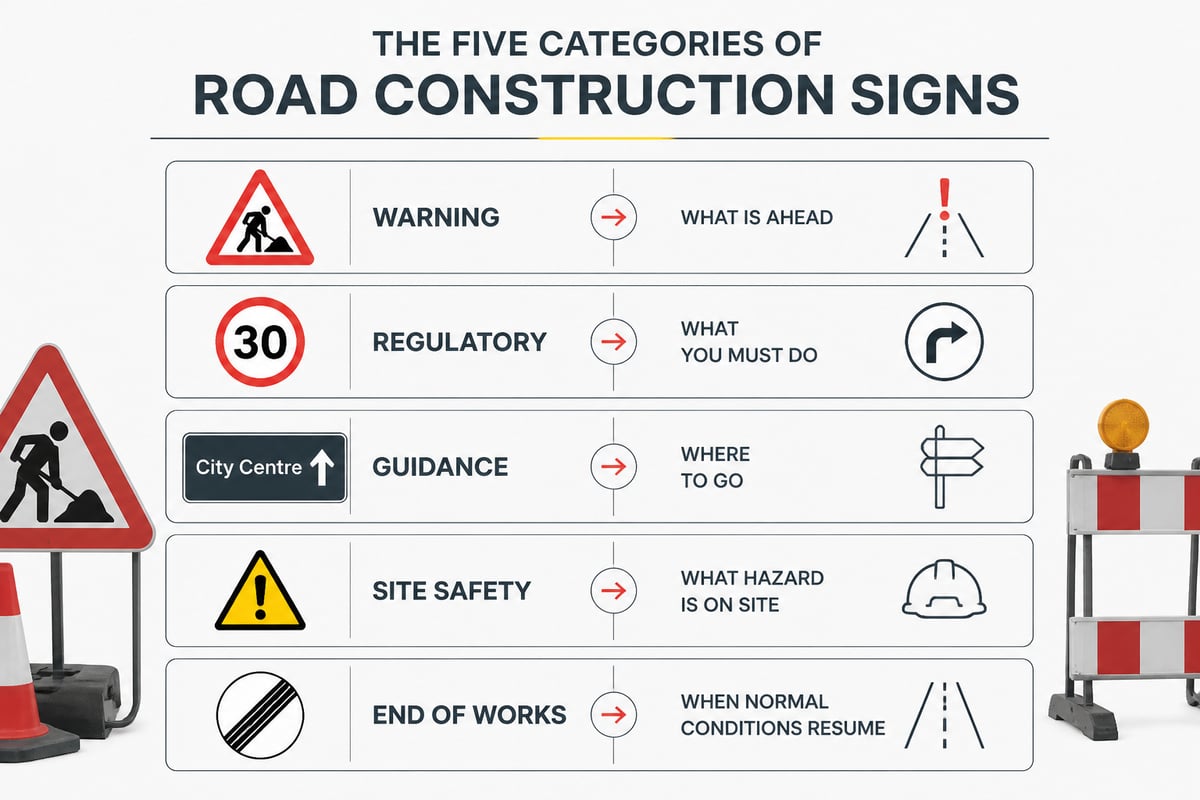
Road construction signs fall into five working categories: warning, regulatory, guidance, site safety and end-of-works signs. Each answers a different question for the person reading it.
Warning signs
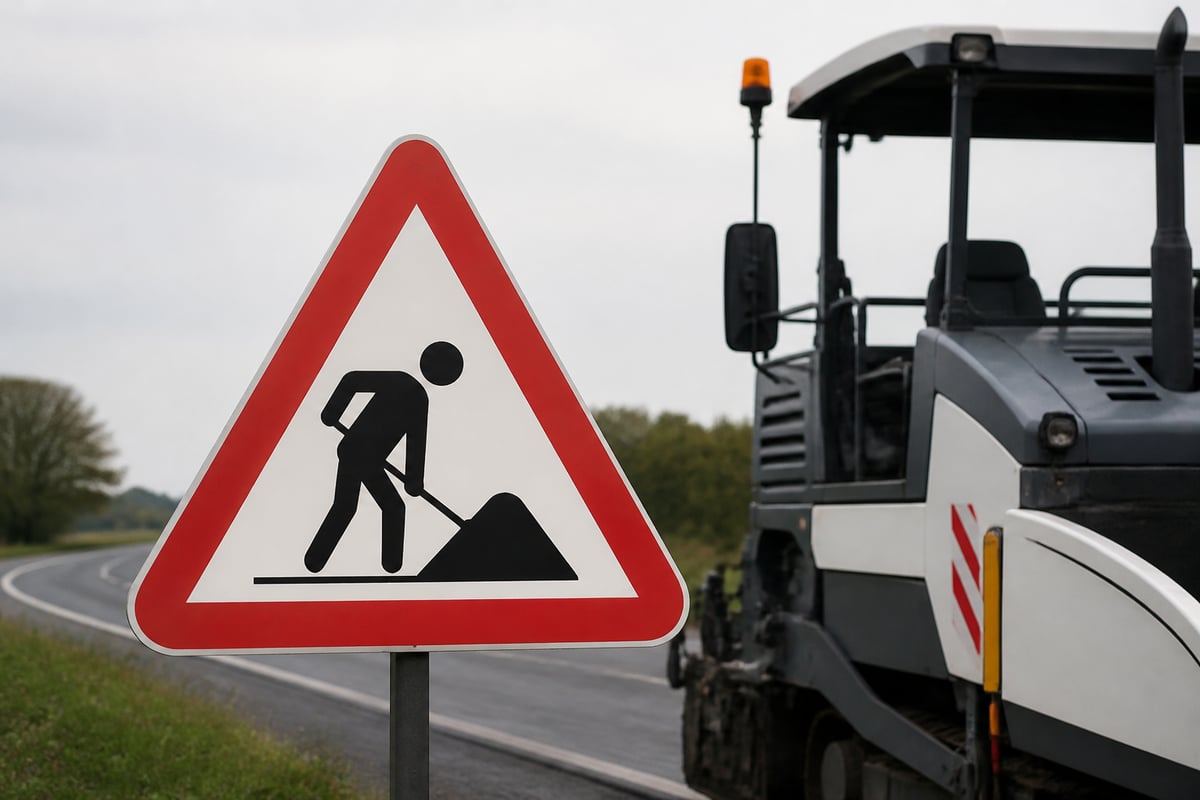
Warning signs tell road users that something unusual is ahead. Typical messages include roadway narrowing, two-way traffic, a sharp junction, reduced visibility or a concealed access point. SafetySignsForSale stocks a full range of warning road signs, including signs such as roadway narrows from the right side ahead and two-way traffic ahead, which suit lane closures and contraflow arrangements.
Regulatory and control signs
These signs carry legal weight. They include stop, give way, no entry, one-way and speed restrictions. On a works site they manage the interface between plant, delivery vehicles and the public. A stop sign at a site exit or a no entry sign on a closed carriageway removes ambiguity about right of way.
Command and prohibition signs
Command signs instruct a particular class of road user, such as cyclists only or goods vehicles above a stated mass. Prohibition signs forbid specific actions or users. Both are useful when a diversion changes who may use a route, for example restricting heavy vehicles from a weaker temporary surface.
Site safety signs
Inside the works boundary, the hazards are specific: open holes, deep excavations, overhead work, scaffolding, dust and blasting. Dedicated construction signs cover these, for instance an open hole sign, a deep excavation sign or a danger men overhead sign.
End-of-works signs
The final sign in the sequence confirms that normal conditions resume. Without it, drivers continue to behave as though the hazard persists, or workers assume the zone extends further than it does.
How a Work Zone Is Defined and Why It Matters for Sign Placement
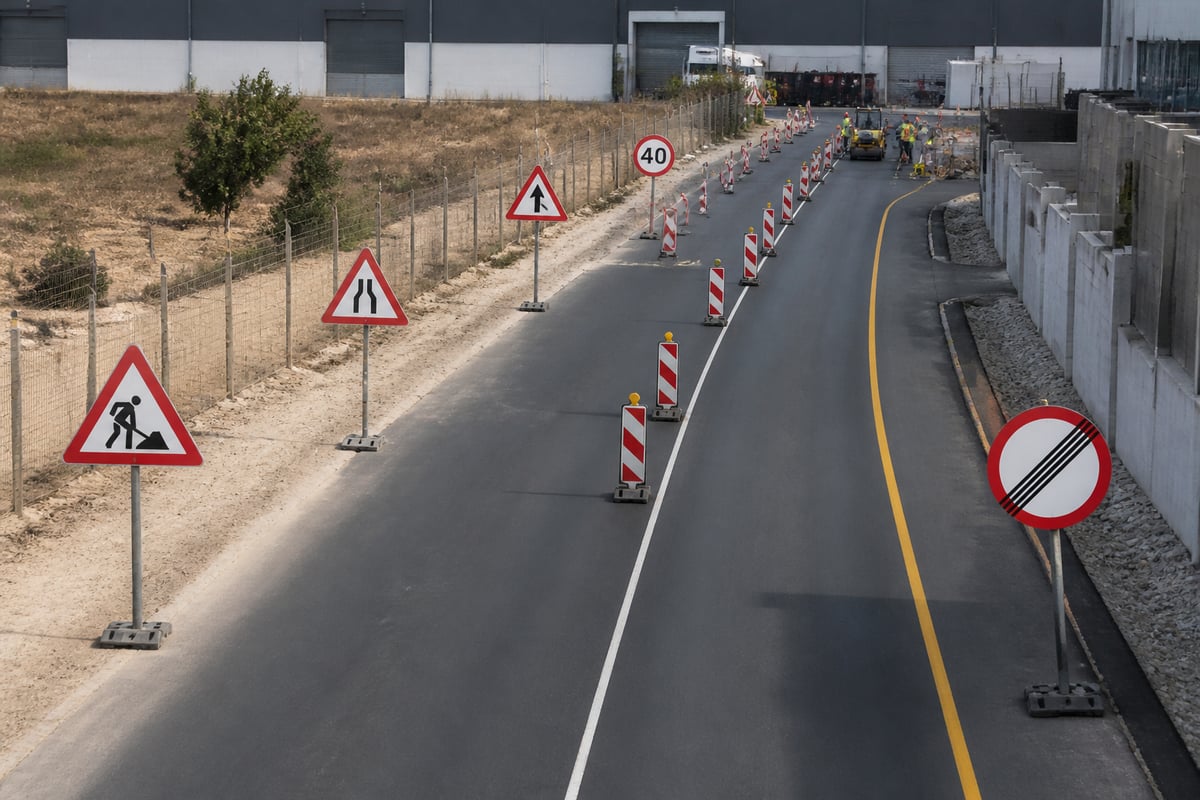
A work zone runs from the first warning sign to the last temporary traffic-control device, and your signage plan should cover that whole length. OSHA's work zone FAQ states that a work zone generally extends from the first warning sign or qualifying vehicle lights to the END ROAD WORK sign or the last temporary traffic-control device.
That definition has a practical consequence. The hazard does not begin at the excavation or the cones. It begins where the first sign is seen. If the advance warning is missing, too close or hidden behind foliage or a parked vehicle, the zone effectively starts later than planned and drivers have less time to react.
A sound sequence usually follows this order:
- Advance warning signs alert approaching traffic to the works.
- Transition signs indicate lane closures, merges or diversions.
- Regulatory signs apply speed limits, stop controls or prohibitions through the zone.
- Activity-area signs mark the working space and its specific hazards.
- Termination signs show the end of the works.
For a temporary arrangement on public roads, the control plan should also align with a recognised standard. In the United States, the Electronic Code of Federal Regulations states that a temporary traffic-control plan must be consistent with MUTCD Part 6 provisions. South African operations should work to the local road traffic sign requirements and the applicable provincial or municipal conditions, but the principle carries over: a documented plan, built on a recognised standard, is stronger than ad hoc placement.
Choosing Signs for Different Site Types
The right mix of road construction signs depends on who uses the area and what the hazard is, so a mine, a factory and a retail centre will specify differently.
| Site type | Typical hazards | Signs commonly needed |
|---|---|---|
| Mine haul roads and plant areas | Blasting, heavy vehicles, dust, open excavations | Blasting, dust area, deep excavation, stop, speed control |
| Factory yards and loading areas | Forklifts, delivery trucks, narrowed lanes | Roadway narrows, two-way traffic, stop, goods vehicles only |
| Retail parks and shopping centres | Pedestrians, shoppers' vehicles, partial closures | No entry, one-way, concealed driveway, reserved lane signs |
| Public road works contracts | Lane closures, diversions, mixed traffic | Advance warning, diversion, speed limit, end of works |
Blasting deserves particular care because the exclusion distance protects life. A blasting in progress sign and a blasting keep away sign should sit at every approach to the exclusion area, not just the main gate. Dust is a related concern, and a dust area sign alerts both drivers and staff to reduced visibility and respiratory risk.
Placement, Spacing and Visibility
A sign only works if it can be read, understood and acted on before the hazard, so placement is as important as the sign itself.
Consider these points when planning:
- Distance: Higher approach speeds need earlier warning. A sign for a 60 km/h road needs more distance than one inside a 20 km/h yard.
- Height and angle: Mount signs at a consistent height, square to approaching traffic, and clear of obstructions.
- Sequence: Avoid stacking several messages on one post. Drivers can process only a limited amount of information at speed.
- Reflectivity: Works often continue into dusk or run through the night. Retroreflective sheeting keeps signs visible in headlights.
- Condition: Faded, bent, muddy or vandalised signs fail their purpose. Include a regular inspection in your site routine.
Positioning also needs to account for the work itself. Signs placed on day one rarely suit week six, once the excavation has moved, a lane has opened or a diversion has shifted. Treat the signage layout as a live document and update it whenever the layout of the works changes.
Materials, Durability and Specification for Procurement
Choose sign materials according to how long the works will last and how harsh the environment is, because a sign that warps, fades or corrodes needs replacing mid-project.
Two common substrates suit most applications:
- ABS plastic is lightweight, resists impact and moisture, and suits temporary installations that may be moved frequently.
- Cromadek steel is rigid and hard-wearing, which makes it a sensible choice for signs that must stay put through wind, vibration and rough handling on long-running sites.
SafetySignsForSale makes its safety signs to order in ABS plastic or Cromadek steel, which gives procurement staff a clear material choice when preparing tender documents or internal approval requests. With over 25 years of experience in signage and a client base that includes blue chip companies, the business is set up for both one-off site needs and larger multi-site orders. Specific sizes, quantities and lead times are best confirmed directly through the product pages or the contact page.
For bulk buyers, a few specification habits save money and rework:
- Walk the site or review the traffic plan first, and list every sign position by category.
- Standardise wording and symbols across sites so staff and contractors recognise them instantly.
- Order spares for the signs most likely to be damaged, such as those at vehicle entrances.
- Record sign locations, sizes and installation dates for audit purposes.
Common Mistakes With Road Construction Signs
Most signage failures come from a handful of repeat errors, and each can be avoided with a short check before the works begin.
Using the wrong category. A prohibition sign where a warning is needed, or a site safety sign facing public traffic, sends the wrong message. Match the sign to the audience and the action required.
Placing signs too close to the hazard. A warning that appears at the edge of an excavation gives no time to slow down. Allow the approach distance the road speed demands.
Leaving old signs in place. A sign for a closed lane that has since reopened teaches drivers to ignore signs. Remove or cover obsolete messages promptly.
Overloading a single post. Too many panels on one pole reduce reading time and weaken every message on it.
Neglecting night conditions. Check the zone after dark. If a sign cannot be read in headlights from the required distance, replace it with a reflective version or add supplementary lighting.
Forgetting the end. Omitting the end-of-works sign leaves the zone open-ended. It costs little and closes the sequence.
Building a Practical Signage Plan
A workable signage plan is a short document that names every sign, its position, its purpose and the person responsible for checking it. It need not be elaborate, but it should exist before the first sign goes up.
A simple structure works well:
- Scope the works. Record the location, duration, traffic volumes and the groups affected: drivers, pedestrians, plant operators, visitors.
- Identify the hazards. List each one, from lane narrowing to blasting, and the distance over which it applies.
- Assign sign types. Match each hazard to a warning, regulatory, command or site safety sign.
- Mark positions on a layout. Sketch the approach, transition, activity area and termination points.
- Set inspection intervals. Decide who checks the signs, how often, and how replacements are authorised.
- Review on change. Update the plan each time the works progress or traffic arrangements shift.
Retail managers should add pedestrian movements and delivery windows to this plan. Mine and factory managers should add shift changes and the movements of heavy plant. In each case the plan should be briefed to contractors at induction so that the signs and the people on site tell the same story.
For hazards that are specific to construction, such as exposed edges, scaffolding or deep trenches, the dedicated construction signs range provides ready-made wording that removes guesswork. A caution scaffolding sign is a typical example for sites where access structures are erected near traffic routes.
Where to Source Road Construction Signs in South Africa
Buy road construction signs from a supplier that can match the sign to the standard, the substrate to the environment, and the delivery to your programme. SafetySignsForSale's Road Signs range covers traffic and road safety signs including stop, give way, speed limit, warning and control signs.
Before ordering, confirm three things with any supplier: that the signs meet the standard your site or municipality requires, that the wording and symbols match your traffic plan, and that the material suits the expected duration and conditions of the works. Putting these points in the purchase order avoids returns and keeps the site compliant from the first day.
Start by walking your site this week and listing every hazard that needs a sign, grouped into warning, regulatory and site safety categories, so that your order matches what the works actually require. SafetySignsForSale can then supply the signs, made to order in ABS plastic or Cromadek steel, from its Road Signs range. When your list is ready, you can Request a Quote from SafetySignsForSale and get pricing for your full signage requirement in one step.