



Safety Signs Blue: Mandatory Action & Compliance Guide
Safety signs blue represent a critical component of workplace safety communication systems across industries worldwide. Unlike warning signs in yellow or prohibition signs in red, blue safety signage carries a specific and legally defined purpose: commanding mandatory actions that workers must follow. Understanding the regulations, applications, and proper implementation of these signs ensures compliance with safety legislation whilst protecting personnel from preventable hazards.
The Regulatory Framework Behind Safety Signs Blue
The colour blue in safety signage is not arbitrary. EU Directive 92/58/EEC established the legal foundation for safety sign colour coding across European Union member states, explicitly designating blue for mandatory instructions. This directive harmonised workplace safety communication, ensuring that workers moving between different countries and facilities would encounter consistent visual language.
In the United Kingdom, the Health and Safety Executive enforces these standards through comprehensive guidance. The HSE Guidance L64 document explains how blue identifies mandatory action signs, providing employers with detailed specifications for implementation. These regulations apply to virtually every workplace environment, from manufacturing facilities to office buildings, creating a unified safety communication system.

Mandatory Action Categories
Safety signs blue typically communicate five primary categories of mandatory actions:
- Personal protective equipment requirements (hard hats, safety glasses, respiratory protection)
- Procedural compliance instructions (wash hands, disinfect tools, report incidents)
- Access control mandates (authorised personnel only, security clearance required)
- Equipment operation requirements (disconnect power before maintenance, engage safety mechanisms)
- Hygiene and sanitation obligations (food handling protocols, clean room procedures)
The circular shape traditionally associated with blue mandatory signs reinforces their command function, differentiating them from triangular warning signs and rectangular information signs.
Applications Across Industrial Sectors
Manufacturing environments represent perhaps the most intensive users of safety signs blue. Production floors require clear communication about where workers must wear hearing protection, when eye protection becomes mandatory, and which areas demand respiratory equipment. The mandatory signs category encompasses hundreds of specific requirements that address diverse industrial hazards.
Construction and Engineering Sites
Construction sites present dynamic environments where hazards shift as projects progress. Safety signs blue inform workers about changing PPE requirements across different zones. A concrete pouring area might mandate hard hats and steel-toed boots, whilst electrical installation zones require insulated gloves and face shields. The blue colour coding allows workers to instantly recognise non-negotiable safety requirements even amidst the visual complexity of active construction sites.
| Industry Sector | Common Blue Sign Applications | Compliance Priority |
|---|---|---|
| Manufacturing | PPE zones, machine operation protocols | Critical |
| Healthcare | Hand hygiene, protective equipment stations | Critical |
| Food Processing | Sanitation requirements, contamination control | Critical |
| Warehousing | High-visibility clothing areas, forklift zones | High |
| Laboratories | Protective equipment, decontamination procedures | Critical |
Healthcare facilities utilise safety signs blue extensively for infection control. Hand washing stations, protective equipment requirements before entering isolation rooms, and mandatory mask zones all employ blue signage. The COVID-19 pandemic from 2020 onwards dramatically increased awareness of these applications, with blue signs becoming familiar to the general public through healthcare settings.
Design Specifications and Visibility Standards
The effectiveness of safety signs blue depends fundamentally on their visibility and legibility. International standards specify precise requirements for colour values, contrast ratios, and sizing relative to viewing distance. The blue used in mandatory signs must fall within defined Pantone or RAL colour ranges to ensure consistency across different manufacturers and lighting conditions.
White symbology and text on blue backgrounds provide the required contrast for effective communication. The W3C accessibility guidelines on contrast recommend minimum contrast ratios that ensure readability for individuals with various visual capabilities. These standards prove particularly important in workplace environments where lighting may be compromised or where workers might have age-related vision changes.
Material Selection and Durability
Modern safety signs blue employ various substrate materials depending on environmental conditions:
- Rigid plastic for indoor applications with stable temperatures
- Aluminium composite for outdoor exposure and weather resistance
- Self-adhesive vinyl for temporary installations or smooth surfaces
- Photoluminescent materials for emergency lighting failure scenarios
- Reflective sheeting for low-light environments and vehicle-mounted applications
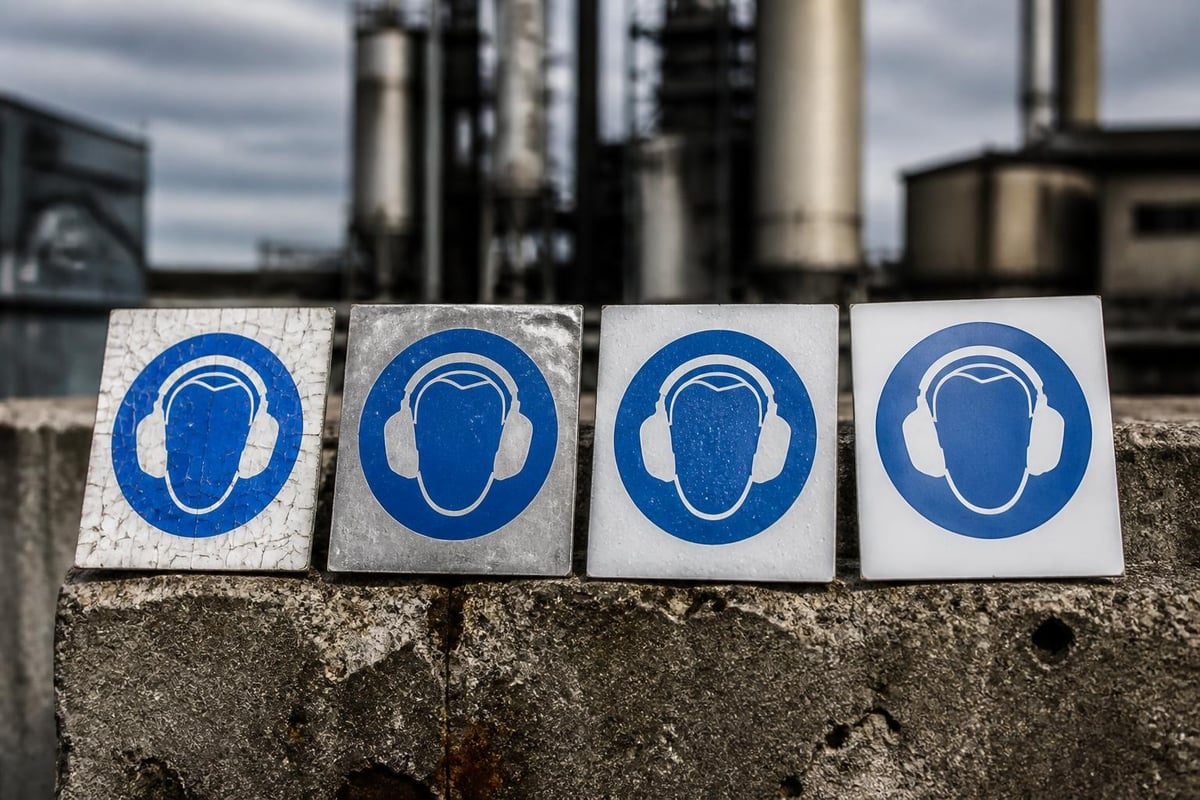
The photoluminescent signs range offers particularly valuable solutions for facilities where power failures might compromise lighting whilst mandatory safety actions remain critical.
Integration with Personal Protective Equipment Programmes
Safety signs blue serve as visual anchors for comprehensive PPE programmes. Effective workplace safety relies on more than simply posting signs; organisations must ensure the required equipment remains accessible, properly maintained, and regularly inspected. Blue mandatory signs typically mark PPE storage locations, creating clear associations between the requirement and the means to comply.
The connection between signage and personal protective equipment supply creates an integrated safety system. When workers encounter a blue sign mandating respiratory protection, they should immediately know where appropriate masks or respirators are stored. This spatial relationship between signage and equipment reduces compliance friction and reinforces safety habits.
Training and Cultural Reinforcement
Safety signs blue only achieve their protective purpose when workers understand and respect their authority. Comprehensive induction programmes should explicitly address the meaning of blue safety signage, distinguishing it from informational, warning, and prohibition signs. Regular refresher training helps maintain awareness, particularly in workplaces with high personnel turnover.
Progressive organisations treat blue mandatory signs as conversation starters rather than mere compliance markers. Safety meetings might discuss why particular PPE requirements exist in specific zones, helping workers understand the hazards these measures address. This educational approach transforms mandatory signs from authoritarian commands into valued protective measures.
Accessibility Considerations for Modern Workplaces
The 2026 workplace increasingly recognises diverse accessibility needs. Safety signs blue must communicate effectively to workers with colour vision deficiencies, visual impairments, and literacy challenges. The Access Board guidance on signage provides valuable frameworks for ensuring mandatory signs meet accessibility standards alongside their safety functions.
Tactile elements supplement visual information for workers with vision impairments. Raised symbols and Braille translations allow these personnel to independently verify mandatory requirements in their work areas. The circular shape of traditional blue mandatory signs provides a tactile identifier that distinguishes them from other sign categories.
Symbol-based communication reduces language barriers in multilingual workplaces. Whilst text reinforces the message, the primary pictogram should convey the mandatory action without requiring linguistic interpretation. This approach proves essential in industries employing international workforces or seasonal workers from diverse backgrounds.
Contrast and Lighting Optimisation
The International Sign Association provides technical guidance on achieving optimal contrast in manufactured signs. For safety signs blue, this involves careful attention to:
- Background colour saturation ensuring pure blue hues without purple or green shifts
- White symbol opacity preventing transparency that reduces contrast
- Surface finish selection balancing glare prevention with visibility
- Illumination requirements for areas with variable or insufficient ambient light
Non-glare finishes prove particularly important in environments with bright artificial lighting or strong natural light exposure. Whilst glossy surfaces might appear more vibrant under ideal conditions, they can become unreadable when direct light sources create reflections.
Strategic Placement and Density Management
Effective deployment of safety signs blue requires strategic thinking about placement density. Excessive signage creates visual clutter that diminishes attention to individual signs, whilst insufficient coverage leaves workers uncertain about requirements. Professional safety audits assess optimal sign placement based on workflow patterns, hazard zones, and decision points.
Mandatory signs should appear at threshold locations where workers transition into areas with different safety requirements. An entrance to a high-noise zone needs blue hearing protection signage before workers cross the boundary, allowing them to comply before exposure begins. Similarly, chemical handling areas require blue signs indicating mandatory protective equipment before personnel handle hazardous substances.
Maintenance and Replacement Protocols
Safety signs blue deteriorate over time through environmental exposure, physical contact, and cleaning processes. Regular inspection programmes should assess:
- Colour fading that reduces recognition or authority
- Physical damage including cracks, bends, or delamination
- Adhesive failure for mounted signs
- Obscuration by equipment, materials, or accumulated dirt
- Relevance ensuring signs reflect current hazards and requirements
Establishing replacement schedules based on material type and environmental conditions prevents the gradual degradation of safety communication systems. High-traffic areas might require annual replacement, whilst protected indoor locations could maintain effectiveness for five years or longer.
Coordinating Blue Signs with Other Safety Communication
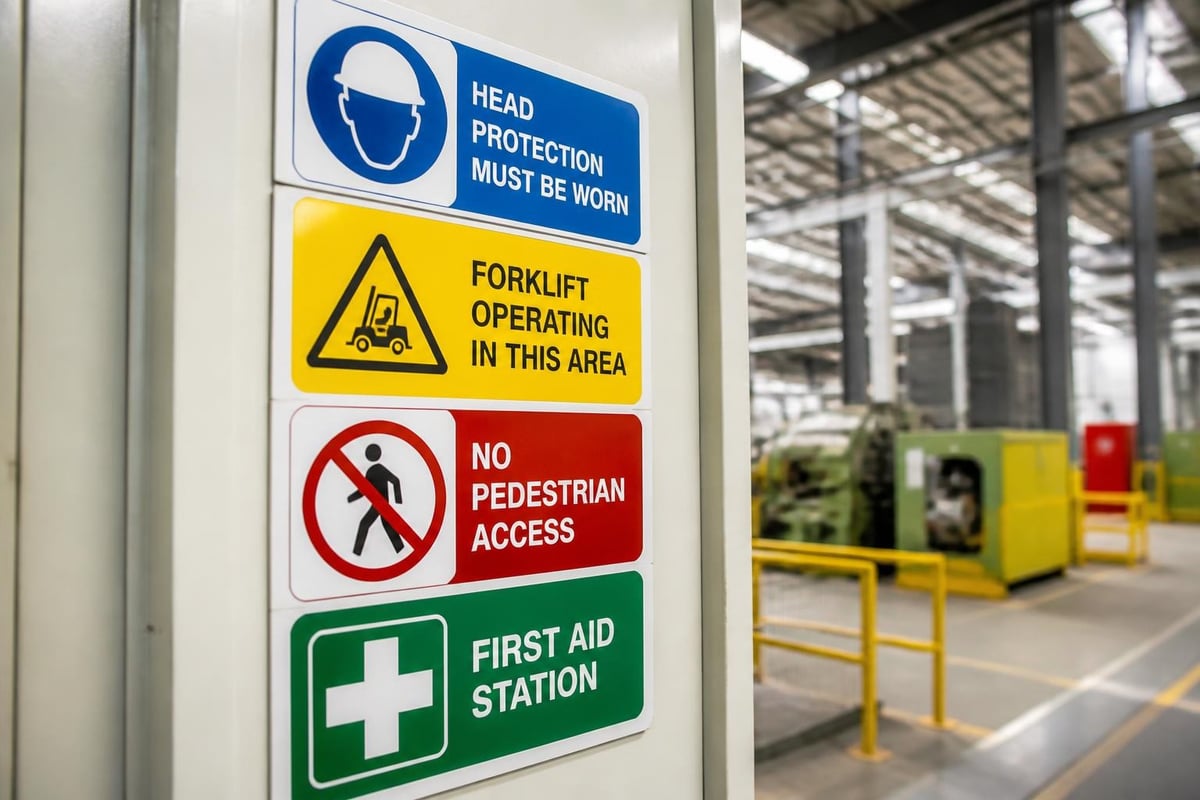
Safety signs blue function within comprehensive safety communication ecosystems that include warning signs, prohibition signs, emergency information, and general guidance. The complete safety signs portfolio demonstrates how different colour-coded categories work together to create layered safety information systems.
Spatial relationships between sign categories enhance comprehension. A yellow warning sign indicating chemical hazard might precede a blue mandatory sign requiring protective gloves and eye protection. This sequential arrangement helps workers understand why particular PPE becomes mandatory, connecting hazard awareness with protective measures.
Traffic management applications demonstrate the broader application of blue mandatory signage beyond workplace environments. UK government guidance on regulatory signs explains how blue circular signs communicate mandatory instructions to drivers, showing the consistency of colour coding across different safety contexts.
Emerging Technologies and Digital Integration
The evolution of workplace safety increasingly incorporates digital technologies alongside traditional safety signs blue. QR codes on mandatory signs can link to detailed procedure documents, equipment specifications, or video training materials. Workers scanning these codes access comprehensive information about why particular PPE is required and how to properly use protective equipment.
Smart facility management systems track compliance through various sensor technologies. Proximity sensors might verify that workers don appropriate PPE before entering zones marked by blue mandatory signs. These systems generate compliance data that informs safety programme improvements whilst identifying areas where additional training might be necessary.
However, digital enhancement should supplement rather than replace traditional safety signs blue. Power failures, device malfunctions, and the simple clarity of immediate visual communication ensure that physical signage remains fundamental to workplace safety architecture.
Future Developments in Safety Signage
Research continues into enhanced visibility technologies for safety signs blue. Electroluminescent materials offer self-illuminated signs that maintain visibility without external power sources for extended periods. Active LED-illuminated signs provide maximum visibility but require electrical infrastructure and maintenance.
Retroreflective materials continue improving, offering enhanced visibility in low-light conditions where headlamps or flashlights provide the only illumination. These advances prove particularly valuable for emergency response scenarios where normal lighting fails but mandatory safety procedures remain critical.
Safety signs blue establish non-negotiable safety requirements that protect workers across diverse industrial environments. From regulatory compliance through the EU directive framework to practical applications in manufacturing, healthcare, and construction, these mandatory signs form essential components of effective safety communication systems. SafetySignsForSale provides comprehensive solutions for organisations requiring compliant, durable, and professionally manufactured safety signage, alongside the PPE, fire equipment, and first aid supplies that complete integrated workplace safety programmes.