


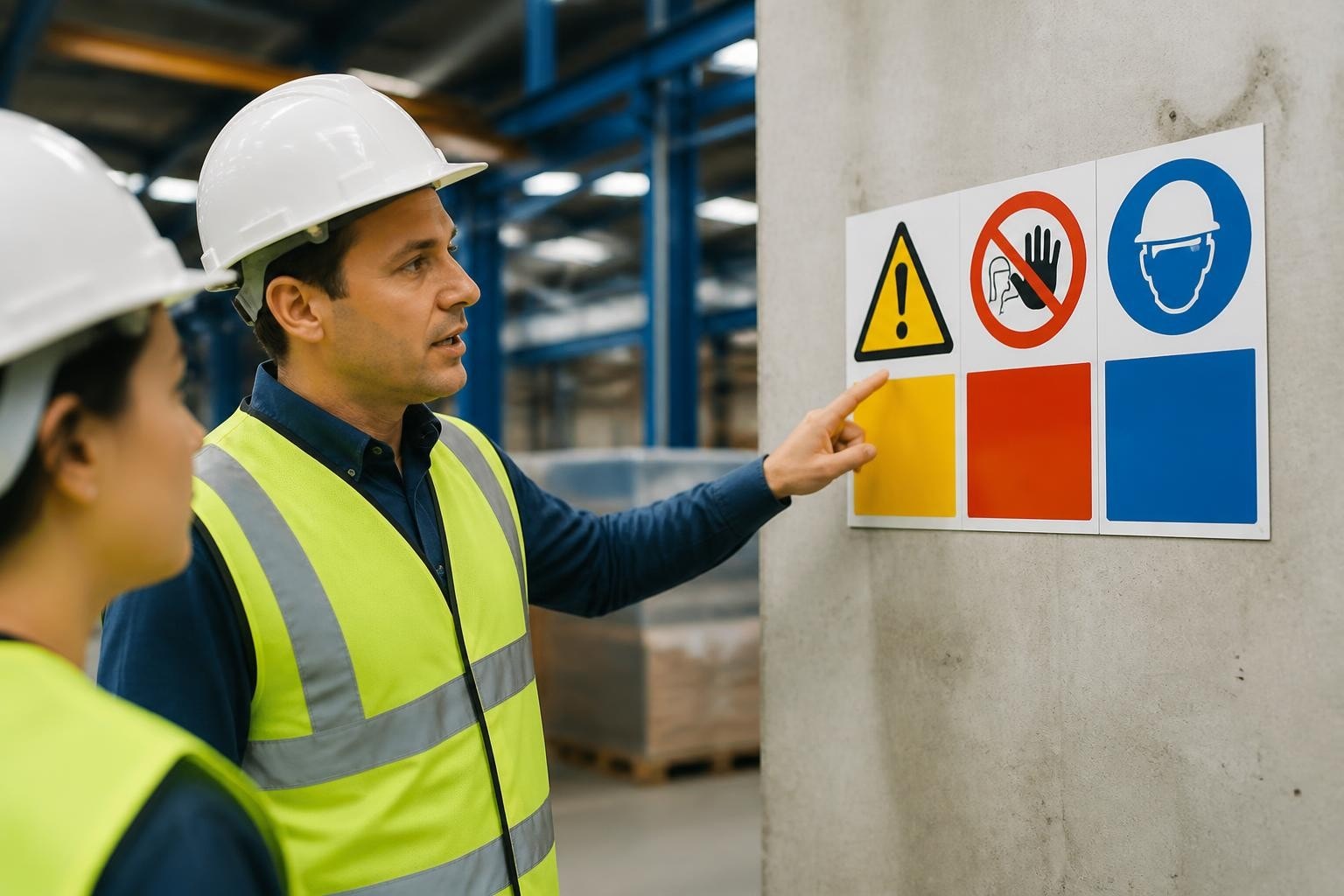
Safety Signs Near Me: A Complete Guide for 2026
When searching for "safety signs near me," businesses and facility managers are typically seeking more than just a product-they're looking for compliance, protection, and peace of mind. The right safety signage creates a visual language that communicates hazards, mandates behaviour, and can literally save lives. As workplace safety regulations continue to evolve in 2026, understanding what makes quality safety signage and where to source it has become increasingly important for organisations across all sectors.
Understanding the Importance of Local Safety Signage Providers
Proximity matters when sourcing safety signs near me for several practical reasons. Local suppliers offer faster turnaround times, personalised service, and the ability to inspect physical samples before committing to large orders. When safety compliance deadlines loom, having a nearby provider can make the difference between meeting regulatory requirements and facing penalties.
Beyond convenience, regional suppliers understand local compliance requirements and industry-specific needs. They're familiar with inspections conducted by provincial authorities and can advise on standards that apply to your particular region and sector.
Benefits of Choosing Nearby Safety Sign Suppliers
- Reduced shipping times mean faster installation and quicker compliance
- Lower transportation costs compared to international or distant suppliers
- Face-to-face consultation for complex safety signage projects
- Emergency replacement capabilities when signs are damaged or regulations change
- Local knowledge of regional compliance requirements and common workplace hazards
Working with established suppliers like SafetySignsForSale ensures access to comprehensive inventories that meet both international standards and local specifications. Their extensive range of safety signs covers everything from basic warnings to specialised photoluminescent options.
Types of Safety Signs Every Workplace Needs
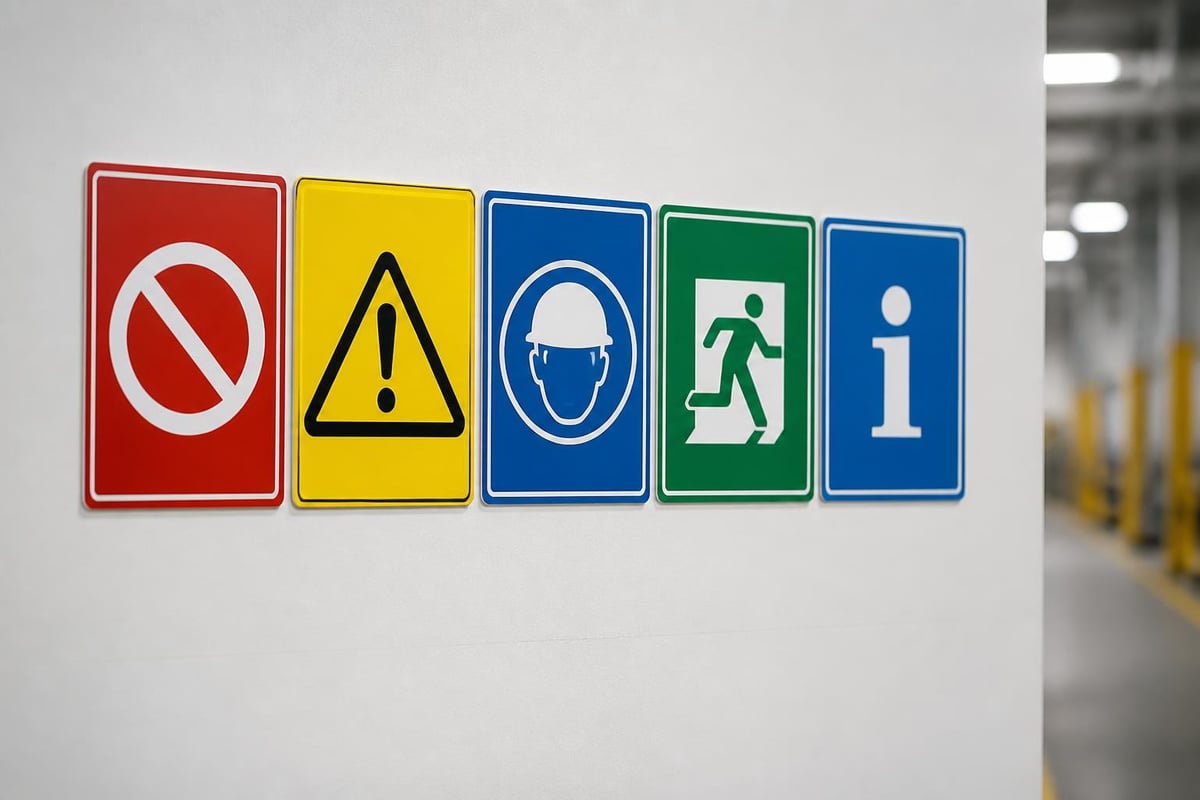
When searching for safety signs near me, understanding the different categories helps ensure comprehensive workplace coverage. Each sign type serves a specific communicative function and must meet particular design standards.
Prohibition Signs
These critical markers communicate what actions are forbidden in specific areas. Featuring red circular borders with diagonal lines, prohibition signs prevent dangerous behaviours before they occur.
Common prohibition signage includes:
- No smoking indicators
- No unauthorised access warnings
- No mobile phones zones
- Restricted area notices
Prohibitory signs must be positioned at entry points and throughout areas where specific behaviours pose risks. Their distinctive design ensures instant recognition, even in high-stress situations.
Warning Signs
Yellow triangular signs with black borders alert personnel to potential hazards. These are perhaps the most ubiquitous safety markers, found in virtually every industrial, commercial, and public setting.
| Warning Type | Application | Placement Priority |
|---|---|---|
| Electrical hazard | Substations, panels | High-voltage areas |
| Slippery surface | Wet floors, polished areas | Immediate hazard zones |
| Chemical hazard | Storage, handling areas | Entry and work points |
| Overhead loads | Crane operations | Movement paths |
The effectiveness of warning signs depends heavily on strategic placement at decision points where personnel can modify their behaviour before encountering the hazard.
Mandatory Signs
Blue circular signs communicate required actions or equipment. These enforce safety protocols by clearly indicating what must be done in specific areas.
Essential mandatory signage covers:
- Personal protective equipment requirements
- Safety procedures before equipment operation
- Handwashing stations
- Authorised personnel only zones
Complementing mandatory signs with the actual PPE supplies creates a complete safety ecosystem where visual communication is backed by readily available protection.
Emergency and Fire Safety Signs
Green and red rectangular signs guide personnel during emergencies. These life-safety markers must meet stringent visibility and durability standards, as they function when conditions are most challenging.
Fire safety signage requirements:
- Fire extinguisher location indicators
- Fire hose reel positions
- Assembly point markers
- Emergency exit routes
Fire-fighting signs represent some of the most regulated safety markers, with specific requirements for size, colour, and illumination. The NFPA research on dynamic exit signage demonstrates how emergency sign performance directly impacts evacuation effectiveness during critical incidents.
Compliance Standards for Safety Signage in 2026
Finding safety signs near me involves more than aesthetic preferences-it requires understanding compliance frameworks that govern workplace safety communication. Standards have evolved significantly, with 2026 seeing continued harmonisation between international protocols.
ANSI Z535 Standards Framework
The American National Standards Institute's Z535 series provides comprehensive guidance for safety sign design, colours, and symbols. The ANSI Z535 standards documentation outlines specific requirements for different sign categories, ensuring consistent visual language across industries.
Recent committee discussions tracked in CPSC meeting logs reveal ongoing refinements to harmonise with ISO standards whilst maintaining practical applicability for diverse workplace environments.
Accessibility Requirements
Modern safety signage must accommodate all building occupants, including those with visual or tactile limitations. The ADA accessibility guidelines for signs establish technical requirements for:
- Tactile character height and spacing
- Braille positioning and formatting
- Visual character contrast ratios
- Mounting height specifications
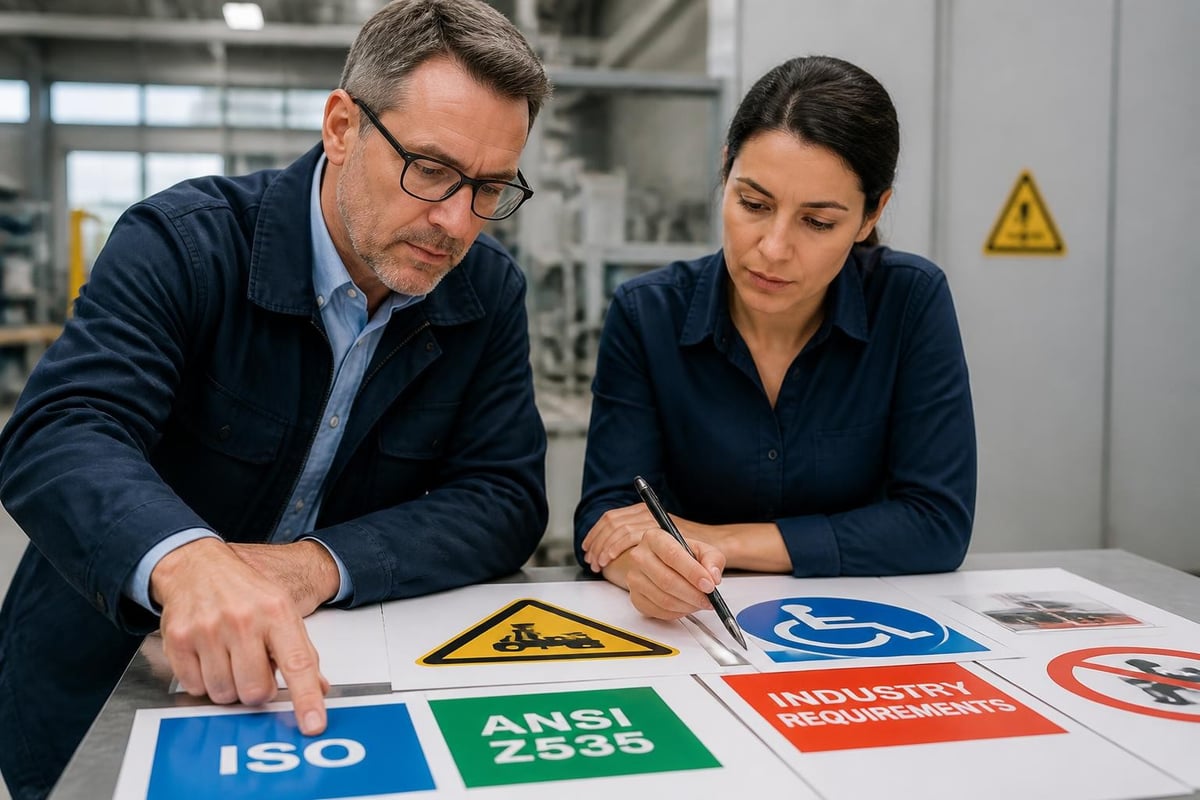
The Department of Justice Title III manual clarifies obligations for public accommodations, making accessibility compliance non-negotiable for facilities serving the public. When evaluating safety signs near me, verify that suppliers understand these layered requirements.
Material Selection for Durability and Performance
The longevity and effectiveness of safety signage depends significantly on material choices. When sourcing safety signs near me, consider environmental conditions that will affect sign performance over time.
Common Safety Sign Materials
| Material | Best Applications | Expected Lifespan | Weather Resistance |
|---|---|---|---|
| Rigid PVC | Indoor, protected outdoor | 5-7 years | Moderate |
| Aluminium | Outdoor, harsh environments | 10-15 years | Excellent |
| Self-adhesive vinyl | Temporary, smooth surfaces | 2-3 years | Poor-Moderate |
| Photoluminescent | Emergency exits, power failure zones | 10-25 years | Variable |
Photoluminescent technology has revolutionised emergency signage by providing visibility during power failures without electrical systems. Photoluminescent signs absorb ambient light and emit a glow lasting several hours, making them invaluable for evacuation routes.
Environmental Considerations
Different workplace environments demand specific material properties:
- Chemical exposure areas require chemically-resistant substrates that won't degrade when splashed
- High-temperature zones need materials that maintain legibility despite heat exposure
- Outdoor installations must withstand UV radiation, moisture, and temperature fluctuations
- Food processing facilities often require stainless steel or antimicrobial-coated signs
Quality suppliers offering safety signs near me should provide material guidance based on your specific operational context, ensuring investments deliver long-term value.
Strategic Sign Placement for Maximum Effectiveness
Purchasing compliant safety signs represents only half the equation-strategic placement determines whether they actually prevent incidents. When implementing safety signs near me, location analysis should precede installation.
Visibility Analysis Framework
Effective sign placement considers:
- Viewing distance and angle from typical approach paths
- Lighting conditions at different times of day
- Visual obstructions from equipment, vehicles, or inventory
- Decision points where personnel choose actions or routes
Signs positioned too high, too low, or obscured by normal operations fail their protective function regardless of compliance or quality.
Density and Redundancy Considerations
Whilst comprehensive signage coverage is essential, excessive sign density creates visual noise that diminishes individual sign impact. Strike a balance between adequate warning and information overload.
Critical safety messages may warrant redundant placement, particularly:
- Along extended corridors or large open spaces
- At multiple entry points to hazardous zones
- Before and after directional changes in emergency routes
- In areas with high personnel turnover or visitor traffic
Customisation Options for Industry-Specific Requirements
Generic safety signage addresses common hazards, but many industries require specialised messaging. When searching for safety signs near me, identify suppliers capable of customisation whilst maintaining standards compliance.
Industry-Specific Safety Communication
Different sectors face unique hazards requiring tailored visual communication:
Manufacturing and industrial settings may need:
- Machine-specific operating procedures
- Lockout/tagout protocols
- Material handling warnings
- Process flow indicators
Healthcare facilities require:
- Infection control reminders
- Radiation zone markers
- Oxygen in use warnings
- Patient privacy notices
Construction sites demand:
- PPE requirement zones
- Load capacity limits
- Excavation warnings
- Height restriction notices
The general informational signs category often serves as the starting point for customised messaging that addresses site-specific conditions not covered by standard hazard warnings.
Conducting a Comprehensive Safety Sign Audit
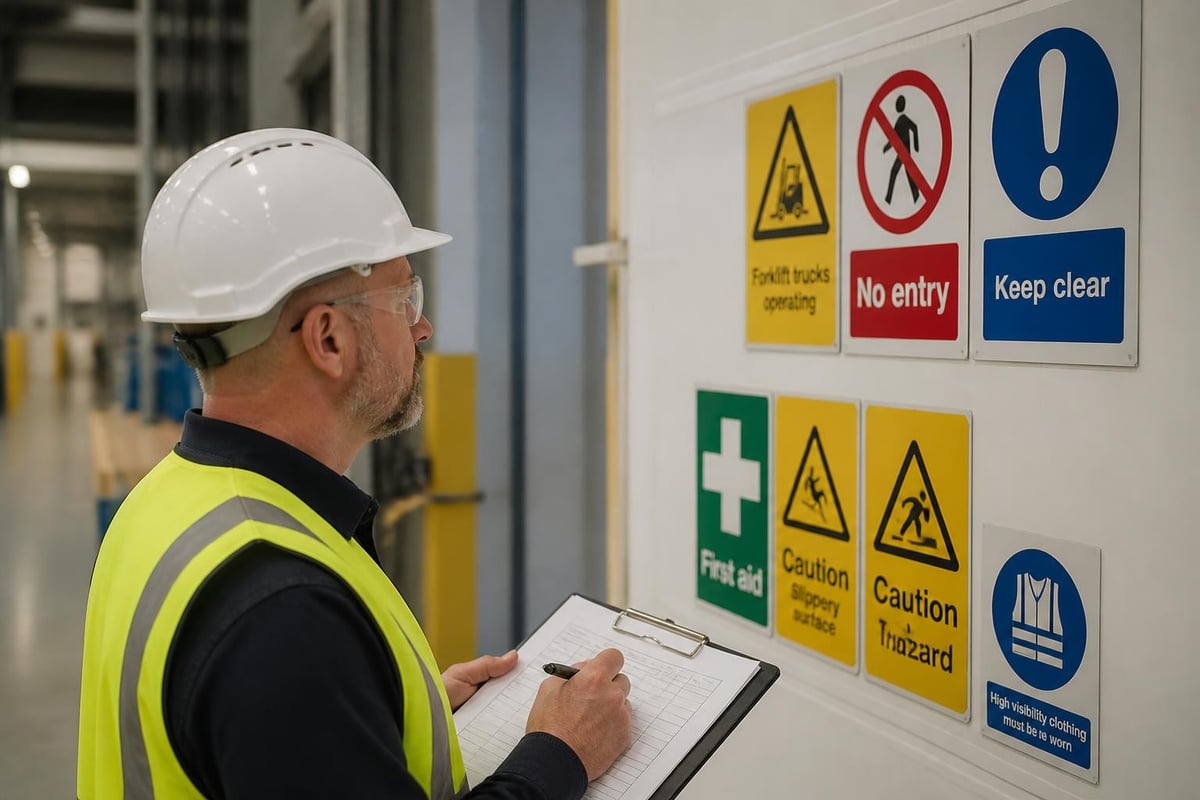
Before purchasing safety signs near me, conduct a thorough audit of current signage and workplace hazards. This systematic approach ensures comprehensive coverage and cost-effective investment.
Audit Methodology
- Document existing signage locations, conditions, and messages
- Identify hazards through workplace inspection and incident records
- Map circulation patterns for personnel, vehicles, and materials
- Note regulatory changes affecting your industry since last update
- Assess sign condition for fading, damage, or obsolescence
This process often reveals both gaps in coverage and redundant or outdated signs that create confusion rather than clarity.
Creating a Replacement Schedule
Safety signs don't last indefinitely. Establishing a replacement schedule prevents degraded signage from compromising safety:
- Annual inspection of all safety signage for damage or fading
- Three-year rotation for outdoor signs in harsh conditions
- Five-year replacement for indoor signs in controlled environments
- Immediate replacement following regulatory changes or new hazards
Integration with Broader Safety Systems
Modern workplace safety extends beyond static signage. When evaluating safety signs near me, consider how they integrate with complementary safety equipment and protocols.
Coordinated Safety Equipment Placement
Safety signs should direct personnel to safety equipment and emergency resources:
- Fire extinguishers require clear directional and location signage
- First aid stations need visible markers from multiple approaches
- Emergency eyewash stations demand illuminated or photoluminescent indicators
- PPE storage areas benefit from pictorial signs showing required equipment
This coordinated approach creates an intuitive safety ecosystem where visual communication and physical resources work together seamlessly.
Digital Integration Opportunities
Forward-thinking organisations in 2026 are exploring how digital systems complement traditional safety signage:
- QR codes on signs linking to detailed safety procedures or training materials
- Digital displays providing real-time hazard updates in dynamic environments
- Mobile applications that map safety equipment and emergency routes
- Integration with building management systems for emergency lighting coordination
Whilst digital enhancements offer significant benefits, they should supplement rather than replace traditional safety signs near me, which function independently of power and connectivity.
Evaluating Safety Sign Suppliers and Quality Indicators
Not all providers offering safety signs near me deliver equivalent quality or service. Distinguishing reputable suppliers from inadequate ones protects both safety outcomes and budgets.
Quality Assessment Criteria
Material quality indicators:
- UV-resistant inks that maintain colour fastness
- Uniform substrate thickness without warping
- Clean edge finishing and precise cutting
- Appropriate backing or mounting options
Compliance verification:
- Explicit standards references (ANSI, ISO, local regulations)
- Documentation of material certifications
- Sample availability for inspection
- Technical support for compliance questions
Service capabilities:
- Customisation options maintaining standards compliance
- Reasonable lead times for standard and custom orders
- Installation guidance or services
- Warranty provisions and replacement policies
Cost Considerations Beyond Unit Price
Whilst budget constraints exist, focusing solely on cheapest safety signs near me often proves economically short-sighted. Consider total cost of ownership:
| Cost Factor | Budget Option | Quality Option | Long-term Impact |
|---|---|---|---|
| Initial price | Lower | Higher | Immediate budget relief |
| Replacement frequency | 2-3 years | 7-10 years | Multiple reorders vs. one-time |
| Compliance risk | Higher | Lower | Potential fines and liability |
| Installation effort | May require replacement hardware | Longer intervals | Labour cost reduction |
Quality signage from established suppliers delivers superior value through extended service life, consistent compliance, and reduced administrative burden from frequent replacements.
Road and Traffic Safety Signage for Facilities
Many facilities require road signs for internal traffic management, creating safe interaction between vehicles, pedestrians, and materials handling equipment. When sourcing safety signs near me, don't overlook these critical markers.
Internal Traffic Control Applications
- Speed limit enforcement in facility roadways
- Pedestrian crossing markers at high-traffic intersections
- Loading bay direction and priority indicators
- Parking designation and restriction signs
- Forklift and vehicle operation zones
Properly implemented traffic signage reduces collision risks and creates predictable movement patterns that enhance overall facility safety. These signs must withstand vehicle exhaust, weather exposure, and occasional physical contact.
Maintaining Safety Signage Effectiveness Over Time
Installing quality safety signs near me represents a significant investment that requires ongoing maintenance to deliver sustained value. Degraded or damaged signs communicate negligence and fail to protect.
Maintenance Best Practices
Regular inspection protocols:
- Monthly visual checks of high-traffic area signage
- Quarterly comprehensive facility signage review
- Post-incident assessment of relevant safety signs
- Annual professional audit by safety consultants
Cleaning and care procedures:
- Gentle cleaning with appropriate solutions (avoid abrasives)
- Immediate removal of graffiti or defacement
- Vegetation trimming around outdoor signs
- Lighting verification for illuminated or photoluminescent signs
Documentation requirements:
- Inspection logs recording condition assessments
- Replacement tracking with dates and reasons
- Incident correlation with nearby signage effectiveness
- Compliance audit documentation for regulatory reviews
Training Personnel on Safety Sign Recognition
Even the most comprehensive safety signs near me fail without proper personnel training. Visual literacy in safety communication requires intentional development and reinforcement.
Effective Training Components
- Sign category education explaining colour coding and shape significance
- Symbol interpretation for pictorial warnings and instructions
- Appropriate responses to different sign types
- Location familiarisation through facility walkdowns
- Periodic refreshers addressing new signs or changed conditions
Mandatory signs particularly require training that explains not just what they communicate but why compliance protects workers. Understanding rationale improves adherence far more effectively than simple rule enforcement.
Creating a Safety Sign Culture
Organisations with exemplary safety records cultivate cultures where signage is respected and heeded:
- Leadership demonstrates compliance with sign directives
- Near-miss reporting includes sign visibility or adequacy assessment
- Suggestion systems encourage employee input on sign placement
- Recognition programs acknowledge safety communication improvements
- Regular communication reinforces the life-saving purpose of signage
Selecting appropriate safety signs near me requires balancing compliance requirements, environmental conditions, and operational needs whilst ensuring clear communication that protects personnel and visitors. The investment in quality signage and proper implementation delivers measurable returns through incident prevention and regulatory compliance. Whether you need comprehensive facility signage, specialised fire safety markers, or industry-specific warnings, SafetySignsForSale offers the expertise and product range to meet your safety communication needs, backed by technical knowledge and commitment to protecting South African workplaces.