


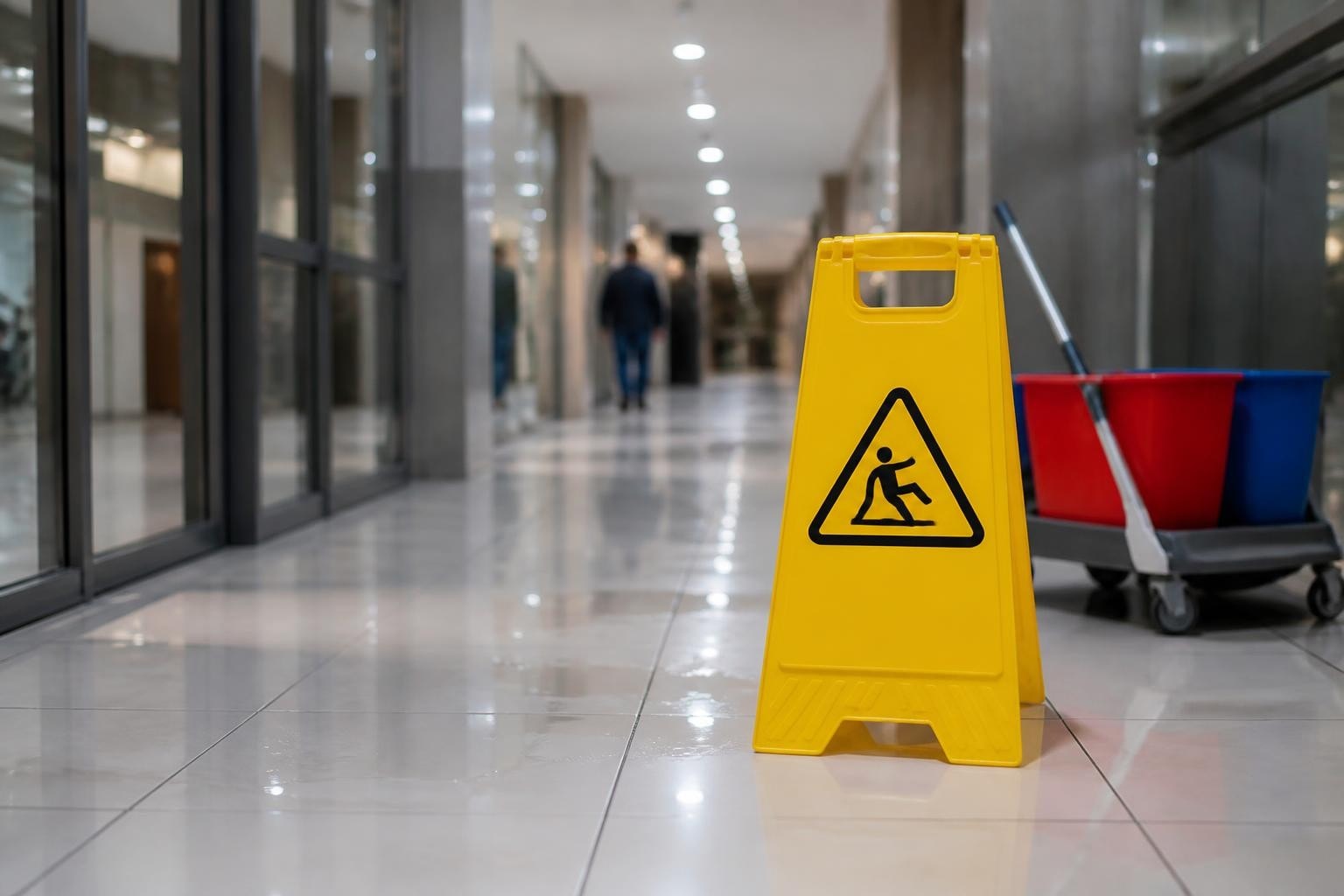
Slip Hazard Sign: Essential Guide for Workplace Safety
Workplace slips, trips, and falls continue to account for a significant proportion of reported injuries across industries in 2026. A properly deployed slip hazard sign serves as a critical line of defence against these preventable accidents, alerting employees and visitors to potentially dangerous conditions before they occur. Whether in retail environments, manufacturing facilities, healthcare settings, or office buildings, these warning devices play an indispensable role in comprehensive safety management programmes. Understanding when, where, and how to use slip hazard signage effectively can mean the difference between a safe workplace and a costly accident.
Understanding Slip Hazard Signs and Their Purpose
A slip hazard sign functions as a visual alert system that warns individuals of slippery conditions caused by water, cleaning products, spills, or other substances that reduce traction. These signs typically feature bold yellow colouring with black text and graphics, following international safety colour conventions that ensure immediate recognition. The primary purpose extends beyond simple notification – they create legal documentation that reasonable precautions were taken to prevent accidents.
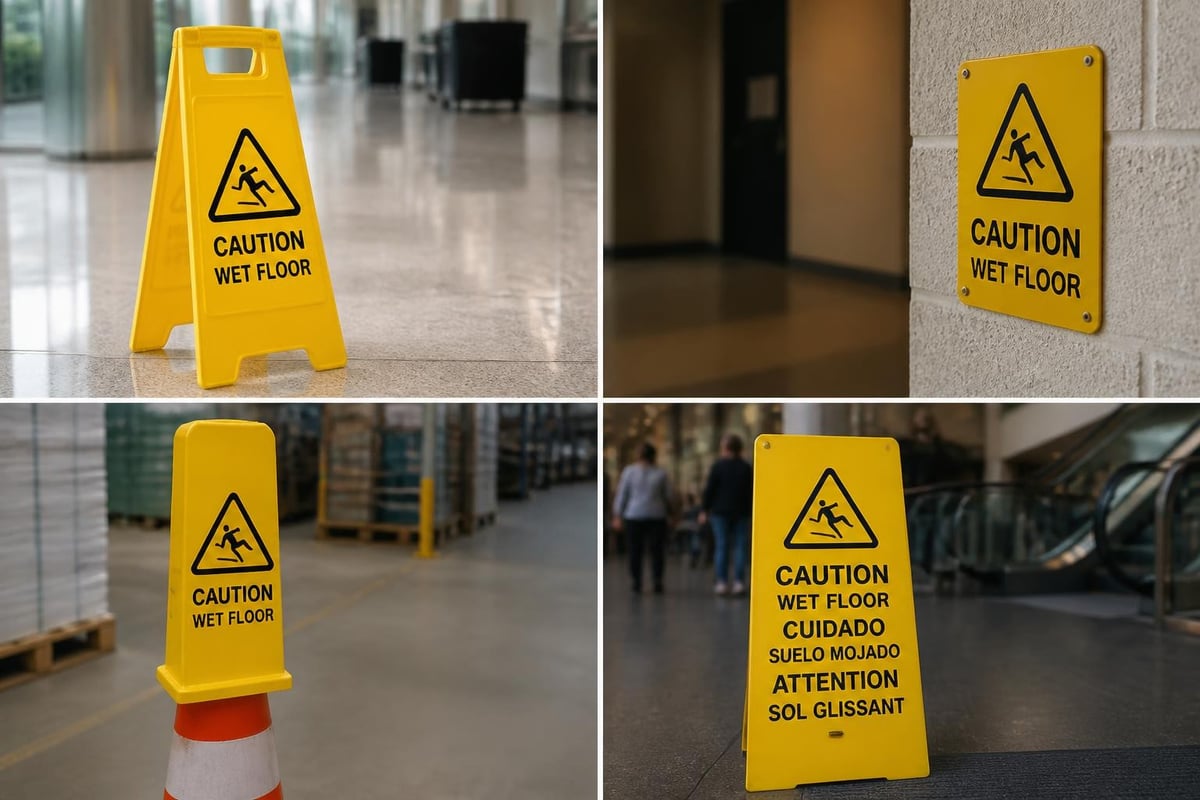
Modern slip hazard signage comes in various formats, from traditional A-frame floor stands to wall-mounted warnings and cone-based systems. Each design addresses specific environmental needs and space constraints. The effectiveness of any slip hazard sign depends on three critical factors: visibility, placement, and compliance with relevant safety standards.
Regulatory Requirements and Standards
Safety signage in the workplace must comply with established regulations and standards. In South Africa, the Occupational Health and Safety Act mandates that employers provide adequate warning of hazards, including slippery surfaces. Similarly, international standards such as ISO 7010 specify the design, colour, and symbols used on safety signs to ensure universal comprehension regardless of language barriers.
Warning signs must meet specific criteria regarding size, colour contrast, and symbol design. A compliant slip hazard sign typically incorporates the triangular warning shape with rounded corners, using Pantone Yellow 109 background with black borders and pictograms. The standardisation ensures that workers from diverse backgrounds immediately recognise potential dangers.
| Standard | Region | Key Requirements |
|---|---|---|
| ISO 7010 | International | Standardised symbols and colours for slip warnings |
| SANS 1186 | South Africa | Local safety sign specifications and dimensions |
| ANSI Z535 | North America | Colour codes and text requirements for hazard signs |
| BS 5499 | United Kingdom | British standards for safety colours and signs |
Strategic Placement and Deployment Practices
Proper placement of a slip hazard sign requires strategic thinking rather than arbitrary positioning. The UK Health and Safety Executive provides comprehensive guidance on slips and trips, emphasising that signage should complement rather than replace proper housekeeping and maintenance procedures.
Optimal Positioning Guidelines
When deploying slip hazard signage, position signs where they can be seen from all approach directions. In corridors, place signs at both ends of the hazardous zone. For open floor areas, use multiple signs to ensure visibility from every potential entry point. The typical effective viewing distance for standard A-frame signs is approximately 15 to 20 metres under normal lighting conditions.
Consider these essential placement principles:
- Deploy signs before cleaning begins, not after spills are already creating hazards
- Position signs outside the wet area, never within the slippery zone itself
- Ensure adequate lighting illuminates both the sign and the hazard
- Account for sight lines around corners, doorways, and obstacles
- Maintain clear pathways around signs to prevent them from becoming trip hazards
The University of Waterloo's institutional safety standard demonstrates how organisations implement systematic approaches to wet floor signage placement and related procedures, providing a practical model for facility management teams.
Types of Slip Hazard Signs and Their Applications
Different workplace environments demand specific types of slip hazard signage. A manufacturing facility faces different challenges than a hospital corridor or retail shop floor. Understanding these variations helps safety managers select appropriate warning systems for their particular needs.
Temporary versus Permanent Signage
Temporary signs address transient hazards such as freshly mopped floors or recent spills. These portable units can be quickly deployed and removed once the danger passes. A-frame signs remain the most popular choice for temporary warnings, though folding cone systems and retractable barriers have gained traction in high-traffic environments.
Permanent signage warns of ongoing conditions such as naturally slippery surfaces, entry areas exposed to weather, or zones where water regularly accumulates. These might include wall-mounted signs, floor decals, or engraved warnings on potentially hazardous surfaces. Permanent installations particularly suit areas where wet conditions persist regardless of cleaning schedules.
Specialised Sign Variations
- Multi-lingual signs prove essential in diverse workplaces where employees speak different primary languages
- Photoluminescent options provide visibility during power failures or in poorly lit areas
- Weatherproof outdoor signs withstand rain, sun exposure, and temperature variations
- Custom messaging signs address specific hazards like "Ice Warning" or "Oil Spill"
The photoluminescent signs category offers solutions for environments where emergency lighting might fail, ensuring warnings remain visible during critical situations.
Integration with Comprehensive Safety Programmes
A slip hazard sign should never stand alone as the sole preventive measure against slips and falls. Ontario's provincial guidance on preventing slips, trips and falls emphasises that signage forms just one component of a multi-faceted safety approach that includes proper housekeeping, appropriate footwear, adequate lighting, and surface maintenance.
Building a Complete Prevention Strategy
Effective slip prevention programmes layer multiple safeguards. Begin with hazard identification through regular workplace inspections. Document areas prone to wet conditions, such as entrances during rainy weather, kitchen zones, or areas near water sources. Once identified, implement engineering controls like drainage improvements or slip-resistant flooring before relying on administrative controls like signage.
Your safety programme should incorporate:
- Regular floor maintenance schedules with documented cleaning procedures
- Immediate spill response protocols with designated cleanup responsibilities
- Adequate supplies of slip hazard signs positioned for quick deployment
- Employee training on both recognising hazards and proper sign usage
- Periodic audits to ensure signage remains visible and in good condition
Consider pairing slip hazard warnings with complementary safety signage that addresses related risks. For instance, areas requiring wet floor warnings might also benefit from mandatory signs instructing proper footwear or general informational signs directing traffic flow around hazardous zones.
Material Selection and Durability Considerations
The construction quality of a slip hazard sign directly impacts its effectiveness and lifespan. Signs subjected to frequent deployment, outdoor weather, or harsh industrial environments require robust materials that maintain visibility under challenging conditions.
| Material Type | Durability | Best Applications | Typical Lifespan |
|---|---|---|---|
| Polypropylene plastic | High impact resistance | Indoor/outdoor A-frames | 3-5 years |
| Rigid PVC | Excellent weather resistance | Wall-mounted permanent signs | 7-10 years |
| Corrugated plastic | Lightweight, affordable | Temporary indoor use | 1-2 years |
| Aluminium composite | Premium durability | High-traffic industrial areas | 10+ years |
Weather Resistance and Outdoor Performance
Outdoor slip hazard signs face additional challenges from UV exposure, temperature fluctuations, and precipitation. Select signs with UV-stabilised materials that resist fading and brittleness. The graphics should use screen-printed or digitally printed inks specifically formulated for outdoor longevity rather than adhesive decals that peel or fade quickly.
Wind resistance becomes critical for outdoor deployment. Lightweight signs may blow over in moderate winds, creating new hazards whilst failing to warn of the original danger. Choose weighted bases or sandbag-compatible designs for exterior applications. Some advanced models incorporate fold-down feet or spring-loaded stabilisers that enhance stability without adding excessive weight.
Maintenance and Inspection Protocols
Even the highest-quality slip hazard sign loses effectiveness if poorly maintained. Faded graphics, damaged frames, or dirty surfaces reduce visibility and undermine the credibility of your safety programme. Establish routine inspection schedules that verify signage remains fit for purpose.
Regular Inspection Checklist
Monthly inspections should assess:
- Graphic clarity and colour vibrancy (replace if faded beyond 70% of original intensity)
- Structural integrity of frames, hinges, and bases
- Cleanliness of sign surfaces (dirt accumulation reduces visibility)
- Stability when deployed (wobbly signs require repair or replacement)
- Inventory levels to ensure adequate supplies for simultaneous deployments
Document inspection results and maintain replacement schedules. A damaged slip hazard sign reflects poorly on overall safety culture and may undermine legal defences if accidents occur. Budget for regular replacements as part of standard safety equipment expenditure, typically allocating funds for 15-20% annual replacement rates in high-use environments.
Legal Implications and Liability Considerations
The presence or absence of a slip hazard sign can significantly impact legal outcomes following workplace accidents. Courts evaluate whether employers took reasonable precautions to warn of known hazards. Proper signage demonstrates duty of care, whilst failures to warn may constitute negligence.
Documentation and Incident Response
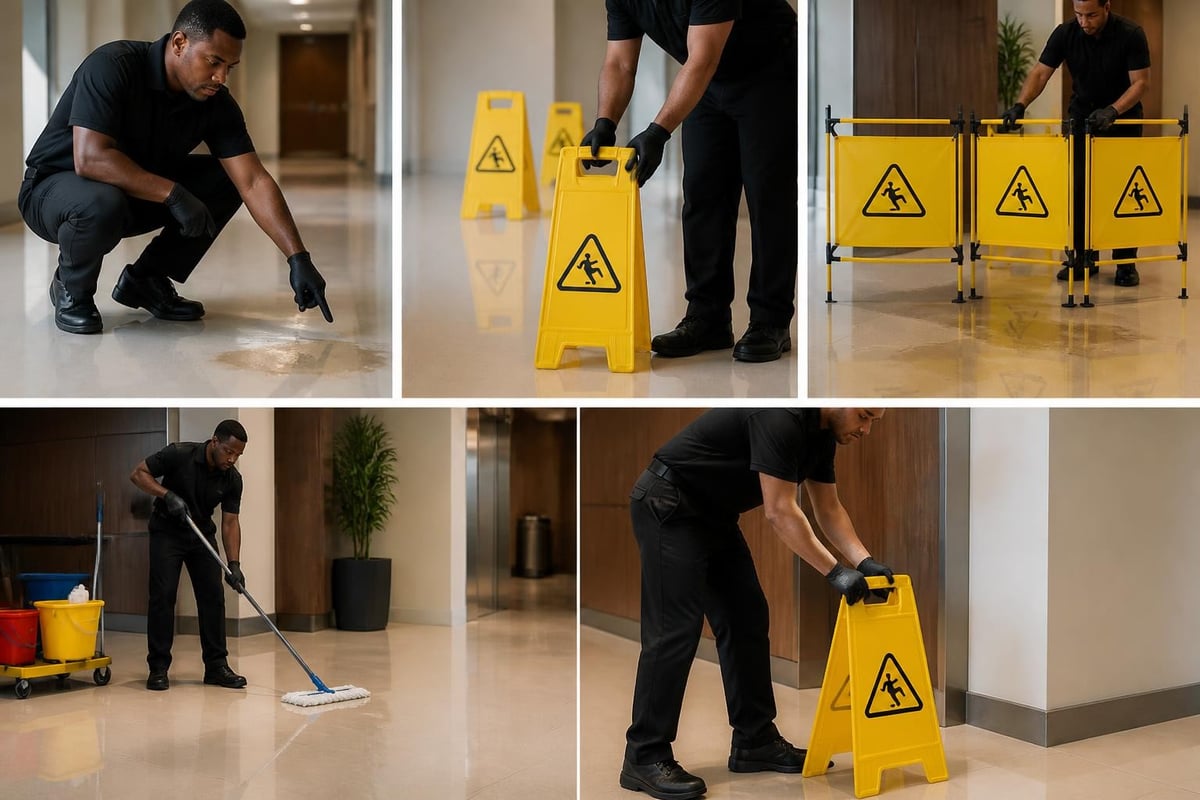
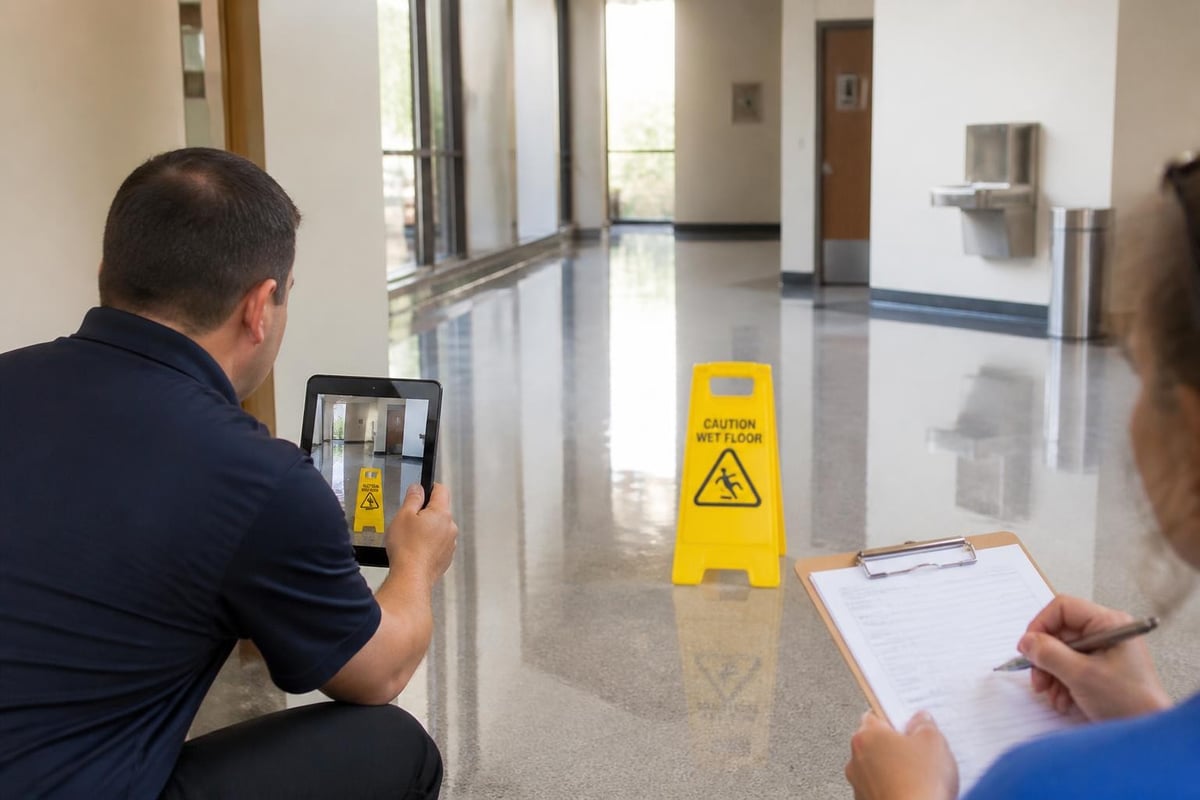
Photographic evidence of deployed signage can prove invaluable during investigations or litigation. When cleaning staff deploy warning signs, photograph their placement as part of standard procedures. Time-stamped images verify that warnings were present before any incident occurred. Similarly, document sign removal once hazards are eliminated.
Following any slip-related incident, preserve the involved signage for inspection. Damaged signs might indicate that the accident victim struck the warning device, supporting arguments about adequate notification. Conversely, signs found improperly positioned or in poor condition could undermine defence positions.
Maintain records of:
- Sign purchase dates and specifications
- Deployment logs for cleaning and maintenance activities
- Training records showing employee instruction on sign usage
- Inspection reports documenting sign conditions
- Replacement schedules and actual replacements performed
The general informational signs you deploy should complement slip hazard warnings, creating a comprehensive visual safety communication system throughout your facility.
Training Employees on Proper Sign Usage
Even the most sophisticated slip hazard sign proves ineffective if employees don't understand proper deployment protocols. Comprehensive training ensures that cleaning staff, maintenance personnel, and managers recognise when and how to use warning signage correctly.
Essential Training Components
Hazard recognition forms the foundation of effective sign usage. Employees must identify conditions requiring warnings beyond obvious wet floors. Teach staff to recognise less apparent hazards such as humidity condensation on smooth floors, tracked-in water during rainy weather, or product residues that create slippery surfaces despite appearing dry.
Deployment timing represents another critical training element. Signs should appear before hazards develop whenever possible. Cleaning staff must position warnings before mopping begins, not after floors are already wet. Similarly, signs warning of external hazards like icy conditions should deploy during overnight hours before morning foot traffic arrives.
Training programmes should include practical demonstrations where employees practice positioning signs at appropriate distances and angles. Role-playing exercises help staff understand visitor perspectives and identify optimal sign placement from various approach directions. Regular refresher sessions ensure procedures remain top-of-mind, particularly for seasonal staff or contractors unfamiliar with facility-specific protocols.
Industry-Specific Applications and Considerations
Different sectors face unique slip hazard challenges that influence sign selection and deployment strategies. Understanding industry-specific requirements helps tailor safety programmes to actual working conditions rather than generic approaches.
Healthcare Facilities
Hospitals and clinics encounter frequent wet conditions from patient care activities, cleaning protocols, and bodily fluid spills. Healthcare environments require signs that can be rapidly deployed and thoroughly sanitised between uses. Antimicrobial sign materials prevent pathogen transmission whilst maintaining visibility. Multi-lingual options prove particularly valuable in diverse patient populations where comprehension cannot be assumed.
Retail and Hospitality
Shops, restaurants, and hotels must balance safety requirements with aesthetic considerations. Customers react negatively to excessive safety signage that creates impressions of poorly maintained premises. Select slip hazard signs with professional appearance that blend with décor whilst maintaining visibility. Compact, discreet designs work well in customer-facing areas, whilst more prominent warnings suit back-of-house zones.
Industrial and Manufacturing
Factories face slip hazards from process fluids, coolants, and raw materials. Industrial slip hazard signs must withstand harsh conditions including chemical exposure, extreme temperatures, and heavy equipment traffic. High-visibility colours and oversized dimensions ensure warnings remain noticeable amid visual clutter of machinery and materials. Consider pairing slip warnings with appropriate PPE requirements like slip-resistant safety footwear.
Educational Institutions
Schools and universities present unique challenges with large numbers of young people moving rapidly between locations. Students often ignore signage whilst distracted by mobile devices or conversations. Multiply sign quantities to create impossible-to-miss warning zones. Bright colours and engaging graphics improve compliance amongst younger populations whilst maintaining professional standards.
Cost-Benefit Analysis of Quality Signage
Budget-conscious organisations might view slip hazard signs as discretionary expenses rather than essential investments. However, the financial implications of workplace slip accidents far exceed quality signage costs. A single serious injury can generate medical expenses, workers' compensation claims, productivity losses, and potential litigation costs totalling tens or hundreds of thousands of pounds.
Calculating Return on Investment
Direct costs of quality slip hazard signs range from £15 to £150 per unit depending on materials, size, and features. A comprehensive facility deployment might require 20-50 signs for adequate coverage, representing an initial investment of £500 to £3,000. Annual replacement costs typically add 15-20% of initial outlay.
Avoided costs from prevented accidents dramatically outweigh signage expenses. The average workplace slip injury costs employers approximately £15,000 to £25,000 when accounting for direct medical expenses, lost productivity, investigation time, and workers' compensation premiums. Preventing just one moderate injury annually repays signage investments multiple times over.
Premium signs with enhanced durability, better visibility, or specialised features justify higher initial costs through extended service life and improved effectiveness. Calculate total cost of ownership over expected lifespan rather than focusing solely on purchase price. A £50 sign lasting five years costs £10 annually, whilst a £20 sign requiring annual replacement actually costs more over time.
Emerging Technologies and Innovations
The slip hazard sign category continues evolving as manufacturers incorporate new technologies and respond to changing workplace needs. Understanding emerging innovations helps organisations future-proof their safety investments whilst maintaining current compliance.
Digital and Smart Signage
Electronic warning systems now integrate sensors that automatically activate signage when moisture detection systems identify wet conditions. These automated solutions eliminate human error in sign deployment whilst providing real-time monitoring of hazardous conditions. Connected systems alert facility managers to prolonged wet conditions requiring investigation, transforming reactive sign placement into proactive hazard management.
LED-enhanced signs improve visibility in challenging lighting conditions or high-traffic areas where static signs may be overlooked. Flashing or rotating lights draw attention more effectively than traditional static warnings, particularly valuable in environments with significant visual distractions. Solar-powered outdoor units eliminate electrical requirements whilst maintaining autonomous operation.
Sustainable and Eco-Friendly Options
Environmental consciousness drives demand for sustainable safety products. Manufacturers now offer slip hazard signs constructed from recycled plastics, biodegradable materials, or sustainably sourced components. These environmentally responsible options maintain performance standards whilst reducing ecological impact. Some organisations achieve sustainability goals whilst fulfilling safety obligations through careful product selection.
Modular designs extend product lifespan by enabling component replacement rather than complete sign disposal. Bases, frames, and graphics panels can be individually updated or repaired, reducing waste and long-term costs. This approach particularly suits organisations with large sign inventories where incremental upgrades provide budget flexibility.
Strategic deployment of slip hazard signs forms an essential component of comprehensive workplace safety management, protecting employees and visitors whilst demonstrating organisational commitment to accident prevention. By selecting appropriate signage types, implementing proper placement protocols, and integrating warnings within broader safety programmes, organisations significantly reduce slip-related incidents and their associated costs. SafetySignsForSale provides extensive ranges of compliant slip hazard signs alongside complementary safety equipment, helping businesses across all sectors establish robust protection systems. Whether you require temporary floor signs for daily cleaning operations or permanent warnings for persistently hazardous areas, expert guidance ensures you select solutions matched to your specific workplace challenges and regulatory requirements.