


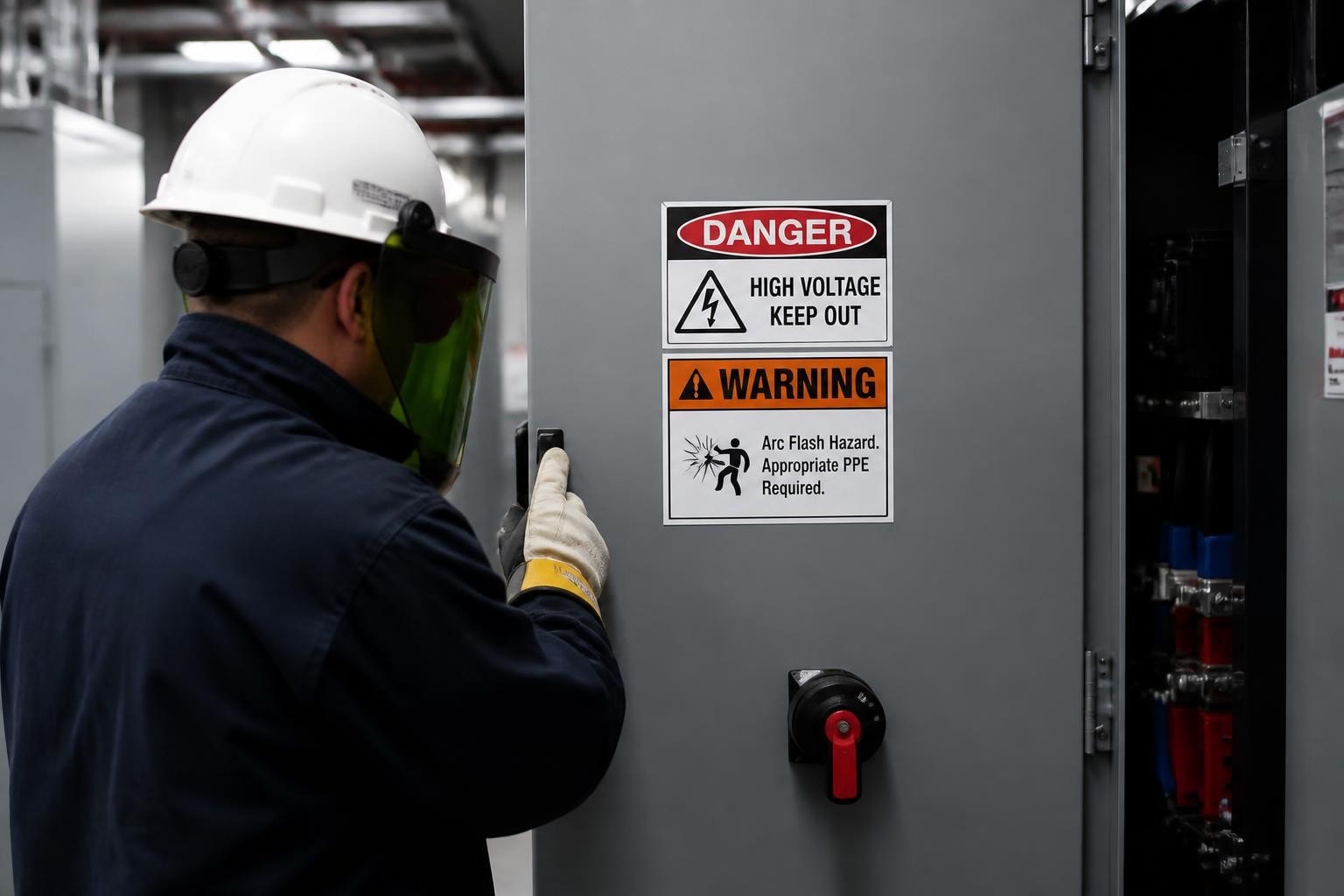
Electrical Danger Signs: Essential Guide for 2026
Electrical hazards present some of the most serious workplace risks across manufacturing, construction, utilities, and commercial facilities. Every year, electrical incidents cause injuries, fatalities, and significant property damage that could often be prevented through proper hazard communication. Electrical danger signs serve as the first line of defence, providing critical warnings about voltage levels, arc flash boundaries, restricted areas, and specific electrical hazards. Understanding how to select, position, and maintain these signs is essential for safety managers, facility supervisors, and anyone responsible for workplace compliance. This comprehensive guide examines the types of electrical danger signs, relevant standards and regulations, strategic placement considerations, and best practices for maintaining an effective electrical safety signage programme throughout 2026 and beyond.
Understanding Electrical Danger Signs and Their Critical Role
Electrical danger signs communicate life-threatening hazards to workers, contractors, and visitors who may encounter energised equipment or electrical installations. These signs differ from general warning signs through their specific focus on electrical risks and the severity of potential consequences.
The primary function of electrical danger signs is to prevent unauthorised access to energised equipment and to alert qualified personnel about specific electrical hazards before they begin work. Unlike informational or cautionary signage, electrical danger signs indicate immediate threats that can result in severe injury or death.
Core Categories of Electrical Hazard Signage
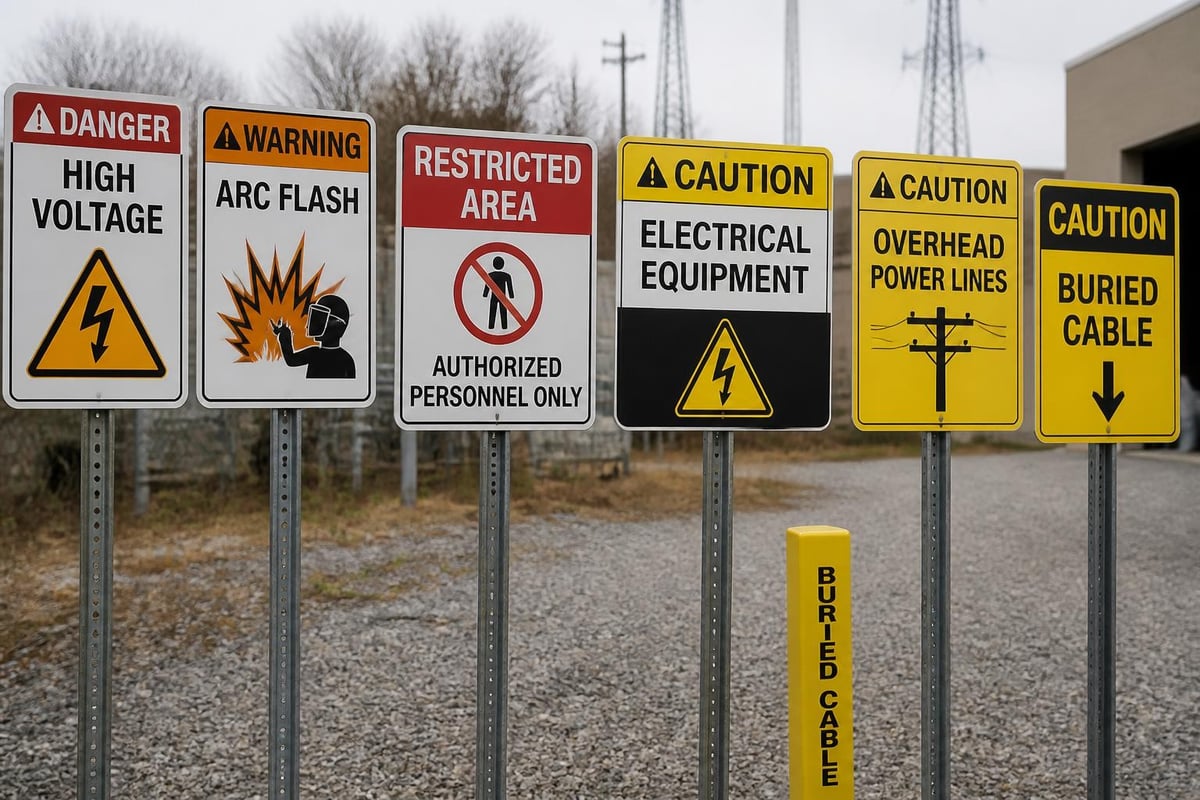
Electrical danger signs fall into several distinct categories, each addressing different aspects of electrical safety:
- High voltage warnings for equipment operating above specified voltage thresholds
- Arc flash labels indicating flash protection boundaries and required PPE
- Restricted access signs limiting entry to qualified electrical workers only
- Equipment-specific warnings for switchgear, transformers, and distribution panels
- Overhead line warnings for aerial electrical conductors
- Buried cable markers identifying underground electrical infrastructure
Each category requires specific information, formatting, and positioning to effectively communicate the nature and severity of the electrical hazard. The NFPA 70E fact sheet provides detailed requirements for electrical safety signage in accordance with current workplace standards.
Regulatory Standards Governing Electrical Danger Signs
Multiple international and regional standards establish requirements for electrical danger signs, creating a framework that ensures consistency and effectiveness across different industries and jurisdictions.
The ANSI Z535 series represents the cornerstone of safety sign standards in many regions. The ANSI Z535 series specifies design criteria including signal words, colour schemes, and pictorial symbols that enhance recognition and comprehension of electrical danger signs.
International and Regional Compliance Requirements
Different regulatory bodies mandate specific requirements for electrical danger signs:
| Standard | Jurisdiction | Key Requirements |
|---|---|---|
| NFPA 70E | North America | Arc flash labelling, shock boundaries, PPE specifications |
| IEC 60417 | International | Standardised electrical symbols and graphical representations |
| BS 7671 | United Kingdom | Wiring regulations and electrical installation signage |
| SANS 10142 | South Africa | Electrical installation wiring and safety requirements |
The National Electrical Code addresses electrical danger signs through specific articles, with NEC arc-flash marking requirements mandating permanent labels on electrical equipment indicating nominal system voltage, arc-flash boundary, and available incident energy or required PPE category.
For facilities operating across multiple jurisdictions, harmonising electrical danger signs to meet the most stringent applicable standards ensures comprehensive compliance whilst simplifying inventory management and worker training.
Arc Flash Warning Labels: Technical Requirements and Content
Arc flash incidents represent one of the most severe electrical hazards, with temperatures reaching 35,000 degrees Fahrenheit and capable of causing catastrophic injuries. Electrical danger signs addressing arc flash hazards require specific technical information calculated through rigorous analysis.
Essential Arc Flash Label Information
Every arc flash label must contain precise data enabling workers to assess risks and select appropriate protective measures:
- Nominal system voltage and equipment identification
- Arc flash boundary distance in feet or metres
- Incident energy level at the working distance (calories/cm²)
- Required PPE category or specific protective equipment
- Limited approach boundary for shock hazard protection
- Date of arc flash study and next review date
The IEEE 1584 standard provides the calculation methodology for determining incident energy levels and arc flash boundaries, ensuring electrical danger signs contain accurate, scientifically validated information. These calculations must be performed by qualified electrical engineers and updated whenever significant electrical system modifications occur.
Arc flash labels should be positioned at the point of interaction where workers open equipment doors or remove covers, ensuring visibility before any electrical work commences. Placement directly on or adjacent to equipment access points maximises effectiveness and compliance with regulatory requirements.
Signal Words and Colour Coding for Electrical Danger Signs
Effective electrical danger signs employ standardised signal words and colour schemes that communicate hazard severity at a glance, even before workers read detailed text.
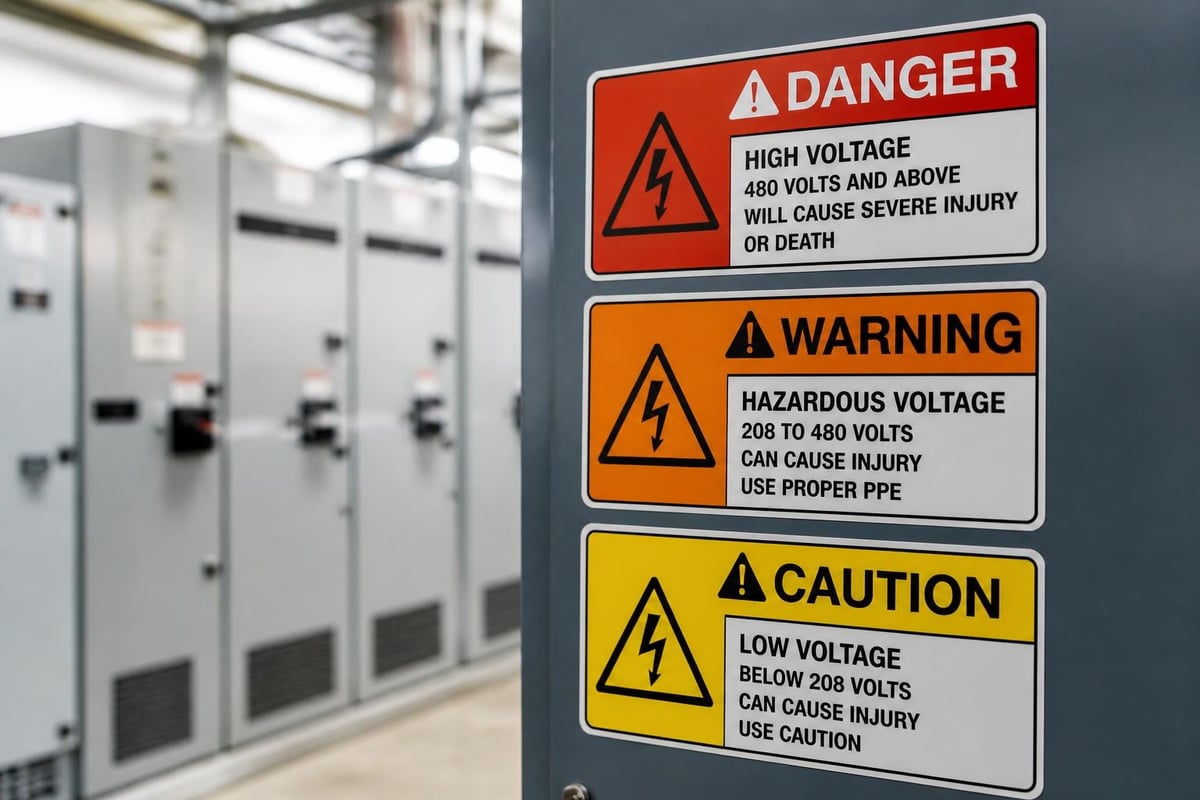
The hierarchy of signal words follows established safety communication principles:
- DANGER (white text on red background) indicates imminent hazards with high probability of death or serious injury
- WARNING (black text on orange background) signifies potential hazards that could result in death or serious injury
- CAUTION (black text on yellow background) denotes hazards that may cause minor or moderate injury
Most electrical danger signs utilise the DANGER signal word due to the inherent severity of electrical hazards. However, some situations warrant WARNING or CAUTION designations based on voltage levels, exposure potential, and specific circumstances.
Symbol Selection and Pictogram Standards
Electrical danger signs incorporate standardised symbols that transcend language barriers and enhance rapid recognition. The IEC 60417 graphical symbols catalogue provides internationally recognised electrical hazard pictograms ensuring consistency across different manufacturers and regions.
Common electrical hazard symbols include:
- Lightning bolt within a triangle for general electrical hazard
- Arc flash symbol depicting radiating energy
- Skull and crossbones for life-threatening voltage levels
- Hand with restriction symbol for "do not operate" warnings
- Lock and tag symbols for lockout/tagout requirements
Combining appropriate symbols with clear text creates multi-layered communication that reinforces safety messages through visual and written channels.
Strategic Placement and Visibility Considerations
The most comprehensively designed electrical danger signs prove ineffective if positioned where workers cannot easily see them. Strategic placement requires analysing workflow patterns, equipment access points, and potential approach paths.
Optimal Positioning Guidelines
Electrical danger signs should be mounted at eye level wherever possible, typically between 1.5 and 2 metres from the floor. For equipment requiring elevated access, additional signs at ground level warn workers before they climb ladders or platforms.
Signs must be positioned:
- Directly on electrical equipment where space permits
- At all access points to electrical rooms and substations
- Before entry points to restricted electrical areas
- On locked gates or doors protecting electrical installations
- At appropriate distances from overhead power lines
Distance requirements for overhead power line warnings vary based on voltage levels, with higher voltages requiring warnings positioned further from the actual conductors. The HSE electrical safety guidance provides specific recommendations for construction sites and similar environments where overhead electrical hazards frequently occur.
Multiple signs may be necessary for large electrical equipment or installations with access from different directions. Each potential approach path should include clear electrical danger signs preventing inadvertent exposure to energised components.
Material Selection and Environmental Durability
Electrical danger signs face diverse environmental challenges including moisture, temperature extremes, chemical exposure, and physical impact. Material selection directly influences sign longevity, legibility, and overall programme effectiveness.
| Material | Advantages | Typical Applications | Expected Lifespan |
|---|---|---|---|
| Aluminium | Weather-resistant, durable, professional appearance | Outdoor substations, utility equipment | 7-10 years |
| Rigid plastic | Chemical-resistant, lightweight, cost-effective | Indoor electrical rooms, control panels | 5-7 years |
| Vinyl adhesive | Conformable, suitable for curved surfaces | Equipment labels, small panels | 3-5 years |
| Photoluminescent | Glow-in-dark visibility, emergency backup | Low-light areas, emergency egress | 5-8 years |
Photoluminescent signs offer particular value in electrical rooms where lighting failure during an electrical incident could compromise visibility of standard signs. These signs charge under normal lighting conditions and remain visible for hours during power outages.
Weatherproofing and Maintenance Requirements
Outdoor electrical danger signs require UV-resistant materials and coatings preventing fading and deterioration from sunlight exposure. Printed graphics should utilise UV-stable inks maintaining legibility despite continuous outdoor exposure.
Regular inspection protocols should verify:
- Sign legibility and absence of fading or damage
- Secure mounting without loose fasteners or deterioration
- Accuracy of technical information following system modifications
- Visibility free from obstructions or overgrown vegetation
- Compliance with current regulatory requirements
Damaged, faded, or outdated electrical danger signs should be replaced immediately, as compromised signage may fail to provide adequate warning during critical moments.
Lockout/Tagout Integration with Electrical Danger Signs
Electrical danger signs complement but cannot substitute for proper lockout/tagout (LOTO) procedures. However, integrating LOTO information within electrical warning signage creates cohesive hazard communication supporting safe electrical work practices.
Many electrical danger signs incorporate fields for attaching lockout tags or documenting equipment status. These integrated systems streamline compliance whilst maintaining clear hazard communication before, during, and after electrical maintenance activities.
Coordination with Mandatory Safety Signage
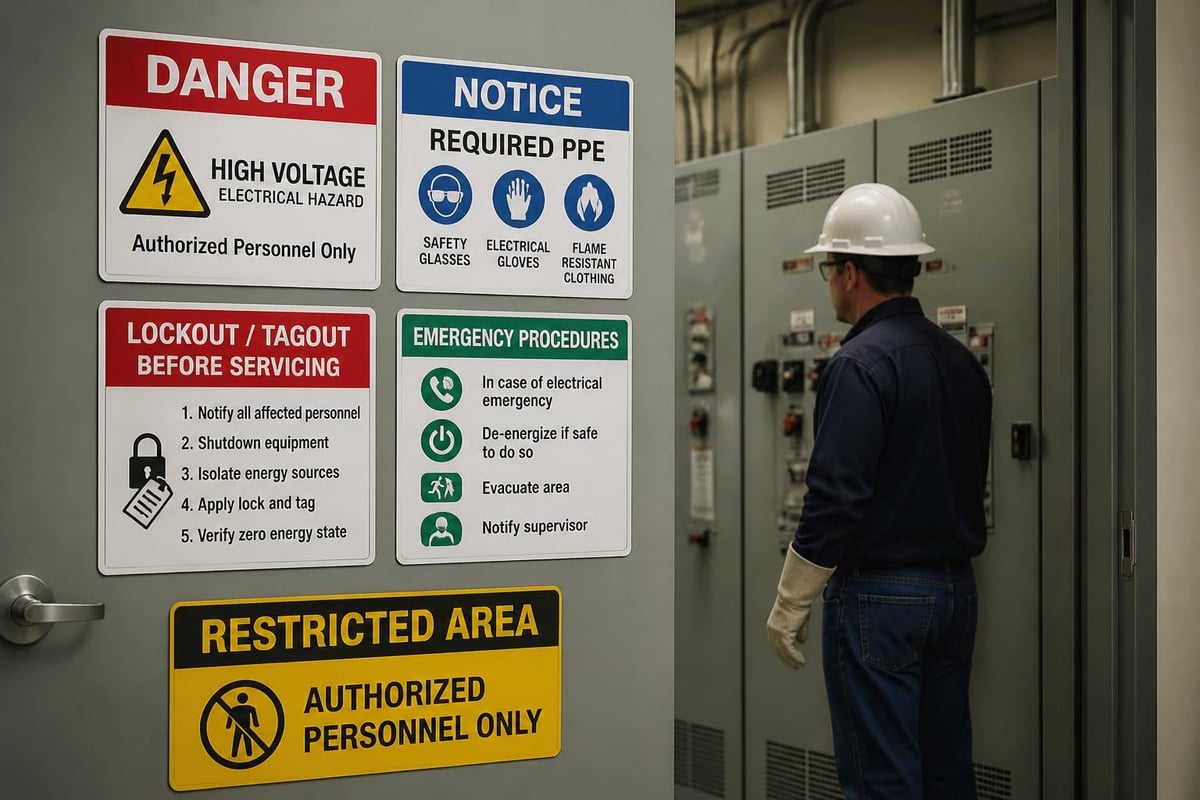
Electrical areas often require multiple mandatory signs beyond electrical danger warnings, including PPE requirements, access restrictions, and procedural instructions. Coordinating these different sign types creates comprehensive safety communication without visual clutter or conflicting messages.
A typical electrical room might include:
- Electrical danger signs on equipment and entry points
- Mandatory PPE signs specifying required protective equipment
- Prohibitory signs restricting unauthorised access
- Instructional signs detailing emergency shutdown procedures
- Arc flash warning labels on energised equipment
This layered approach addresses different safety aspects whilst maintaining focus on primary electrical hazards through prominent electrical danger signs.
Customisation Requirements for Specific Electrical Installations
Standard electrical danger signs address common hazards, but many installations require customised signage reflecting unique voltage levels, equipment configurations, or site-specific procedures.
Site-Specific Information Fields
Customised electrical danger signs should incorporate:
- Exact voltage levels and phase configurations
- Calculated arc flash incident energy values
- Site-specific emergency contact information
- Equipment identification numbers or asset tags
- Scheduled maintenance intervals and last inspection dates
- Foreign language translations where workforce diversity requires
Facilities with multilingual workforces benefit from electrical danger signs presenting critical warnings in multiple languages. However, standardised symbols and colour coding remain primary communication tools, with text providing supplementary detail.
Custom electrical danger signs must still adhere to applicable standards regarding signal words, colour schemes, and minimum text sizes. Customisation enhances specificity without compromising standardised safety communication principles.
Training Workers to Recognise and Respond to Electrical Danger Signs
Even the most professionally designed and strategically placed electrical danger signs prove ineffective if workers lack training to recognise and respond appropriately to these warnings.
Comprehensive electrical safety training should address:
- Recognition of different electrical danger sign types and formats
- Understanding signal word hierarchy and hazard severity levels
- Interpretation of arc flash boundary information and PPE requirements
- Appropriate responses to different electrical warnings
- Procedures when encountering damaged or missing electrical danger signs
- Integration of signage with LOTO and work permit systems
Training effectiveness increases when conducted with actual electrical danger signs used at the facility, allowing workers to familiarise themselves with specific formats, locations, and information relevant to their work environment.
Competency Verification and Refresher Requirements
Initial training should be verified through competency assessments ensuring workers can correctly identify electrical danger signs, interpret critical information, and describe appropriate responses. Annual refresher training maintains awareness and addresses any signage updates or regulatory changes.
Documentation of electrical safety training, including electrical danger sign recognition, supports regulatory compliance and provides evidence of due diligence in the event of incidents or inspections. Training records should specify topics covered, dates completed, and assessment results for each participant.
Procurement Considerations and Quality Standards
Selecting appropriate electrical danger signs requires balancing regulatory compliance, durability requirements, budget constraints, and specific facility needs. Quality variations among suppliers significantly impact long-term programme effectiveness and lifecycle costs.
Supplier Evaluation Criteria
When procuring electrical danger signs, safety managers should evaluate:
- Compliance with applicable standards (ANSI Z535, IEC, regional requirements)
- Material quality and expected lifespan in intended environment
- Customisation capabilities for site-specific requirements
- Lead times and availability for standard and custom signs
- Technical support for arc flash calculations and label design
- Comprehensive product range supporting diverse electrical hazard types
Reputable suppliers like SafetySignsForSale offer extensive electrical danger sign inventories addressing common hazards whilst providing customisation services for specialised applications. Consolidating safety sign procurement with a knowledgeable supplier streamlines ordering, ensures consistency, and supports ongoing compliance.
Quality electrical danger signs represent investment in worker safety rather than mere compliance expense. Premium materials and professional design provide superior visibility, longevity, and effectiveness compared to budget alternatives that require frequent replacement and may compromise safety communication during critical moments.
Emerging Technologies and Digital Electrical Safety Communication
Traditional static electrical danger signs remain essential, but emerging technologies supplement conventional signage with dynamic, interactive safety communication capabilities.
Digital displays adjacent to electrical equipment can present real-time information including:
- Current equipment status (energised, de-energised, under maintenance)
- Live electrical measurements and alarm conditions
- Context-specific safety procedures and PPE requirements
- Integrated lockout/tagout status and authorised worker lists
- Video demonstrations of safe electrical work practices
These systems complement rather than replace traditional electrical danger signs, as they depend on electrical power and electronic components that may fail during electrical incidents when warnings prove most critical.
QR Codes and Mobile Integration
Static electrical danger signs increasingly incorporate QR codes linking to detailed safety information, equipment documentation, or training resources accessible via smartphones. Workers scan codes to access:
- Complete arc flash study reports and calculations
- Equipment-specific safe work procedures
- Historical maintenance records and modification documentation
- Emergency contact information and incident reporting systems
- Multilingual safety information and instructional videos
This approach maintains permanent physical electrical danger signs whilst enabling access to comprehensive information exceeding what can be practically displayed on physical labels. However, QR code functionality requires mobile device availability and network connectivity, limiting effectiveness in certain environments or circumstances.
Audit Procedures and Continuous Improvement
Regular audits ensure electrical danger signs remain accurate, visible, and compliant with current standards throughout facility lifecycles. Systematic inspection protocols identify deficiencies before they compromise safety or result in regulatory violations.
Electrical safety sign audits should assess:
- Presence of required signs at all electrical equipment and access points
- Sign condition including legibility, damage, and weathering
- Accuracy of technical information following electrical system modifications
- Compliance with current regulatory standards and best practices
- Integration with LOTO systems and work permit processes
- Worker awareness and understanding of electrical danger signs
Audit findings should be documented with photographs, location references, and corrective action timelines. Trends analysis identifies systemic issues such as accelerated deterioration in specific environments, recurring damage patterns, or gaps in initial sign placement protocols.
Lifecycle Management and Replacement Planning
Proactive replacement programmes prevent electrical danger sign failures before they occur. Establishing replacement schedules based on material specifications, environmental exposure, and observed deterioration rates ensures continuous hazard communication without gaps.
Facilities management systems should track:
- Installation dates for all electrical danger signs
- Expected replacement intervals based on material and environment
- Inspection findings and condition assessments
- Regulatory updates requiring sign modifications or replacements
Budget planning for electrical danger sign replacement prevents reactive procurement and ensures adequate resources for maintaining comprehensive electrical safety signage programmes. Quantity discounts and standardised specifications reduce per-unit costs whilst simplifying inventory management.
Effective electrical danger signs form the foundation of comprehensive electrical safety programmes, providing critical hazard communication that protects workers from severe injuries and fatalities. By selecting appropriate sign types, ensuring regulatory compliance, maintaining visibility and legibility, and integrating signage with broader safety systems, organisations create robust defences against electrical hazards. Whether you need standard electrical warning labels, custom arc flash signs, or comprehensive facility-wide electrical safety signage solutions, SafetySignsForSale provides the expertise and product range to support your electrical safety requirements across all industries and applications.