


Warning Sign in the Road: Essential Safety Guidance
Road safety depends on effective communication between infrastructure and road users. A warning sign in the road serves as a critical intervention point, alerting drivers to potential hazards before they encounter them. These signs form an essential component of traffic management systems worldwide, designed to reduce accidents and save lives. Understanding their purpose, proper deployment, and compliance requirements ensures organisations can maintain safe environments for all road users whilst meeting legal obligations.
The Fundamental Purpose of Road Warning Signs
Warning signs exist to inform drivers of conditions ahead that may not be immediately apparent. Unlike regulatory signs that mandate specific actions, a warning sign in the road prepares motorists for upcoming hazards, allowing them to adjust speed, position, and attention accordingly.
The psychological principle behind warning signs centres on providing adequate reaction time. Research indicates that drivers require sufficient advance notice to process information, make decisions, and execute appropriate responses. According to human factors guidelines for road systems, sign placement must account for vehicle speeds, stopping distances, and cognitive processing time.
Key Functions of Warning Signs
Warning signs serve multiple interconnected purposes within the broader traffic management framework:
- Hazard notification: Alerting drivers to unexpected conditions such as sharp curves, intersections, or road surface changes
- Speed management: Encouraging appropriate speed reduction before reaching hazardous areas
- Attention direction: Focusing driver awareness on specific environmental factors requiring heightened vigilance
- Decision support: Providing information that enables informed tactical choices about lane position and following distance
These functions work together to create layers of protection, particularly in high-risk zones where road geometry, traffic patterns, or environmental conditions increase crash potential.
Standardisation and Regulatory Compliance
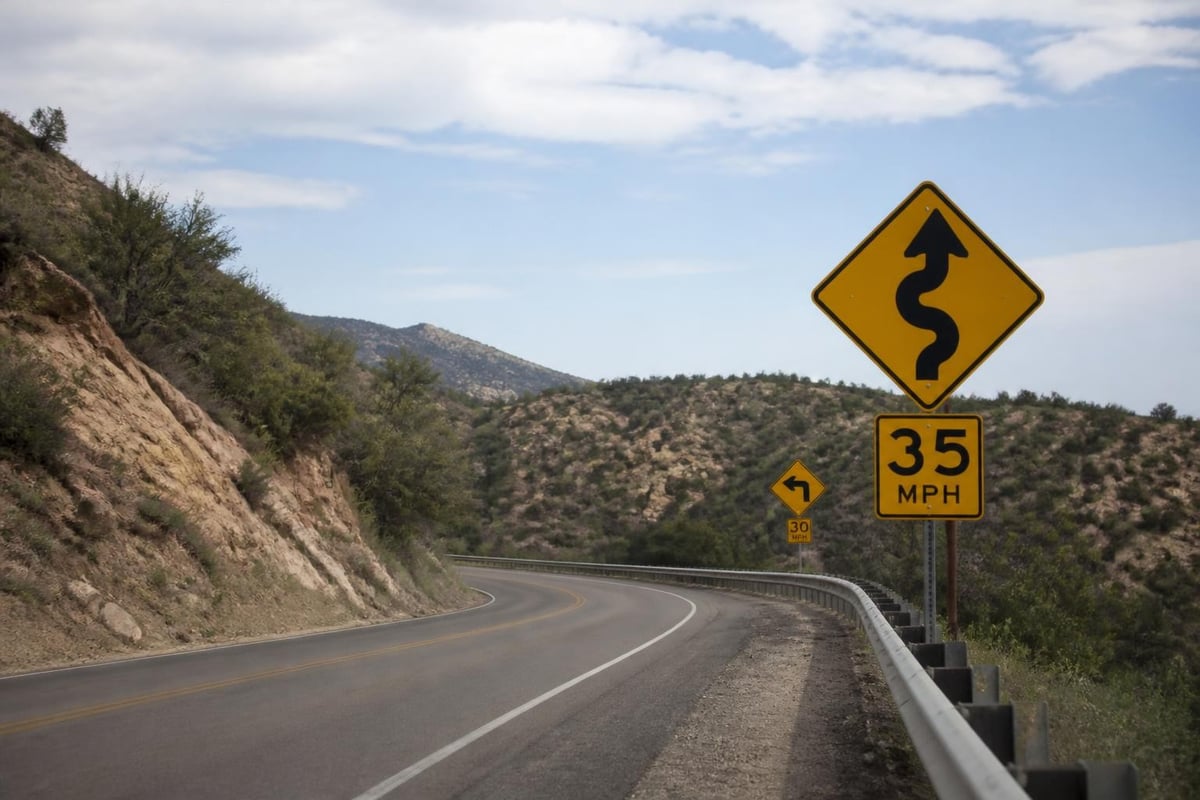
Every effective warning sign in the road adheres to established standards that ensure consistency across jurisdictions. The Manual on Uniform Traffic Control Devices provides comprehensive specifications for design, application, and placement in the United States, whilst other countries maintain equivalent standards.
Standardisation serves a vital purpose beyond mere consistency. Drivers develop pattern recognition through repeated exposure to uniform sign designs. When a warning sign in the road maintains consistent colour, shape, and symbology, drivers can process its message more quickly and reliably than they could with non-standard alternatives.
Standard Warning Sign Characteristics
| Element | Specification | Purpose |
|---|---|---|
| Shape | Diamond (square rotated 45°) | Immediate recognition as warning category |
| Colour | Yellow/amber background with black symbols | High visibility and hazard association |
| Retroreflectivity | Minimum maintained luminance levels | Night-time visibility across varying conditions |
| Symbol design | Simplified, high-contrast pictographs | Rapid comprehension regardless of literacy |
Compliance with these standards protects organisations from liability whilst ensuring maximum effectiveness. Non-compliant signs may fail to communicate effectively or could expose operators to legal challenges following incidents.
Common Types and Applications
Different hazard categories require specific warning sign designs. Understanding when and where to deploy each type ensures appropriate coverage across various risk scenarios.
Geometric Warning Signs
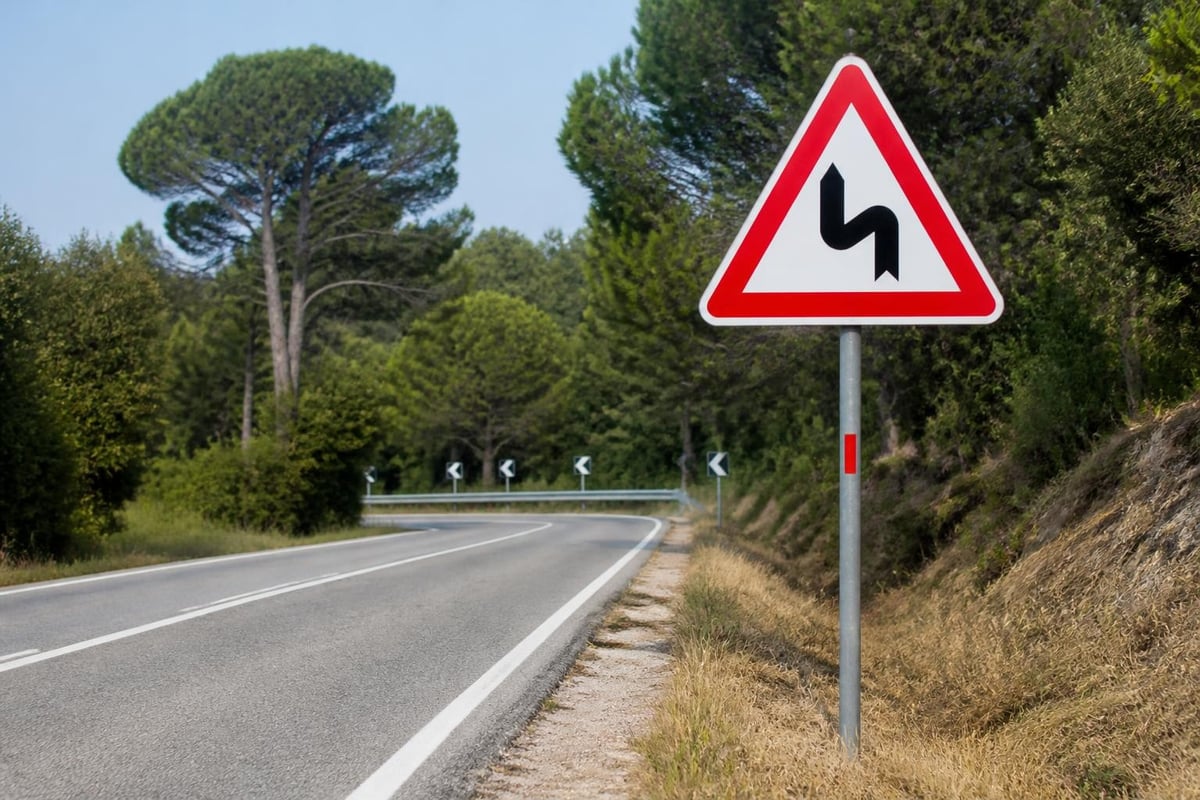
Roads with challenging geometry require advance notice to prevent loss of control or lane departures. Sharp curves, steep grades, and narrow bridges each warrant specific warning signs positioned to provide adequate preparation distance.
A warning sign in the road indicating a sharp curve should appear sufficiently in advance that drivers travelling at the posted speed limit can safely reduce velocity and navigate the turn. Calculation of this distance requires consideration of approach speed, deceleration rates, and curve radius.
Intersection and Crossing Warnings
Areas where traffic streams merge or cross present elevated collision risk. Warning signs alert drivers to:
- Cross-traffic ahead at uncontrolled or yield-controlled intersections
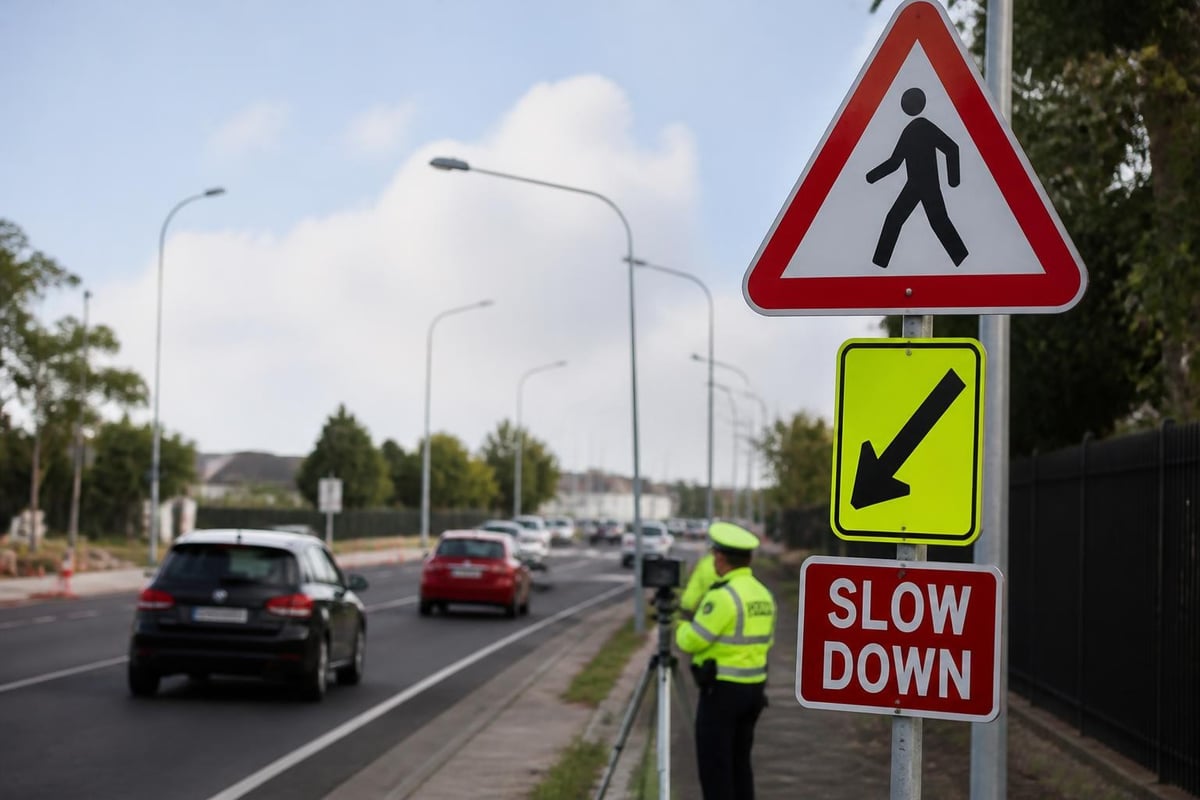
- Pedestrian crossings in unexpected locations
- Railway level crossings requiring stopped vehicle clearance
- Bicycle route intersections with vehicular traffic
These signs become particularly critical where sight distances are limited or where road users may not anticipate crossing movements.
Condition-Based Warning Signs
Environmental and road surface conditions that differ from normal expectations require dedicated warnings:
- Slippery surface warnings for areas prone to ice formation or oil contamination
- Flood zone indicators in low-lying areas subject to water accumulation
- Wind hazard signs for exposed sections where crosswinds affect vehicle stability
- Wildlife crossing markers in areas with documented animal-vehicle collision history
The National Academies' crash countermeasure toolbox provides evidence-based guidance for selecting appropriate warning interventions based on documented crash patterns.
Placement Principles and Best Practices
Effective positioning of a warning sign in the road requires careful analysis of multiple factors. Simply installing a sign proves insufficient; proper placement determines whether drivers receive, process, and act upon the warning.
Distance Calculations
The fundamental placement principle involves providing adequate time and space for driver response. This calculation incorporates:
- Perception-reaction time: Typically 2.5 seconds for unexpected events
- Decision-making interval: Additional time for selecting appropriate action
- Manoeuvre execution: Space required to complete speed adjustment or position change
- Approach speed: Higher velocities demand greater advance warning distances
For a warning sign in the road alerting to a sharp curve on a 100 km/h roadway, placement might occur 200-300 metres in advance, whereas the same hazard on a 50 km/h urban street might require only 75-100 metres of advance notice.
Visibility Considerations
Signs must remain visible under all conditions drivers might encounter:
| Condition | Requirement | Solution |
|---|---|---|
| Night-time | Adequate retroreflectivity | High-quality reflective sheeting, regular maintenance |
| Adverse weather | Visibility through rain/fog | Larger size, enhanced contrast, possible supplementary lighting |
| Visual clutter | Stand out from background | Strategic placement, size adjustment, removal of competing elements |
| Vegetation growth | Year-round unobstructed sightlines | Scheduled trimming, relocated placement if necessary |
Research on driver comprehension of warning signs demonstrates that even well-designed signs fail when positioning compromises visibility or when competing visual elements distract attention.
Maintenance and Lifecycle Management
A warning sign in the road loses effectiveness as materials degrade. Systematic maintenance programmes ensure signs continue performing their safety-critical function throughout their service life.
Retroreflectivity Management
Night-time visibility depends entirely on retroreflective sheeting that returns light to its source. This property degrades over time through:
- Ultraviolet radiation exposure causing material breakdown
- Physical abrasion from airborne particles
- Chemical attack from pollutants and cleaning agents
- Moisture infiltration compromising adhesive bonds
Regular assessments using calibrated retroreflectometers identify signs falling below minimum performance thresholds. Proactive replacement before complete failure maintains consistent safety levels.
Physical Condition Monitoring
Beyond retroreflectivity, comprehensive inspections evaluate:
- Structural integrity of posts and mounting hardware
- Sign face cleanliness and freedom from graffiti or damage
- Proper vertical and horizontal alignment
- Freedom from obstructing vegetation or objects
- Legibility of symbols and text elements
Documentation of inspection findings creates accountability whilst supporting budget planning for systematic replacement programmes.
Integration with Broader Safety Systems
The most effective safety interventions employ multiple complementary measures. A warning sign in the road achieves maximum impact when integrated with supporting infrastructure and programmes.
Engineering Improvements
Warning signs work alongside physical modifications:
- Delineation: Edge lines, chevrons, and raised pavement markers reinforcing sign messages
- Surface treatments: High-friction surfacing in curve approaches or at pedestrian crossings
- Lighting: Strategic illumination highlighting hazardous areas
- Geometric modification: Where feasible, addressing the underlying hazard through redesign
The World Health Organization's infrastructure guidance emphasises this layered approach as essential for protecting vulnerable road users.
Educational Reinforcement
Even properly placed warning signs benefit from public education initiatives. Drivers must understand:
- The meaning of various warning sign symbols and formats
- Appropriate responses to different warning categories
- The relationship between warning signs and upcoming conditions
- The importance of maintaining speed appropriate to warnings
Educational campaigns prove particularly valuable when introducing new sign types or in areas with diverse driver populations who may have learnt to drive under different sign conventions.
Industry-Specific Applications
Whilst public roads receive primary attention, private facilities and industrial settings require equally rigorous warning sign deployment. Warehouses, manufacturing plants, and logistics centres all contain roadways where vehicles and pedestrians interact.
Private Road Networks
Commercial facilities maintain internal road systems where standard traffic control principles apply. A warning sign in the road alerting to forklift crossings, loading dock approaches, or speed reduction zones protects workers and visitors whilst reducing liability exposure.
These environments often present unique challenges:
- Mixed traffic including pedestrians, industrial vehicles, and conventional automobiles
- Rapidly changing conditions as operations evolve
- High-density activity in confined spaces
- Workers who may become complacent through familiarity
Customised warning signs addressing facility-specific hazards complement standard road warning signs, creating comprehensive coverage across all risk scenarios.
Temporary Traffic Management
Construction zones, maintenance activities, and special events require temporary warning sign deployment. These situations demand:
- Portable mounting systems allowing rapid installation and removal
- Enhanced conspicuity to overcome driver expectations of normal conditions
- Sequential placement guiding drivers through changing lane configurations
- Regular repositioning as work zones advance
Temporary warning signs must meet the same performance standards as permanent installations whilst accommodating the dynamic nature of short-term operations.
Emerging Technologies and Future Developments
Warning sign technology continues evolving beyond traditional static installations. Innovation focuses on enhancing effectiveness through improved communication methods.
Enhanced Visibility Systems
Modern warning signs incorporate active elements:
- Solar-powered LED borders increasing conspicuity during low-light conditions
- Radar-activated flashers drawing attention when vehicles approach at excessive speeds
- Variable message displays adapting warnings to real-time conditions
- Retroreflective enhancements exceeding minimum standards for critical applications
These technologies prove particularly valuable where crash history indicates standard signs provide insufficient warning or where geometric constraints limit placement options.
Connected Infrastructure
Emerging vehicle-to-infrastructure communication systems enable digital transmission of warning information directly to vehicle displays. Whilst this technology promises enhanced safety, physical warning signs remain essential for:
- Vehicles lacking connected capability
- System failures or communication interruptions
- Backup redundancy ensuring no single point of failure
- Legal compliance with established standards
The transition period will likely see parallel systems operating together, with traditional warning signs providing baseline protection whilst connected systems offer supplementary information to equipped vehicles.
Procurement and Quality Considerations
Organisations sourcing warning signs must evaluate multiple quality factors beyond initial purchase price. A warning sign in the road represents a long-term investment in safety infrastructure.
Material Specifications
High-quality warning signs incorporate:
| Component | Quality Indicator | Impact on Performance |
|---|---|---|
| Substrate | Aluminium alloy, minimum gauge | Durability, wind resistance, service life |
| Sheeting | Engineer-grade or high-intensity reflective | Night visibility, maintenance intervals |
| Inks/Pigments | UV-stable formulations | Colour retention, symbol clarity over time |
| Protective coating | Weather-resistant overlay | Graffiti resistance, ease of cleaning |
Specifications should reference recognised standards ensuring delivered products meet documented performance requirements.
Supplier Evaluation
Selecting warning sign suppliers requires assessment of:
- Manufacturing quality control processes and certifications
- Product testing documentation demonstrating standards compliance
- Warranty coverage and expected service life claims
- Technical support for proper sign selection and placement
- Inventory depth ensuring availability across sign types
Establishing relationships with reputable suppliers ensures consistent quality whilst supporting ongoing safety programmes through reliable product availability.
Legal and Liability Considerations
Proper warning sign deployment carries significant legal implications. Organisations maintaining roads or facilities where a warning sign in the road proves necessary face potential liability if inadequate warnings contribute to incidents.
Duty of Care
Property owners and road authorities owe road users a duty to warn of non-obvious hazards. This obligation requires:
- Identifying conditions requiring warnings through systematic hazard assessment
- Deploying appropriate warning signs meeting applicable standards
- Maintaining signs in effective condition throughout their service life
- Updating warnings as conditions change or new hazards emerge
Documentation of these processes demonstrates due diligence in fulfilling duty of care obligations.
Post-Incident Analysis
Following collisions or injuries, investigators examine whether adequate warnings existed. Factors considered include:
- Presence of warnings appropriate to the hazard type
- Compliance with placement standards for advance distance
- Sign condition and visibility at the time of the incident
- Consistency with practice at similar locations
Comprehensive warning sign programmes supported by maintenance records provide strong evidence of reasonable care, whilst gaps or deficiencies may support liability findings.
Understanding the critical role of warning signs and implementing them according to established standards protects road users whilst fulfilling legal obligations across public roads and private facilities. Whether you require standard traffic warning signs, custom facility-specific warnings, or temporary traffic management solutions, SafetySignsForSale offers comprehensive products meeting the highest quality standards, backed by expert guidance to ensure proper selection and deployment for your specific safety requirements.