


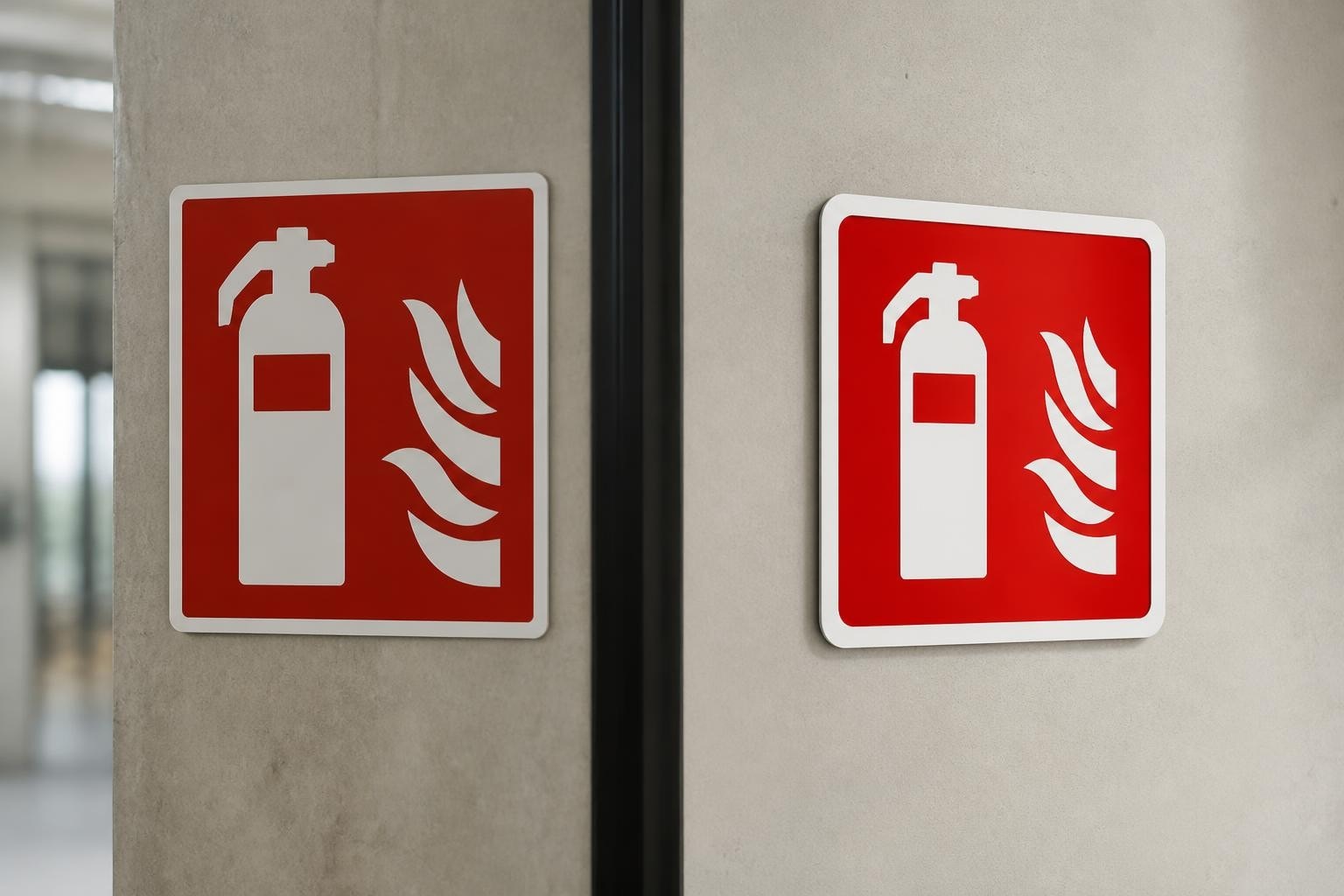
BS 5499: Understanding Fire Safety Signage Standards
Understanding safety signage standards is essential for maintaining compliant, effective workplace environments. BS 5499, the British Standard that governed fire safety signs for decades, represents a crucial chapter in the development of modern safety communication. While this standard has largely been superseded by international equivalents, its influence remains significant, and many organisations still reference it when specifying safety signage requirements. For safety professionals and facilities managers, understanding the history, components, and legacy of bs 5499 provides valuable context when navigating today's regulatory landscape and making informed purchasing decisions.
The Historical Significance of BS 5499
BS 5499 emerged during a period when fire safety signage required standardisation across British workplaces. The standard was developed to ensure consistency in how emergency information was communicated, particularly in evacuation scenarios where clear, universally understood symbols could save lives.
Development and Purpose
The bs 5499 series was created to address several critical needs in workplace safety communication. Before standardisation, organisations used varied signage approaches, creating confusion for visitors and workers moving between different sites. The standard established uniform colours, shapes, and pictograms that could be recognised instantly, even in low-light or smoke-filled conditions.
The primary objectives included:
- Creating consistent visual language for fire safety information
- Establishing specifications for photoluminescent materials
- Defining viewing distances and sign dimensions
- Standardising fire equipment location markers
- Ensuring compatibility with building regulations
This standardisation proved particularly valuable in multi-occupancy buildings, public spaces, and industrial facilities where rapid comprehension of safety information could mean the difference between orderly evacuation and dangerous confusion.
The Multi-Part Structure
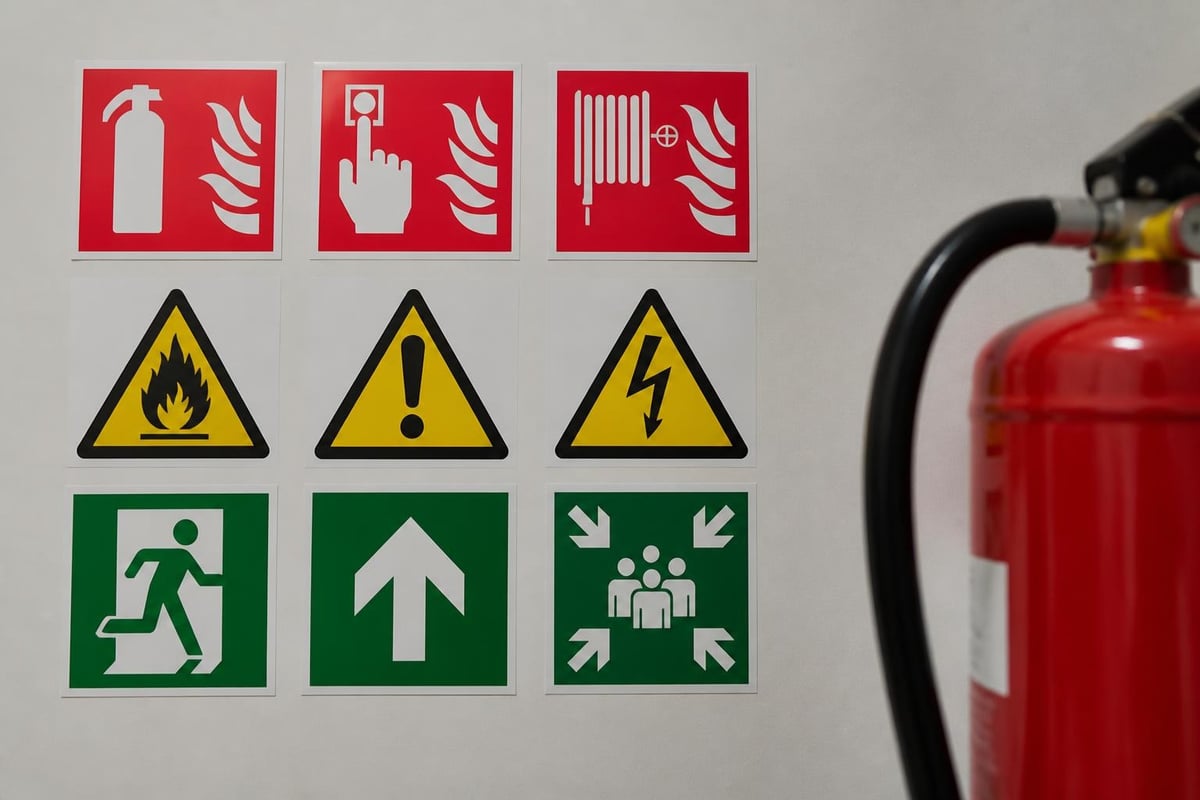
BS 5499 was published as a series of parts, each addressing specific aspects of fire safety signage. This modular approach allowed organisations to reference relevant sections based on their particular requirements.
| Part Number | Focus Area | Key Applications |
|---|---|---|
| Part 1 | General specifications | Design principles, colour codes, dimensions |
| Part 4 | Code of practice | Installation guidance, positioning requirements |
| Part 10 | Photoluminescent materials | Performance standards for glow-in-the-dark signs |
The segmented structure meant that manufacturers, installers, and safety officers could navigate directly to applicable guidance. Photoluminescent signs became particularly important under bs 5499 Part 10, which specified rigorous testing protocols for material performance during power failures.
Transition to ISO 7010
The global movement towards harmonised safety standards led to the development of ISO 7010, which eventually replaced bs 5499 in most applications. This transition represented both an opportunity and a challenge for organisations with existing signage infrastructure.
Why the Change Occurred
International standardisation offered numerous advantages over nationally-specific systems. As businesses became increasingly global and workforces more mobile, the need for universally recognised safety symbols became apparent. The International Organization for Standardization developed ISO 7010 to create a truly global visual language for safety communication.
Research has demonstrated that standardised pictograms improve comprehension across diverse populations. A peer-reviewed study on safety sign comprehension found that workers in industrial settings showed significantly better understanding when exposed to internationally standardised symbols compared to text-based or non-standardised imagery.
The European Union's adoption of harmonised standards further accelerated the transition. The Health and Safety (Safety Signs and Signals) Regulations 1996 provided the legal framework in the UK, whilst subsequent updates aligned British requirements with European directives and international standards.
Key Differences Between BS 5499 and ISO 7010
Understanding the distinctions between bs 5499 and ISO 7010 helps organisations make informed decisions about signage updates and replacements.
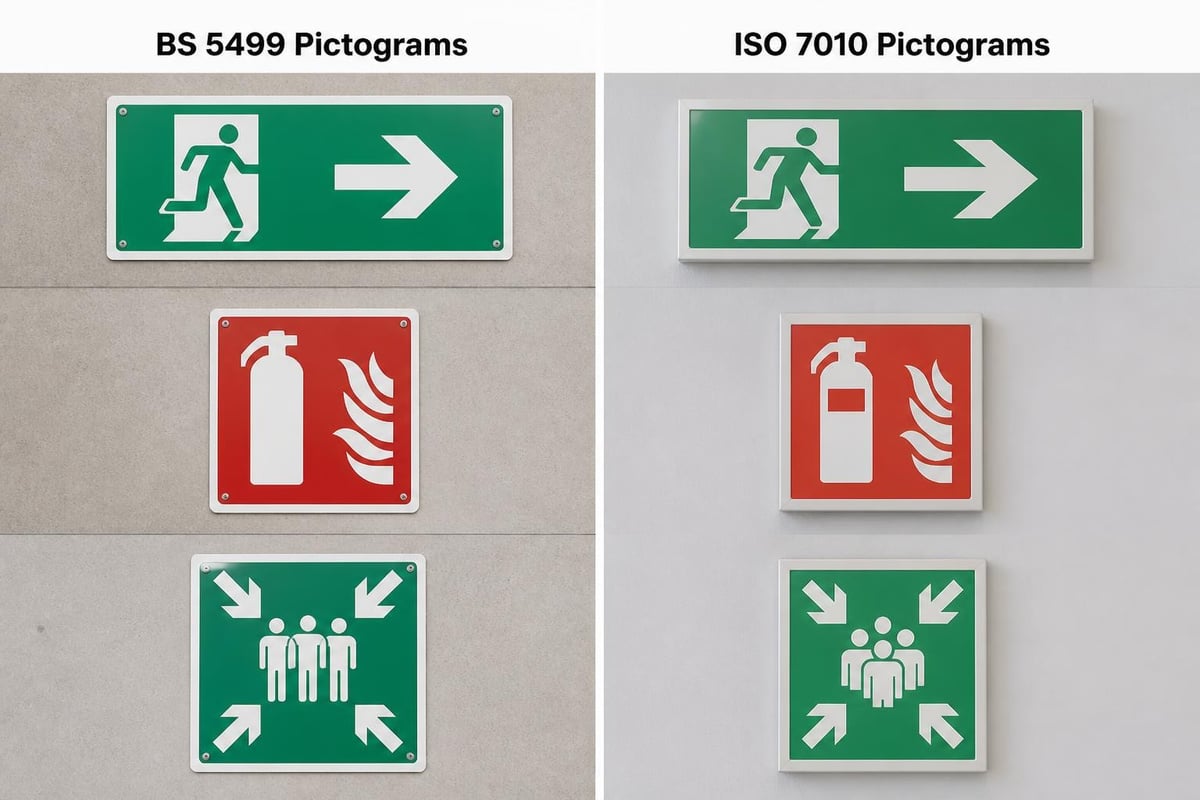
Pictogram Design Philosophy
ISO 7010 employs more detailed, universally tested pictograms. Where bs 5499 used simplified symbols developed primarily for British users, ISO 7010 underwent extensive international testing to ensure comprehension across cultures and languages.
Colour and Shape Conventions
Both standards use similar safety colour principles (red for prohibition/fire equipment, green for escape routes, yellow for warnings), but ISO 7010 refined the precise specifications for colour rendering and shape proportions based on broader research.
Symbol Variations
Some fire safety concepts receive different visual treatment. Fire exit running man symbols, fire extinguisher locations, and assembly point markers all evolved between the standards, with ISO 7010 versions designed for enhanced clarity at distance.
Practical Implications for Modern Workplaces
Despite the official transition to ISO 7010, bs 5499 remains relevant in several contexts. Many existing buildings retain original signage, and some procurement specifications still reference the older standard.
Legacy Installations
Numerous facilities across the UK and Commonwealth nations maintain bs 5499-compliant signage installed before the transition period. These installations remain legally acceptable in many jurisdictions, provided they meet current visibility and maintenance standards.
The Scottish Government's water safety initiatives demonstrate ongoing public sector engagement with signage standards, including testing of both legacy and contemporary formats to ensure maximum public comprehension.
Compliance Considerations
Safety officers must understand which standard their current signage follows and whether updates are legally required or merely advisable. In most cases, bs 5499 signs need not be immediately replaced unless they're damaged, poorly positioned, or demonstrably inadequate for current building use.
When replacing individual signs, organisations face a choice: maintain consistency with existing bs 5499 signage or begin transitioning to ISO 7010. Mixing standards within a single escape route can create confusion, so strategic planning is essential.
Replacement Decision Factors
- Current signage condition and visibility
- Building occupancy changes or refurbishments
- Regulatory inspection recommendations
- Corporate standardisation across multiple sites
- Budget availability for systematic replacement
Selecting Fire Safety Signage Today
Modern procurement requires understanding both historical standards and current requirements. Whether specifying fire fighting signs or comprehensive wayfinding systems, informed decision-making ensures compliance and effectiveness.
Material and Performance Specifications
BS 5499 Part 10 established important precedents for photoluminescent material performance that continue to influence current specifications. These materials charge under ambient light and glow during power failures, providing critical guidance when electrical lighting fails.
Modern photoluminescent signs must meet stringent performance criteria:
- Initial luminance: Brightness immediately after light source removal
- Luminance after specified periods: Glow intensity at 10, 60, and 90 minutes
- Charge time: Duration required to reach full luminance
- Durability: Resistance to cleaning chemicals and physical wear
These specifications ensure that photoluminescent signs perform reliably throughout their expected lifespan, typically 10-25 years depending on material quality and environmental conditions.
Coordinating with Other Safety Signage
Fire safety signs function within broader safety communication systems. Comprehensive workplace safety requires coordination between multiple sign categories, each serving distinct purposes.
| Sign Category | Primary Function | Standard Reference |
|---|---|---|
| Fire fighting signs | Mark equipment locations | BS 5499 / ISO 7010 |
| Mandatory signs | Require specific actions | ISO 7010 |
| Warning signs | Alert to hazards | ISO 7010 |
| Prohibition signs | Forbid dangerous behaviours | ISO 7010 |
Effective safety communication integrates mandatory signs, warning signs, and prohibitory signs with fire safety markers to create comprehensive wayfinding and hazard awareness systems.
Documentation and Record-Keeping
Professional safety management requires thorough documentation of signage installations, whether following bs 5499 or contemporary standards. This documentation supports compliance audits, maintenance scheduling, and strategic replacement planning.
Essential Records
Maintain detailed records that capture:
- Sign locations with reference to floor plans
- Installation dates and installer details
- Standard compliance (BS 5499 or ISO 7010)
- Material specifications and expected lifespan
- Inspection dates and condition assessments
- Planned replacement schedules
Digital documentation systems increasingly replace paper logs, enabling facilities managers to track signage across multiple sites, schedule inspections, and plan systematic updates. Photographic records prove particularly valuable, documenting both placement and condition over time.
Inspection and Maintenance Protocols
Regular inspection ensures that fire safety signage remains visible, legible, and properly positioned. Environmental factors including sunlight exposure, cleaning chemicals, and physical contact can degrade sign performance over time.
Recommended Inspection Frequency
- Monthly visual checks of all emergency exit routes
- Quarterly detailed inspections including photoluminescent performance
- Annual comprehensive audits with documentation updates
- Post-incident reviews following evacuations or near-misses
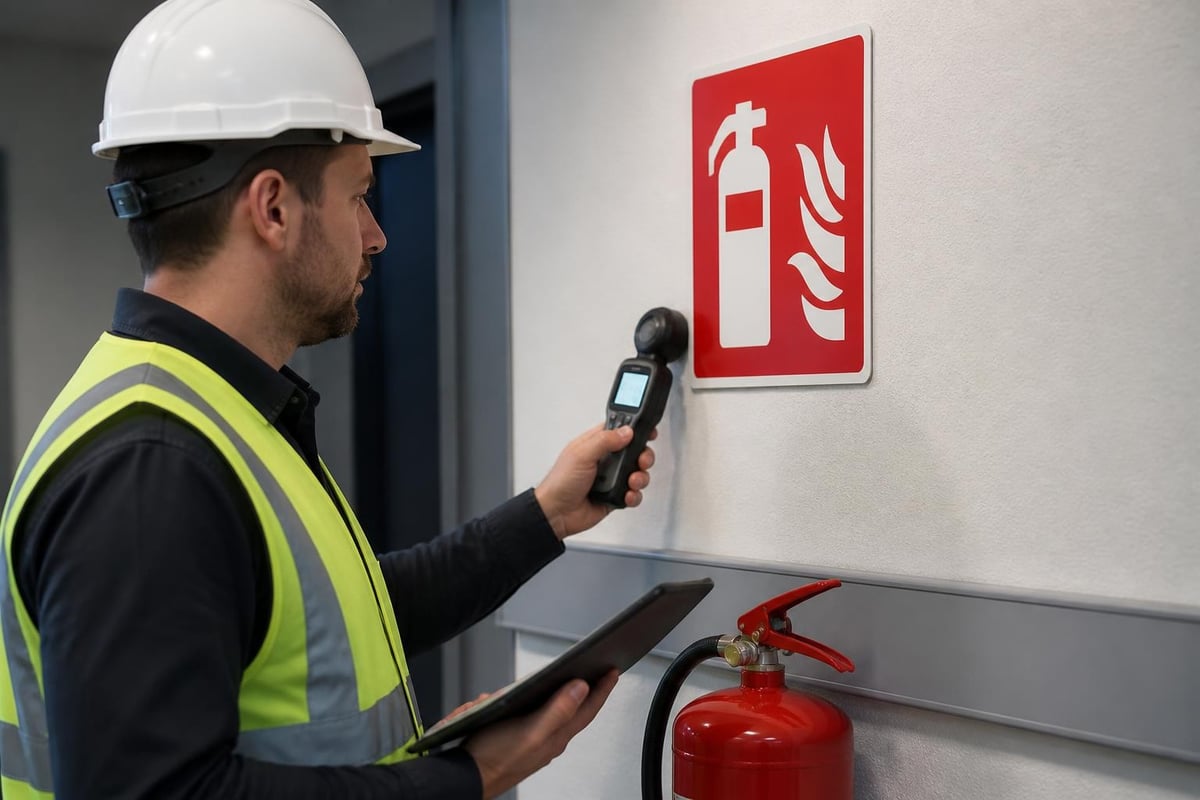
Photoluminescent signs require specific testing to verify continued performance. Inspectors should use calibrated luminance meters to measure glow intensity after controlled light exposure, ensuring materials still meet original specifications established under bs 5499 Part 10 or equivalent standards.
Integration with Fire Equipment
Fire safety signs don't exist in isolation-they mark the locations of critical firefighting equipment and guide personnel to safety. Understanding this integration helps organisations create coherent emergency response systems.
Equipment Location Marking
BS 5499 established conventions for marking fire extinguishers, hose reels, and hydrant points that remain influential today. These location markers must be visible from typical approach distances and clearly indicate equipment type.
The standard specified minimum viewing distances based on sign size, ensuring that markers remain visible across large spaces. Modern facilities often exceed these minimum requirements, particularly in warehouses, manufacturing plants, and public assembly spaces where sight lines may be obstructed by equipment, displays, or crowds.
Coordinating Visual Elements
Effective fire safety systems coordinate multiple visual elements:
- Directional signage guiding to exits and equipment
- Location markers identifying specific equipment positions
- Instructional signs explaining equipment operation
- Status indicators showing equipment condition and testing dates
This layered approach ensures that personnel can locate, access, and operate firefighting equipment even under stressful emergency conditions. Fire fighting equipment accessories often include integrated signage holders or mounting brackets that maintain sign visibility whilst protecting equipment.
Future Developments in Fire Safety Signage
Whilst bs 5499 represents historical practice, the principles it established continue evolving through contemporary standards development. Emerging technologies and changing workplace configurations drive ongoing refinement of safety communication approaches.
Digital and Dynamic Signage
Traditional static signs are increasingly supplemented by digital displays capable of providing real-time information during emergencies. These systems can indicate optimal evacuation routes based on fire location, guide personnel away from affected areas, and provide live updates on assembly point locations.
However, digital systems require backup power and regular testing to ensure reliability. Many facilities maintain traditional photoluminescent signage as failsafe systems, ensuring guidance remains available even during complete power failure.
Enhanced Accessibility
Modern standards increasingly address accessibility for persons with visual, cognitive, or mobility impairments. Tactile signage, audio wayfinding systems, and enhanced contrast specifications build on foundations established by bs 5499 whilst extending protection to broader populations.
Research continues into optimal pictogram design, testing comprehension across diverse user groups including children, elderly persons, and individuals from varied cultural backgrounds. The NBS publication index tracks ongoing standards development, documenting how contemporary specifications evolve from earlier frameworks like bs 5499.
Procurement Best Practices
Organisations sourcing fire safety signage today should adopt strategic approaches that balance immediate compliance needs with long-term flexibility and performance.
Specification Development
Detailed specifications prevent procurement errors and ensure delivered products meet operational requirements. Effective specifications address:
- Standards compliance: ISO 7010 for new installations, compatibility considerations for partial replacements
- Material performance: Substrate durability, photoluminescent performance grades, UV resistance
- Physical specifications: Dimensions, mounting methods, viewing distances
- Environmental factors: Indoor/outdoor use, chemical resistance, temperature ranges
- Warranty requirements: Expected lifespan, performance guarantees, replacement provisions
When maintaining bs 5499 consistency in legacy installations, specifications should reference specific pictogram designs to ensure exact matches with existing signage.
Quality Verification
Not all safety signage offers equivalent performance. Quality verification processes protect against substandard products that may fail during critical moments.
Verification Methods
- Manufacturer certification to recognised standards
- Independent testing laboratory reports
- Material specification data sheets
- Sample evaluation before bulk ordering
- Photoluminescent performance testing on delivered products
Reputable suppliers provide comprehensive documentation supporting compliance claims. For critical applications, independent verification through accredited testing laboratories provides additional assurance.
Training and Awareness
Even the most carefully specified and installed signage provides limited benefit without effective user training. Organisations must ensure that building occupants understand safety signage and can respond appropriately during emergencies.
Induction and Ongoing Training
New employee orientation should include familiarisation with fire safety signage throughout the facility. This training covers:
- Exit route markers and their meanings
- Assembly point locations
- Fire equipment identification and basic operation
- Differences between sign types (information, direction, location)
Regular refresher training maintains awareness, particularly in facilities with high turnover or seasonal staff variations. Evacuation drills provide practical opportunities to follow signage under simulated emergency conditions.
Multi-Language Considerations
Modern workplaces often include personnel from diverse linguistic backgrounds. Whilst standards like bs 5499 and ISO 7010 use pictograms specifically designed for language-independent comprehension, supplementary text elements may require translation.
Some organisations provide multi-language safety orientation materials that explain pictogram meanings, building on the visual symbols with explicit verbal descriptions in workers' primary languages.
Cost Considerations and Budgeting
Systematic signage replacement or new installation requires realistic budgeting that accounts for all associated costs, not merely sign purchase prices.
Comprehensive Cost Components
- Materials: Sign purchase costs varying by size, material, and performance specifications
- Installation: Professional mounting ensuring proper positioning and securing
- Planning: Surveys, compliance audits, and specification development
- Documentation: Record creation and ongoing management systems
- Training: Staff familiarisation with new or updated signage
- Ongoing maintenance: Inspection, cleaning, and eventual replacement
Phased replacement programmes spread costs over multiple budget cycles whilst systematically improving safety communication. Prioritisation based on risk assessment ensures that highest-priority areas receive attention first, with lower-risk zones addressed in subsequent phases.
Long-Term Value Analysis
Quality signage represents long-term investment rather than consumable expense. Superior materials and professional installation deliver extended service life, reducing lifecycle costs despite higher initial investment.
| Specification Level | Initial Cost | Expected Lifespan | Lifecycle Cost |
|---|---|---|---|
| Economy grade | Low | 3-5 years | High (frequent replacement) |
| Standard grade | Moderate | 7-10 years | Moderate |
| Premium grade | High | 15-25 years | Low (infrequent replacement) |
When evaluating costs, consider total ownership including maintenance, replacement frequency, and potential compliance issues from premature failure. Comprehensive safety signs from established suppliers typically offer better long-term value than apparently cheaper alternatives.
Regulatory Context and Legal Requirements
Understanding the regulatory framework surrounding fire safety signage helps organisations maintain compliance whilst avoiding unnecessary expenditure on premature replacements or gold-plated specifications.
Current UK Requirements
The Health and Safety (Safety Signs and Signals) Regulations 1996, as amended, establish legal obligations for workplace safety signage. These regulations don't mandate immediate replacement of bs 5499-compliant signs with ISO 7010 equivalents, provided existing signage remains fit for purpose.
However, organisations must ensure that safety signage:
- Clearly communicates necessary safety information
- Remains visible and legible under normal and emergency conditions
- Uses recognised symbols and colours
- Is positioned appropriately for the intended audience
- Receives regular maintenance and inspection
Risk assessment drives signage requirements. High-risk environments or complex evacuation routes may require more comprehensive signage than simple, single-occupancy spaces.
Industry-Specific Considerations
Certain industries face additional requirements beyond general workplace regulations. Healthcare facilities, educational institutions, entertainment venues, and licensed premises often must meet enhanced standards for fire safety and evacuation signage.
Industry-specific guidance documents and approved codes of practice provide detailed requirements. Facilities managers should consult relevant sector guidance alongside general standards when specifying safety signage systems.
Understanding BS 5499 and its relationship to contemporary standards enables informed decisions about fire safety signage that balance compliance, performance, and cost-effectiveness. Whether maintaining legacy installations or implementing comprehensive updates to ISO 7010, the principles established by bs 5499 continue to underpin effective safety communication. For organisations requiring comprehensive safety signage solutions, from fire safety markers to complete wayfinding systems, SafetySignsForSale provides extensive product ranges meeting both current standards and legacy requirements, supported by expert guidance on specification, installation, and compliance.