



Pedestrian Warning Sign Guide: Types, Standards & Use
Road safety depends on clear communication between infrastructure and users, with pedestrian warning sign systems serving as critical tools for preventing accidents and protecting vulnerable road users. These signs alert motorists to pedestrian activity zones, crossing points, and areas where heightened awareness is essential. As urban environments evolve and pedestrian traffic increases, understanding the proper selection, placement, and maintenance of these warning signs becomes increasingly important for businesses, municipalities, and property managers committed to creating safer spaces.
Understanding Pedestrian Warning Sign Categories
A pedestrian warning sign functions as a regulatory or cautionary device that informs drivers of pedestrian presence or activity ahead. These signs fall into several distinct categories, each serving specific purposes within the road safety ecosystem.
Standard Pedestrian Crossing Signs
The most recognizable pedestrian warning sign features a symbolic representation of a person walking, typically displayed in black against a yellow or amber background. This universal symbol transcends language barriers and provides immediate recognition of pedestrian activity zones.
Different variants exist for specific contexts:
- School crossing signs with additional "SCHOOL" text or child figures
- Elderly crossing warnings for retirement communities and care facilities
- Playground zones indicating children at play
- Shopping district pedestrian zones for high-traffic retail areas
The Official U.S. standards (MUTCD 11th Edition) provides comprehensive guidance on symbol requirements, specifications, and placement protocols that came into effect in January 2024, updating previous standards to reflect modern traffic conditions.
Advance Warning Signs
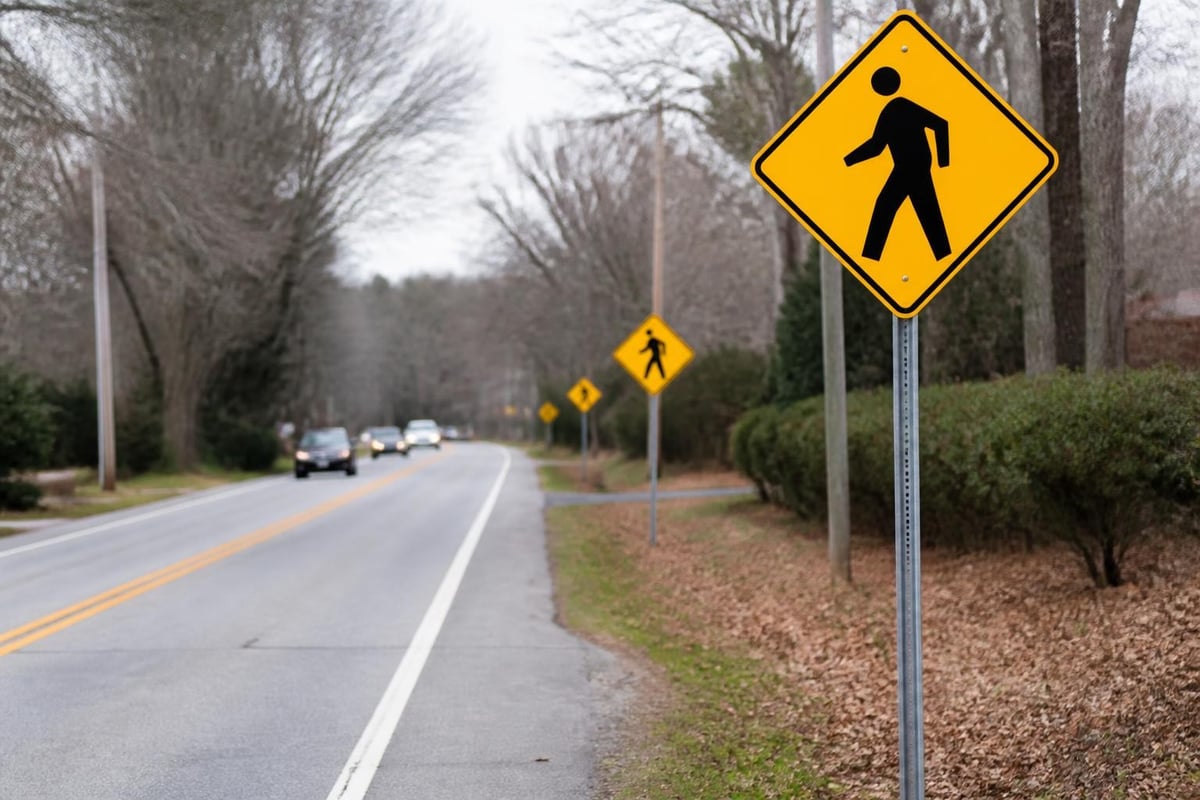
Advance pedestrian warning sign installations alert drivers to upcoming crossing points, giving them adequate time to reduce speed and prepare to stop. These signs typically appear 150 to 300 metres before the actual crossing point, depending on road speed limits and sight distance considerations.
| Sign Type | Placement Distance | Typical Speed Zones |
|---|---|---|
| Standard advance warning | 150-200 metres | 50-60 km/h |
| High-speed advance warning | 250-300 metres | 70-80 km/h |
| School zone advance | 100-150 metres | 40 km/h |
Regulatory Standards and Compliance Requirements
Compliance with established standards ensures pedestrian warning sign effectiveness and legal validity. Standards vary by jurisdiction but share common principles regarding visibility, placement, and design specifications.
International and National Standards
The regulatory framework governing pedestrian warning signs operates at multiple levels. International guidelines provide broad safety principles, whilst national standards establish specific technical requirements. Research from the Insurance Institute for Highway Safety demonstrates that proper signage implementation significantly reduces pedestrian fatalities when combined with other safety measures.
Key compliance elements include:
- Reflective materials meeting minimum retroreflectivity standards
- Specific colour combinations (typically yellow/amber backgrounds with black symbols)
- Standardised symbol dimensions and proportions
- Mounting height requirements (typically 2.1 to 2.4 metres)
- Visibility distance specifications based on approach speeds
Regional Variations in Design
Whilst core principles remain consistent globally, regional variations exist. The UK Department for Transport guidance outlines specific requirements for pedestrian and crossing-related signs under British regulations, which differ in certain design elements from North American standards.
European standards often emphasise pictogram clarity and colour contrast ratios, whilst North American specifications focus heavily on retroreflective performance under various lighting conditions. Understanding these differences proves essential for businesses operating across multiple jurisdictions.
Strategic Placement and Installation Best Practices
Proper pedestrian warning sign placement determines effectiveness in preventing accidents and protecting vulnerable road users. Location decisions require careful analysis of traffic patterns, pedestrian volumes, and environmental factors.
Site Assessment Considerations
Before installing any pedestrian warning sign, conduct a thorough site assessment examining multiple factors. Traffic speed consistently ranks as the primary consideration, as higher speeds demand earlier warning distances and potentially larger sign dimensions.
- Measure approach sight distances from driver perspective
- Document pedestrian crossing volumes during peak periods
- Identify visual obstructions that might compromise sign visibility
- Assess ambient lighting conditions for day and night visibility
- Review historical accident data for the specific location
Environmental factors significantly impact sign performance. Trees, buildings, and other structures can obstruct sightlines, necessitating alternative placement or supplementary signage. Seasonal changes, particularly in regions with deciduous trees, may temporarily reduce visibility during certain months.
Mounting Height and Lateral Positioning
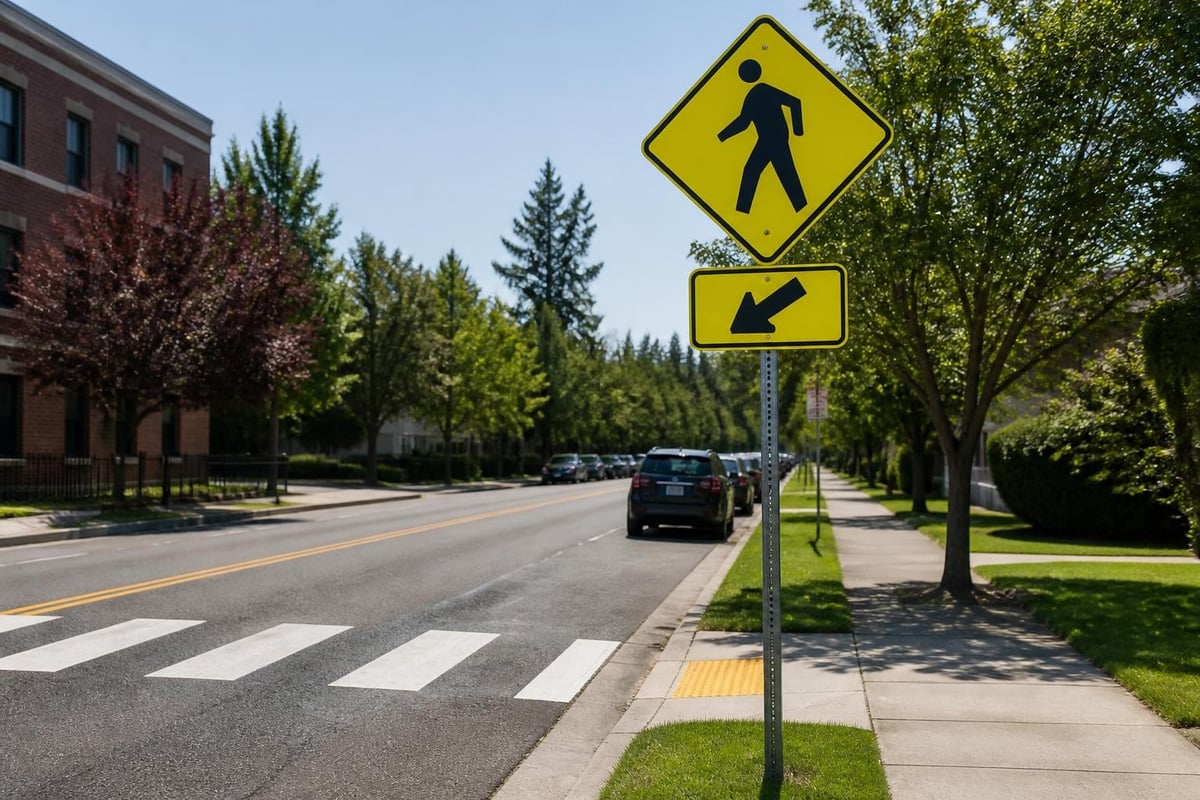
The AASHTO Guide for Pedestrian Facilities provides authoritative guidance on optimal mounting configurations. Standard mounting height ranges between 2.1 and 2.4 metres measured from the bottom of the sign to the road surface, though specific situations may warrant adjustments.
Lateral positioning guidelines:
- Minimum 0.6 metres clearance from road edge to sign face
- Preferably 2 metres clearance in high-speed zones
- Sufficient offset to prevent damage from errant vehicles
- Clear zone compliance for roadside safety
Enhancing Visibility Through Supplementary Measures
A pedestrian warning sign achieves maximum effectiveness when complemented by additional safety measures. Integrated approaches create multiple layers of protection and communication with drivers.
Illumination and Active Warning Systems
Traditional static signage benefits significantly from enhanced visibility features. Solar-powered LED-enhanced signs have become increasingly popular, offering improved conspicuity during dawn, dusk, and night-time hours without requiring electrical infrastructure.
| Enhancement Type | Benefits | Typical Applications |
|---|---|---|
| Solar LED border | 24/7 visibility, no power required | School zones, pedestrian crossings |
| Radar-activated flashing | Speed-responsive warnings | High-risk crossings |
| Overhead illumination | Consistent visibility | Urban crossing points |
| In-pavement lighting | Ground-level warning | Controlled crosswalks |
Active warning systems detect approaching vehicles and activate flashing lights, creating dynamic alerts that capture driver attention more effectively than static signs alone. These systems prove particularly valuable in areas with documented pedestrian safety concerns or high accident rates.
Pavement Markings and Physical Infrastructure
Pedestrian warning sign effectiveness increases when coordinated with complementary road markings and physical infrastructure. High-visibility crosswalk markings, speed tables, and refuge islands work synergistically with signage to create comprehensive safety zones.
Advance stop lines positioned 1 to 5 metres before the crossing point provide additional safety margins, preventing vehicles from stopping directly on the pedestrian path. These markings reinforce the message conveyed by warning signage and create predictable driver behaviour patterns.
Maintenance and Replacement Protocols
Even the highest-quality pedestrian warning sign deteriorates over time, compromising its effectiveness. Establishing systematic maintenance and replacement protocols ensures continued safety performance.
Regular Inspection Schedules
Implement quarterly visual inspections examining these critical elements:
- Reflective surface condition checking for cracks, fading, or delamination
- Structural integrity of sign face and mounting hardware
- Vegetation management ensuring unobstructed visibility
- Graffiti or vandalism requiring immediate removal
- Post stability and foundation condition
Document inspection findings systematically, creating maintenance records that support budgeting decisions and liability protection. Photographic documentation proves particularly valuable for tracking degradation patterns and justifying replacement decisions.
Service Life and Replacement Criteria
Modern pedestrian warning sign materials typically provide 7 to 10 years of service life under normal conditions, though harsh environments may accelerate deterioration. Retroreflectivity measurements using dedicated instruments provide objective replacement criteria, with signs falling below minimum standards requiring immediate replacement regardless of visual appearance.
Signs showing obvious damage, significant fading, or structural compromise require immediate replacement irrespective of age. Proactive replacement based on condition rather than arbitrary timeframes optimises safety whilst managing costs effectively.
Specialised Applications and Emerging Technologies
The pedestrian warning sign landscape continues evolving with technological advancement and changing urban environments. Understanding emerging applications helps organisations future-proof their safety infrastructure investments.
Smart City Integration
Connected infrastructure represents the frontier of pedestrian safety technology. Smart pedestrian warning sign systems integrate with traffic management networks, providing real-time data on pedestrian volumes, crossing patterns, and potential conflicts.
These systems enable:
- Adaptive warning timing based on actual pedestrian presence
- Data collection supporting infrastructure planning decisions
- Integration with autonomous vehicle communication protocols
- Remote monitoring and maintenance alerting
Temporary and Portable Applications
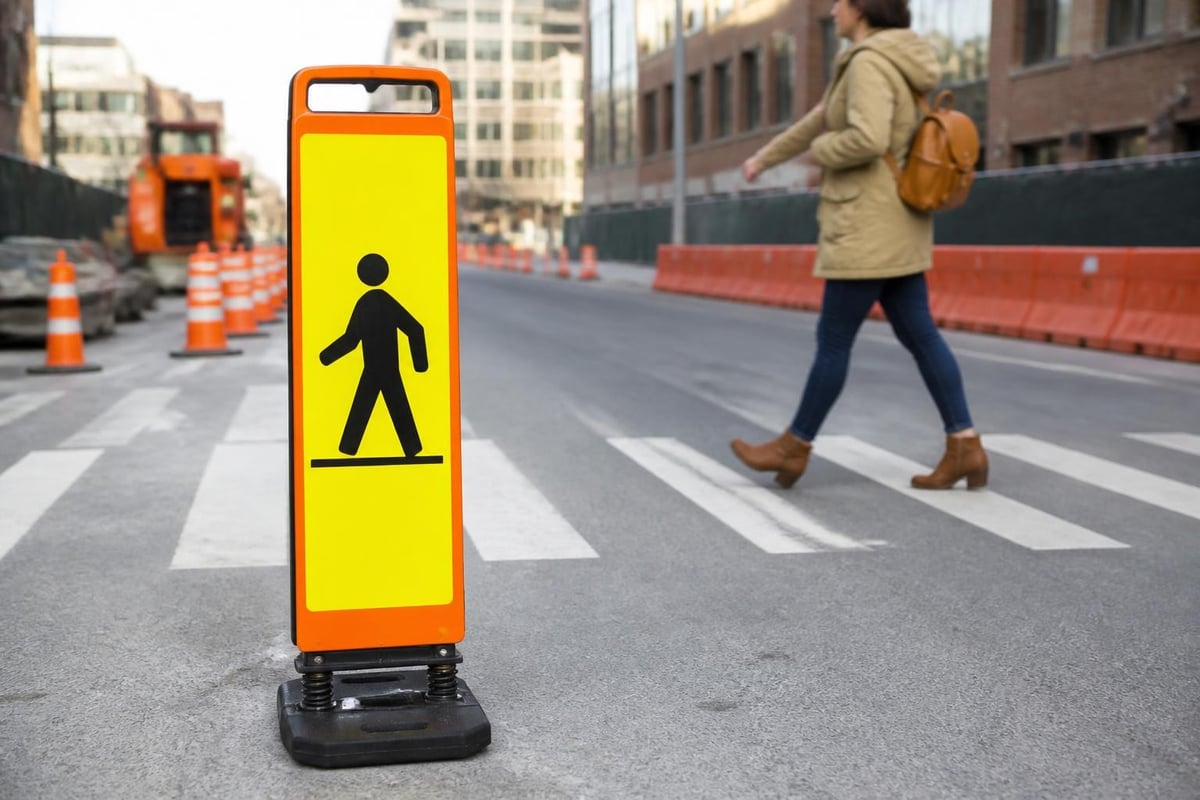
Construction zones, special events, and temporary pedestrian routes require mobile pedestrian warning sign solutions. Portable sign systems with weighted bases or quick-deploy mounting mechanisms provide flexibility whilst maintaining safety standards.
Quality temporary installations incorporate:
- High-visibility fluorescent backgrounds (often orange or lime-yellow)
- Stable mounting preventing wind displacement
- Retroreflective materials meeting permanent sign standards
- Clear messaging supplementing standard symbols
Cost-Benefit Analysis and Investment Justification
Organisations often question pedestrian warning sign investments, particularly when budgets face competing priorities. Understanding the economic and social value these safety measures provide helps justify appropriate expenditure.
Quantifying Safety Benefits
The World Health Organization's pedestrian safety guidance emphasises evidence-based approaches to road safety interventions. Properly implemented pedestrian warning sign systems demonstrably reduce accident rates, with studies showing reductions between 15% and 40% in pedestrian-vehicle conflicts at treated locations.
Economic considerations include:
- Direct accident cost avoidance (medical, legal, property damage)
- Liability reduction for property owners and municipalities
- Enhanced property values in demonstrably safe neighbourhoods
- Reduced insurance premiums reflecting improved safety records
- Compliance with regulatory requirements avoiding penalties
Long-Term Value Considerations
Quality pedestrian warning sign products justify higher initial costs through extended service life and reduced maintenance requirements. Signs manufactured with premium retroreflective sheeting and weather-resistant materials provide superior long-term value compared to budget alternatives requiring frequent replacement.
Consider total cost of ownership over the expected service life rather than focusing solely on acquisition costs. A sign costing 40% more but lasting twice as long delivers superior economic value whilst maintaining consistent safety performance.
Procurement and Supplier Selection Criteria
Selecting appropriate pedestrian warning sign suppliers significantly impacts safety outcomes, compliance assurance, and long-term value. Established suppliers with demonstrated expertise in safety signage provide assurance that products meet applicable standards and performance requirements.
Quality Verification Methods
Request certification documentation confirming compliance with relevant standards before procurement. Reputable suppliers readily provide test reports, material specifications, and compliance certificates demonstrating their products meet or exceed regulatory requirements.
Essential procurement criteria:
- Documented compliance with applicable standards
- Material specifications and expected service life
- Warranty coverage and terms
- Installation guidance and support
- Customisation capabilities for specific applications
Verify supplier experience with similar projects and request reference contacts from previous clients. Site visits to installed examples provide valuable insights into real-world performance and aging characteristics.
Balancing Cost and Quality
Whilst budget constraints always factor into procurement decisions, pedestrian safety applications demand prioritising quality and compliance over cost minimisation. Substandard signage creates liability exposure far exceeding any initial cost savings whilst failing to provide the intended safety benefits.
Consider suppliers offering comprehensive product ranges allowing coordinated procurement of related safety equipment, creating consistency in appearance and performance whilst potentially qualifying for volume pricing advantages.
Effective pedestrian protection requires careful selection, proper placement, and diligent maintenance of appropriate warning signage that meets regulatory standards whilst addressing specific site conditions. Whether you're managing a school zone, commercial property, or municipal infrastructure, SafetySignsForSale provides the comprehensive range of pedestrian warning signs, safety equipment, and expert guidance needed to create safer environments for all road users across South Africa.