


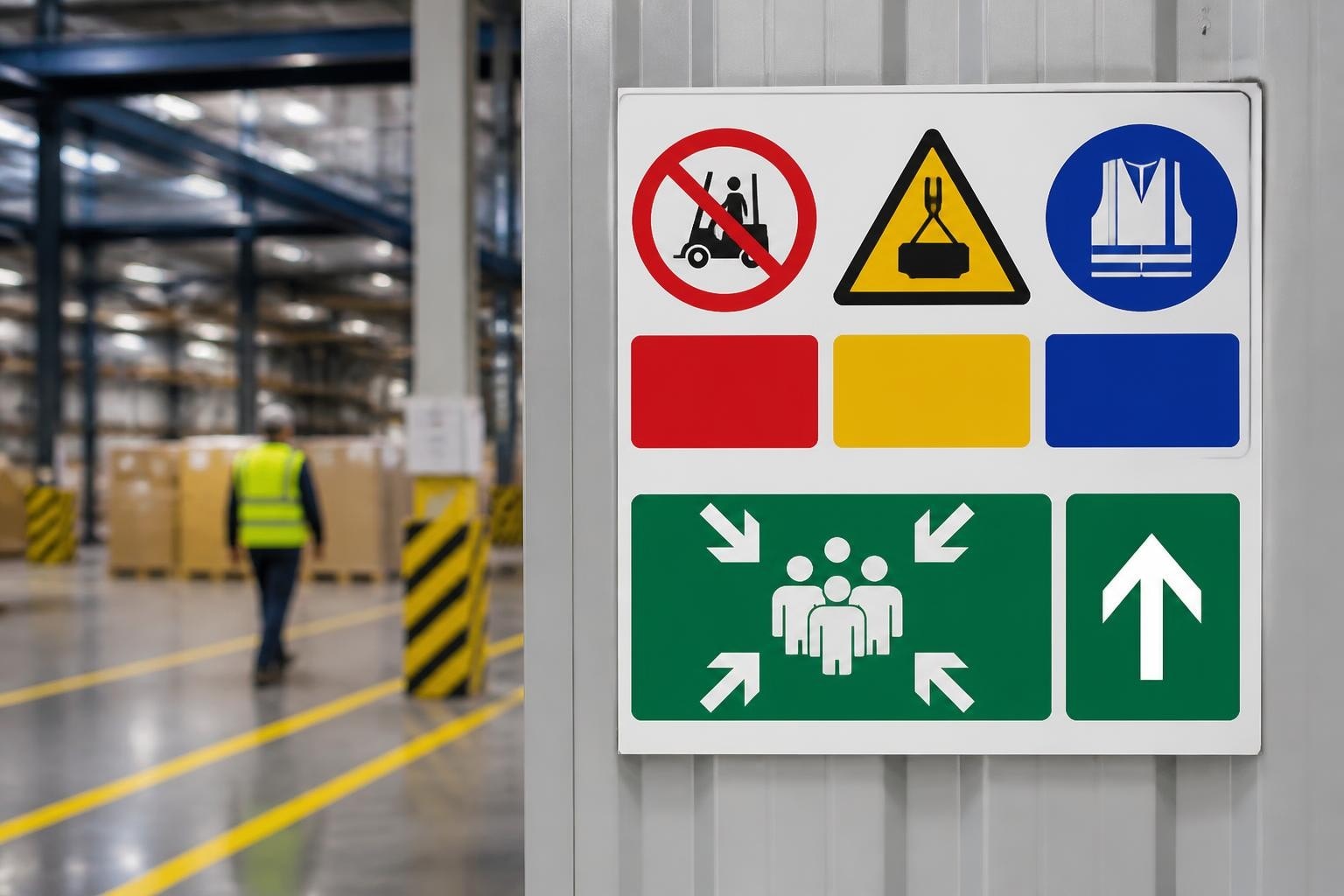
Safety Logos: Standards, Design & Workplace Compliance
Safety logos serve as the universal language of workplace protection, transcending linguistic barriers to communicate critical hazards, mandatory actions, and emergency information. These standardised graphic symbols form the foundation of effective safety communication systems across industries, from manufacturing facilities to construction sites, healthcare environments to commercial buildings. Understanding the principles, regulations, and practical applications of safety logos enables organisations to create safer work environments whilst maintaining regulatory compliance.
The Fundamental Purpose of Safety Logos in Workplace Communication
Safety logos function as immediate visual cues that convey essential safety information without relying on text or language comprehension. Their primary purpose centres on rapid recognition and understanding, particularly in emergency situations where every second matters.
The effectiveness of safety logos stems from their ability to communicate across language barriers. In diverse workplaces employing multilingual staff, these standardised symbols ensure everyone receives the same critical safety messages regardless of their native language or literacy level.
Core Categories of Safety Symbol Systems
Different safety logo types serve distinct communication functions within comprehensive workplace safety programmes:
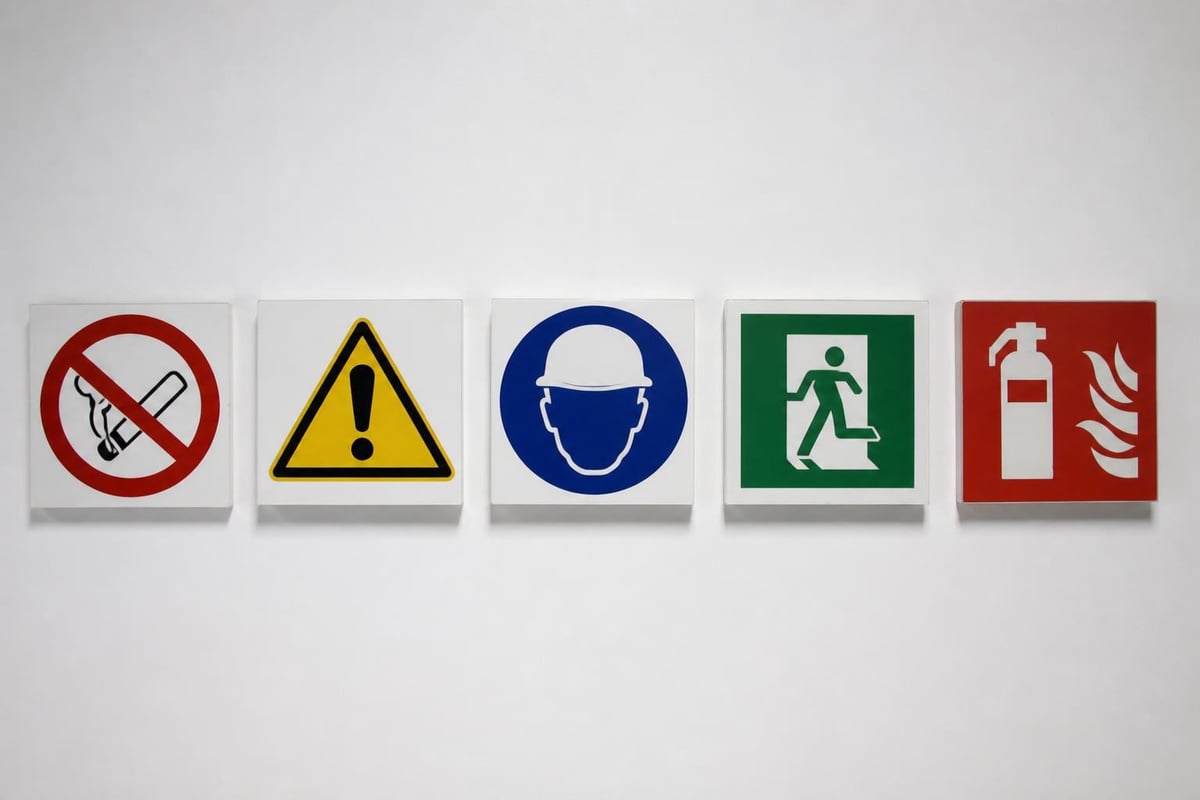
- Prohibition logos indicate actions or behaviours that are forbidden in specific areas
- Warning logos alert workers to potential hazards or dangerous conditions
- Mandatory logos specify required actions or personal protective equipment
- Emergency information logos guide people to safety equipment and evacuation routes
- Fire safety logos identify fire-fighting equipment and emergency procedures
The UK HSE guidance on safety signs provides comprehensive frameworks for selecting and implementing appropriate safety signage systems in workplace environments.
International Standards Governing Safety Logo Design
Safety logos must adhere to internationally recognised standards to ensure consistency and universal recognition. These standards specify everything from colour schemes to geometric shapes, symbol design to dimensional requirements.
Key Regulatory Frameworks
| Standard | Region | Primary Focus |
|---|---|---|
| ISO 7010 | International | Standardised safety symbols and colours |
| ANSI Z535 | United States | Safety signs, colours, and designs |
| BS 5499 | United Kingdom | Safety signs including fire safety |
| EN ISO 7010 | European Union | Registered safety symbols |
The European Commission guidelines on Directive 92/58/EEC establish fundamental requirements for safety and health signage throughout EU member states, influencing global best practices.
ISO 7010 represents the most widely adopted international standard for safety logos. This framework provides a comprehensive library of registered symbols designed through extensive testing to ensure intuitive comprehension across cultures and demographics.
Colour Psychology and Standardisation
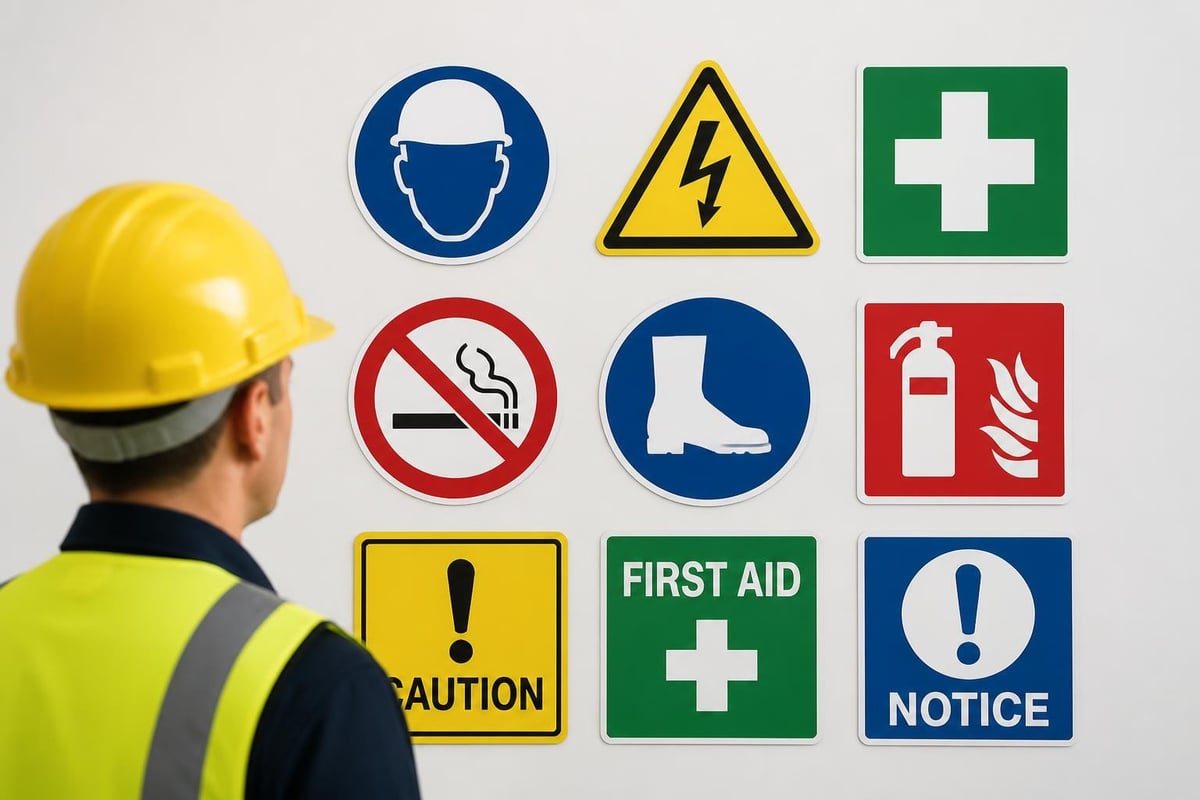
Safety logos employ specific colour combinations that carry consistent meanings worldwide:
Red backgrounds indicate prohibition or fire-fighting equipment, creating immediate associations with danger and stop commands. Yellow or amber backgrounds signify caution and warning, naturally drawing attention without triggering alarm. Blue backgrounds denote mandatory actions, providing clear instruction without implying immediate danger. Green backgrounds represent safe conditions, emergency exits, and first aid facilities, offering reassurance and guidance.
These colour conventions align with human psychological responses and have become deeply embedded in safety culture across industries. When sourcing safety signs, ensuring colour compliance with international standards remains paramount for maintaining effective communication.
Design Principles for Effective Safety Logos
Creating safety logos that fulfil their protective function requires careful attention to visual communication principles. Effective symbols balance simplicity with specificity, ensuring rapid comprehension without ambiguity.
Visual Hierarchy and Symbol Recognition
The most effective safety logos share common design characteristics:
- Simplicity: Minimal detail allows quick recognition from various distances
- Contrast: Strong figure-ground relationships ensure visibility in diverse lighting
- Universality: Symbols avoid culture-specific references or interpretations
- Scalability: Designs remain recognisable across different sizes and applications
- Distinctiveness: Each symbol clearly differentiates from others in the system
Research documented in the National Academies Human Factors Guidelines demonstrates that symbol comprehension depends heavily on cognitive load, viewing angle, and environmental context. These factors influence both initial logo design and practical implementation decisions.
Typography and Supplementary Text
While safety logos primarily communicate through symbols, supplementary text enhances comprehension and reinforces messages. Text elements should complement rather than compete with the primary symbol.
Typography selection impacts readability significantly. Sans-serif fonts with adequate x-height and character spacing provide optimal legibility across viewing distances. Letter height calculations must account for anticipated viewing distances, with minimum dimensions specified by regulatory standards.
The integration of text with symbols follows specific conventions. Mandatory signs typically position instructional text below the primary symbol, whilst warning signs may include hazard descriptions alongside the warning triangle.
Regulatory Compliance and Industry-Specific Requirements
Different industries face unique safety challenges that necessitate specialised safety logo applications. Compliance requirements vary based on sector, jurisdiction, and specific hazard profiles.
Manufacturing and Industrial Environments
Manufacturing facilities require comprehensive safety logo systems addressing machinery hazards, chemical exposures, and process-specific risks. Prohibitory signs prevent unauthorised access to restricted areas, whilst warning symbols alert workers to moving parts, high temperatures, and electrical hazards.
Industrial safety programmes often incorporate custom logos addressing site-specific hazards not covered by standard symbol libraries. These bespoke designs must still conform to fundamental colour and shape conventions to maintain system coherence.
Healthcare and Laboratory Settings
Healthcare environments demand specialised safety logos addressing biological hazards, radiation risks, and patient safety concerns. Bio-hazard symbols, sharps warnings, and infection control indicators form essential components of medical facility safety systems.
Laboratories implement multi-layered safety logo systems combining chemical hazard symbols, equipment warnings, and emergency response information. The integration of PPE requirements through mandatory action symbols ensures appropriate protection across different work areas.
Construction and High-Risk Industries
Construction sites utilise extensive safety logo systems addressing temporary hazards, restricted zones, and dynamic risk environments. The transient nature of construction work necessitates adaptable signage systems that can be relocated and updated as projects progress.
High-visibility applications become crucial in outdoor construction environments where weather conditions, varying light levels, and visual obstructions challenge sign effectiveness. Photoluminescent signs provide critical visibility during power failures or low-light conditions.
Practical Implementation and Placement Strategies
Effective safety logo implementation extends beyond selecting appropriate symbols to encompass strategic placement, mounting specifications, and ongoing maintenance protocols.
Viewing Distance and Size Calculations
Safety logo dimensions must correspond to anticipated viewing distances to ensure readability. Standard formulas calculate minimum symbol heights based on maximum viewing distances, typically applying a 1:100 ratio for normal viewing conditions.
Environmental factors influence size requirements significantly. Bright lighting, clean environments, and unobstructed sight lines permit smaller symbols, whilst poor lighting, dusty conditions, or visual clutter necessitate larger dimensions.
Mounting Height and Accessibility Considerations
The ADA technical guidance on signage establishes critical requirements for accessible sign placement, including mounting height ranges, tactile element specifications, and contrast ratios. These principles apply broadly to safety logos requiring accessibility compliance.
| Sign Type | Recommended Mounting Height | Viewing Angle |
|---|---|---|
| Exit signs | 2.0-2.4 metres | Eye level to overhead |
| Equipment identification | At equipment height | Direct line of sight |
| Warning signs | 1.5-2.0 metres | Eye level |
| Floor markings | Ground level | Overhead view |
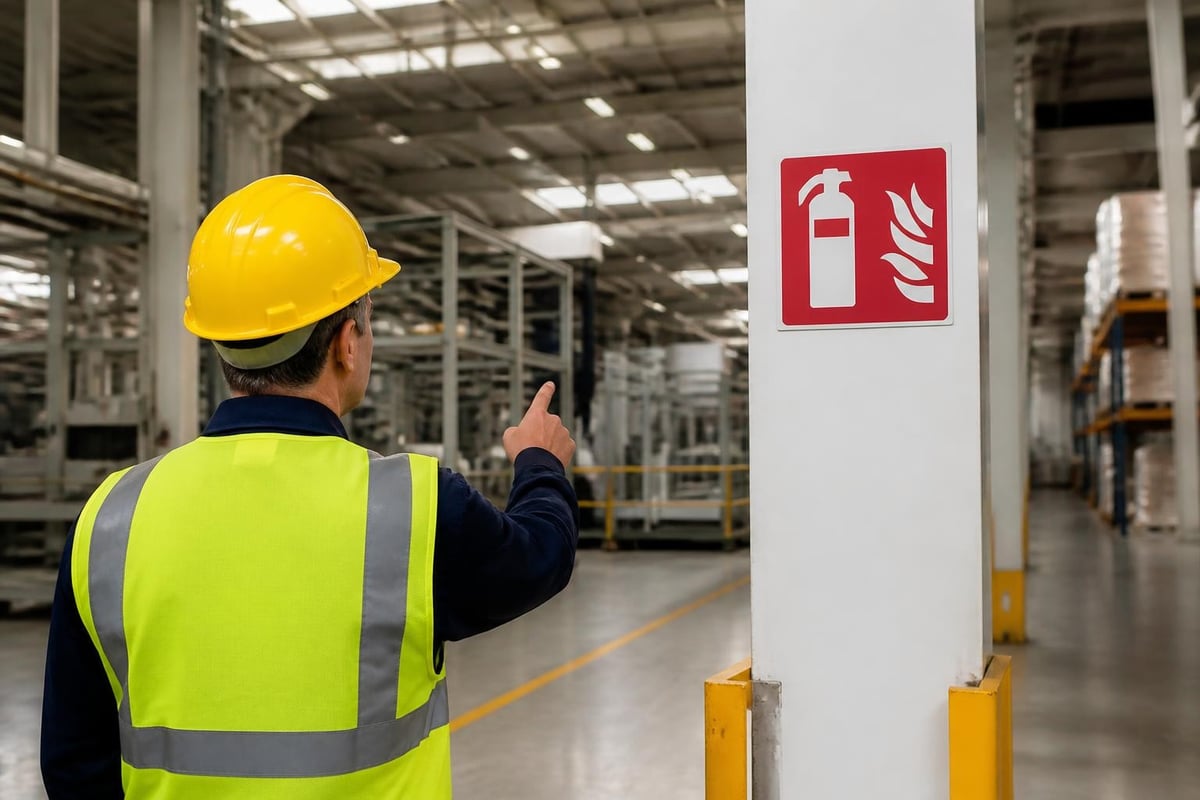
Strategic placement considers traffic flow, decision points, and hazard proximity. Safety logos should appear before workers encounter the hazard, providing adequate response time. Fire-fighting signs must guide users directly to equipment locations whilst remaining visible from multiple approach angles.
Material Selection and Environmental Durability
Safety logos must withstand environmental conditions whilst maintaining visibility and legibility throughout their service life. Material selection directly impacts performance, longevity, and total cost of ownership.
Indoor Applications and Material Options
Indoor environments generally permit a wider range of material choices given reduced weather exposure:
- Rigid plastic substrates offer excellent dimensional stability and surface printability
- Adhesive vinyl provides cost-effective solutions for smooth, clean surfaces
- Aluminium composites deliver durability for high-traffic areas
- Acrylic materials enable premium appearance in corporate environments
Surface preparation significantly influences adhesive-backed safety logo performance. Proper cleaning, degreasing, and surface profiling ensure long-term adhesion without peeling or lifting.
Outdoor and Harsh Environment Requirements
Exterior applications demand materials engineered to resist UV degradation, temperature extremes, moisture infiltration, and physical impact. Fade-resistant inks, weather-resistant substrates, and protective laminates extend service life in challenging conditions.
Chemical exposure necessitates specialised material selection. Facilities handling corrosive substances require safety logos manufactured from chemically resistant materials that maintain legibility despite exposure to harsh agents.
Integration with Comprehensive Safety Management Systems
Safety logos function most effectively when integrated within broader safety management frameworks that include training, procedures, and organisational culture development.
Training and Symbol Familiarisation
Even standardised safety logos require employee training to ensure consistent interpretation and appropriate response. Orientation programmes should cover the complete safety logo system, explaining symbol meanings, colour conventions, and expected actions.
Regular refresher training reinforces safety logo comprehension and addresses new symbols as facilities evolve. Interactive training methods, including scenario-based learning and workplace walkthroughs, improve retention and practical application.
Audit and Maintenance Protocols
Systematic safety logo audits identify faded, damaged, or obscured signs requiring replacement. Audit checklists should address:
- Physical condition and legibility
- Positional accuracy and visibility
- Compliance with current standards
- Appropriateness for existing hazards
- Consistency across facilities
Maintenance schedules prevent gradual degradation from compromising safety logo effectiveness. Cleaning protocols remove accumulated dirt and grime, whilst replacement programmes address fade and damage before symbols become illegible.
Technology-Enhanced Safety Communication
Modern safety management systems increasingly incorporate digital technologies that complement physical safety logos. QR codes integrated with traditional symbols provide access to detailed safety information, multilingual instructions, and emergency procedures.
Mobile applications enable workers to report damaged or missing safety logos instantly, facilitating rapid response and continuous improvement. Digital dashboards track safety logo placement, maintenance histories, and compliance status across multiple facilities.
Procurement Considerations and Quality Assurance
Selecting safety logo suppliers requires evaluating manufacturing quality, standards compliance, customisation capabilities, and service support. Quality variations significantly impact both initial effectiveness and long-term performance.
Vendor Qualification Criteria
Professional safety sign suppliers demonstrate verifiable standards compliance through certification documentation and manufacturing quality systems. Requesting material specifications, testing certifications, and production samples enables informed procurement decisions.
Customisation capabilities become important when facilities require site-specific safety logos addressing unique hazards. Suppliers should provide design consultation services ensuring custom symbols maintain standards compliance whilst addressing specific communication needs.
Cost-Effectiveness and Value Analysis
Safety logo procurement decisions should balance initial costs against total lifecycle expenses. Premium materials commanding higher purchase prices often deliver superior longevity, reducing replacement frequency and total ownership costs.
Volume purchasing strategies can reduce unit costs significantly whilst ensuring consistency across large facilities or multi-site operations. Standardising on specific suppliers, materials, and designs simplifies inventory management and replacement procurement.
The availability of comprehensive product ranges, including general informational signs, road signs, and specialised safety equipment, enables single-source procurement that streamlines vendor management and ensures system compatibility.
Emerging Trends and Future Developments
Safety logo design and implementation continue evolving in response to technological advances, changing workforce demographics, and enhanced understanding of visual communication principles.
Standardisation Expansion and Symbol Updates
International standards organisations regularly update safety logo libraries, adding symbols addressing emerging hazards and retiring outdated designs. The ISO 7010 registry has expanded significantly since inception, now encompassing hundreds of registered symbols.
These updates reflect technological changes, new workplace hazards, and improved comprehension testing. Organisations must monitor standard revisions to ensure ongoing compliance and optimal communication effectiveness.
Dynamic and Adaptive Signage Systems
Digital display technologies enable dynamic safety logos that adapt to changing conditions. Variable message signs can display different symbols based on operational status, detected hazards, or emergency situations.
Integration with building management and industrial control systems creates intelligent safety communication networks that respond automatically to sensor inputs and operational changes. These advanced systems complement traditional static safety logos rather than replacing them entirely.
Augmented Reality Applications
Augmented reality (AR) technologies overlay digital safety information onto physical environments through mobile devices or smart glasses. Workers viewing equipment through AR interfaces can see contextual safety logos, operating procedures, and hazard warnings specific to their location and task.
Whilst these innovations enhance safety communication capabilities, physical safety logos remain essential primary communication tools that function independently of technology infrastructure, power supplies, or device availability.
Implementing effective safety logos requires understanding design principles, regulatory standards, and practical application strategies that ensure clear hazard communication and regulatory compliance. Whether establishing new safety systems or updating existing signage, selecting appropriate symbols, materials, and placement strategies creates safer work environments across all industries. SafetySignsForSale provides comprehensive safety signage solutions, including compliant safety logos, fire equipment markers, and complete facility safety systems designed to meet diverse industry requirements and protect your workforce.