


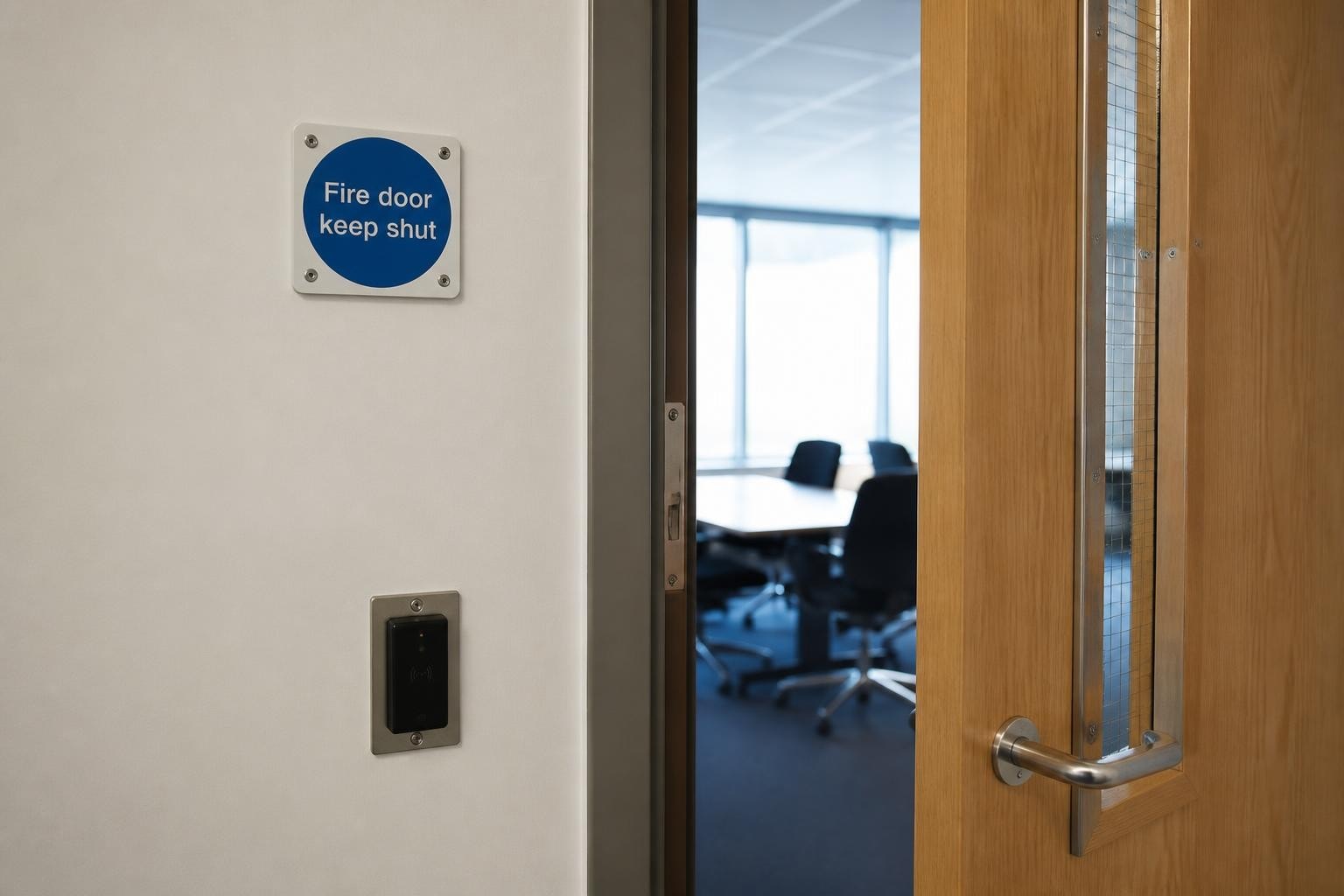
Fire Door Keep Shut Signs: Compliance & Safety Guide
Fire safety remains one of the most critical responsibilities for any organisation, and properly marked fire doors form an essential component of passive fire protection systems. Fire door keep shut signs serve a vital function in ensuring these life-saving barriers remain effective, yet many businesses overlook their importance or fail to implement them correctly. Understanding the regulatory requirements, installation standards, and best practices surrounding these signs can mean the difference between compliance and catastrophic failure during an emergency.
The Critical Function of Fire Door Keep Shut Signs
Fire doors represent a fundamental element of compartmentation strategy, designed to contain smoke and flames within specific zones during a fire. When properly maintained and clearly marked, they provide occupants with precious additional minutes to evacuate safely whilst simultaneously limiting property damage.
Why Signage Matters for Fire Door Effectiveness
The UK Government's fire safety guidance for offices and shops explicitly states that fire doors must remain effective at all times, with appropriate signage forming a key requirement. Without clear visual reminders, occupants frequently prop doors open for convenience, completely negating the protective function these doors provide.
Fire door keep shut signs address several critical challenges:
- Behavioral reinforcement – reminding staff and visitors to close doors behind them
- Legal compliance – meeting statutory signage requirements under fire safety legislation
- Audit evidence – demonstrating due diligence during inspections
- Emergency clarity – ensuring unfamiliar visitors understand door protocols
Research from fire safety organisations consistently demonstrates that unmarked fire doors are significantly more likely to be propped open or wedged, creating dangerous gaps in compartmentation that allow rapid fire spread.
Regulatory Requirements and Standards
Understanding the legal framework surrounding fire door keep shut signs ensures organisations meet their statutory obligations whilst protecting occupants effectively.
United Kingdom Regulations
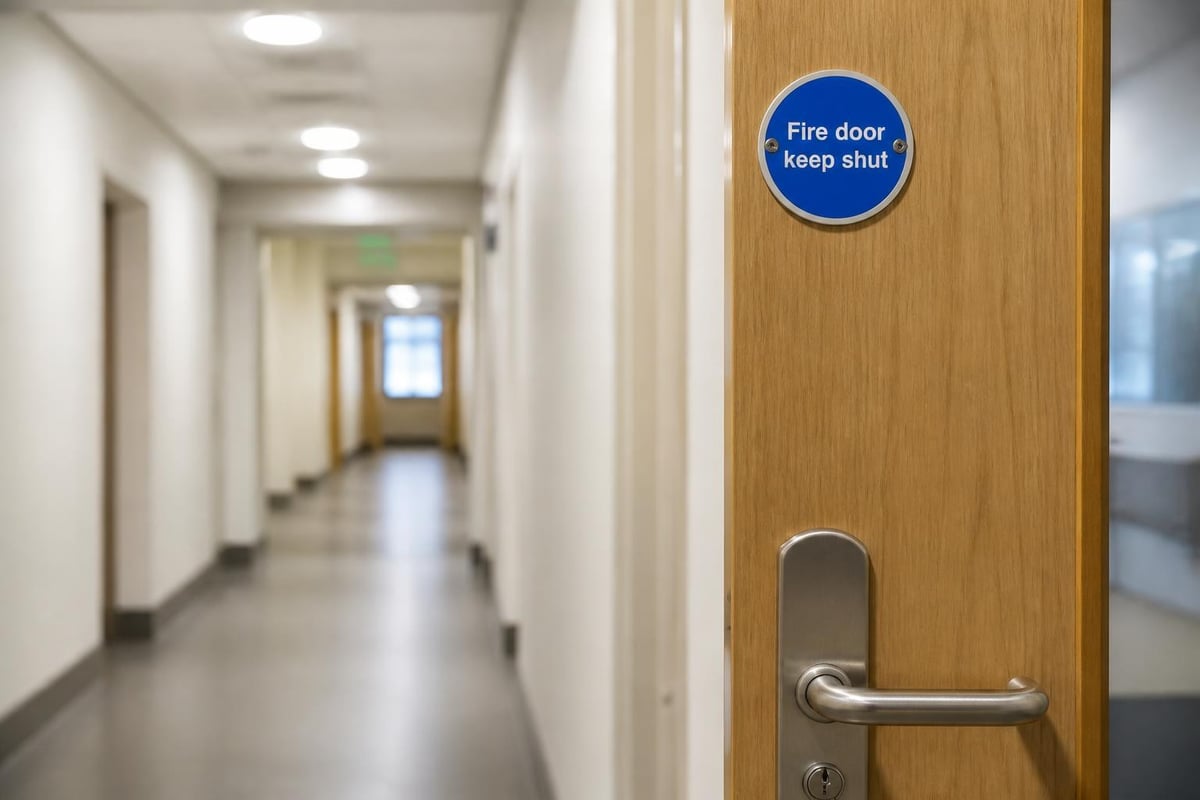
The Regulatory Reform (Fire Safety) Order 2005 places responsibility on the "responsible person" to ensure adequate fire safety measures, including appropriate signage. The official guidance for small and medium places of assembly contains explicit instruction that self-closing fire doors should be labelled 'Fire door – keep shut' on both sides.
British Standard BS 5499 and BS EN ISO 7010 provide the technical specifications for fire safety signage design, ensuring consistency and immediate recognition. The Fire Industry Association's best practice guide offers comprehensive guidance on selecting and maintaining compliant signage that meets these standards.
| Regulation/Standard | Key Requirement | Applies To |
|---|---|---|
| RR(FS)O 2005 | Adequate fire safety signage | All non-domestic premises in England & Wales |
| BS EN ISO 7010 | Standardised pictogram design | Recommended for all new signage |
| BS 5499 | Fire safety sign specifications | UK fire safety signage |
| Approved Document B | Building Regulations fire safety | New builds and major alterations |
United States Standards
American facilities follow NFPA 80, the Standard for Fire Doors and Other Opening Protectives, which governs fire door performance, inspection protocols, and signage requirements where applicable. The U.S. Fire Administration guidance emphasises that self-closing fire doors must remain closed to function effectively, with signage serving as an important reminder mechanism.
Whilst NFPA 80 focuses primarily on door assembly performance and maintenance rather than prescriptive signage requirements, many US jurisdictions adopt local ordinances mandating fire door keep shut signs based on authority having jurisdiction (AHJ) determinations.
Types and Variations of Fire Door Signage
Not all fire door keep shut signs serve identical purposes. Different door types and operational requirements demand specific signage variations to ensure proper function.
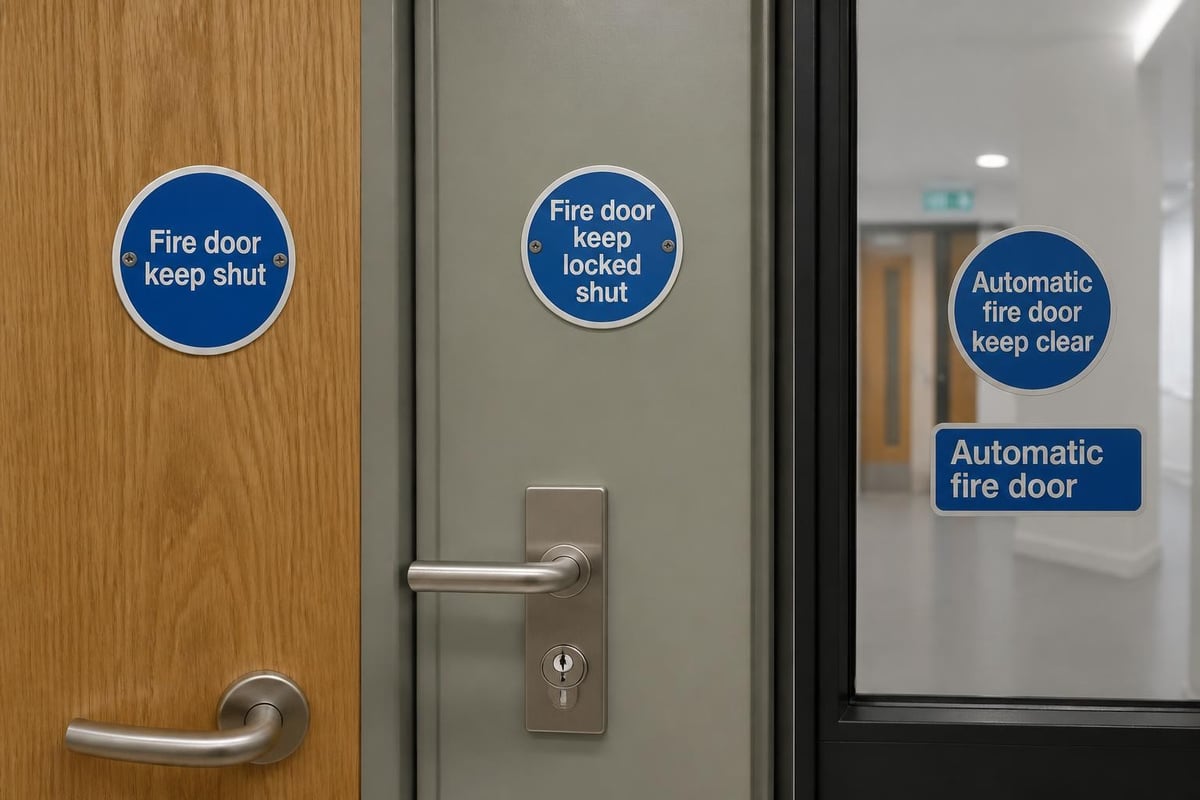
Standard "Fire Door Keep Shut" Signs
These represent the most common variant, installed on manually operated self-closing fire doors throughout buildings. The wording clearly instructs occupants to ensure the door closes fully behind them after passage.
Standard signs typically feature:
- Bold red or white text on contrasting background
- Clear pictogram showing closed door symbol
- Durable materials resistant to cleaning chemicals
- Adhesive or screw-fix mounting options
"Fire Door Keep Locked Shut" Signs
Certain fire doors in buildings require locked status when not in designated use periods. These doors protect particularly sensitive areas or control access whilst maintaining fire compartmentation. The additional "locked" instruction prevents unauthorised opening whilst ensuring compliance personnel understand the door's operational status.
"Automatic Fire Door Keep Clear" Signs
Modern buildings increasingly utilise automatic fire doors that remain open during normal operations but close automatically upon fire alarm activation. These require different signage warning occupants not to obstruct the door's closing mechanism or sweep area. The practical guidance from RiskFire explains how this wording prevents dangerous obstructions that could prevent proper door closure during emergencies.
Installation Best Practices
Proper installation of fire door keep shut signs directly impacts their effectiveness. Even compliant signage fails to serve its purpose when positioned incorrectly or rendered invisible through poor placement.
Positioning Requirements
Signs must be mounted on both sides of every fire door requiring keep-shut status. This dual-sided approach ensures visibility regardless of approach direction, reminding occupants whether entering or exiting the protected space.
Optimal positioning places signs at eye level, typically between 1.4 and 1.7 metres from floor level. This height range ensures visibility for most adults whilst remaining accessible for verification during inspections.
Key positioning considerations include:
- Clear sightlines – avoid placement behind door furniture or hanging items
- Adequate lighting – ensure signs remain visible in normal and emergency lighting conditions
- Duplicate signage – high-traffic doors may benefit from additional signs at different heights
- Glass door modifications – use appropriately sized signs that don't obscure vision panels
Surface Preparation and Fixing Methods
Clean, dry surfaces ensure maximum adhesion for self-adhesive signs. Prepare mounting areas by:
- Removing dust, grease, and previous signage residue
- Allowing freshly painted surfaces to cure fully (minimum 48 hours)
- Testing adhesion on textured or difficult surfaces
- Using mechanical fixings for high-traffic or outdoor applications
Screw-fixed signs offer superior longevity in demanding environments, whilst self-adhesive variants provide quick installation with minimal door damage. Consider the door material, traffic levels, and environmental conditions when selecting fixing methods.
Common Defects and Compliance Failures
Fire safety inspections frequently identify recurring issues with fire door keep shut signs that compromise both compliance and effectiveness.
Missing or Damaged Signage
Door replacement projects often overlook signage transfer, leaving new fire doors unmarked. Similarly, cleaning activities, vandalism, or general wear can remove or damage existing signs without prompt replacement. The Fire Door Safety Week campaign provides useful checklists for regular inspections that should include signage condition verification.
| Common Defect | Risk Level | Remedial Action |
|---|---|---|
| Missing signs (one or both sides) | High | Immediate replacement required |
| Faded or illegible text | Medium | Replace within 30 days |
| Partially detached signs | Medium | Re-secure or replace |
| Non-compliant wording | Medium | Replace with correct specification |
| Incorrect sign type for door function | High | Replace with appropriate variant |
Incorrect Wording or Non-Standard Signs
Organisations sometimes create custom signage using inconsistent wording such as "Please keep this door closed" or "Fire exit – keep shut". Whilst well-intentioned, these non-standard variants may not meet regulatory requirements and can create confusion during emergencies when clear, recognised messaging proves critical.
Obscured or Poorly Positioned Signs
Signs mounted too high, too low, or behind door-mounted equipment fail to communicate effectively. Notice boards, coat hooks, and other fixtures frequently obscure fire door signage, rendering it invisible to passing occupants.
Regular audits should verify that all fire door keep shut signs remain clearly visible from normal approach angles, with remedial action taken promptly when obstructions develop.
Integration with Broader Fire Safety Management
Fire door keep shut signs represent just one element within comprehensive fire safety programmes. Their effectiveness multiplies when integrated with wider management systems and occupant awareness initiatives.
Fire Risk Assessment Considerations
Competent fire risk assessments must evaluate fire door effectiveness, including signage adequacy. Assessors should verify:
- All self-closing fire doors carry appropriate signage
- Signs remain legible and properly positioned
- Signage matches door operational requirements
- Replacement schedules account for signage lifecycle
Documentation from these assessments provides audit trails demonstrating ongoing compliance and identifies improvement opportunities before enforcement action becomes necessary.
Staff Training and Awareness
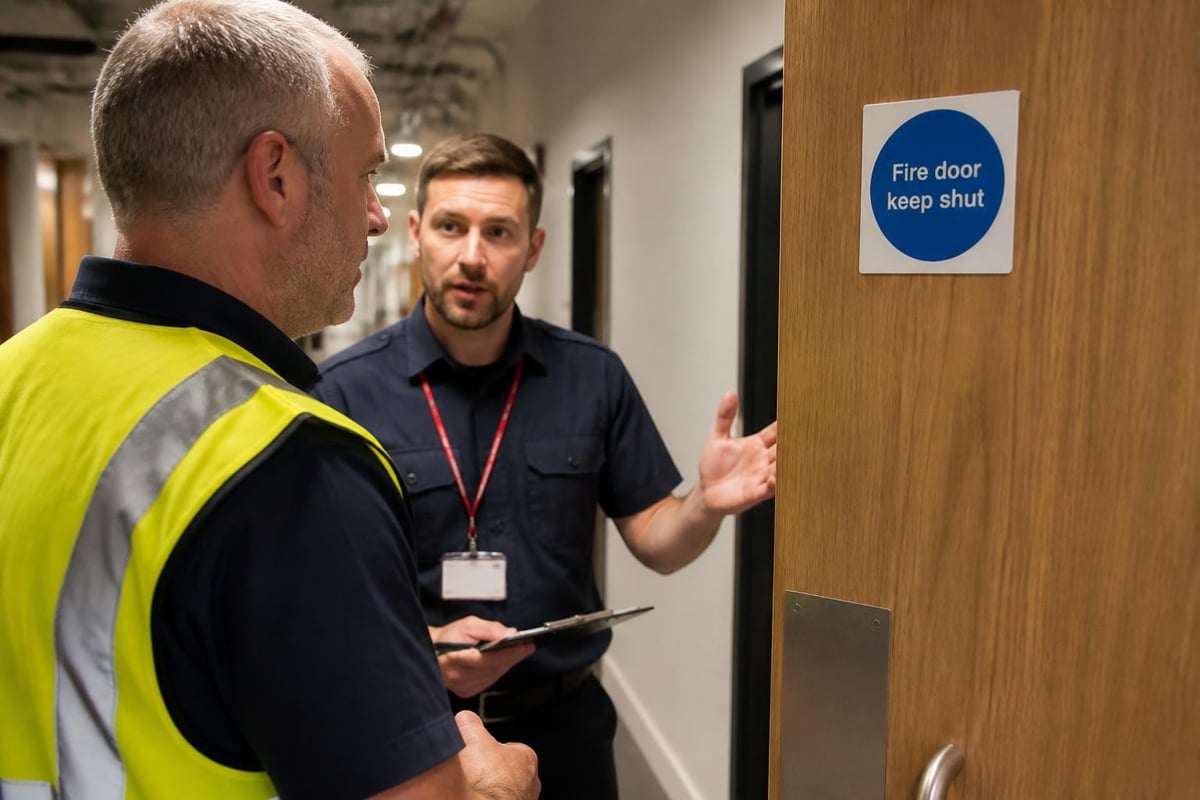
Even perfectly specified and positioned fire door keep shut signs achieve limited effectiveness without occupant understanding. Comprehensive induction training should explain:
- Why fire doors must remain closed
- How compartmentation protects occupants and property
- The prohibition on wedging or propping fire doors
- Reporting procedures for damaged doors or missing signage
Annual refresher sessions reinforce these messages, whilst visible commitment from leadership demonstrates organisational fire safety culture.
Maintenance Schedules and Record Keeping
Fire doors require regular inspection, typically every six months, with signage condition forming part of standardised checklists. Maintenance records should document:
- Sign condition assessment
- Cleaning activities
- Replacement actions
- Any temporary signage during door works
- Verification photographs
Digital management systems increasingly facilitate this documentation, enabling trend analysis and proactive replacement before signs fail completely.
Material Selection and Durability
The physical characteristics of fire door keep shut signs significantly influence their lifespan and continued effectiveness across different environments.
Material Options
Rigid plastic signs offer excellent durability and weather resistance, suitable for both interior and exterior fire doors. Their robust construction withstands regular door operation and cleaning regimes whilst maintaining clear graphics.
Self-adhesive vinyl provides cost-effective solutions for internal applications with lower traffic levels. Modern photoluminescent variants enhance visibility during power failures, though they require periodic light exposure to maintain charge.
Brushed aluminium signs deliver professional aesthetics in corporate environments whilst providing exceptional longevity. Their scratch-resistant surfaces maintain appearance despite years of exposure.
Photoluminescent materials combine standard fire door signage with emergency way-guidance functionality. These signs glow in darkness, potentially providing additional orientation during evacuations when lighting fails.
Environmental Considerations
Different building areas demand specific material specifications:
- Outdoor locations – UV-resistant materials prevent fading and degradation
- Industrial environments – chemical-resistant surfaces withstand aggressive cleaning agents
- High-humidity areas – waterproof materials prevent delamination and deterioration
- High-traffic zones – impact-resistant substrates reduce damage from trolleys and equipment
Selecting appropriate materials for each location optimises signage lifespan whilst maintaining compliance throughout the service life.
Emerging Technologies and Future Developments
Fire safety signage continues evolving, incorporating new technologies that enhance effectiveness whilst maintaining fundamental protective functions.
Smart Building Integration
Advanced building management systems increasingly monitor fire door status electronically, using magnetic sensors to detect doors held open inappropriately. These systems can trigger alerts to security personnel whilst maintaining compliance logs automatically.
Integration opportunities include:
- Real-time door status dashboards
- Automated maintenance scheduling based on usage patterns
- Occupant reminder systems when doors remain open
- Integration with access control for locked fire doors
Whilst electronic monitoring provides valuable management data, physical fire door keep shut signs remain essential for immediate occupant communication and regulatory compliance.
Enhanced Visibility Solutions
Recent developments in sign technology focus on improving visibility and comprehension:
- LED-illuminated signs that activate during fire alarm conditions
- Multi-language signs for international environments
- Tactile elements supporting accessibility requirements
- QR codes linking to detailed door maintenance history
These innovations supplement rather than replace traditional signage, offering enhanced functionality whilst maintaining core compliance elements.
Procurement Considerations for Organisations
Selecting appropriate fire door keep shut signs requires balancing compliance requirements, durability expectations, and budget constraints.
Specification Development
Effective procurement begins with comprehensive specification that addresses:
- Applicable standards (BS EN ISO 7010, BS 5499)
- Required dimensions for different door sizes
- Material preferences based on environmental conditions
- Fixing method requirements
- Quantity calculations including spares allocation
- Delivery and installation timescales
Clear specifications prevent misunderstandings whilst ensuring delivered products meet actual requirements rather than supplier assumptions.
Quality Verification
Not all suppliers provide genuinely compliant products. Verification steps include:
- Requesting certification documentation
- Checking manufacturer credentials
- Reviewing sample products before bulk orders
- Verifying materials match specifications
- Confirming warranty provisions
Reputable suppliers willingly provide supporting documentation and technical guidance, whilst reluctance to furnish compliance evidence suggests potential quality concerns.
Lifecycle Cost Analysis
Initial purchase price represents only one component of total ownership cost. Comprehensive analysis considers:
| Cost Factor | Budget Impact | Evaluation Period |
|---|---|---|
| Purchase price | Direct | One-time |
| Installation labour | Direct | One-time |
| Replacement frequency | Indirect | 3-5 years typically |
| Inspection time | Indirect | Ongoing |
| Non-compliance penalties | Contingent | If deficiencies arise |
Higher-quality signs with greater durability often deliver superior value despite elevated initial costs, reducing replacement frequency and associated labour expenses.
Sector-Specific Applications
Different building types present unique challenges and requirements for fire door keep shut signs implementation.
Healthcare Facilities
Hospitals and care homes face particular complexity balancing fire compartmentation with patient movement and observation requirements. Fire door keep shut signs must coexist with infection control protocols, accessibility needs, and medical equipment circulation.
Specialist considerations include:
- Antimicrobial sign coatings for infection prevention
- Dual-language signage for diverse patient populations
- Enhanced visibility for visually impaired occupants
- Coordination with nurse call systems and patient monitoring
Educational Establishments
Schools and universities combine high occupancy with users possessing varying fire safety awareness. Clear signage becomes particularly critical during events when unfamiliar visitors occupy buildings.
Effective approaches incorporate:
- Age-appropriate signage design in primary schools
- Vandal-resistant materials in high-risk areas
- Integration with fire safety education programmes
- Seasonal verification before term commencement
Industrial and Warehouse Environments
Manufacturing and storage facilities present challenging conditions including temperature extremes, airborne contaminants, and heavy equipment operation. Fire door keep shut signs require robust specifications whilst remaining visible despite difficult conditions.
Strategic implementation addresses:
- Chemical-resistant materials for process environments
- Larger signs for warehouse-scale door installations
- Illuminated or reflective options for low-light areas
- Protected mounting positions avoiding forklift damage
Hospitality Sector
Hotels, restaurants, and entertainment venues balance guest experience with stringent fire safety requirements. Signage must integrate aesthetically whilst maintaining clear communication and regulatory compliance.
Hospitality-specific solutions include:
- Discreet but compliant sign designs
- Coordination with interior design schemes
- Multi-language signage for international guests
- Enhanced inspection protocols during renovations
Fire door keep shut signs form an indispensable element of comprehensive fire safety strategies, providing the clear communication necessary to maintain protective compartmentation throughout buildings. From regulatory compliance and proper installation through ongoing maintenance and sector-specific applications, these seemingly simple signs demand careful attention to ensure they fulfil their life-saving function effectively. Whether you're conducting fire risk assessments, managing building compliance programmes, or specifying safety equipment for new projects, SafetySignsForSale offers the comprehensive range of compliant fire safety signage and expert guidance needed to protect your occupants and meet your regulatory obligations.