


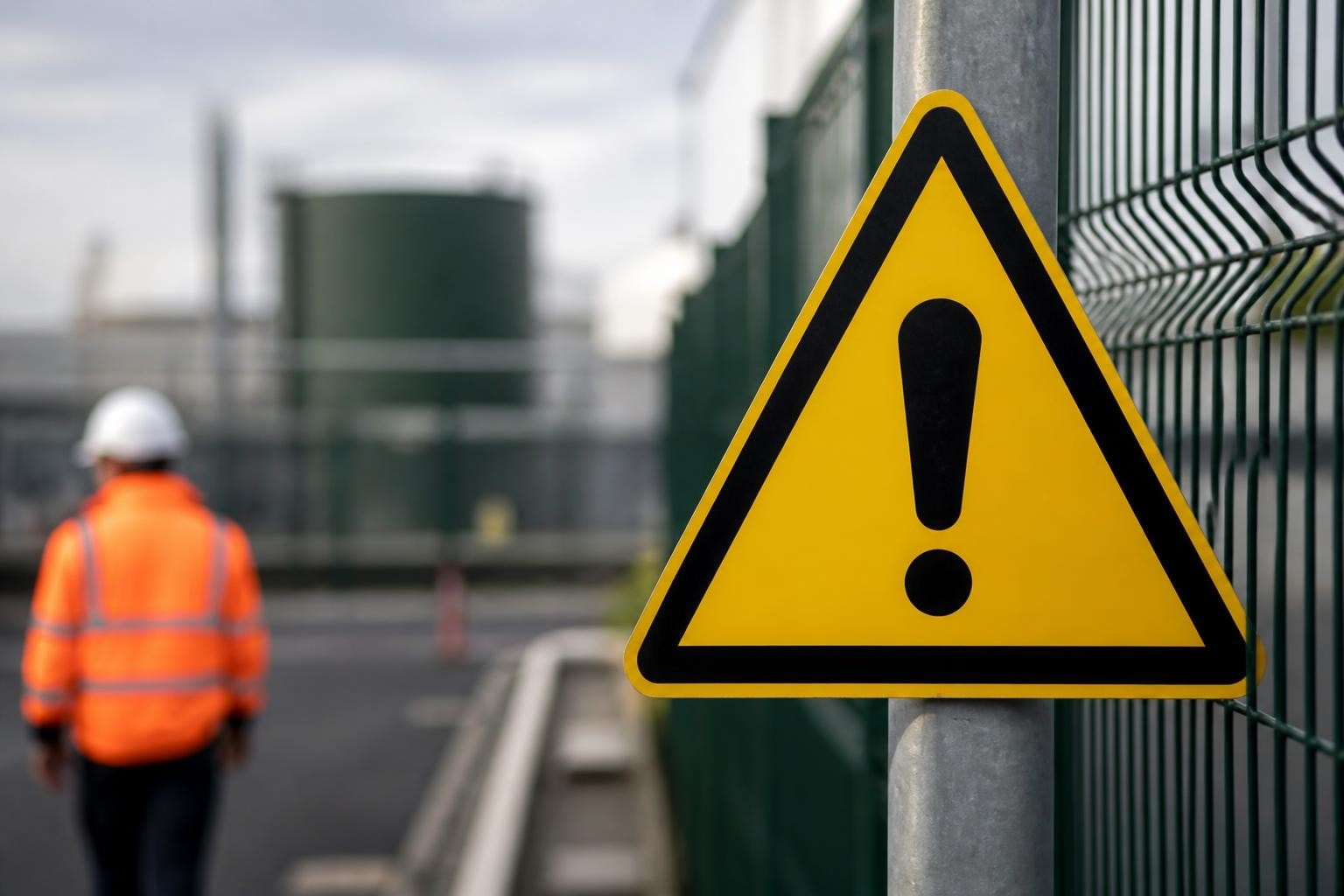
Yellow Triangle Sign: Your Guide to Warning Signage
The yellow triangle sign remains one of the most recognisable symbols in safety communication worldwide. Whether you encounter it on the roadside, in a manufacturing facility, or within an office environment, this distinctive shape and colour combination immediately signals caution. Understanding the purpose, variations, and proper implementation of these warning signs is essential for businesses committed to maintaining safe working environments and complying with regulatory requirements in 2026.
The Universal Language of Warning Signs
Yellow triangle signs serve as a cornerstone of visual safety communication across industries. The triangular shape with a yellow background creates instant recognition, drawing attention to potential hazards before accidents occur. This standardisation ensures that workers, visitors, and the general public can identify warnings regardless of language barriers or literacy levels.
The psychological impact of the yellow triangle sign cannot be understated. Research in colour psychology demonstrates that yellow naturally attracts human attention, whilst the triangle shape conveys urgency and the need for heightened awareness. This combination makes these signs particularly effective in environments where split-second recognition can prevent injuries or save lives.
Regulatory Framework and Standards
In the United Kingdom, HSE guidance on safety signs establishes clear requirements for workplace warning signage. The Health and Safety (Safety Signs and Signals) Regulations 1996 mandate specific use of yellow warning triangles in occupational settings. These regulations align with European standards whilst incorporating British-specific requirements.
The standardisation extends beyond colour and shape. Sign dimensions, symbol clarity, and placement height all follow prescribed guidelines to ensure maximum visibility and comprehension. Businesses must ensure their warning signs meet these specifications to maintain compliance and protect their workforce effectively.
Common Types of Yellow Triangle Warning Signs
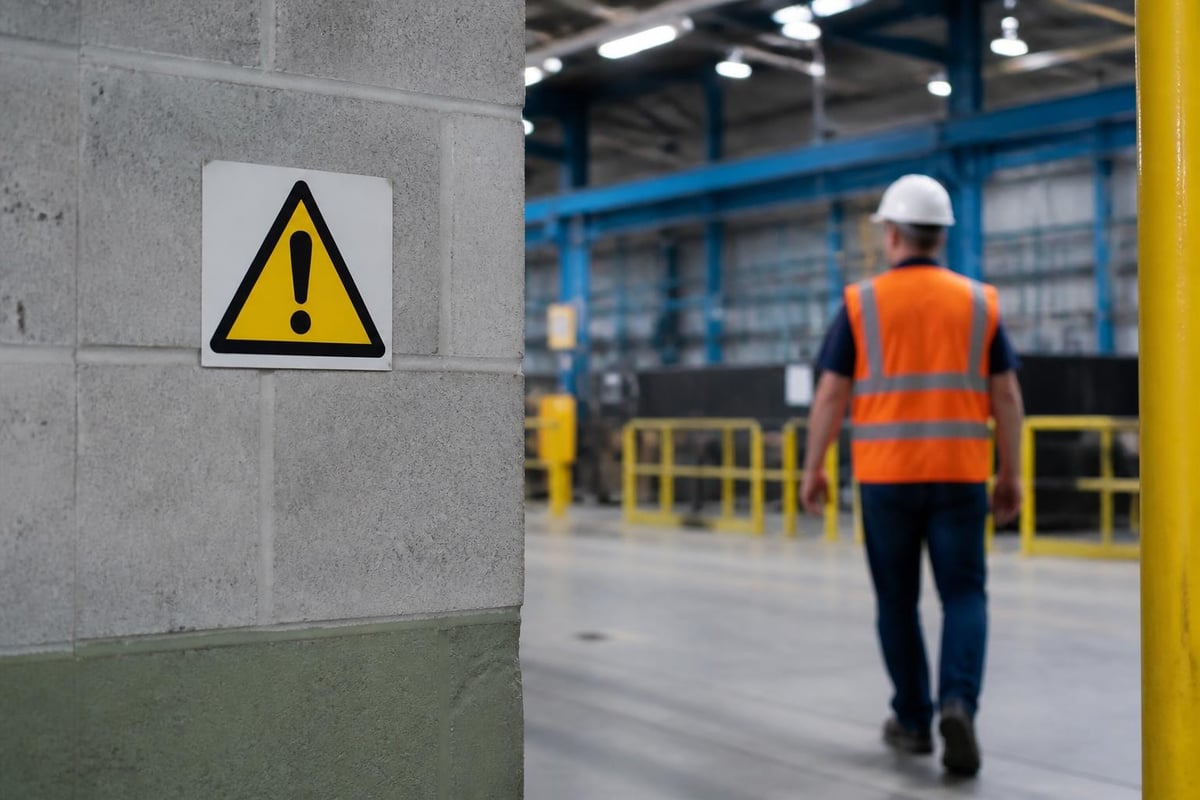
The versatility of the yellow triangle sign manifests through dozens of specific warning symbols, each designed to communicate particular hazards. Understanding these variations helps safety officers select appropriate signage for their facilities.
Workplace Hazard Warnings
Industrial and commercial environments require specialised warning signage to address sector-specific risks:
- Electrical hazard warnings featuring lightning bolt symbols
- Slippery surface alerts with falling person pictograms
- Overhead load indicators showing suspended weight symbols
- Chemical hazard notifications displaying corrosive substance icons
- Hot surface warnings with flame or heat wave graphics
- Laser radiation alerts for environments using high-powered equipment
- Biological hazard symbols in healthcare and laboratory settings
Each symbol follows international pictogram standards, ensuring universal recognition across different countries and languages. The yellow triangle background remains consistent, whilst the black symbol varies according to the specific hazard being communicated.
Traffic and Road Warning Signs
The Traffic Signs Manual Chapter 4 provides comprehensive guidance on road warning triangles used throughout the UK. These signs alert motorists to upcoming hazards, intersections, or changing road conditions.
| Sign Type | Purpose | Common Locations |
|---|---|---|
| Bend ahead | Warns of sharp curves | Rural roads, mountain passes |
| Pedestrian crossing | Alerts to crossing zones | Urban areas, school zones |
| Road works | Indicates construction zones | Motorways, city centres |
| Animal crossing | Warns of wildlife | Countryside, nature reserves |
| Uneven road surface | Signals poor road conditions | Older infrastructure areas |
Suppliers like SafetySignsForSale offer comprehensive road signs that meet UK Department for Transport specifications, ensuring durability and reflectivity requirements are satisfied.
Material Selection and Durability Considerations
Choosing appropriate materials for your yellow triangle sign significantly impacts longevity and effectiveness. Different environments demand different specifications to maintain visibility and structural integrity over time.
Indoor Applications
Indoor warning signs typically face less environmental stress but must still withstand cleaning chemicals, temperature variations, and physical contact. Common material choices include:
Rigid plastic boards provide excellent durability for permanent installations in warehouses, factories, and office buildings. These signs resist fading under fluorescent lighting and maintain colour accuracy for years.
Self-adhesive vinyl offers flexibility for temporary warnings or surfaces where drilling mounting holes proves impractical. High-quality vinyl resists peeling and maintains adhesion even in moderate humidity.
Aluminium composite panels deliver premium durability in industrial settings where impact resistance matters. Their lightweight construction simplifies installation whilst providing long-term reliability.
Outdoor and Harsh Environment Applications
External yellow triangle signs must endure weather extremes, UV exposure, and potential vandalism. Material selection becomes critical for maintaining visibility and compliance:
- Retroreflective sheeting ensures night-time visibility for traffic signs
- Marine-grade aluminium resists corrosion in coastal or chemical environments
- UV-stabilised plastics prevent colour degradation under constant sunlight
- Anti-graffiti coatings facilitate cleaning in urban settings
The investment in quality materials pays dividends through reduced replacement frequency and consistent safety communication. Fire fighting equipment locations, for instance, require signs that remain visible during emergencies regardless of lighting conditions or environmental factors.
Strategic Placement and Visibility Optimisation
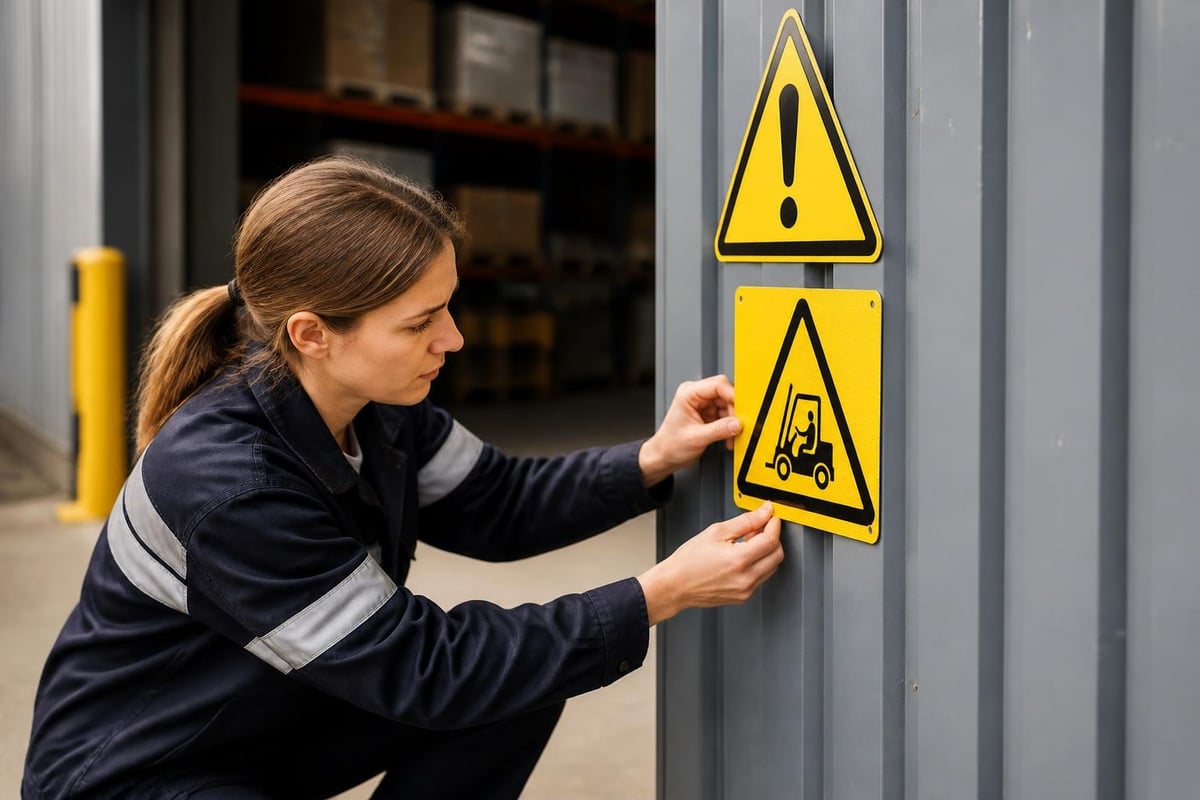
Even the most well-designed yellow triangle sign fails its purpose if positioned incorrectly. Strategic placement ensures warnings reach their intended audience at the optimal moment for hazard avoidance.
Height and Viewing Distance
Standard practice positions warning signs between 1.5 and 2.5 metres from ground level, placing them within natural eye level for standing adults. This height accommodates visibility for both pedestrians and vehicle operators whilst preventing obstruction by equipment or stored materials.
Viewing distance calculations determine appropriate sign dimensions. A worker approaching at walking speed requires different sizing compared to a forklift operator travelling at higher speeds through a warehouse. The formula accounts for recognition time, reaction time, and stopping distance when necessary.
Lighting and Contrast
Adequate illumination ensures yellow triangle signs remain visible throughout operational hours. Natural daylight provides excellent visibility, but facilities operating evening shifts or lacking windows require supplementary lighting solutions.
Photoluminescent signs offer an innovative solution for emergency scenarios. These photoluminescent signs absorb ambient light during normal operations and glow during power failures, maintaining safety communication when traditional signage becomes invisible.
Background contrast significantly affects sign visibility. Yellow triangles stand out effectively against dark walls or equipment but may blend into light-coloured surfaces. Safety managers should assess backgrounds during site surveys and consider contrasting borders or relocated positioning where necessary.
Integration with Comprehensive Safety Programmes
The yellow triangle sign represents just one component of effective workplace safety management. These warnings work optimally when integrated within broader safety initiatives encompassing training, protective equipment, and emergency procedures.
Complementary Signage Systems
A layered approach to safety communication incorporates multiple sign categories:
- Warning signs (yellow triangles) identify potential hazards
- Mandatory signs (blue circles) specify required actions
- Prohibitory signs (red circles) indicate forbidden activities
- Emergency signs (green squares) direct to safety equipment and exits
- General informational signs provide supplementary guidance
This multi-category system creates redundancy and reinforcement. A chemical storage area might combine yellow triangle corrosive warnings with blue mandatory eye protection signs and red no-smoking prohibitions, creating comprehensive hazard communication.
Training and Awareness
Signage effectiveness depends heavily on workforce understanding. Regular safety training should include sign recognition modules covering:
- Symbol meanings for all yellow triangle variants used on-site
- Appropriate responses to different warning categories
- Reporting procedures for damaged or missing signs
- Temporary warning protocols during maintenance or unusual operations
Interactive training sessions using actual signs from the facility improve retention compared to theoretical classroom instruction. Workers who physically interact with signage during training demonstrate better recognition under pressure.
Maintenance and Compliance Auditing
Yellow triangle signs require regular inspection and maintenance to ensure continued effectiveness and regulatory compliance. Faded, damaged, or obscured warnings create liability exposure whilst failing their protective function.
Inspection Schedules
Establishing systematic inspection routines prevents sign degradation from compromising safety:
| Inspection Frequency | Focus Areas | Documentation Required |
|---|---|---|
| Weekly | Visibility, obstruction checks | Informal notes |
| Monthly | Physical damage, mounting integrity | Checklist completion |
| Quarterly | Colour retention, reflectivity testing | Photographic records |
| Annually | Comprehensive compliance audit | Detailed report |
High-risk areas warrant more frequent inspections. Chemical storage facilities, heavy machinery zones, and traffic intersections should receive weekly scrutiny at minimum.
Replacement Criteria
Determining when yellow triangle signs require replacement involves both objective measurements and subjective assessment:
Colour retention below 80% of original intensity indicates replacement necessity. Spectrophotometer readings provide objective data for critical applications, whilst visual comparison against new signs suffices for general purposes.
Structural damage including cracks, warping, or mounting failure demands immediate replacement regardless of colour condition. Compromised structural integrity often prevents proper positioning or creates additional hazards from falling signage.
Regulatory updates occasionally necessitate sign replacement even when existing signs remain physically sound. Changes to pictograms, dimensions, or colour specifications require updates to maintain compliance.

Industry-Specific Applications and Customisation
Different sectors face unique hazards requiring specialised yellow triangle sign applications. Understanding industry-specific requirements ensures appropriate warning coverage across diverse operational environments.
Manufacturing and Industrial Settings
Production facilities encounter concentrated hazard densities requiring extensive warning signage. Assembly lines, material handling zones, and equipment operation areas all demand specific yellow triangle configurations.
Robotics installations particularly benefit from prominent warning triangles indicating automated machinery zones. These signs often incorporate supplementary text specifying safe approach distances or required PPE such as safety glasses or hearing protection.
Healthcare and Laboratory Environments
Medical facilities and research laboratories face biological, chemical, and radiation hazards requiring specialised warning symbols. The yellow triangle sign in these contexts often features biohazard symbols, radiation warnings, or cytotoxic substance indicators.
Integration with first aid equipment creates comprehensive safety infrastructure. Warning signs direct personnel away from hazards whilst emergency equipment signs guide them toward protective resources and treatment supplies.
Construction and Temporary Work Zones
Building sites require flexible signage solutions accommodating constantly changing conditions. Portable yellow triangle signs on tripod stands or weighted bases provide mobility whilst maintaining visibility.
Excavation warnings, overhead work indicators, and confined space alerts represent common construction applications. These temporary installations must withstand wind, weather, and frequent relocation whilst maintaining legibility.
Emerging Technologies and Future Developments
The yellow triangle sign continues evolving alongside technological advancement. Digital enhancements and smart integration expand traditional signage capabilities whilst maintaining the fundamental visual recognition that makes these warnings effective.
Digital and Dynamic Warning Systems
LED-enhanced yellow triangles offer variable messaging capabilities, displaying different warnings based on operational conditions or detected hazards. Manufacturing facilities utilise sensors that activate specific warnings when machinery operates or hazardous materials are present.
These intelligent systems reduce sign clutter whilst increasing relevance. Rather than permanent static warnings for occasional hazards, dynamic signs activate only when actual risk exists, preventing warning fatigue and maintaining attention effectiveness.
Augmented Reality Integration
Forward-thinking organisations experiment with augmented reality overlays supplementing physical yellow triangle signs. Workers wearing AR-enabled safety glasses receive additional contextual information when viewing warning signs, including detailed hazard descriptions, safe approach procedures, or real-time monitoring data.
This technology proves particularly valuable during maintenance operations or emergency response when detailed hazard information supports better decision-making under pressure.
Cost-Benefit Analysis of Quality Signage Investment
Budget-conscious organisations sometimes question whether premium yellow triangle signs justify their higher initial cost compared to economy alternatives. Comprehensive cost-benefit analysis consistently demonstrates that quality signage delivers superior long-term value.
Direct Cost Comparisons
| Sign Quality Level | Initial Cost | Expected Lifespan | Annual Cost | Replacement Frequency |
|---|---|---|---|---|
| Economy grade | £8-12 | 2-3 years | £4.00 | High |
| Standard grade | £15-25 | 5-7 years | £3.57 | Moderate |
| Premium grade | £30-50 | 10-15 years | £3.33 | Low |
These figures demonstrate minimal annual cost difference whilst premium signs reduce administrative burden associated with frequent replacements and disposal.
Indirect Value Considerations
Quality yellow triangle signs deliver benefits extending beyond direct cost savings:
- Reduced accident rates through superior visibility and durability
- Lower insurance premiums from demonstrated safety commitment
- Enhanced compliance reducing regulatory violation risks
- Improved reputation amongst employees and stakeholders
- Decreased replacement labour freeing maintenance staff for other duties
Organisations operating in harsh environments or high-risk industries particularly benefit from premium signage investment. A single prevented accident often delivers returns far exceeding total signage programme costs.
Customisation and Bespoke Warning Solutions
Standard yellow triangle signs address the majority of warning requirements, but some situations demand customised solutions. Bespoke signage ensures specific organisational hazards receive appropriate communication.
When Custom Signs Prove Necessary
Unique operational processes, proprietary equipment, or site-specific hazards may lack corresponding standard symbols. Custom yellow triangle signs featuring organisation-specific pictograms or multilingual text accommodate these scenarios.
Facilities employing diverse workforces benefit from multilingual warnings ensuring comprehension regardless of primary language. The yellow triangle format remains consistent whilst symbol selection and text incorporate multiple languages serving the actual workforce composition.
Design Considerations for Custom Warnings
Creating effective custom yellow triangle signs requires balancing specificity with universal comprehension. Overly complex symbols confuse rather than clarify, whilst oversimplified designs may fail to convey the actual hazard nature.
Professional design services ensure custom signs maintain appropriate contrast ratios, symbol sizing, and mounting specifications whilst incorporating organisation-specific requirements. This expertise prevents well-intentioned custom signage from inadvertently compromising safety communication effectiveness.
The yellow triangle sign represents a fundamental element of workplace safety communication, combining psychological impact with regulatory compliance and practical hazard warning. From manufacturing floors to construction sites, these distinctive warnings protect workers and visitors through immediate visual recognition of potential dangers. Whether implementing a comprehensive signage programme or updating existing warnings to current standards, selecting quality products from experienced suppliers ensures both compliance and effectiveness. SafetySignsForSale provides extensive warning sign solutions alongside complementary safety equipment, offering businesses the comprehensive resources needed to create safer working environments across all industries.