


Danger Sign: Essential Guide for Workplace Safety 2026
Workplace safety begins with clear, visible communication of hazards that could result in serious injury or death. A danger sign serves as the most critical level of warning signage, alerting personnel to immediate threats that demand specific precautions. Understanding the proper application, regulatory requirements, and effectiveness of these essential safety tools can mean the difference between a safe working environment and a catastrophic incident. For organizations across manufacturing, construction, chemical processing, and countless other sectors, implementing the right danger sign strategy forms a cornerstone of comprehensive health and safety management.
Understanding the Hierarchy of Safety Signage
Safety signs follow a carefully structured hierarchy based on the severity of potential hazards. This classification system ensures workers immediately recognize the level of risk they face.
The Four-Tier Warning System
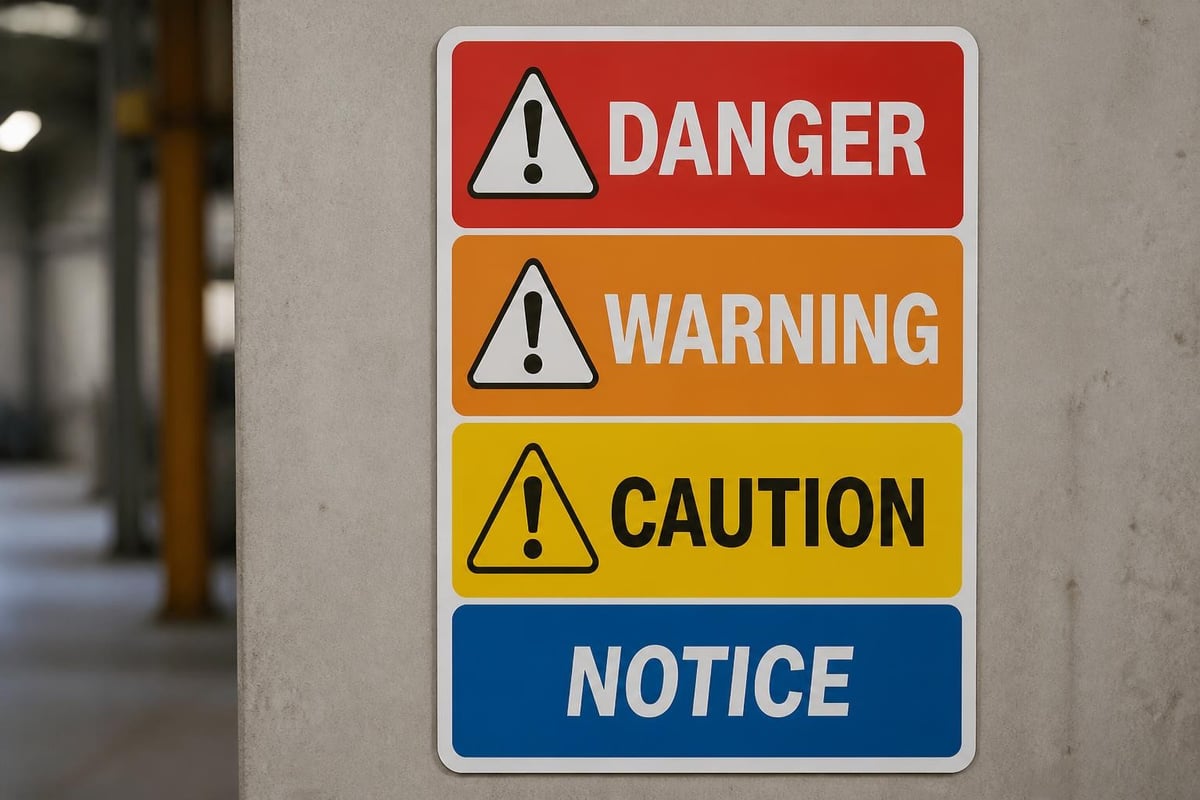
Danger signs occupy the highest position in safety signage hierarchy, reserved exclusively for situations where death or severe injury will likely result if proper precautions are not taken. Below this level, warning signs address situations that could potentially cause serious harm, whilst caution signs indicate moderate risks. Notice signs provide general information without addressing immediate hazards.
The distinction between these categories is not merely academic. Research published in *Scientific Reports* demonstrates that workers process signage differently based on signal words and design elements, with comprehension rates varying significantly across demographic groups and cognitive abilities.
| Sign Type | Risk Level | Typical Applications | Design Requirements |
|---|---|---|---|
| Danger | Death or serious injury likely | High voltage, confined spaces, toxic materials | Red, black, white - specific pictograms required |
| Warning | Serious injury possible | Slip hazards, moving machinery | Orange and black triangular format |
| Caution | Moderate injury possible | General housekeeping, minor hazards | Yellow and black |
| Notice | Information only | Directions, procedures | Blue or green backgrounds |
Regulatory Framework and Compliance
Multiple regulatory bodies govern the design, placement, and maintenance of danger signs across different jurisdictions. The European Commission provides non-binding guidance on Directive 92/58/EEC regarding safety and health signs at work, establishing minimum requirements that member states must implement.
In the United States, OSHA Standard 1910.145 specifies precise colour coding, with danger signs requiring red, black, and white combinations. The standard mandates that the signal word "DANGER" appears in white letters on a red oval within a black rectangle, with additional safety messages below.
The International Labour Organization maintains comprehensive guidance on safety signs as part of broader occupational safety and health management systems, emphasizing that signage must integrate with training, risk assessments, and control measures rather than serving as a standalone solution.
Critical Applications Requiring Danger Signs
Certain workplace hazards demand the highest level of visual warning. Identifying these situations correctly ensures appropriate risk communication.
Electrical Hazards
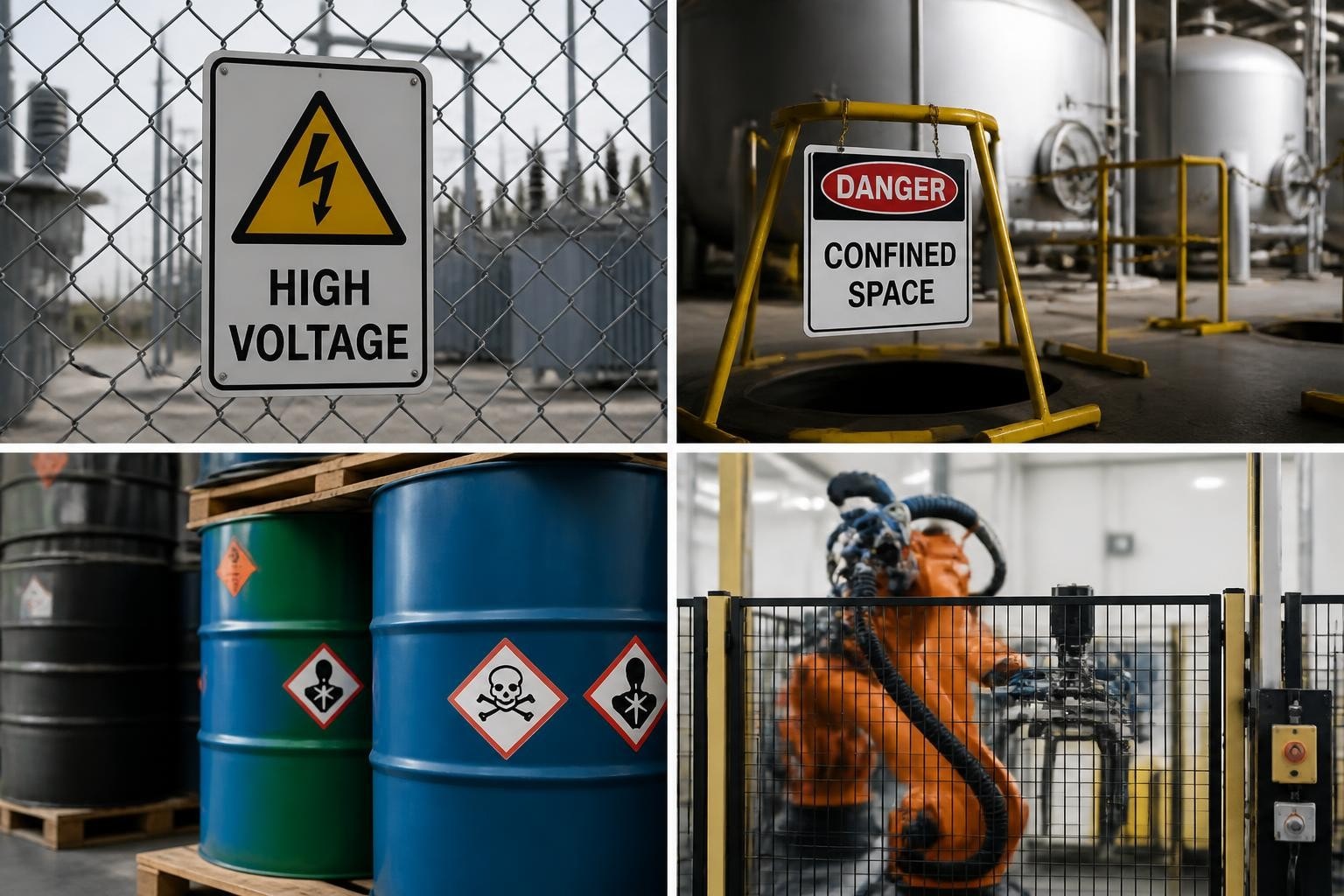
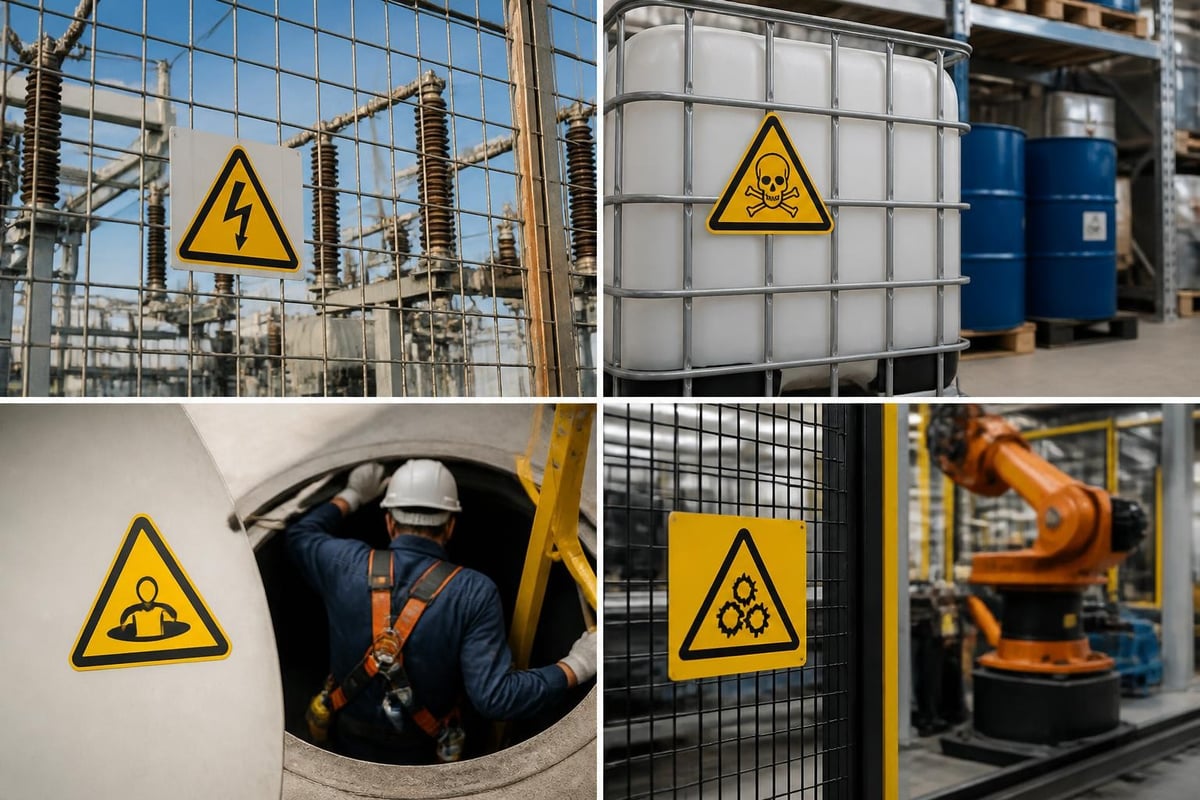
High voltage electrical installations represent one of the most common applications for danger signs. Any equipment operating above 600 volts typically requires danger-level signage, with specific warnings about electrocution risks, arc flash potential, and required personal protective equipment.
- Substations and transformers - Entry points must display danger signs visible from all approaches
- Overhead power lines - Height clearance warnings for vehicles and elevated work platforms
- Electrical panels and switchgear - Clear indication of voltage levels and required safety procedures
- Battery storage systems - Particularly relevant for modern renewable energy installations
Chemical and Toxic Materials
Chemical processing facilities, laboratories, and storage areas use danger signs to communicate acute toxicity, corrosive substances, and reactive materials. The Globally Harmonized System (GHS) pictograms often accompany traditional danger signs to provide standardized hazard communication.
Confined spaces represent another critical application where a danger sign warns of atmospheric hazards, including oxygen deficiency, toxic gases, or explosive atmospheres. These areas require permit-to-work systems in addition to prominent signage at every entry point.
Machinery and Automation
Modern manufacturing environments feature increasingly complex automated systems where human interaction with moving machinery can prove fatal. Danger signs must identify:
- Pinch points and crush zones where workers could become trapped
- Rotating equipment that could entangle clothing or body parts
- Automated guided vehicles operating in shared spaces with pedestrians
- Robotic work cells with unexpected start-up potential
SafetySignsForSale provides specialized warning signs designed for these specific machinery applications, ensuring compliance whilst maintaining visibility in industrial environments.
Design Principles for Maximum Effectiveness
A danger sign only fulfills its protective function when workers notice, read, and comprehend the message. Design choices significantly impact these outcomes.
Colour Psychology and Visibility
The red-black-white colour scheme mandated for danger signs leverages fundamental colour psychology. Red triggers immediate attention and subconsciously signals threat across cultures. Black provides maximum contrast for readability, whilst white backgrounds ensure visibility in various lighting conditions.
However, colour alone proves insufficient. A comprehensive study published in *Heliyon* examining safety sign comprehension among industry workers found that pictogram design quality and text clarity matter as much as colour coding. The research revealed that ISO comprehension thresholds-requiring 85% understanding in target populations-are frequently not met even with properly coloured signs.
Material selection influences visibility and durability:
- Reflective substrates enhance night-time visibility in outdoor locations
- Photoluminescent materials provide emergency visibility during power failures
- Weather-resistant coatings prevent degradation in harsh environments
- Anti-graffiti surfaces maintain message integrity in public-facing areas
Typography and Message Clarity
Text on a danger sign must be readable from the maximum distance at which workers might encounter the hazard. Industry standards typically specify minimum letter heights based on viewing distance, with a general rule of one inch of letter height per 50 feet of viewing distance.
Message conciseness remains critical. Workers should grasp the hazard and required action within three seconds. Effective danger signs follow this structure:
- Signal word - "DANGER" prominently displayed
- Hazard identification - What is the specific threat
- Consequence - What injury or harm could occur
- Avoidance - What action prevents the harm
Redundant or overly technical language reduces effectiveness rather than improving it. The goal is immediate comprehension, not comprehensive documentation.
Accessibility and Universal Design
Modern danger signs must communicate effectively to all workers, including those with visual impairments, colour blindness, or limited literacy. The 2010 ADA Standards for Accessible Design establish requirements for tactile characters, Braille, and high contrast that apply to certain permanent signage.
For danger signs specifically, accessibility considerations include:
- Pictograms that convey hazards without text dependency
- Multiple language versions in multilingual workplaces
- Tactile elements for blind or low-vision workers
- Position and mounting at appropriate heights and locations
Strategic Placement and Visibility Management
Even the most perfectly designed danger sign fails if positioned incorrectly or obscured from view.
Location Decision Framework
Determining where to place a danger sign requires systematic hazard assessment. Each sign should be positioned where workers naturally look before encountering the hazard, with sufficient distance to allow protective action.
| Hazard Type | Minimum Placement Distance | Mounting Height | Additional Considerations |
|---|---|---|---|
| High voltage | 10 feet from energized parts | Eye level (5-6 feet) | Multiple angles if equipment is accessible from several approaches |
| Confined space | At every entry point | Immediately adjacent to entry | Secure to prevent removal or tampering |
| Overhead hazards | Before entry to danger zone | 6-8 feet (visible above obstacles) | May require suspended signs |
| Chemical storage | Exterior of storage area | 4-6 feet | Weather-resistant materials essential |
Emerging technology offers new approaches to ensuring sign visibility. Research published in *Frontiers in Public Health* demonstrates machine vision systems can automatically detect safety signs in work environments, identifying when signs become obscured, damaged, or removed. This technology enables proactive maintenance programs that ensure continuous effectiveness.
Environmental Factors
Workplace conditions profoundly affect danger sign visibility and longevity. Dust, moisture, temperature extremes, and ambient lighting all demand consideration during selection and installation.
Indoor industrial settings may accumulate dust or chemical residues that obscure signage within weeks. Regular cleaning schedules and protective coatings mitigate this issue. Complementing traditional danger signs with photoluminescent signs ensures visibility during power failures or emergency lighting situations.
Outdoor installations face weather exposure, UV degradation, and temperature cycling. Marine-grade materials and specialized coatings extend service life, whilst mounting systems must withstand wind loading and potential impact.
Integration with Comprehensive Safety Systems
A danger sign represents just one component within a layered safety approach. Effective hazard management requires multiple complementary controls.
The Hierarchy of Controls
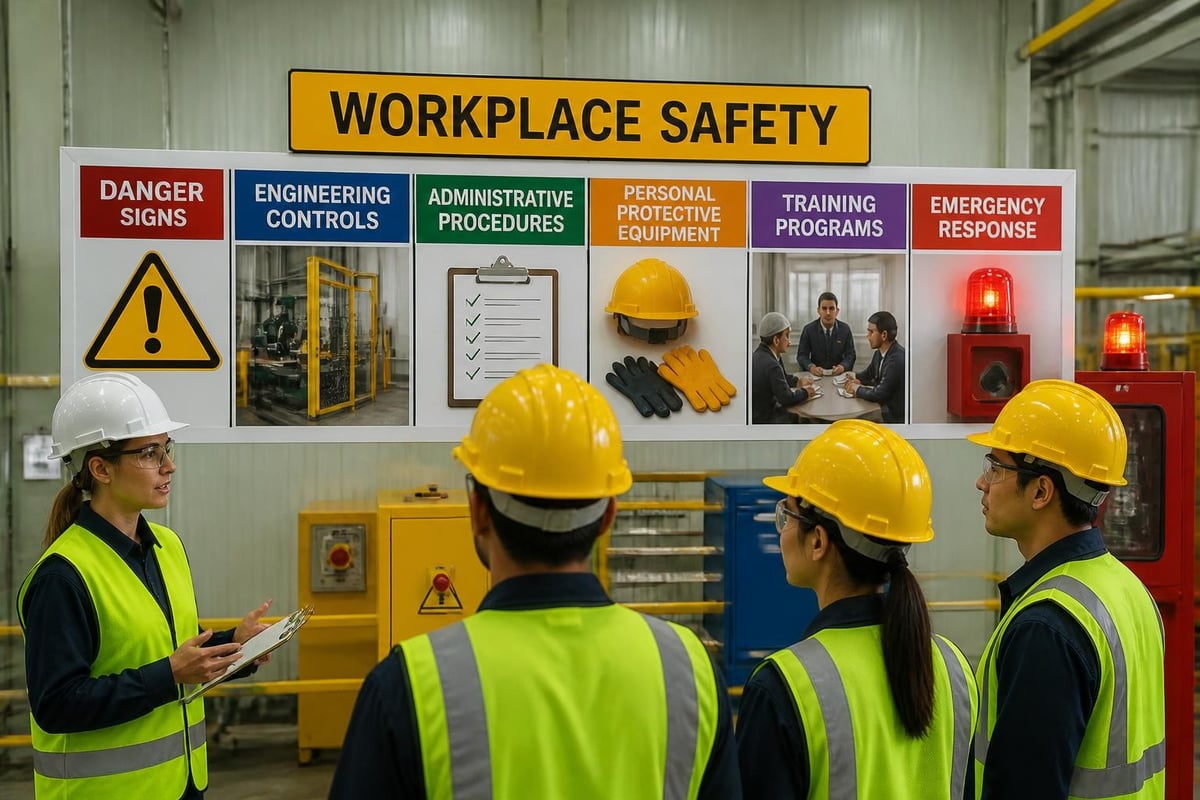
Safety professionals recognize that signage falls within the administrative controls tier of the hierarchy of controls-more effective than personal protective equipment but less protective than elimination, substitution, or engineering controls.
This positioning means danger signs should never serve as the primary protective measure for serious hazards. Instead, they complement physical barriers, lockout/tagout procedures, ventilation systems, and other engineered safeguards.
For example, a confined space with atmospheric hazards requires:
- Engineering controls - Forced ventilation systems
- Administrative controls - Permit-to-work procedures and atmospheric testing
- Danger signs - Clear hazard communication at entry points
- PPE - Respiratory protection when required by exposure assessment
Organizations offering comprehensive solutions like SafetySignsForSale recognize this integrated approach, providing not only signage but also personal protective equipment and first aid equipment that work together within complete safety programs.
Training and Cultural Reinforcement
Even the most visible danger sign proves ineffective if workers develop "sign blindness" through overexposure or if organizational culture doesn't prioritize safety compliance.
Initial training must explicitly cover:
- The four-tier signage hierarchy and what each level means
- Specific hazards present in the workplace
- Required actions when encountering each danger sign
- Reporting procedures for damaged or missing signs
Ongoing reinforcement through toolbox talks, safety meetings, and incident investigations keeps danger sign awareness fresh. Leading organizations conduct periodic audits specifically assessing whether workers notice and correctly interpret signage throughout their facilities.
Maintenance and Lifecycle Management
Danger signs deteriorate over time through environmental exposure, physical damage, and normal wear. Systematic maintenance ensures continued effectiveness throughout their service life.
Inspection Protocols
Regular inspection programs should evaluate multiple factors:
- Visibility - Can the sign be seen from all necessary approaches?
- Legibility - Is all text and imagery clearly readable?
- Physical condition - Are there cracks, fading, corrosion, or deformation?
- Mounting security - Is the sign firmly attached and properly oriented?
- Relevance - Does the hazard still exist as originally described?
Inspection frequency depends on environmental exposure, with outdoor signs or those in harsh conditions requiring monthly checks, whilst protected indoor signs might need only quarterly review.
Documentation of these inspections provides evidence of due diligence and helps identify systemic issues, such as particular sign types or locations experiencing premature failure.
Replacement Criteria and Lifecycle Planning
Establishing clear replacement criteria prevents subjective decision-making about when signs have become ineffective. Objective thresholds might include:
- Colour fading beyond 20% of original vibrancy
- Text or pictograms illegible from design viewing distance
- Physical damage affecting more than 10% of sign area
- Mounting damage preventing secure attachment
- Obsolete hazard information or outdated standards
Proactive replacement programs schedule sign renewal based on expected service life rather than waiting for failure. Quality signs in protected environments might last 7-10 years, whilst harsh outdoor conditions may limit effectiveness to 3-5 years.
Budget planning should account for the entire danger sign inventory, with annual replacement costs typically ranging from 10-20% of total sign value depending on environmental conditions and quality specifications.
Emerging Trends and Future Developments
Safety signage continues evolving through technological advancement and deeper understanding of human factors.
Digital and Dynamic Signage
Traditional static danger signs may soon be complemented or replaced by digital displays that provide real-time hazard information. These systems offer several advantages:
- Conditional activation - Signs illuminate only when hazards are present
- Multi-language cycling - Automatic translation for diverse workforces
- Integration with sensors - Direct connection to gas detection, equipment status, or environmental monitoring
- Remote management - Centralized control and instant updates across facilities
However, digital systems introduce dependencies on power supplies and electronic reliability that may actually reduce effectiveness during emergencies when static signs continue functioning.
Augmented Reality Integration
Forward-looking organizations are exploring augmented reality (AR) applications that overlay danger sign information directly into workers' fields of view through smart glasses or mobile devices. This technology enables context-sensitive warnings that appear precisely when and where needed.
AR systems can also provide additional detail unavailable on physical signs, including step-by-step safety procedures, emergency contact information, or real-time environmental readings. The challenge remains ensuring these sophisticated systems enhance rather than distract from fundamental hazard awareness.
Personalized Risk Communication
Emerging research suggests that danger sign effectiveness might improve through personalization based on individual risk factors, experience levels, or job roles. Variable message signs could display different information to contractors versus regular employees, or adjust complexity based on documented training completion.
While technically feasible, such approaches raise questions about information equity and whether all workers truly receive equivalent protection.
Measuring Effectiveness and Continuous Improvement
Organizations must verify that their danger sign programs actually reduce incidents and near-misses rather than simply achieving compliance.
Comprehension Testing
Before deploying new danger signs across a facility, pilot testing with representative worker populations identifies comprehension issues. The ISO 9186 standard establishes methodology for testing safety symbol comprehension, requiring at least 67% correct interpretation for general prohibition symbols and 85% for more specific messages.
Simple testing approaches include:
- Show and ask - Display the sign and request interpretation
- Multiple choice - Provide several hazard descriptions and ask which applies
- Scenario-based - Describe a situation and ask what the sign indicates workers should do
Testing reveals surprising gaps. Workers might correctly identify "danger" as serious but misunderstand the specific hazard or required protective action.
Leading and Lagging Indicators
Lagging indicators such as injury rates in areas with danger signs provide outcome data but only after harm has occurred. More valuable are leading indicators that predict effectiveness before incidents happen:
- Percentage of workers correctly interpreting signs during safety audits
- Number of reported "sign not visible" observations
- Time from sign damage to replacement
- Training completion rates for hazard-specific procedures
Tracking these metrics over time reveals whether the danger sign program is improving, stable, or deteriorating in effectiveness.
Incident Analysis and Pattern Recognition
When incidents occur despite appropriate danger signs, thorough investigation determines root causes. Common findings include:
- Sign blindness from overuse or poor placement
- Inadequate lighting preventing visibility during incident timing
- Language barriers with recent hires or contractors
- Competing priorities where production pressure overcomes safety awareness
These insights drive targeted improvements rather than simply adding more signs or increasing size, which often proves counterproductive by creating visual clutter that reduces attention to all warnings.
Effective danger sign implementation requires careful attention to regulatory requirements, evidence-based design principles, strategic placement, and ongoing maintenance within integrated safety systems. Organizations that treat these critical warnings as part of comprehensive risk management rather than mere compliance checkboxes create genuinely safer workplaces. Whether you need specialized fire fighting signs, mandatory signs, or complete safety signage solutions, SafetySignsForSale provides the quality products and expert guidance necessary to protect your workforce across any industry application.