


Fire Door Signage: Compliance, Standards & Best Practices
Fire doors save lives by preventing the spread of smoke and flames during emergencies, but their effectiveness depends entirely on remaining closed when required. Fire door signage plays a critical role in ensuring building occupants understand the purpose of these doors and the importance of keeping them shut. In the UK and internationally, regulations mandate specific signage to identify fire doors, provide operational instructions, and support compliance with fire safety legislation. This guide examines the regulatory framework governing fire door signage, practical implementation strategies, material specifications, and maintenance requirements essential for facility managers, safety officers, and specifiers.
Regulatory Framework for Fire Door Signage
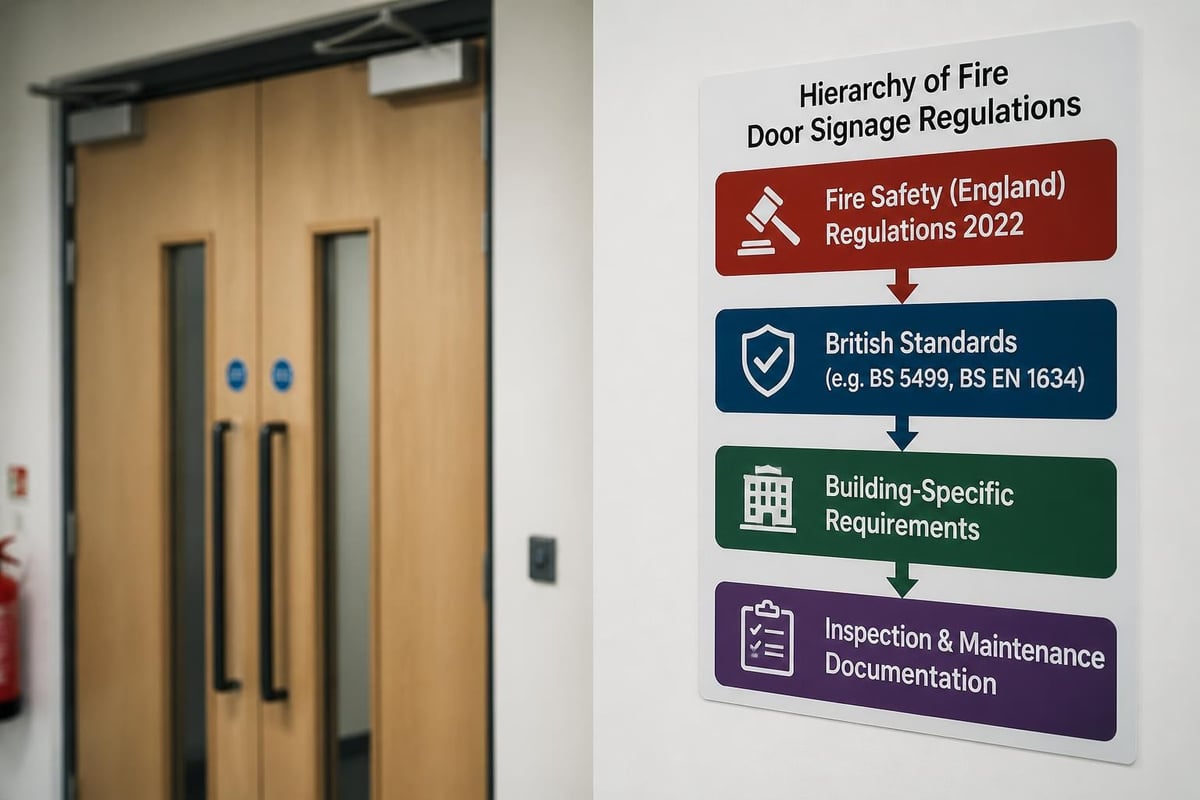
Fire safety legislation in the UK has evolved significantly following the 2017 Grenfell Tower tragedy. The Fire Safety (England) Regulations 2022 introduced stricter requirements for fire door identification and maintenance, particularly in residential buildings. These regulations mandate clear labelling of fire doors and require responsible persons to ensure signage remains visible and legible throughout the door's service life.
UK Standards and Guidance
British Standards provide detailed specifications for fire door assemblies and their associated signage. BS 5499-10:2014 covers safety signs, including the design and application of fire door signage in commercial and residential settings.
The regulations distinguish between different categories of fire door signage:
- Identification labels confirming the door's fire rating and certification
- Instructional signs directing occupants to keep doors closed
- Prohibition signs warning against propping doors open
- Tactile and visual signs meeting accessibility requirements
International Standards
In the United States, NFPA 80 (Standard for Fire Doors and Other Opening Protectives) establishes requirements for fire door signage materials and placement. The NFPA research into sign materials demonstrates how different signage affects door performance during fire testing, providing evidence-based guidance for specifiers.
Recent NFPA 80 committee reports clarify that signage must not impair the fire door's function or compromise its fire rating. This consideration influences material selection, size limitations, and attachment methods.
Essential Signage Types and Messaging
Effective fire door signage communicates multiple messages to different audiences. Building occupants need clear operational instructions, whilst maintenance personnel require technical information about the door assembly.
Standard Operational Signage
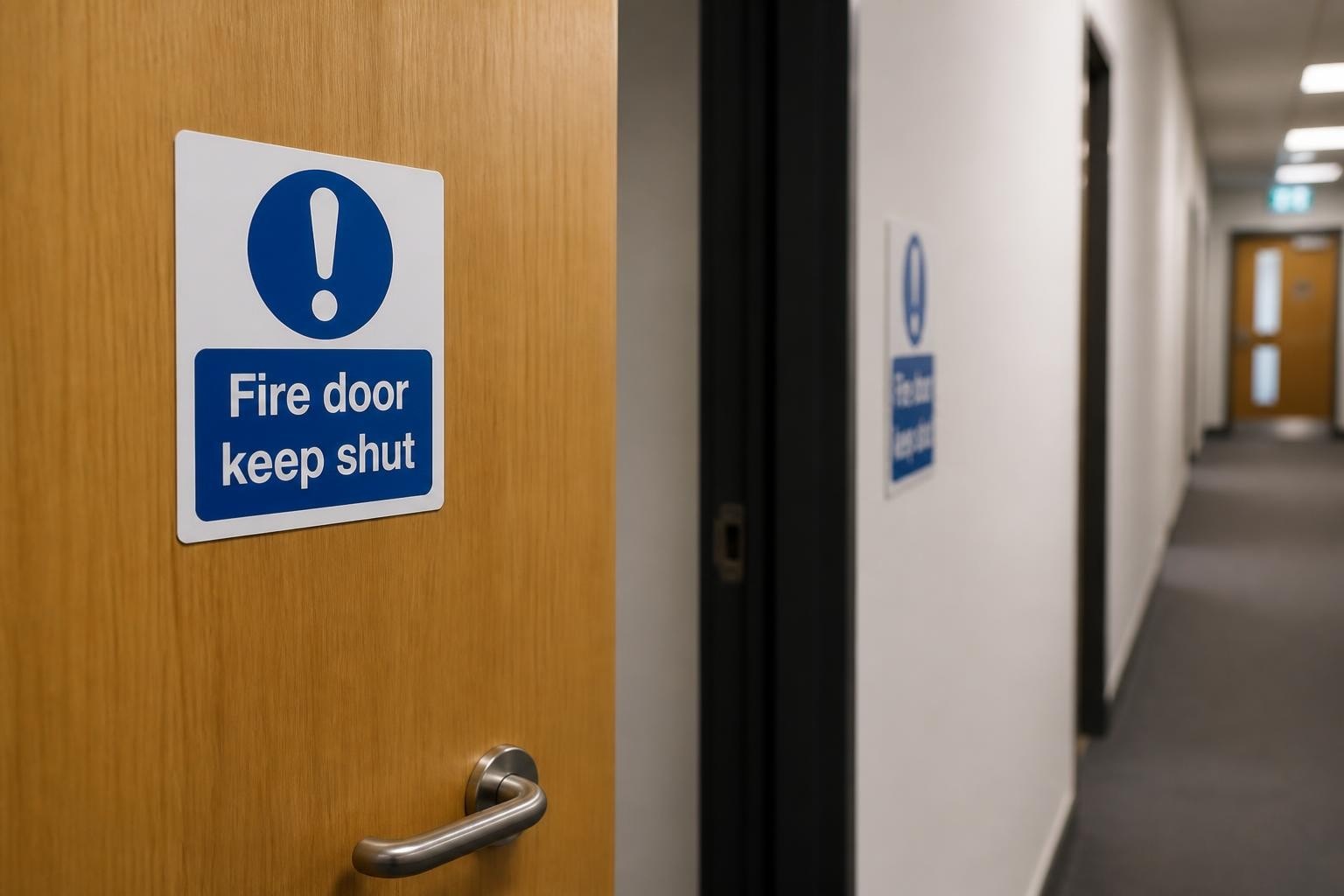
The most common fire door sign features the instruction "Fire Door Keep Shut" or similar wording. The VA Signage Design Manual provides standardised messaging that has become widely adopted across various sectors. This clear, direct language eliminates ambiguity about the door's required state.
Alternative messages include:
- "Fire Door Keep Locked Shut"
- "Automatic Fire Door Keep Clear"
- "Fire Door Do Not Obstruct"
- "Fire Exit Keep Clear"
Each message serves a specific purpose depending on the door's function and the building's fire strategy. Self-closing doors typically require "Keep Shut" signage, whilst doors with automatic closing devices may use different wording.
| Sign Type | Primary Message | Typical Placement | Regulatory Basis |
|---|---|---|---|
| Instruction | Fire Door Keep Shut | Face of door | Fire Safety Regulations |
| Prohibition | Do Not Prop Open | Door frame/wall | BS 5499 |
| Warning | Fire Door Keep Clear | Approach zone | Building regulations |
| Information | Fire rating/certification | Edge of door | NFPA 80 / BS standards |
Certification and Rating Labels
Beyond operational signage, fire doors must display certification labels confirming their fire resistance rating. These labels typically appear on the door edge or frame and include:
- Fire resistance duration (FD30, FD60, FD90, etc.)
- Certification body details
- Installation date
- Door manufacturer information
These technical labels differ from operational fire door signage but work together to ensure complete compliance and traceability throughout the door's lifecycle.
Material Specifications and Performance Requirements
The materials used for fire door signage directly affect both the door's fire performance and the sign's longevity. Research demonstrates that certain materials can compromise a fire door's integrity when exposed to heat.
Approved Materials
Fire door signage must withstand the conditions present during normal use and potential fire exposure. Acceptable materials include:
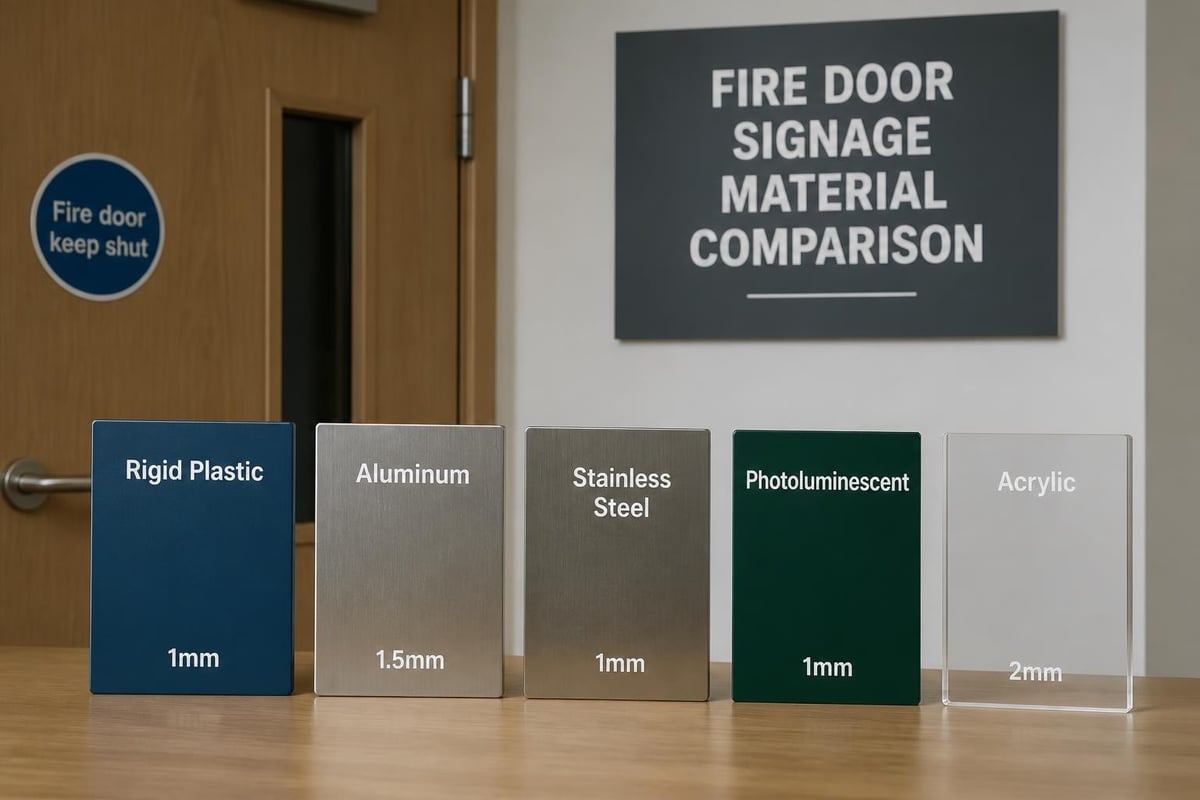
- Rigid plastics (polycarbonate, acrylic) with appropriate thickness
- Aluminium composite panels for high-durability applications
- Self-adhesive vinyl for temporary or lightweight requirements
- Photoluminescent materials for visibility during power failures
The NFPA research findings indicate that sign size and material thickness influence fire door performance. Large vinyl signs or excessive labelling can affect door behaviour during fire testing, potentially leading to certification issues.
Size and Thickness Limitations
Industry guidance suggests limiting individual signs to no more than 10% of the door face area. Multiple small signs distributed across the door generally perform better than one large sign.
Material thickness recommendations:
- Self-adhesive vinyl: 0.10-0.15mm maximum
- Rigid plastic signs: 1.0-3.0mm thickness range
- Metal signs: 0.5-1.5mm depending on substrate
- Photoluminescent signs: manufacturer specifications
Accessibility and ADA Compliance
In facilities serving the public or employees, fire door signage must meet accessibility standards ensuring persons with disabilities can navigate safely during emergencies. The 2010 ADA Standards for Accessible Design establish specific requirements for tactile and visual characteristics.
Tactile Requirements
Exit doors and doors leading to fire stairs require raised character signage and Grade 2 Braille. These tactile elements must meet precise specifications:
- Characters raised 0.8mm minimum above background
- Sans serif uppercase lettering
- Character height between 16mm and 51mm
- High contrast between text and background (70% minimum)
Tactile fire door signage must be positioned on the wall adjacent to the latch side of the door, not on the door itself, at a height between 1220mm and 1525mm above the finished floor.
Visual Contrast Standards
Fire door signage must provide sufficient visual contrast for persons with low vision. This requirement affects colour selection, finish specifications, and lighting considerations:
- Non-glare finish to prevent reflection interference
- Minimum 70% contrast ratio between characters and background
- Supplementary illumination or photoluminescent materials in low-light areas
- Pictogram options for multilingual environments
Placement and Installation Best Practices
Correct positioning ensures fire door signage achieves its intended purpose without interfering with door operation or building aesthetics. The NBS guidance on fire doors provides practical recommendations for sign placement in UK buildings.
Optimal Positioning Strategies
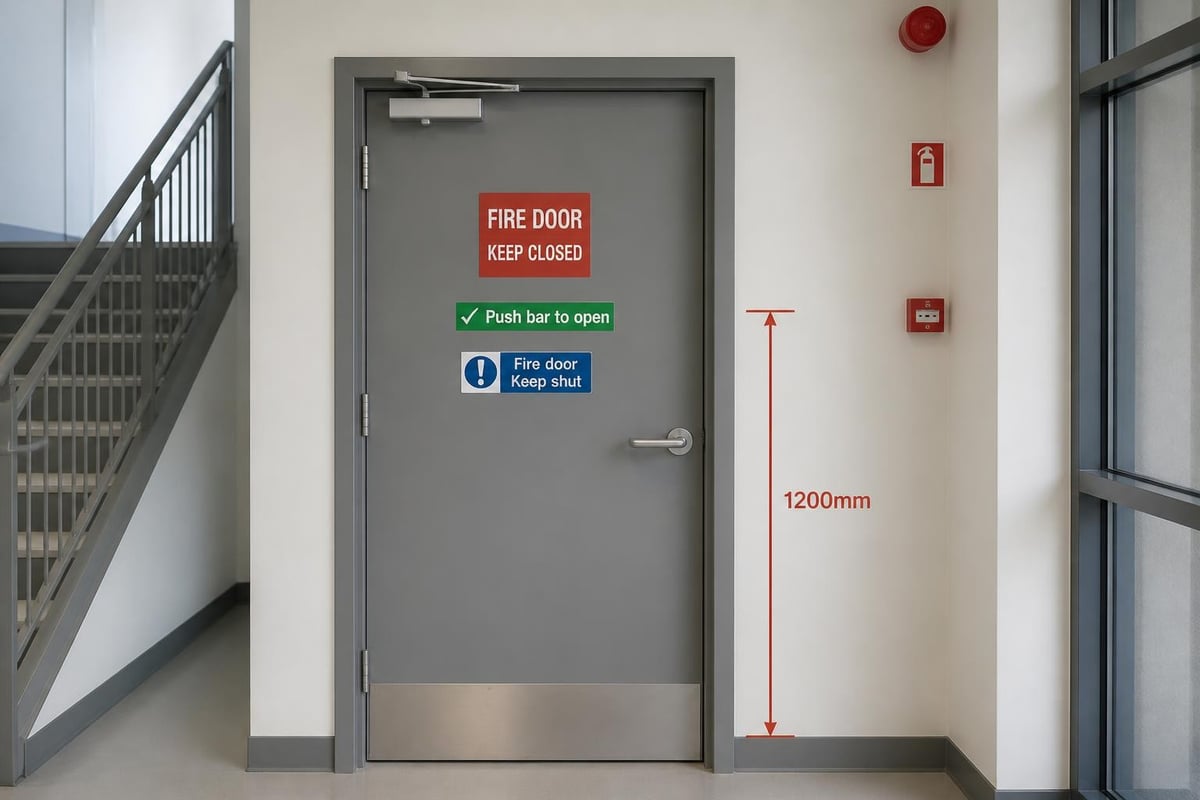
Fire door signage typically appears on the pull side of the door at eye level (approximately 1500mm above finished floor level). This positioning maximises visibility for approaching occupants whilst maintaining clear sightlines.
Installation considerations include:
- Avoiding interference with door hardware (handles, closers, vision panels)
- Ensuring visibility from primary approach directions
- Maintaining clearance from door edges (minimum 100mm recommended)
- Accounting for door swing and adjacent wall space
Multiple Sign Applications
Complex buildings often require multiple fire door signage elements on a single door assembly:
- Primary operational sign (Fire Door Keep Shut)
- Prohibition sign (Do Not Prop Open)
- Certification label (fire rating information)
- Accessibility signage (where required)
When multiple signs are necessary, coordinate their placement to avoid visual clutter whilst ensuring each message remains clearly readable.
Installation Methods and Attachment Systems
How fire door signage attaches to the door assembly affects both aesthetics and long-term performance. Different installation methods suit different environments and door types.
Adhesive Applications
Self-adhesive fire door signage offers quick installation and clean aesthetics. Modern acrylic adhesives provide excellent bond strength whilst allowing future removal without damaging door surfaces.
Application best practices include:
- Clean and degrease the mounting surface thoroughly
- Apply at room temperature (minimum 15°C)
- Use firm, even pressure to eliminate air bubbles
- Allow 24-hour cure time before subjecting to heavy use
Mechanical Fixing
In high-traffic areas or vandalism-prone locations, mechanically fixed signs provide superior durability. However, penetrating fire door surfaces requires careful consideration of fire rating implications.
The Firecode UK guidance on hardware notes that any penetrations through fire-rated door leaves must not compromise the assembly's fire resistance. When mechanical fixing is necessary, use manufacturer-approved methods and seal penetrations appropriately.
| Installation Method | Advantages | Disadvantages | Best Applications |
|---|---|---|---|
| Self-adhesive vinyl | Quick installation, no door damage | Lower durability, temperature sensitive | Office environments, low-traffic |
| Adhesive rigid sign | Professional appearance, durable | Difficult removal, surface preparation critical | Commercial buildings, medium-traffic |
| Screw-fixed | Maximum security, vandal-resistant | Door penetration concerns, permanent | Industrial, high-risk areas |
| Magnetic attachment | Removable, no damage | Limited to metal doors only | Temporary installations, testing |
Inspection and Maintenance Protocols
Fire door signage requires regular inspection to ensure continued legibility and compliance. The British Fire Consortium inspection checklist includes specific sign-related checkpoints as part of comprehensive fire door assessment.
Inspection Frequency
UK regulations require periodic inspection of fire doors and their associated signage. Recommended frequencies vary by building type:
- High-risk residential buildings: Monthly visual checks, quarterly detailed inspections
- Commercial premises: Quarterly visual checks, annual detailed inspections
- Industrial facilities: Monthly checks in high-traffic zones, bi-annual comprehensive reviews
- Healthcare and education: Term-time monthly checks, annual comprehensive surveys
During inspections, verify that fire door signage remains:
- Securely attached without peeling or damage
- Clearly legible with no fading or obscuration
- Positioned correctly and visible from approach directions
- Appropriate for the door's current function and fire strategy
Common Maintenance Issues
Fire door signage deteriorates through various mechanisms. Early identification and remediation prevent compliance failures during formal inspections.
Typical problems include:
- Adhesive failure causing sign detachment or curling edges
- UV degradation leading to colour fading and reduced legibility
- Physical damage from impacts, vandalism, or cleaning activities
- Paint overspray during decorating works obscuring messages
- Obsolete messaging following building alterations or use changes
Replacement schedules should account for environmental factors such as direct sunlight exposure, cleaning chemical use, and traffic levels. Proactive replacement before complete failure maintains continuous compliance.
Sector-Specific Requirements
Different building types face unique fire door signage challenges based on occupancy characteristics, regulatory frameworks, and operational demands.
Healthcare Facilities
Hospitals and care homes require fire door signage that balances safety requirements with patient dignity and wayfinding needs. Dementia-friendly environments may incorporate colour-coded systems or pictorial signage alongside standard text messages.
Healthcare-specific considerations include:
- Infection control compatible materials (cleanable, non-porous)
- Reduced visual clutter to minimise patient confusion
- Integration with wayfinding and room identification systems
- Compatibility with medical equipment and bed movements
Educational Settings
Schools and universities present unique fire safety challenges due to high occupancy levels and diverse user groups. Fire door signage in educational buildings must withstand heavy use whilst remaining clearly understood by children and visitors.
Educational facilities benefit from:
- Vandal-resistant materials and installation methods
- Pictogram-based messaging for younger children
- Multi-language signage in diverse communities
- Regular inspection programmes aligned with term schedules
Residential Buildings
Following the introduction of enhanced fire safety regulations for residential buildings, particularly those above 11 metres, fire door signage requirements have intensified. The Fire Safety (England) Regulations 2022 mandate comprehensive fire door identification in residential settings.
Residential fire door signage must balance safety requirements with aesthetic considerations important to building residents. Consultation with residents' groups can help develop signage solutions that achieve compliance whilst respecting the domestic environment.
Design Considerations for Maximum Effectiveness
Effective fire door signage communicates essential safety information quickly and unambiguously. Design choices significantly impact message comprehension and compliance.
Colour Psychology and Standards
Safety signage colour schemes follow internationally recognised standards that leverage colour psychology for rapid message recognition:
- Red indicates prohibition (Do Not Prop Open)
- Blue denotes mandatory actions (Fire Door Must Remain Closed)
- Green shows safe conditions or directions (Fire Exit)
- Yellow warns of hazards or cautions
Fire door signage typically employs red or blue colour schemes depending on whether the message prohibits an action or mandates a behaviour.
Typography and Legibility
Character selection and sizing directly influence sign readability. Sans serif typefaces provide optimal legibility at distance and under stress conditions.
Minimum character heights vary with viewing distance:
- 25mm characters: readable to 5 metres
- 50mm characters: readable to 10 metres
- 75mm characters: readable to 15 metres
- 100mm characters: readable to 20 metres
Consider the typical approach distance to each fire door when specifying sign dimensions. Corridor doors may require smaller signs than doors accessed across large open-plan areas.
Integration with Building Management Systems
Modern building management increasingly incorporates fire door monitoring technology. Electronic systems can detect when fire doors remain open beyond acceptable time periods and trigger alerts.
When implementing fire door monitoring systems, coordinate fire door signage with electronic indicators:
- Position signage to remain visible alongside monitoring sensors
- Ensure warning devices don't obscure operational signs
- Include signage explaining automatic closing systems where installed
- Coordinate visual elements for aesthetic consistency
Advanced systems may include digital signage elements that change messaging based on fire alarm activation or other building conditions. Such systems require careful specification to ensure they enhance rather than complicate fire safety during emergencies.
Quality Assurance and Product Selection
Selecting appropriate fire door signage requires evaluating supplier credentials, product certifications, and performance specifications. The market includes both compliant and substandard products, making informed selection critical.
Certification and Standards Compliance
Verify that fire door signage products meet relevant British and international standards:
- BS 5499 compliance for sign design and symbology
- Declared fire performance characteristics where applicable
- Material safety data confirming non-toxic composition
- Photometric testing results for photoluminescent products
Reputable suppliers provide comprehensive technical documentation supporting compliance claims. Request certification documentation before specifying products for large installations.
Supplier Evaluation Criteria
When selecting a fire door signage supplier, consider:
- Product range breadth (standard and bespoke options)
- Material quality and durability specifications
- Technical support and specification assistance
- Lead times and minimum order quantities
- Compliance documentation provision
Working with specialist safety signage suppliers ensures access to current regulatory knowledge and products designed specifically for fire safety applications rather than general signage purposes.
Effective fire door signage forms an essential component of comprehensive fire safety strategies, ensuring these critical protective elements function as intended during emergencies. By understanding regulatory requirements, selecting appropriate materials, and implementing robust inspection protocols, building owners and facility managers maintain compliance whilst protecting occupants. SafetySignsForSale provides a comprehensive range of compliant fire door signage solutions, from standard operational signs to bespoke installations, supported by expert technical guidance to help you meet your specific safety requirements across all building types and applications.