



Hazard Signs: Essential Safety Communication Guide
Workplace safety relies on clear, immediate communication of potential dangers. Hazard signs serve as the first line of defence against accidents, injuries, and fatalities across industrial, commercial, and public environments. These visual warning systems transcend language barriers and provide instant recognition of threats ranging from electrical hazards to chemical exposure. Understanding the proper selection, placement, and maintenance of hazard signs is essential for any organisation committed to protecting its workforce and complying with regulatory requirements.
Understanding the Core Purpose of Hazard Signs
Hazard signs fulfil a critical role in occupational health and safety by alerting workers and visitors to potential dangers before they encounter them. Unlike mandatory signs that instruct specific actions or prohibitory signs that forbid certain behaviours, hazard signs specifically identify conditions or substances that could cause harm.
The effectiveness of these visual warnings depends on several factors working in harmony. Recognition speed matters enormously in emergency situations. Standardised symbols and colour schemes ensure that anyone entering a hazardous area immediately understands the nature of the threat, regardless of their native language or reading ability.
The Psychology Behind Effective Warning Systems
Research into sign comprehension reveals fascinating insights about how humans process safety information. A 2023 study published in Scientific Reports examined how socio-demographic factors and cognitive features influence safety sign understanding. The findings demonstrate that whilst standardised pictograms improve universal comprehension, context and familiarity significantly affect response times and appropriate behavioural reactions.
Key comprehension factors include:
- Prior exposure to similar warning symbols
- Cultural context and workplace training
- Visual clarity and symbol complexity
- Placement within the natural sight line
- Contrast against surrounding environment
Facilities managers must consider these variables when implementing hazard warning programmes. The most carefully selected signs prove ineffective if positioned where workers won't naturally see them or if the symbols chosen don't resonate with the workforce's experience and training background.
Classification Systems for Hazard Signs
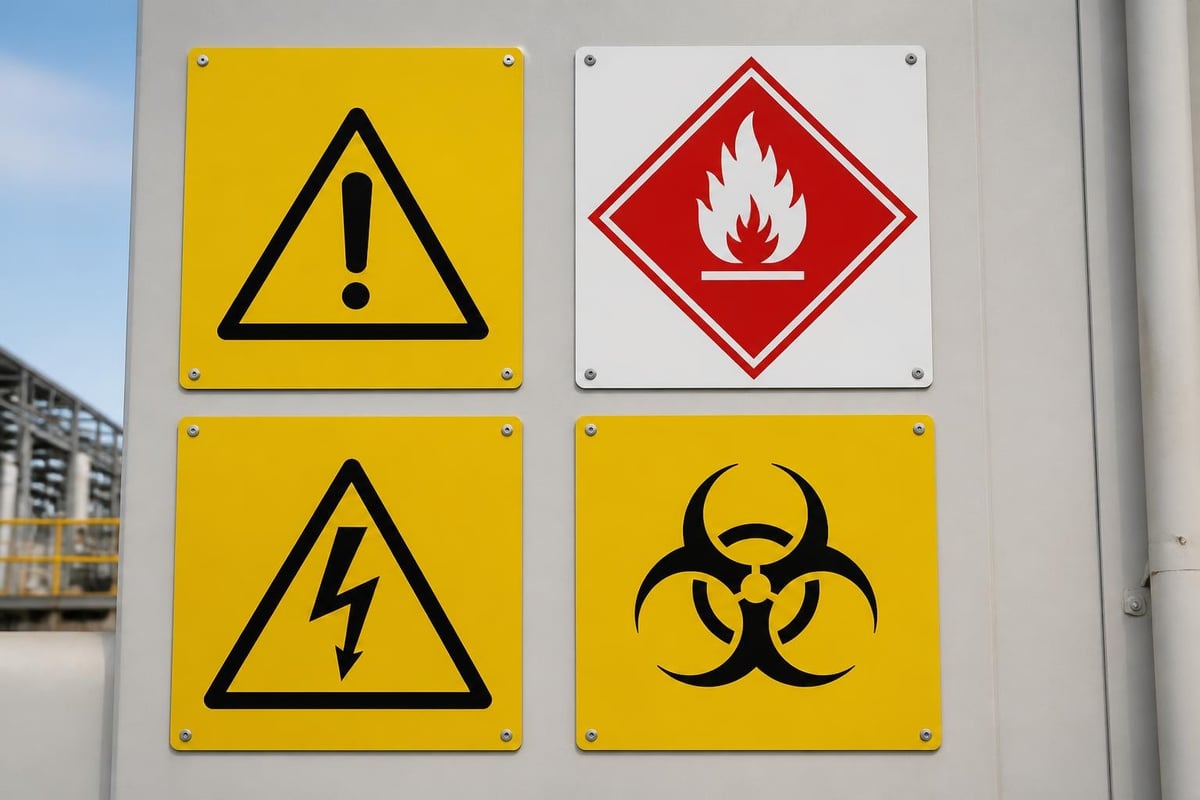
Modern safety management employs several classification approaches for hazard signs, each serving distinct purposes within comprehensive safety programmes. Understanding these categories helps organisations select appropriate warnings for specific threats.
| Category | Primary Colour | Symbol Shape | Typical Applications |
|---|---|---|---|
| General Warning | Yellow/Amber | Triangle | Slips, trips, machinery |
| Chemical Hazard | Orange | Diamond | Flammable, toxic, corrosive substances |
| Electrical Warning | Yellow | Triangle/Lightning | High voltage, live circuits |
| Biological Hazard | Orange/Red | Trefoil | Infectious materials, biohazards |
| Radiation Warning | Yellow/Magenta | Trefoil | Ionising radiation sources |
Industry-Specific Hazard Applications
Different sectors face unique risks requiring specialised hazard communication. Manufacturing facilities prioritise machinery hazards and chemical exposure warnings. Healthcare environments emphasise biological hazards and radiation warnings. Construction sites focus on falling objects, excavation dangers, and equipment operation zones.
The warning signs available through professional suppliers should reflect the specific risk profile of each industry. Generic warnings rarely provide the precise information workers need to make informed safety decisions.
Road and traffic applications introduce another dimension of hazard signage. The Manual on Uniform Traffic Control Devices establishes comprehensive standards for roadway warning signs, including temporary work zone hazards. Whilst primarily focused on public roads, these standards influence road signs used within private industrial sites and warehouse facilities.
Regulatory Compliance and Standards
Hazard signs must comply with established national and international standards to ensure consistency and legal compliance. South African regulations align with international best practices whilst addressing local industry requirements.
The Occupational Health and Safety Act mandates proper hazard identification and communication throughout workplaces. Employers bear legal responsibility for ensuring appropriate warnings are displayed wherever hazards exist that cannot be immediately eliminated through engineering controls or substitution.
International Standards Harmonisation
ISO 7010 provides globally recognised safety sign standards, promoting universal comprehension across borders. These standardised symbols appear in modern hazard signs worldwide, reducing confusion in multinational operations and improving safety for international workers.
Core ISO 7010 requirements include:
- Specific colour combinations for different warning types
- Standardised geometric shapes conveying message urgency
- Simplified pictograms for immediate recognition
- Minimum size specifications based on viewing distance
- Contrast ratios ensuring visibility in various lighting conditions
Fire safety signage follows additional specialised standards. The NFPA standards provide authoritative guidance on emergency egress, fire equipment location, and hazard warnings related to fire protection systems. These requirements often overlap with general hazard signage when addressing flammable materials or fire-prone areas.
Material Selection and Durability Considerations
The physical construction of hazard signs directly impacts their effectiveness and longevity. Environmental conditions, exposure to chemicals, and expected service life all influence material choices.
Comparing Common Sign Materials
| Material | Durability | Weather Resistance | Chemical Resistance | Typical Lifespan | Best Applications |
|---|---|---|---|---|---|
| Aluminium | Excellent | Excellent | Good | 10+ years | Outdoor, industrial |
| Rigid Plastic | Very Good | Very Good | Excellent | 7-10 years | Indoor/outdoor, chemical areas |
| Self-Adhesive Vinyl | Good | Good | Fair | 3-5 years | Indoor, temporary warnings |
| Photoluminescent | Excellent | Good | Good | 10+ years | Low-light, emergency egress |
Photoluminescent signs deserve special consideration for hazard warnings in areas where power failures could compromise safety. These materials absorb ambient light and continue glowing for hours during darkness, ensuring critical warnings remain visible during emergencies.
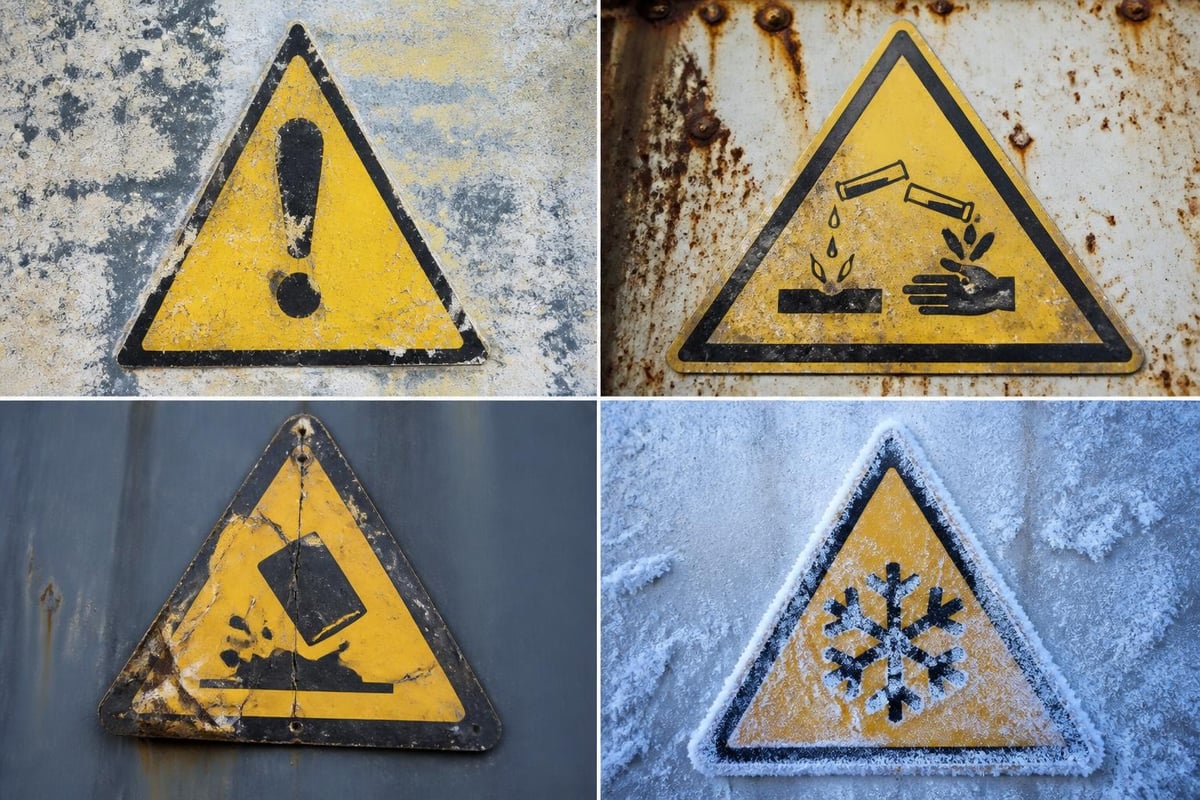
Outdoor installations face particular challenges. UV degradation fades colours and weakens materials over time. Temperature fluctuations cause expansion and contraction that can crack inferior products. Moisture infiltration leads to delamination and rust. Selecting appropriate materials prevents premature failure and maintains warning effectiveness.
Strategic Placement and Visibility Optimisation
Even perfectly designed hazard signs fail if positioned incorrectly. Strategic placement considers human behaviour, traffic patterns, and environmental factors to maximise visibility and comprehension.
The Sight-Line Principle
Workers naturally focus attention along predictable sight lines based on their tasks and movement patterns. Hazard signs must intersect these sight lines at distances allowing adequate reaction time. A warning about overhead hazards proves useless if mounted at ground level where workers focused on their immediate path won't see it.
Placement best practices:
- Mount signs at eye level (1.5-1.8 metres) when possible
- Position warnings before workers enter hazardous zones
- Ensure adequate lighting, natural or artificial
- Remove visual clutter that competes for attention
- Use multiple signs for large or complex hazard areas
- Consider approach angles from all directions
Manufacturing facilities often require hazard signs at multiple points around machinery or chemical storage areas. Workers approaching from different directions must receive equal warning, regardless of their entry point.
Integration with Comprehensive Safety Programmes
Hazard signs represent just one component of effective safety management. Their impact multiplies when integrated with training, personal protective equipment (PPE), and engineering controls.
New employee orientation should include specific training on hazard sign recognition and appropriate responses. Workers must understand not only what each symbol means but also what actions to take upon seeing specific warnings. A flammable materials warning should trigger awareness of ignition sources, whilst a biological hazard symbol prompts consideration of contamination protocols.
Complementary Safety Systems
The relationship between hazard signs and PPE requirements deserves particular attention. Many hazardous areas require specific protective equipment, and signs should reflect these requirements. A comprehensive approach places hazard warnings alongside mandatory PPE signs, creating clear associations between threats and protection measures.
First aid equipment location signs work in conjunction with hazard warnings. Workers encountering chemical hazards need immediate knowledge of eyewash products or emergency showers nearby. This layered approach to safety communication saves precious seconds during emergencies.
Fire safety integration proves equally critical. Fire fighting signs must coordinate with hazard warnings about flammable materials or fire-prone processes, whilst fire equipment placement considers hazard zones and evacuation routes.
Chemical Hazard Communication Requirements
Chemical hazards present unique challenges requiring specialised signage approaches beyond general warning triangles. The Globally Harmonised System (GHS) establishes standardised hazard communication for chemical substances, mandating specific pictograms and warning statements.
Labels on chemical containers must display appropriate hazard pictograms indicating physical hazards (explosives, flammables, oxidisers), health hazards (toxicity, carcinogenicity, respiratory sensitisation), and environmental hazards. The EPA Label Review Manual provides detailed requirements for pesticide and chemical labeling, including hazard and precautionary statements that extend beyond workplace regulations.
Facility-Level Chemical Warnings
Beyond individual container labels, facilities storing or using hazardous chemicals must post area-level warnings alerting everyone entering that chemicals present specific risks. These signs typically combine GHS pictograms with supplementary information about the nature of chemicals present and required precautions.
Essential chemical hazard sign elements:
- Primary hazard classification (flammable, corrosive, toxic)
- Specific chemical families or compounds present
- Required PPE for entry
- Emergency contact information
- First aid and spill response guidance
Storage areas for incompatible chemicals require particularly clear hazard communication. Signs must not only warn of individual chemical hazards but also alert workers to segregation requirements preventing dangerous reactions.
Maintenance and Inspection Protocols
Hazard signs deteriorate over time, and damaged or faded warnings compromise safety. Systematic inspection and maintenance programmes ensure signs remain effective throughout their service life.
Establishing Inspection Schedules
| Environment | Inspection Frequency | Priority Checks | Replacement Triggers |
|---|---|---|---|
| Indoor, controlled | Quarterly | Adhesion, legibility | Fading, damage, outdated symbols |
| Outdoor, mild climate | Monthly | Weather damage, visibility | 20% colour loss, cracks, delamination |
| Outdoor, harsh/industrial | Weekly | All factors | Any compromise to recognition |
| High-traffic areas | Monthly | Physical damage, obstruction | Impact damage, graffiti, obscured view |
Documentation of inspections provides evidence of due diligence whilst identifying patterns requiring corrective action. Certain locations might consistently damage signs, suggesting either material upgrades or additional protective measures.
Cleaning protocols matter more than many organisations realise. Dust, grime, and industrial residue reduce contrast and obscure details. Regular cleaning with appropriate methods maintains visibility without damaging sign surfaces or graphics.
Emerging Technologies and Future Developments
Digital and smart signage technologies are beginning to supplement traditional static hazard signs in certain applications. LED-based warning systems can flash or change messages based on conditions, drawing attention more effectively than passive signs during critical moments.
Real-time hazard monitoring systems can activate digital warnings only when actual hazards exist. A confined space might display different warnings depending on current atmospheric testing results, or a machinery area might intensify warnings when equipment operates versus idle states.
However, these technologies complement rather than replace traditional hazard signs. Power failures, system malfunctions, and maintenance requirements make complete reliance on electronic warnings inadvisable. The most robust safety programmes layer traditional and advanced warning systems.
Augmented Reality and Safety Training
AR applications are transforming how organisations train workers to recognise and respond to hazard signs. Virtual overlays can simulate hazardous conditions and demonstrate proper responses to various warnings without exposing trainees to actual risks.
This technology particularly benefits industries with infrequent but severe hazards. Workers might encounter certain warnings rarely during normal operations, but AR training maintains familiarity and appropriate response patterns.
Cost-Benefit Analysis of Quality Hazard Signage
Budget constraints tempt some organisations toward inexpensive, low-quality hazard signs. This short-term thinking inevitably costs more through premature replacement, potential accidents, and regulatory penalties.
Premium materials and manufacturing processes add upfront cost but deliver substantially longer service life and better performance. A quality aluminium sign lasting 15 years costs far less annualised than replacing cheap vinyl signs every 2-3 years.
The true cost calculation must include inspection labour, installation time, and potential production disruptions during replacement. Facilities replacing signs frequently divert maintenance resources from other critical tasks whilst risking periods where warnings are missing or compromised.
Quality indicators in hazard signs:
- UV-stable inks maintaining colour intensity
- Robust substrate materials resisting environmental stress
- Professional-grade adhesives for reliable mounting
- Rounded or reinforced corners preventing damage initiation
- Compliance certifications from recognised standards bodies
Most importantly, the cost of a prevented accident vastly exceeds any signage investment. A single serious injury generates medical expenses, lost productivity, increased insurance premiums, and potential litigation costs dwarfing even comprehensive sign programmes.
Customisation and Site-Specific Requirements
Whilst standardised hazard signs provide universal communication value, certain situations require customised warnings addressing unique site-specific risks. Unusual machinery configurations, proprietary processes, or uncommon chemical combinations might not have standard symbols.
Custom hazard signs should maintain recognisable elements from standard designs whilst adding specific details. The familiar yellow triangle with black border immediately signals "warning" even when the interior pictogram depicts a unique hazard specific to the facility.
Professional sign suppliers offer customisation services balancing specificity with comprehension. The goal remains instant recognition and appropriate response, not artistic originality or overly complex messaging.
Multi-hazard areas present particular challenges. Some locations contain several distinct threats requiring communication. Solutions include composite signs displaying multiple pictograms or sequential sign placement addressing each hazard separately. The approach depends on space constraints and the relationship between hazards.
Effective hazard signs form an indispensable element of comprehensive workplace safety programmes, providing immediate visual communication that protects lives and prevents injuries. By selecting appropriate materials, ensuring regulatory compliance, positioning signs strategically, and maintaining them properly, organisations create safer environments for everyone. SafetySignsForSale offers an extensive range of compliant hazard signs alongside complementary safety equipment, PPE, and first aid supplies, providing everything needed to meet your organisation's safety requirements across all industries and applications.