



Sign for Pedestrian Crossing: Essential Safety Guide
Pedestrian crossings represent critical infrastructure where vehicle and foot traffic intersect, making proper signage essential for preventing accidents and ensuring safe passage. Every year, thousands of pedestrian casualties occur at poorly marked crossing points, emphasising the vital importance of installing appropriate warning and informational signage. A well-designed sign for pedestrian crossing serves multiple functions: alerting drivers to reduce speed, informing pedestrians where it's safe to cross, and creating predictable traffic patterns that protect vulnerable road users. Whether you're managing a commercial property, educational facility, or public roadway, understanding the specifications and requirements for pedestrian crossing signage ensures compliance with safety regulations whilst protecting the community.
Understanding Pedestrian Crossing Sign Categories
The sign for pedestrian crossing encompasses several distinct categories, each serving specific purposes within the road safety ecosystem. Regulatory signs mandate specific behaviours, such as yielding to pedestrians or stopping at marked crossings. Warning signs alert drivers to upcoming pedestrian activity, particularly in areas with high foot traffic or reduced visibility. Informational signs guide pedestrians to designated crossing points and provide instructions for safe passage.
Different crossing types require corresponding signage approaches. Zebra crossings typically feature warning triangles displaying a pedestrian symbol, positioned in advance of the crossing point. Signal-controlled crossings incorporate illuminated signs indicating when it's safe to cross, often accompanied by audible signals for visually impaired users. School zones demand enhanced signage with fluorescent yellow-green backgrounds to maximise visibility during peak pedestrian hours.
Regulatory Standards and Compliance Requirements
Compliance with established standards ensures pedestrian crossing signs deliver consistent, recognisable messaging across jurisdictions. The MUTCD 11th Edition provides comprehensive specifications for sign dimensions, colours, symbology, and placement requirements used throughout the United States. These standards dictate that pedestrian crossing warning signs must feature a walking person symbol in black on a fluorescent yellow-green background, ensuring maximum daytime and night-time visibility.
International variations exist, with different countries adopting region-specific approaches. The UK Department for Transport guidance illustrates distinct signage conventions for zebra crossings, pelican crossings, and puffin crossings used across Britain. Understanding these variations proves essential for organisations operating across multiple jurisdictions or procuring signs from international suppliers.
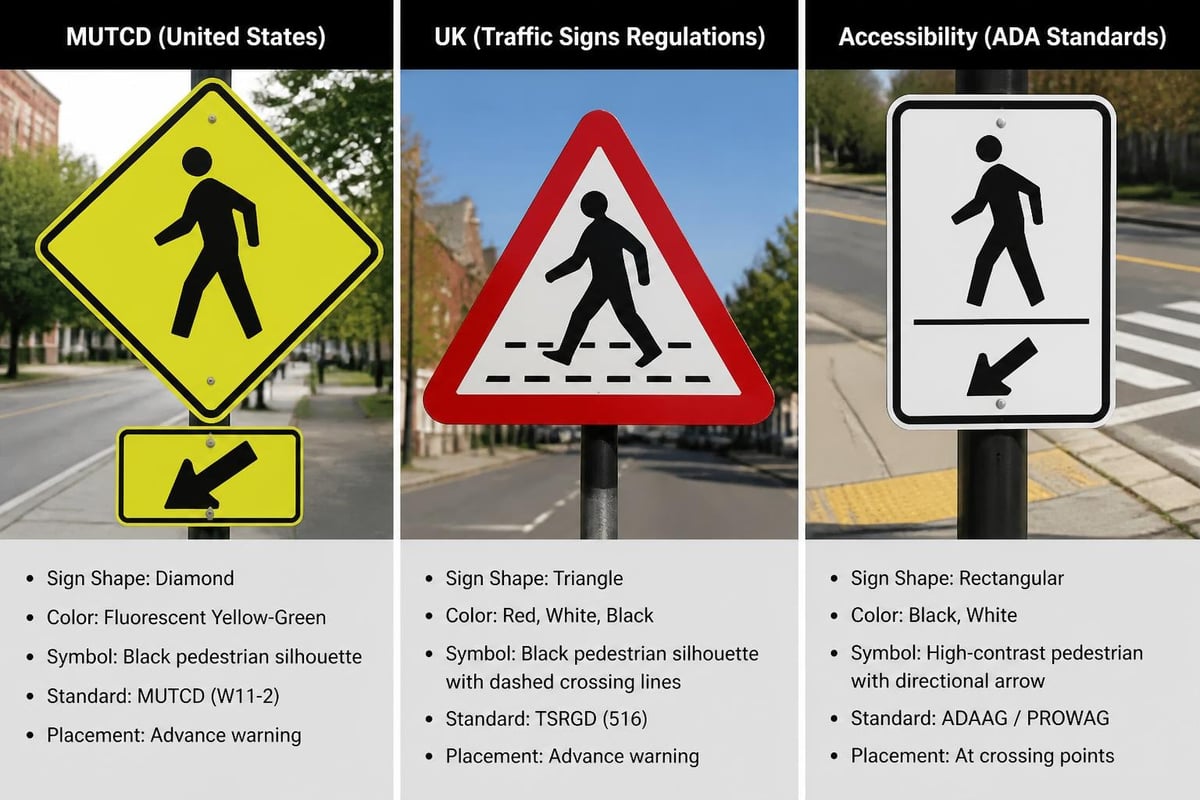
Material specifications significantly impact sign longevity and effectiveness. High-intensity prismatic sheeting provides superior retroreflectivity, ensuring signs remain visible during night-time conditions and adverse weather. Aluminium substrates offer excellent durability against environmental degradation, whilst UV-resistant coatings prevent fading under prolonged sun exposure. The comprehensive road signs collection includes pedestrian crossing signage manufactured to international standards.
Strategic Placement and Visibility Considerations
Proper placement transforms a sign for pedestrian crossing from a regulatory requirement into an effective safety intervention. Advance warning signs should be positioned at distances calculated based on road speed limits, providing adequate reaction time for drivers. On roads with speed limits of 50 km/h, signs typically appear 50-75 metres before the crossing point. Higher-speed environments demand proportionally greater advance warning distances.
Height and lateral positioning directly influence sign visibility and effectiveness. Signs mounted too high may fall outside drivers' primary visual scan patterns, whilst those placed too low risk obstruction by parked vehicles or vegetation. Standard mounting height ranges between 1.5 and 2.1 metres, measured from the bottom edge of the sign to the road surface.
The United States Access Board guidelines establish specific requirements for accessible pedestrian signals and crossing infrastructure, ensuring individuals with disabilities can safely navigate crossing points. These provisions mandate tactile pushbuttons, audible crossing indicators, and appropriate signal timing to accommodate varying pedestrian speeds.
Environmental and Lighting Factors
Environmental conditions substantially affect sign visibility and longevity. Coastal areas with salt-laden air require enhanced corrosion protection, whilst regions experiencing extreme temperature fluctuations demand materials with superior expansion and contraction characteristics. Signs positioned in areas with direct sunlight throughout the day benefit from additional UV protection to prevent colour degradation.
Artificial lighting integration enhances pedestrian crossing safety during hours of darkness. Illuminated signs draw driver attention more effectively than passive retroreflective signs alone, particularly in urban environments with competing visual stimuli. LED technology provides energy-efficient illumination with minimal maintenance requirements, reducing long-term operational costs.
| Lighting Type | Visibility Range | Energy Consumption | Maintenance Frequency |
|---|---|---|---|
| Solar-powered LED | Excellent (300m+) | Zero grid power | Annual inspection |
| Mains-powered LED | Excellent (300m+) | Low (15-25W) | Bi-annual |
| Illuminated cabinet | Good (200m) | Moderate (40-60W) | Quarterly |
| Retroreflective only | Moderate (150m) | None | Annual replacement |
Seasonal vegetation growth patterns require consideration during initial placement planning. Trees and shrubs that appear minimal during winter months may substantially obscure signage during spring and summer growth periods. Regular vegetation management programmes ensure year-round sign visibility.
Crossing Design Integration and Complete Systems
A sign for pedestrian crossing functions most effectively as part of a comprehensive crossing design system rather than as an isolated element. Coordinated infrastructure elements create layered protection for pedestrians whilst providing clear guidance for all road users. Road surface treatments, including high-visibility crosswalk markings and textured paving, reinforce the visual messages conveyed by vertical signage.
The Transport for London Streetscape Guidance demonstrates how major urban centres integrate pedestrian crossing signage with broader streetscape design principles. This approach balances safety requirements with aesthetic considerations, creating cohesive public realm environments that prioritise pedestrian safety without compromising visual harmony.
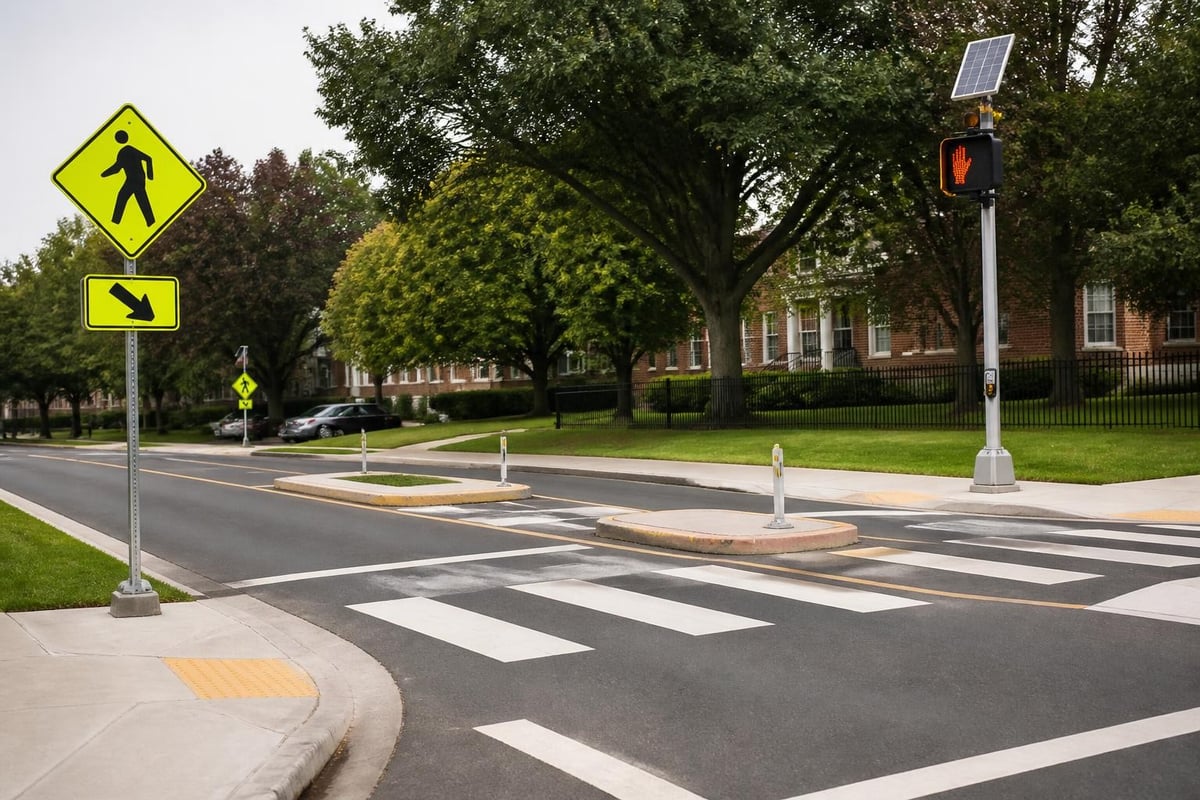
Traffic calming measures complement pedestrian crossing signage by reducing vehicle speeds in high-risk areas. Speed cushions, raised crossings, and kerb extensions physically reinforce the priority afforded to pedestrians at crossing points. When combined with appropriate signage from suppliers like SafetySignsForSale, these integrated approaches deliver measurable reductions in pedestrian casualties.
Special Considerations for High-Risk Locations
Educational facilities present unique pedestrian crossing challenges due to concentrated pedestrian activity during arrival and dismissal periods. Enhanced signage including flashing beacons activated during school hours significantly improves driver awareness and compliance. School crossing supervisor programmes supported by clear signage create additional layers of protection for young pedestrians.
- Hospital zones: Slower pedestrian movement speeds requiring extended crossing times
- Shopping districts: High pedestrian volumes with unpredictable crossing behaviours
- Residential areas: Limited sight distances and unexpected pedestrian emergence
- Industrial sites: Heavy vehicle traffic requiring enhanced warning systems
- Public transport hubs: Complex pedestrian flow patterns across multiple crossing points
Senior living facilities and healthcare centres accommodate pedestrians with reduced mobility and slower crossing speeds. Extended crossing signal phases, combined with clear pedestrian-activated signs, ensure adequate time for safe passage. The World Health Organization pedestrian safety manual provides evidence-based recommendations for infrastructure modifications that protect vulnerable road users.
Maintenance Requirements and Life Cycle Management
Systematic maintenance programmes preserve sign effectiveness throughout their operational lifespan. Regular inspections identify issues including retroreflectivity degradation, physical damage, vegetation obstruction, and mounting hardware deterioration. Establishing quarterly inspection schedules ensures problems receive prompt attention before compromising pedestrian safety.
Retroreflectivity testing using calibrated measurement equipment provides objective data on sign visibility performance. Signs failing to meet minimum retroreflectivity thresholds require immediate replacement, as compromised visibility during night-time conditions substantially increases collision risk. Many organisations implement proactive replacement schedules rather than reactive maintenance, ensuring consistent performance standards.
Documentation and Compliance Records
Comprehensive record-keeping demonstrates due diligence in maintaining safe pedestrian crossing infrastructure. Documentation should capture installation dates, inspection findings, maintenance activities, and replacement schedules for each sign for pedestrian crossing within an organisation's responsibility. Digital asset management systems streamline this process whilst providing readily accessible compliance evidence.
Regular audits verify that existing signage continues to meet current regulatory standards. Standards periodically undergo revision to incorporate new research findings and technological advances. Organisations must update non-compliant signage to align with current requirements, particularly when renovating existing crossings or installing new pedestrian infrastructure.
The comprehensive safety signs range available from specialist suppliers ensures access to compliant replacement signage when maintenance activities identify deficient elements. Establishing relationships with reliable suppliers facilitates rapid replacement, minimising periods when pedestrians cross without adequate warning signage.
Technological Advancements in Pedestrian Crossing Signage
Innovation continues transforming pedestrian crossing safety through advanced signage technologies. Intelligent transportation systems integrate pedestrian detection sensors with dynamic warning signs that activate only when pedestrians are present, increasing driver attention through variable messaging. These systems prove particularly effective at mid-block crossings where pedestrian activity occurs sporadically.
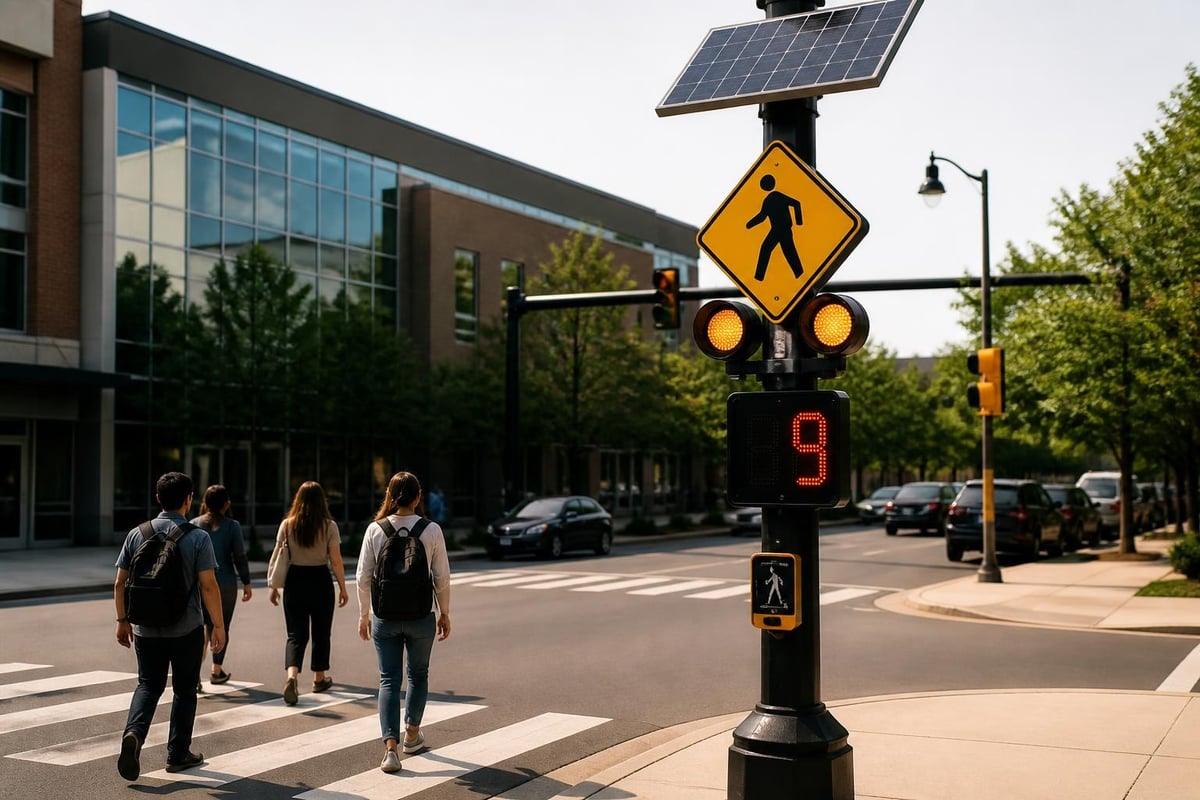
Countdown timer displays incorporated into pedestrian signal assemblies provide clear information about remaining crossing time, reducing risky behaviours such as pedestrians entering crossings during insufficient clearance intervals. Research demonstrates that countdown timers significantly improve pedestrian compliance with signal phases whilst reducing driver-pedestrian conflicts.
| Technology | Primary Benefit | Installation Cost | Operational Complexity |
|---|---|---|---|
| LED-enhanced signs | Improved visibility | Moderate | Low |
| Radar detection | Targeted warnings | High | Moderate |
| Countdown timers | Behaviour modification | Moderate-High | Low-Moderate |
| Solar power systems | Energy independence | Moderate | Low |
| Connected infrastructure | Data collection | High | High |
Smart city initiatives increasingly incorporate pedestrian crossing data collection capabilities, monitoring crossing volumes, signal compliance rates, and near-miss events. This information informs evidence-based decisions regarding infrastructure improvements and targeted enforcement activities. Connected infrastructure enables real-time adjustments to signal timing based on pedestrian demand patterns.
Future Developments and Emerging Standards
Autonomous vehicle deployment will necessitate enhanced pedestrian crossing signage incorporating machine-readable elements. Vehicle-to-infrastructure communication protocols may enable automated speed reduction as vehicles approach pedestrian crossings, with signage serving dual purposes for human drivers and automated systems. Standardisation efforts currently underway will establish consistent approaches to this emerging requirement.
Climate resilience considerations increasingly influence material selection for outdoor signage. Extreme weather events associated with climate change demand signs capable of withstanding higher wind loads, more intense precipitation, and greater temperature extremes. Manufacturers are developing enhanced mounting systems and substrate materials addressing these evolving requirements.
Procurement Considerations for Organisations
Selecting appropriate pedestrian crossing signage requires balancing regulatory compliance, performance requirements, budget constraints, and maintenance capabilities. Organisations should prioritise suppliers demonstrating comprehensive understanding of applicable standards and providing certified products meeting those specifications. Request documentation verifying compliance with relevant national or international standards before finalising procurement decisions.
Total cost of ownership extends beyond initial purchase price to encompass installation expenses, maintenance requirements, and expected service life. Higher-quality signs with superior retroreflectivity and weather resistance may command premium pricing but deliver lower life cycle costs through extended replacement intervals and reduced maintenance activities.
Bulk procurement opportunities enable organisations managing multiple locations to achieve economies of scale whilst ensuring consistent signage specifications across their portfolio. The extensive general informational signs and warning signs catalogues offer comprehensive options for organisations seeking multiple sign types from a single supplier.
Installation and Professional Services
Professional installation ensures pedestrian crossing signs achieve optimal positioning and secure mounting. Improperly installed signs may fail prematurely due to inadequate wind load resistance or suffer reduced effectiveness through suboptimal placement. Many suppliers offer installation services or can recommend qualified contractors familiar with signage installation requirements.
Consider warranty provisions covering both product defects and installation workmanship. Comprehensive warranties provide financial protection against premature failures whilst incentivising suppliers to maintain quality standards. Review warranty terms carefully, noting exclusions and maintenance requirements that may void coverage.
Training programmes for maintenance personnel ensure consistent inspection procedures and appropriate remediation responses. Staff members responsible for pedestrian crossing infrastructure should understand regulatory requirements, inspection techniques, and documentation procedures. This knowledge base supports effective asset management whilst reducing liability exposure associated with inadequate maintenance practices.
Multi-Location Management Strategies
Organisations operating across multiple sites face unique challenges in maintaining consistent pedestrian crossing safety standards. Centralised procurement establishes uniform specifications whilst leveraging purchasing power for cost efficiencies. Standardised sign specifications simplify inventory management and enable efficient bulk ordering of replacement components.
Asset tracking systems provide visibility across distributed infrastructure portfolios, identifying sites requiring attention and facilitating proactive maintenance scheduling. Cloud-based platforms enable field personnel to update asset conditions using mobile devices, ensuring headquarters maintains current information on infrastructure status across all locations.
Regional regulatory variations require careful attention when managing multi-jurisdictional portfolios. A sign for pedestrian crossing meeting specifications in one region may not satisfy requirements elsewhere. Maintaining region-specific compliance documentation and procurement specifications prevents inadvertent installation of non-compliant signage.
Pedestrian crossing signage represents a critical safety investment that protects vulnerable road users whilst demonstrating organisational commitment to public safety. Understanding regulatory requirements, strategic placement principles, and maintenance obligations ensures these vital safety elements deliver optimal performance throughout their service lives. Whether you're responsible for a single crossing or managing extensive pedestrian infrastructure across multiple locations, SafetySignsForSale provides comprehensive solutions including compliant pedestrian crossing signs, supporting infrastructure elements, and expert guidance to help you create safer environments for pedestrians in your community.