


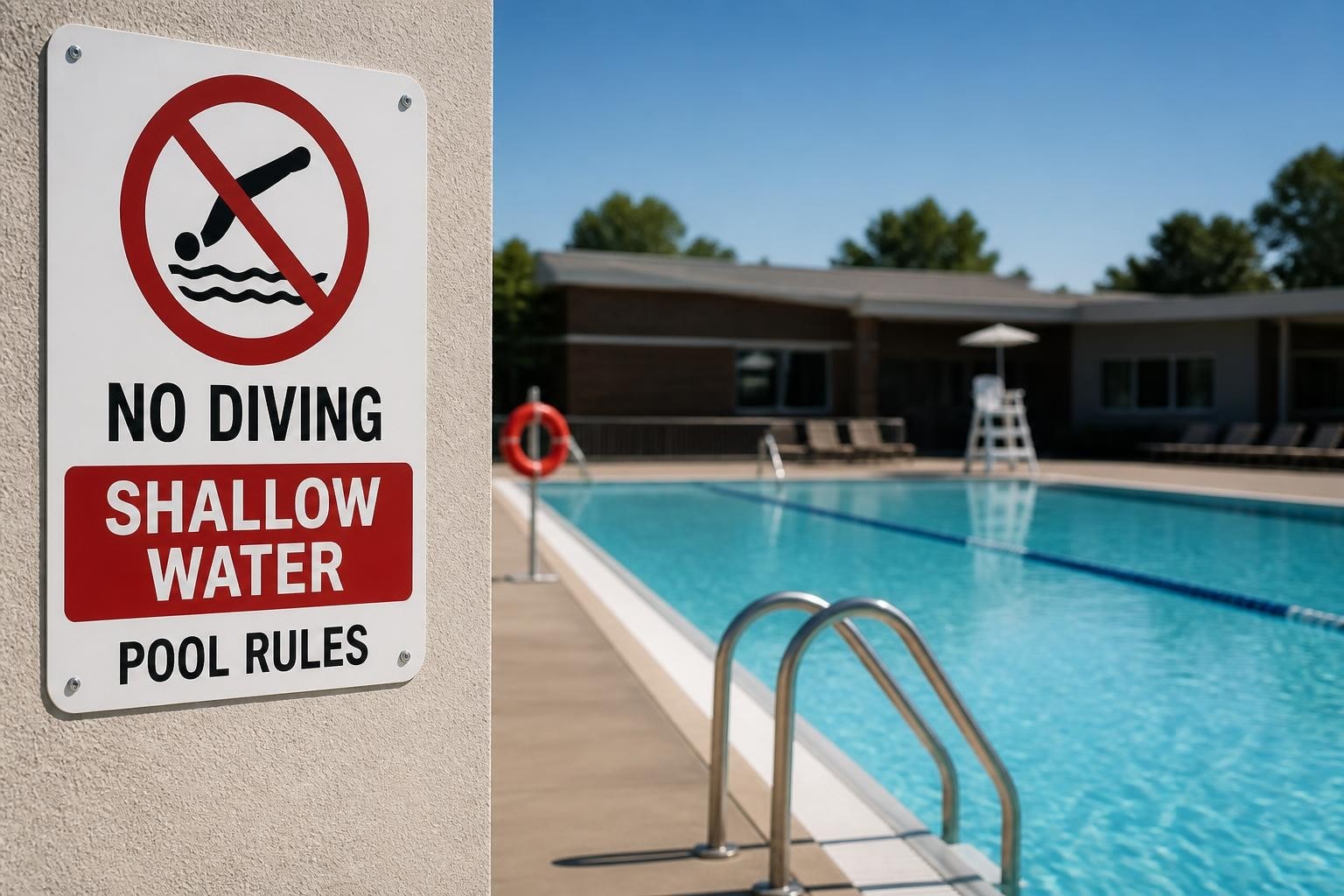
Pool Safety Signs: Essential Guide for 2026 Compliance
Swimming pools provide recreation, exercise, and community gathering spaces, but they also present significant safety risks that require proper management and clear communication. Effective signage plays a critical role in preventing accidents, ensuring regulatory compliance, and protecting facility operators from liability. Whether managing a public pool, hotel facility, or residential complex, understanding the requirements and best practices for pool safety signs is essential for creating a safe aquatic environment in 2026.
Regulatory Framework for Pool Safety Signage
Pool safety signs must comply with multiple regulatory standards that vary by jurisdiction and facility type. In South Africa, facility operators need to understand both local health department requirements and international best practices that inform safety protocols.
The 2024 International Swimming Pool and Spa Code (ISPSC) provides comprehensive guidance on signage requirements for public pools, including specifications for size, placement, and content. These standards establish minimum requirements that protect swimmers and create consistent expectations across facilities.
Understanding Signage Categories
Pool environments require several distinct categories of safety signage, each serving specific protective functions:
- Prohibitory signs that communicate forbidden activities
- Warning signs that alert users to specific hazards
- Mandatory signs that indicate required actions or equipment
- Emergency information that guides response during incidents
- Depth markers that communicate water depth throughout the pool
Facilities must assess their unique risk profile to determine which combination of warning signs and prohibitory signs best addresses their operational context.
Essential Pool Safety Signs Every Facility Needs
Certain pool safety signs are universally necessary regardless of facility size or type. These core signs form the foundation of any comprehensive aquatic safety programme.
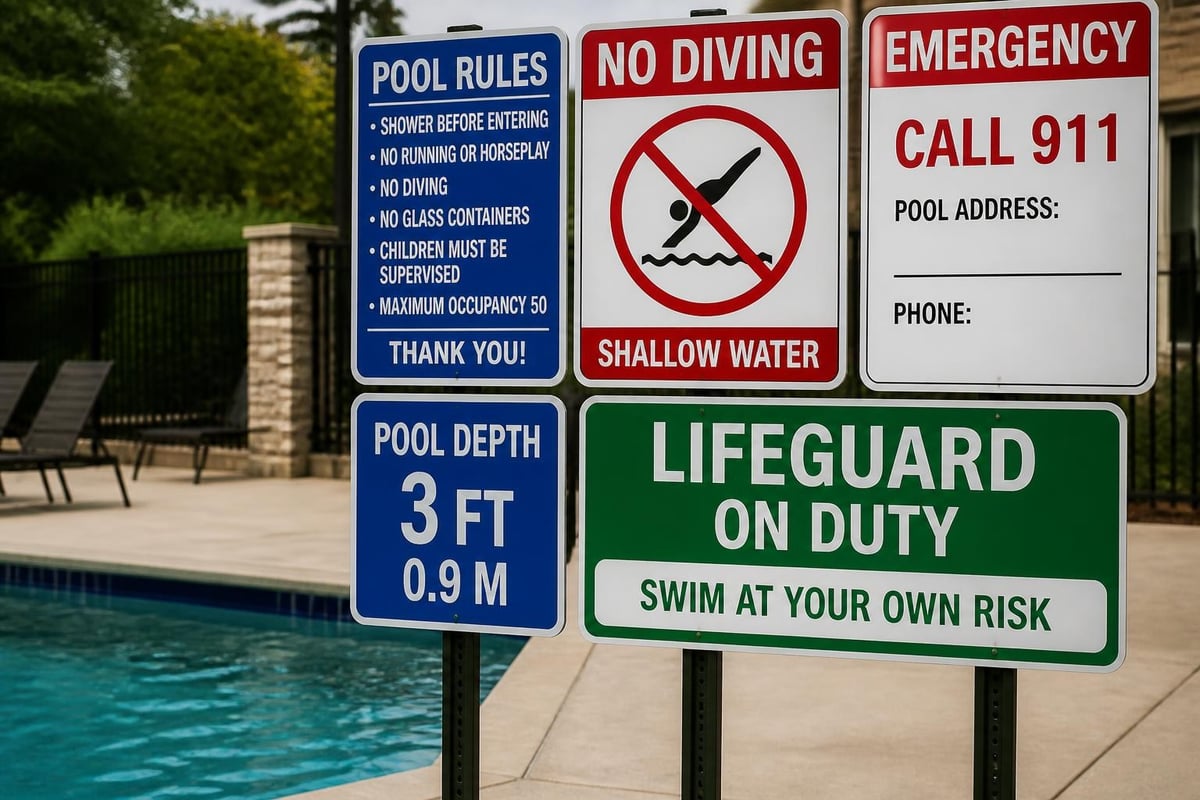
Depth Markers and No Diving Warnings
Water depth information must be clearly visible around the entire pool perimeter. Depth markers should appear at regular intervals and at all depth transitions, with measurements displayed in contrasting colours against the pool deck or coping.
No diving signs are particularly critical in shallow areas. These warnings prevent catastrophic head and neck injuries that occur when swimmers dive into insufficient water depth. The signs should be placed at multiple points along shallow sections and include both text and symbolic representations for universal comprehension.
| Sign Type | Placement | Minimum Size | Key Message |
|---|---|---|---|
| Depth markers | Every 7.5m around perimeter | 100mm numerals | Water depth in metres |
| No diving | Shallow end, multiple locations | 300mm × 450mm | Graphic symbol + text |
| Pool rules | Main entrance, clearly visible | 600mm × 900mm | Comprehensive facility rules |
| Emergency contact | Near telephone/entrance | 450mm × 600mm | Emergency numbers |
Pool Rules and Conduct Signs
Comprehensive pool rules signs should be prominently displayed at facility entrances where all users must pass. These signs establish behavioural expectations and create a foundation for enforcement actions when necessary.
Effective pool rules signage typically addresses:
- No running on deck surfaces
- Showering requirements before entry
- No glass containers in pool area
- Appropriate swimwear requirements
- Maximum capacity limits
- Supervision requirements for children
The American Red Cross provides aquatic facility guidance that includes recommendations for standardising pool rules signs and emergency instruction panels, ensuring consistency with established safety protocols.
Emergency Response and First Aid Signage
Pool safety signs must provide clear guidance during emergency situations when rapid response is critical. These signs serve both swimmers and facility staff, ensuring everyone understands emergency procedures and equipment locations.
Emergency Contact Information
Emergency contact signs should display local emergency service numbers, facility management contacts, and the pool's physical address. Including the address is particularly important, as distressed callers may not know their precise location when reporting an emergency.
Position these signs near pool telephones and at staff stations. The information should be laminated or printed on weather-resistant materials that withstand humid pool environments.
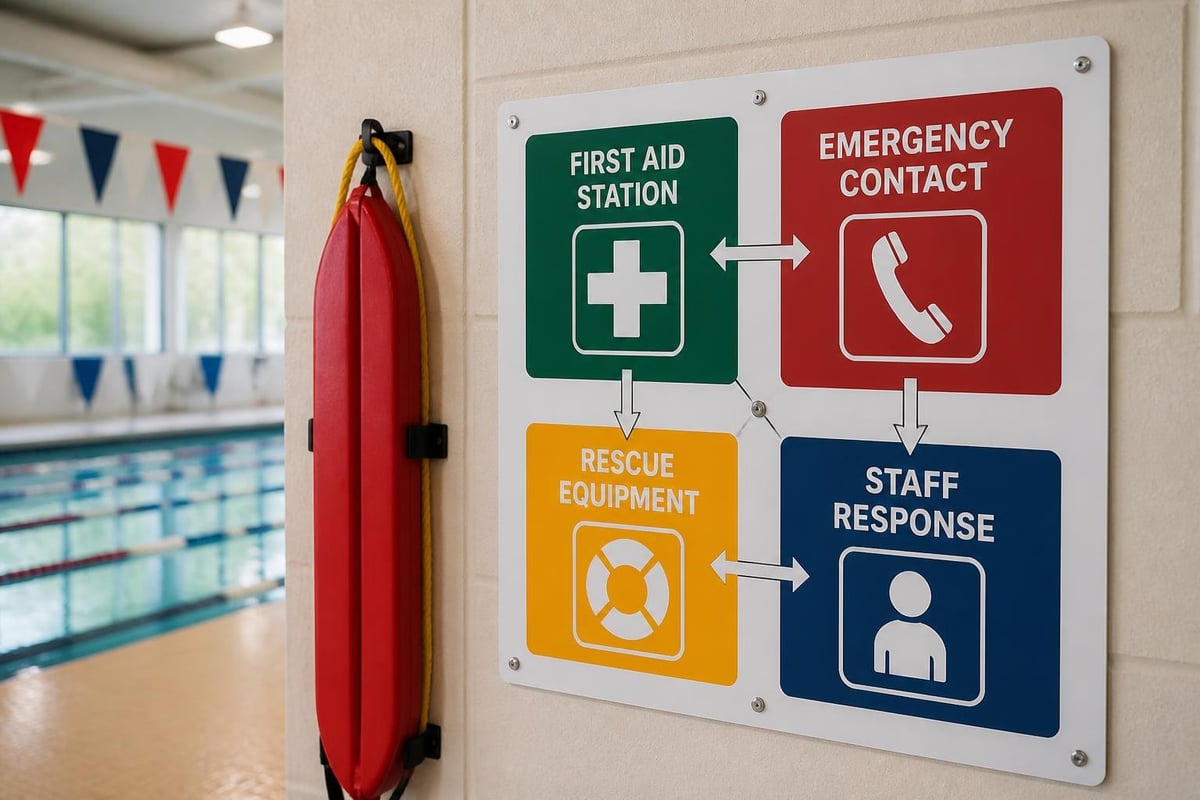
First Aid and Safety Equipment Locations
Clear signage indicating first aid equipment locations enables rapid response during medical emergencies. Signs should mark:
- First aid kit storage locations
- AED (automated external defibrillator) cabinets
- Emergency oxygen equipment
- Spinal injury backboards and rescue equipment
- Emergency shower and eyewash station locations for chemical exposures
General informational signs can direct users to these critical resources whilst maintaining a clean, professional appearance throughout the facility.
Chemical Safety and Mechanical Room Requirements
Pool facilities involve complex chemical treatment systems and mechanical equipment that present distinct hazards requiring specialized signage. These areas are typically restricted to authorized personnel but require comprehensive safety communication.
Chemical Storage and Handling Areas
Pool chemical storage areas must comply with OSHA's specifications for accident prevention signs, which establish federal requirements for safety sign content, colours, and signal words when posting hazard warnings in chemical, electrical, and mechanical areas.
Chemical storage signage should include:
- Danger signs with appropriate signal words and hazard descriptions
- Personal protective equipment requirements specifying necessary safety gear
- Emergency response procedures for spills or exposures
- Material safety data sheet (MSDS) locations
- Authorized personnel only access restrictions
The integration of mandatory signs ensures compliance with PPE requirements, whilst prohibitory signs restrict unauthorized access to hazardous areas.
Mechanical and Electrical Hazards
Pool pump rooms, filtration systems, and electrical panels require appropriate warning signage that alerts maintenance personnel to specific hazards. High voltage electrical equipment, rotating machinery, and pressurized systems each demand distinct safety communications.
Consider using photoluminescent signs in areas where power failures could create dangerous conditions, ensuring visibility even during electrical outages.
Drowning Prevention and Supervision Signage
Drowning prevention represents the primary safety concern for all aquatic facilities. Effective signage supports comprehensive prevention strategies by communicating supervision requirements, water safety principles, and immediate response procedures.
Lifeguard Status and Supervision Requirements
Clear signage must indicate whether lifeguards are on duty and, when they are not, communicate that swimming is at the user's own risk. This transparency manages expectations and encourages appropriate caution.
The World Health Organization's guidance on preventing drowning provides practical recommendations covering signage as part of broader drowning-prevention strategies, offering an international perspective and evidence base for effective messaging and public information campaigns.
Facilities without lifeguard coverage should prominently display:
- "No Lifeguard on Duty - Swim at Your Own Risk" warnings
- Adult supervision requirements for children
- Recommendations against swimming alone
- Emergency response instructions for witnesses
Child Supervision and Age-Specific Warnings
Pool safety signs should clearly communicate adult supervision requirements for children. Research consistently demonstrates that active, attentive adult supervision is the most effective drowning prevention measure.
Signs addressing child safety might specify:
- Children under specific ages must be accompanied by an adult within arm's reach
- Non-swimmers must wear approved flotation devices
- Age and height restrictions for slides, diving boards, or specific pool areas
- Designated areas for different age groups or skill levels
Inclusive and Accessible Pool Signage
Modern pool facilities must ensure their signage is accessible to all users, including those with visual impairments, cognitive differences, or language barriers. Inclusive design extends safety benefits to the entire community.
Multi-Language and Symbolic Communication
Diverse communities benefit from multi-language signage that communicates critical safety information in the languages most commonly spoken by facility users. Symbols and pictograms provide universal understanding that transcends language barriers.
The NRPA's 2024 guidance on developing inclusive swimwear policies includes recommendations for creating language-inclusive, accessible signage at pools, offering practical approaches to equitable signage and community-facing messaging.
Visual Accessibility Standards
Pool safety signs should meet accessibility standards for:
- Colour contrast that ensures readability for those with colour vision deficiencies
- Text size appropriate for viewing distances in specific locations
- Font selection that prioritizes legibility over decorative appeal
- Tactile elements for critical safety information in locations where touch-based reading is appropriate
- Height placement that accommodates wheelchair users and children
Material Selection and Durability Considerations
Pool environments are exceptionally harsh on signage materials. Constant humidity, chemical exposure, UV radiation, and temperature fluctuations demand specialized materials that maintain legibility and structural integrity over time.
Weather-Resistant and Chemical-Resistant Materials
Pool safety signs must withstand:
- Chlorine and other sanitizing chemical vapours
- Direct water exposure and humidity
- UV radiation from sunlight and indoor lighting
- Temperature extremes in outdoor installations
- Physical impacts from pool equipment and user activity
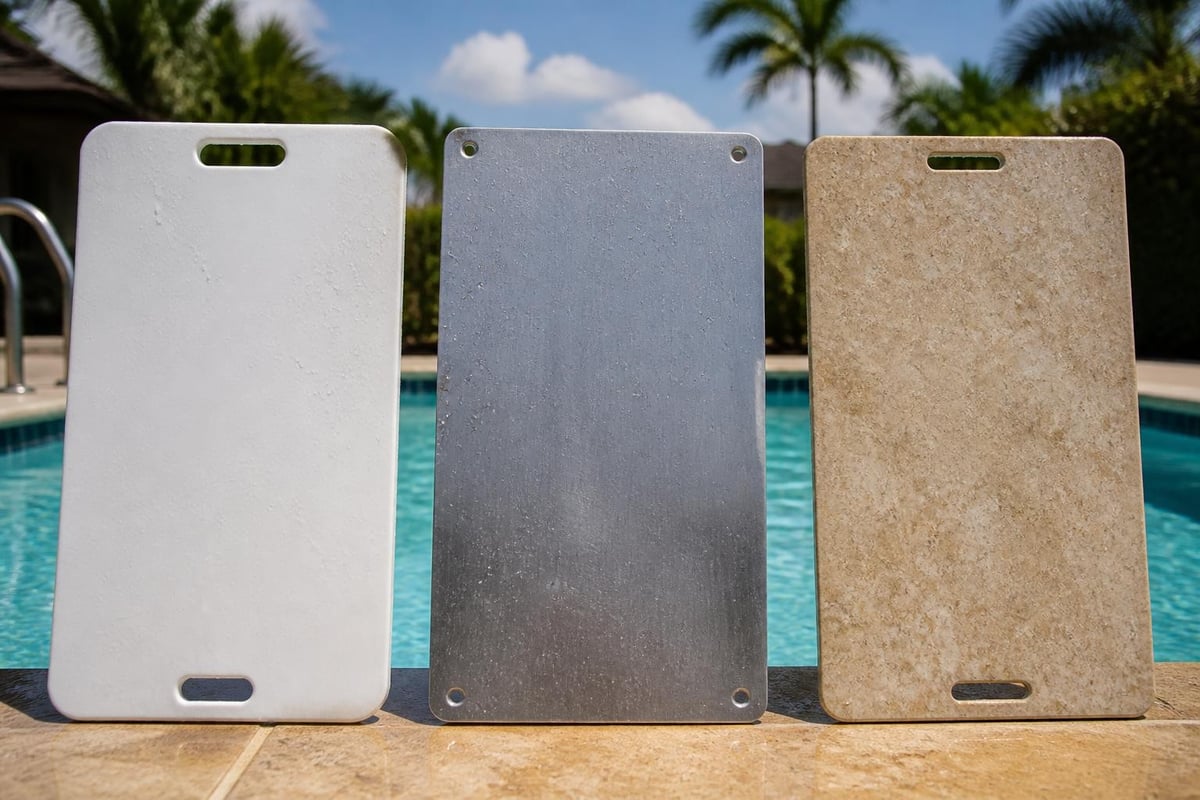
Recommended materials include UV-stabilized plastics, marine-grade aluminum with protective coatings, and laminated composite materials designed for aquatic environments. Standard paper-based signs deteriorate rapidly and become illegible, creating liability concerns.
Maintenance and Replacement Schedules
Even durable materials eventually degrade in pool environments. Facility managers should establish regular inspection schedules to assess signage condition and replace signs before they become illegible or structurally compromised.
| Inspection Frequency | Assessment Focus | Action Triggers |
|---|---|---|
| Weekly | Physical damage, vandalism | Immediate replacement |
| Monthly | Legibility, fading, chemical damage | Schedule replacement within 30 days |
| Quarterly | Mounting security, structural integrity | Repair or replace as needed |
| Annually | Regulatory compliance, content updates | Update to current standards |
Quality safety signs designed specifically for aquatic environments provide better long-term value through extended service life and maintained effectiveness.
Strategic Placement and Visibility Optimization
The most well-designed pool safety signs provide no benefit if users do not see and read them. Strategic placement ensures maximum visibility and comprehension at critical decision points.
Sight Lines and User Behaviour Patterns
Observe how users move through your facility to identify optimal sign placement. People entering the pool area naturally look forward and slightly downward, making eye-level placement at entry points highly effective.
Consider placing duplicate signs when:
- Pool area entrances exist at multiple locations
- Long sight distances might prevent users from seeing distant signs
- Architectural elements obstruct views from certain angles
- Both ends of a pool require the same safety message
Height, Lighting, and Contrast Considerations
Mount signs at heights appropriate for standing adults (typically 1.5 to 2 metres from deck level) whilst ensuring they remain visible to seated or wheelchair-using visitors. Indoor facilities should ensure adequate lighting illuminates signage even during early morning or evening hours.
Maximize contrast between sign backgrounds, text, and pictograms. Industry standards recommend:
- Dark text on light backgrounds for most applications
- High-contrast colour combinations (black/yellow, white/red, white/blue)
- Reflective or photoluminescent materials in low-light areas
- Matte finishes that prevent glare from water reflections or overhead lighting
Compliance Documentation and Liability Protection
Proper pool safety signs serve as evidence of reasonable care in preventing foreseeable injuries. Documentation of signage installation, maintenance, and updates supports legal defensibility should incidents occur.
Record-Keeping Best Practices
Maintain comprehensive records of:
- Sign installation dates and locations (photographic documentation recommended)
- Regular inspection reports noting condition and readability
- Replacement history with dates and reasons
- Regulatory compliance reviews
- Incident reports that reference signage adequacy
These records demonstrate proactive safety management and regulatory compliance, potentially reducing liability exposure during legal proceedings.
Regular Compliance Audits
Schedule annual audits that assess signage against current regulatory requirements. Codes and standards evolve, and signs installed years ago may no longer meet contemporary requirements. Professional safety consultants can provide objective assessments and recommendations for improvements.
Compare your current signage against the comprehensive safety signs catalogue to identify gaps in coverage or opportunities to upgrade to more durable, compliant options.
Seasonal and Special Event Signage Needs
Pool facilities often experience seasonal variations or host special events that require temporary or supplemental signage addressing unique circumstances or elevated risk profiles.
Temporary Signage for Maintenance and Repairs
When pool areas undergo maintenance, construction, or repairs, temporary warning signs must alert users to unusual hazards:
- Wet floor warnings during deck resurfacing
- Equipment hazards during filter or pump replacement
- Access restrictions to areas under repair
- Chemical hazard notices during intensive cleaning
Temporary signs should be equally durable and visible as permanent installations, particularly for extended maintenance projects.
Special Event and Programme-Specific Signs
Swimming lessons, competitive events, therapy sessions, and other specialized programmes may require programme-specific signage that communicates modified rules, restricted access, or special safety protocols. These signs should clearly indicate their temporary nature and the timeframes during which special rules apply.
Effective pool safety signs form an essential component of comprehensive aquatic facility management, protecting swimmers whilst demonstrating regulatory compliance and reasonable care. By selecting appropriate sign types, durable materials, and strategic placements, facility operators create safer environments that prevent accidents and support emergency response when incidents occur. Whether updating existing signage or outfitting a new facility, SafetySignsForSale offers the comprehensive range of pool safety signs, first aid equipment, and safety solutions necessary to meet 2026 regulatory standards whilst protecting your community and your business.