


Site Safety Board: Essential Guide for Workplace Safety
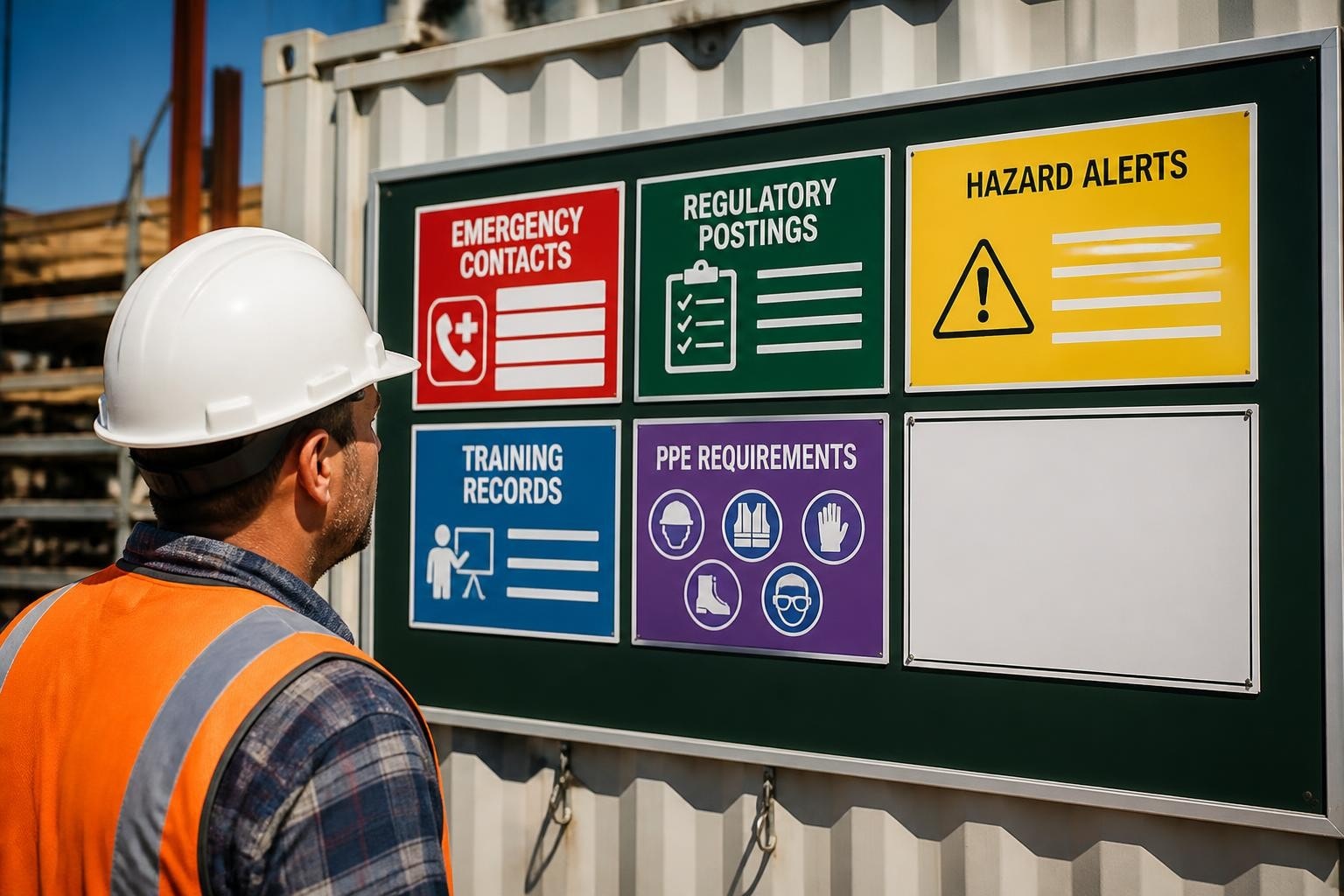
A site safety board serves as the central communication hub for workplace health and safety information, ensuring that all personnel have immediate access to critical safety data, emergency procedures, and regulatory postings. Whether positioned at a construction site entrance, manufacturing facility corridor, or office reception area, this essential tool keeps workers informed about hazards, protective measures, and current safety initiatives. Properly maintained safety boards not only fulfill regulatory obligations but also demonstrate an organisation's commitment to creating a culture where safety remains paramount in daily operations.
Understanding the Purpose and Benefits of a Site Safety Board
The primary function of a site safety board extends beyond simple compliance with safety regulations. These boards create a visible focal point for safety communications, making it easier for workers, visitors, and contractors to access important information quickly. When strategically positioned and thoughtfully organized, they become an invaluable resource that supports training, reinforces safe behaviours, and provides immediate reference during emergencies.
Research consistently demonstrates that visible safety communications improve awareness and reduce incident rates. A well-maintained board helps establish accountability by displaying safety performance metrics, inspection records, and incident-free day counters. This transparency encourages teams to take ownership of workplace safety and creates healthy competition between shifts or departments to maintain excellent safety records.
Core Components Every Board Should Include
Every effective site safety board should contain specific categories of information to serve its purpose comprehensively. The exact content will vary based on industry, facility type, and specific hazards present, but certain elements remain universal across all workplaces.
Essential regulatory postings form the foundation of any compliant board. These include:
- Emergency contact numbers and evacuation procedures
- First aid and fire marshal contact details
- Regulatory agency contact information
- Workers' rights and responsibilities posters
- Current health and safety policy statements
Many jurisdictions require specific postings under occupational health and safety legislation. In the United States, OSHA publications provide detailed guidance on mandatory workplace postings, whilst the UK's Health and Safety Executive sets similar requirements for British workplaces. Understanding these obligations ensures your board meets all legal requirements whilst providing genuine value to workers.
Designing an Effective Layout and Organization System
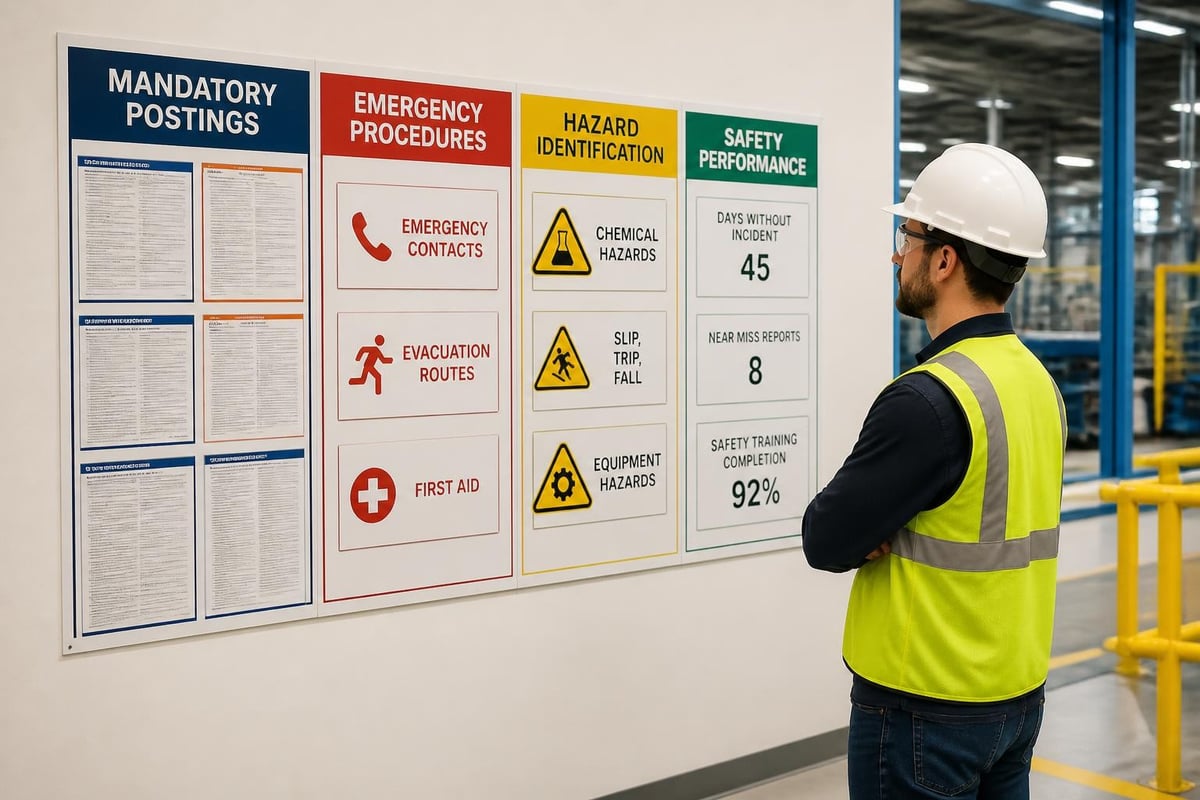
The physical design and organization of your site safety board significantly impacts its effectiveness. A cluttered, disorganized board becomes invisible to workers who learn to ignore the visual noise. Conversely, a cleanly organized board with clear sections draws attention and makes information retrieval effortless.
Consider implementing a colour-coded system where different categories receive distinct background colours. Red sections might contain emergency information, yellow for current hazards, green for safety achievements, and blue for training schedules. This visual hierarchy allows workers to locate specific information quickly without reading every notice.
Size, Location, and Accessibility Considerations
Board dimensions should reflect the amount of information you need to display and the typical viewing distance. A minimum size of 1200mm × 900mm works well for most construction sites and industrial facilities, whilst smaller office environments might manage with 900mm × 600mm boards. Larger sites may require multiple boards positioned at key access points.
Location selection requires careful thought about traffic patterns and visibility. Position your board where workers naturally congregate or pass regularly, such as:
- Main site entrance gates
- Time clock or sign-in areas
- Canteen or break room entrances
- Tool distribution points
- Changing room corridors
Weather protection becomes essential for outdoor installations. Lockable, weatherproof cabinets with clear acrylic doors protect documents whilst maintaining visibility. These enclosures prevent rain damage, sun fading, and unauthorized removal of important notices.
| Location Type | Recommended Size | Key Features | Typical Content Volume |
|---|---|---|---|
| Construction Site | 1200mm × 1200mm | Weather-resistant, lockable | High (15-25 documents) |
| Manufacturing Floor | 900mm × 1200mm | High-visibility backing | Medium (10-20 documents) |
| Office Environment | 600mm × 900mm | Professional finish | Low (5-12 documents) |
| Warehouse | 1200mm × 900mm | Durable, large text | Medium (12-18 documents) |
The HSE guidance on safety signs and signals provides comprehensive recommendations on sign visibility, positioning, and illumination requirements that apply equally to safety boards.
Regulatory Compliance and Legal Requirements
Understanding which regulations govern your site safety board ensures you avoid costly violations whilst protecting your workforce effectively. Different industries face varying requirements, but commonalities exist across sectors. In construction environments, OSHA's standards on accident-prevention signs establish minimum requirements for warning signs and safety communications.
The regulatory landscape continues evolving as standards organizations update best practices. Recent developments include the Federal Register's incorporation of ANSI Z535.4-2023, which provides updated guidance on product safety signs and labels, affecting how information should be presented on site safety boards to maintain consistency with other workplace signage.
Mandatory Information and Documentation
Specific documents must appear on your safety board to maintain compliance across different jurisdictions. These typically include current certificates, licences, and regulatory postings required by local authorities. Create a compliance checklist to verify all necessary items remain current and properly displayed.
Required documentation often includes:
- Current safety inspection certificates
- Environmental permits and conditions
- Insurance certificates
- Appointed safety personnel details
- Incident reporting procedures
- Hazardous materials inventories
Maintaining proper records of what appears on your board and when it was posted creates an audit trail should regulatory inspectors visit. Photograph your board monthly to document compliance and track changes over time. This practice proves invaluable during accident investigations or compliance audits.
Content Management and Update Schedules
Static information quickly becomes wallpaper that workers ignore. Dynamic content that changes regularly maintains attention and ensures the board remains relevant. Establish clear responsibilities for board management, assigning specific individuals to review, update, and maintain current information.
Implement a structured review schedule based on information type. Emergency contacts require verification monthly, whilst training schedules might update weekly and safety performance metrics could change daily. Creating a maintenance log helps track when each section was last reviewed and by whom.
Keeping Information Current and Relevant
Remove outdated notices promptly to prevent confusion and maintain credibility. Nothing undermines a safety board faster than displaying expired information or referencing completed projects. Archive removed materials systematically in case future reference becomes necessary during investigations or audits.
The Workplace Safety & Prevention Services guidelines emphasize the importance of regular content updates and provide practical checklists for maintaining board relevance. Their research shows boards updated at least weekly receive significantly more worker attention than those changed monthly or less frequently.

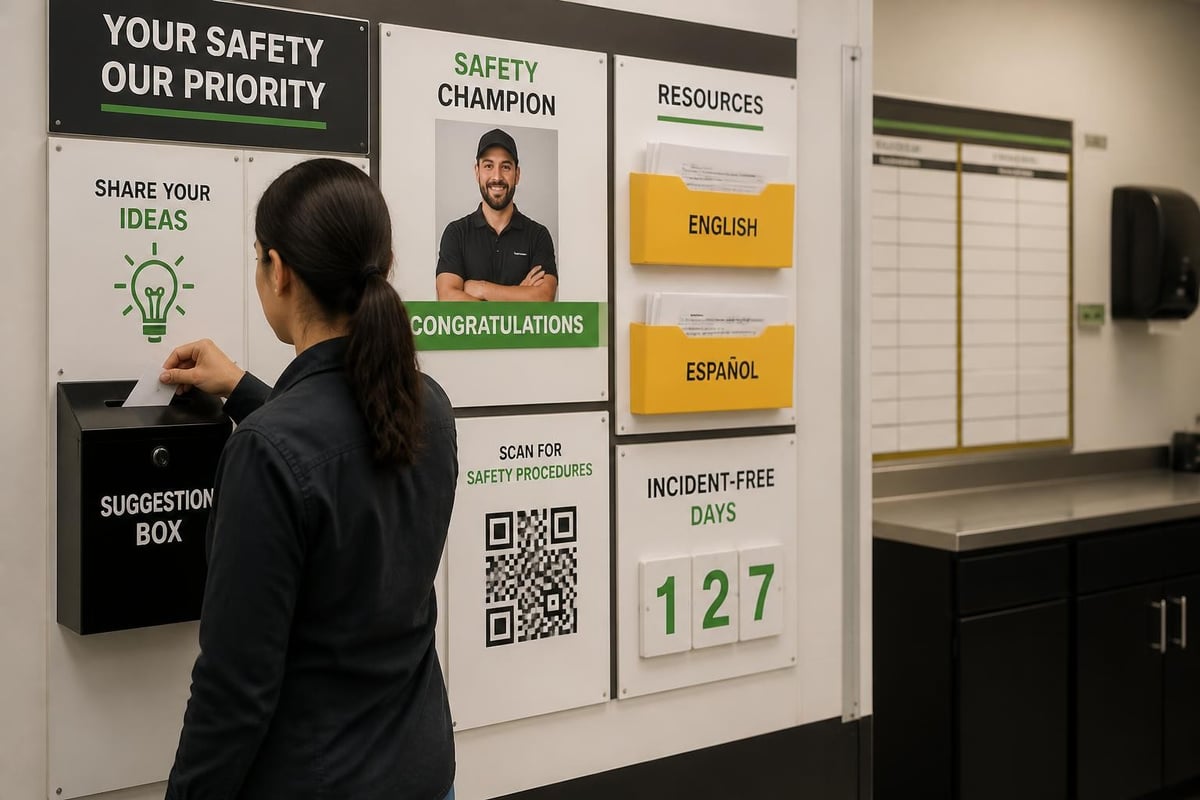
Incorporate worker feedback mechanisms directly on your board. A suggestion box or tear-off feedback forms encourage engagement and provide valuable insights into what information workers find most useful. This participatory approach increases buy-in and helps identify communication gaps.
Integrating Safety Signage and Visual Communications
Your site safety board works most effectively when integrated with broader workplace safety signage systems. Creating visual consistency between the board and permanent safety signs throughout your facility reinforces messages and improves comprehension, particularly in multilingual workplaces.
Use the same pictograms, colours, and terminology across all safety communications. If your warning signs use specific symbols for electrical hazards or falling objects, replicate those symbols in board postings about those hazards. This consistency helps workers quickly recognize and understand safety information regardless of literacy levels.
Supporting Different Communication Styles
Effective safety boards accommodate diverse learning styles and language capabilities. Combine text with images, diagrams, and photographs to convey information multiple ways. A procedure described in text alongside a step-by-step photograph series ensures comprehension across skill levels and language backgrounds.
Consider these communication strategies:
- Multilingual postings for diverse workforces
- Pictogram-heavy designs reducing language barriers
- QR codes linking to detailed video demonstrations
- Colour-coded severity levels for hazard alerts
- Simplified text using plain language principles
Visual aids prove particularly valuable for complex procedures like lockout-tagout sequences or confined space entry protocols. A well-designed diagram communicates these multi-step processes more effectively than text alone, reducing errors and improving safety outcomes.
Specialized Boards for Different Industries and Hazards
Different work environments require tailored approaches to safety board content and design. Construction sites face dynamic hazards that change as projects progress, requiring frequent updates to reflect current conditions. Manufacturing facilities deal with static machinery hazards but must communicate process changes and maintenance schedules. Understanding these sector-specific needs ensures your board delivers maximum value.
Construction Site Safety Boards
Construction environments present unique challenges requiring boards that adapt to rapidly changing conditions. The INGAA Construction Safety Guidelines outline comprehensive requirements for site-specific safety plans, including detailed recommendations for safety boards serving infrastructure and linear construction projects.
Construction boards should prominently feature:
- Current site hazard map showing active work zones
- Today's planned lifts, excavations, or high-risk activities
- Weather warnings affecting work conditions
- Visitor and contractor sign-in requirements
- Daily toolbox talk topics and attendance records
- Plant and equipment inspection status
Supplement your board with appropriate mandatory signs placed at specific hazard locations, creating a comprehensive safety communication system. Regular site safety walks should verify that board information accurately reflects current site conditions.
Manufacturing and Industrial Facilities
Manufacturing environments benefit from boards emphasizing process safety, chemical hazards, and machinery-specific precautions. Detailed information about hazardous materials requires ready access to safety data sheets, emergency response procedures, and appropriate personal protective equipment requirements for different areas.
Include production-specific safety metrics such as days since last recordable incident, near-miss reporting trends, and department safety scores. This data-driven approach helps identify problem areas and recognizes high-performing teams, creating positive reinforcement for safe behaviours.
| Industry Sector | Priority Content | Update Frequency | Special Requirements |
|---|---|---|---|
| Construction | Daily hazards, weather, lift plans | Daily | Weather protection essential |
| Manufacturing | Process changes, SDS, machine guards | Weekly | Chemical resistance |
| Warehousing | Traffic patterns, loading zones | Weekly | High visibility from forklifts |
| Healthcare | Infection control, sharps disposal | Daily | Clean-room compatible materials |
Training, Engagement, and Continuous Improvement
Simply installing a site safety board accomplishes little without proper training and active engagement strategies. Workers must understand the board's purpose, know where to find specific information, and feel comfortable using it as a resource. Incorporate board orientation into all site inductions and contractor briefings.
Building a Culture of Board Utilization
Transform your board from passive display to active tool through deliberate engagement tactics. Reference the board during daily toolbox talks, directing workers to specific postings relevant to that day's activities. When discussing a new procedure or hazard, physically walk teams to the board and show them where that information lives.
Recognize individuals who identify outdated information or suggest improvements. This recognition could be as simple as a "Safety Spotter of the Month" notation on the board itself, creating a visible feedback loop that encourages continued participation. Some organizations successfully implement reward systems for safety suggestions sourced through board interactions.
Regular safety committee meetings should include board review as a standing agenda item. Committee members can evaluate effectiveness, identify missing information, and ensure the board continues meeting worker needs as projects and hazards evolve.
Measuring Effectiveness and Making Improvements
Establish metrics to assess whether your site safety board achieves its intended purposes. Track indicators such as:
- Time required for workers to locate specific safety information
- Percentage of new workers who can identify emergency contacts
- Number of safety suggestions submitted through board mechanisms
- Reduction in repeat safety violations for clearly posted rules
- Worker survey responses about board usefulness and clarity
Conduct annual reviews comparing your board against industry best practices and emerging standards. Technology continues creating new opportunities for enhanced safety communications, from digital displays showing real-time data to mobile applications that extend board content to workers' devices. Evaluate these innovations against your specific needs and resources.
Consider complementing your physical board with digital tools for workers who spend time away from the main display. Photograph current board content and distribute via messaging apps or email, ensuring remote workers and off-site contractors maintain awareness of current safety information. This hybrid approach maximizes reach whilst maintaining the visible presence of a physical board.
Complementary Safety Resources and Equipment
Your site safety board functions as one component within a comprehensive workplace safety system. The information displayed should guide workers to other safety resources positioned throughout your facility. Clear signage directing personnel to first aid equipment, fire extinguishers, and emergency exits creates a cohesive safety infrastructure.
Use your board to display maps showing the locations of critical safety equipment. A simple floor plan with marked positions of eyewash stations, emergency showers, fire equipment, and first aid supplies helps workers respond quickly during emergencies. Update these maps whenever equipment relocates or new hazards emerge.
Cross-reference board information with permanent safety signage throughout your facility. When the board mentions confined space entry requirements, ensure those spaces display appropriate prohibitory signs reinforcing the restrictions. This redundancy strengthens messages and increases the likelihood workers will observe safety protocols.
Maintenance, Durability, and Long-Term Sustainability
Physical deterioration undermines even the best-designed safety board. Weather exposure, vandalism, and simple wear gradually degrade materials, reducing visibility and professionalism. Select construction materials appropriate for your environment and establish maintenance routines preventing deterioration.
Outdoor boards require particularly robust construction. Marine-grade aluminium frames resist corrosion in coastal environments, whilst powder-coated steel provides durability for inland locations. Acrylic or polycarbonate glazing protects contents better than glass, which poses injury risks if broken. Ensure adequate drainage prevents water accumulation inside enclosed boards.
Sustainable Practices and Document Management
Reduce waste and improve efficiency through thoughtful document management. Instead of printing full-page notices for brief announcements, maintain a "current alerts" section where smaller notices can be displayed and quickly replaced. Laminate frequently referenced documents like emergency procedures to extend their lifespan and allow cleaning without damage.
Digital photography creates permanent archives of board contents without consuming storage space. Monthly photographs document compliance, track changes, and provide reference materials for recreating effective layouts. These images prove invaluable when setting up new sites or standardizing boards across multiple locations.
Establish replacement cycles for permanent components based on observed wear patterns. Background fabrics typically require replacement every 2-3 years depending on UV exposure, whilst frames and enclosures may last a decade or more with proper maintenance. Budgeting for these predictable expenses prevents sudden deterioration forcing emergency replacements.
Implementing and maintaining an effective site safety board requires ongoing commitment, but the investment delivers substantial returns through improved safety awareness, regulatory compliance, and reduced incident rates. Whether you're establishing a new board or enhancing an existing one, focusing on clear organization, current content, and worker engagement transforms this simple tool into a powerful safety asset. SafetySignsForSale offers comprehensive solutions including safety signs, PPE, fire equipment, and first aid supplies to support your complete workplace safety programme, ensuring you have the resources needed to protect your workforce effectively.