


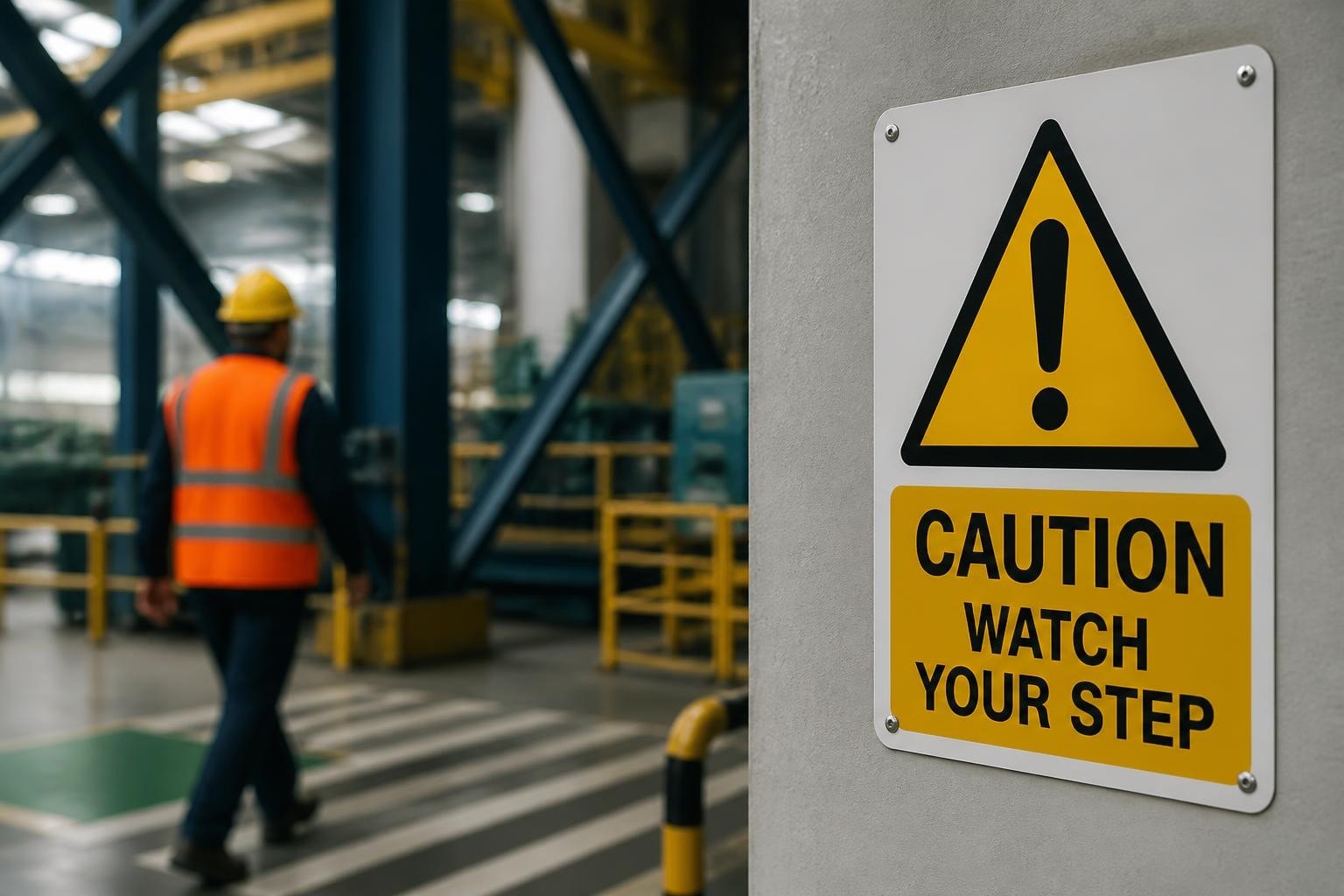
Warning Sign: Types, Placement & Compliance Guide 2026
A warning sign serves as a critical first line of defence against workplace hazards, alerting individuals to potential dangers before they cause harm. Whether in manufacturing facilities, construction sites, healthcare environments, or public spaces, these visual indicators play an indispensable role in preventing accidents and saving lives. Understanding the purpose, design principles, and regulatory requirements surrounding these safety tools has become increasingly important as workplaces evolve and safety standards tighten across all industries.
Understanding the Essential Purpose of Warning Signs
The primary function of a warning sign is to communicate hazards that may not be immediately obvious to workers, visitors, or the general public. Unlike prohibitory signage that instructs individuals not to perform specific actions, warning signage alerts people to environmental or situational dangers that require caution and awareness.
These visual safety tools address hazards ranging from slippery surfaces and electrical risks to chemical exposures and moving machinery. The effectiveness of a warning sign depends entirely on its ability to capture attention, convey information quickly, and prompt appropriate behavioral responses. Research has demonstrated that sign comprehension varies significantly based on design elements and user demographics, making evidence-based design crucial for maximum effectiveness.
Categories of Warning Signage
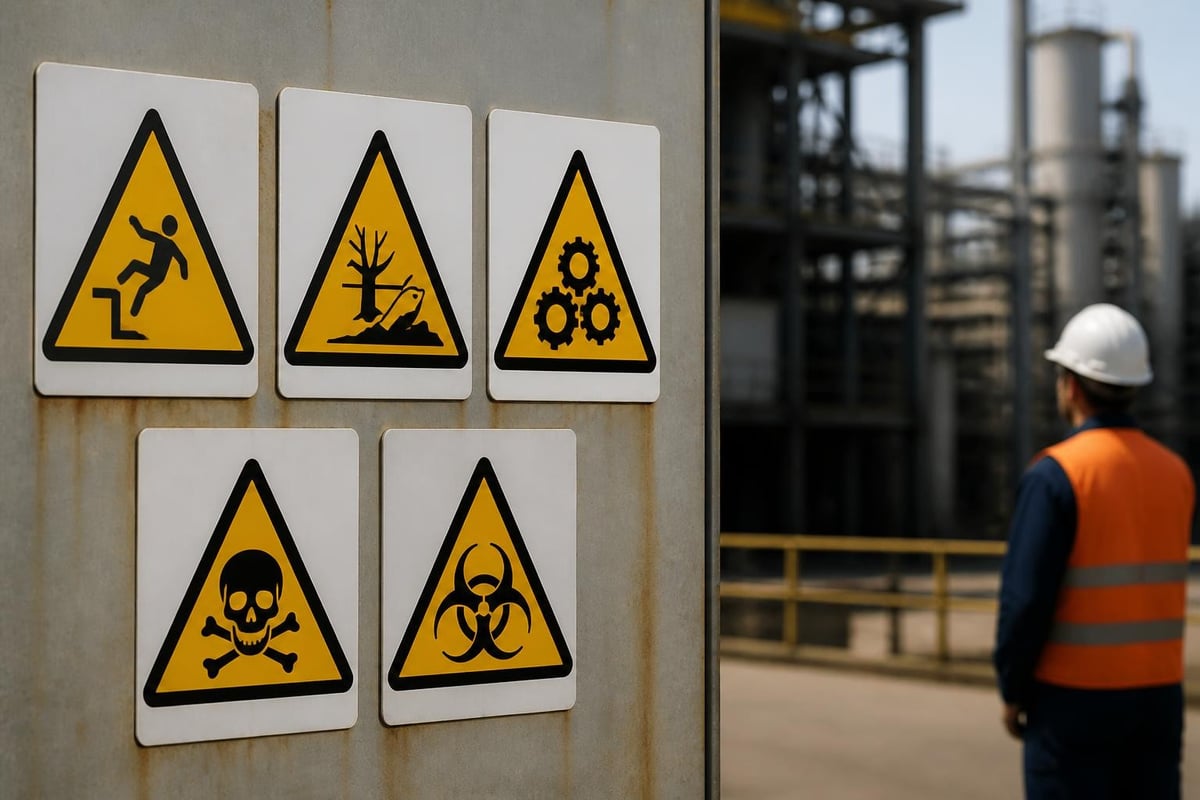
Warning signs fall into several distinct categories based on the hazards they address:
- Physical hazard warnings: Slippery floors, uneven surfaces, low clearances, trip hazards
- Environmental warnings: Extreme temperatures, confined spaces, poor visibility areas
- Equipment warnings: Moving machinery, electrical equipment, high-pressure systems
- Chemical warnings: Toxic substances, flammable materials, corrosive agents
- Biological warnings: Infection risks, biohazard materials, contaminated areas
Each category requires specific visual treatments and messaging to ensure immediate recognition. The comprehensive range of warning signs available today reflects the diverse hazards present across different industrial sectors.
Design Standards and Visual Characteristics
The effectiveness of a warning sign relies heavily on standardized design elements that create immediate recognition. International and national standards govern color schemes, pictograms, typography, and dimensions to ensure consistency across installations.
Color Coding and Symbolism
Yellow or amber backgrounds with black text and symbols represent the universal standard for warning signage. This high-contrast combination maximizes visibility in various lighting conditions whilst creating instant psychological association with caution. The distinctive triangular border further reinforces the warning message, differentiating these signs from mandatory signs and prohibitory signs.
Material selection significantly impacts durability and visibility. Modern warning signs utilize:
- Rigid plastics (PVC, polycarbonate) for indoor applications
- Aluminum composite panels for outdoor durability
- Photoluminescent materials for low-light emergency situations
- Retroreflective sheeting for roadway applications
The California Department of Transportation specifications provide detailed requirements for retroreflective materials and weatherability standards, particularly relevant for outdoor warning installations.
Typography and Symbol Design
Text on a warning sign must be legible from appropriate distances under various conditions. Sans-serif fonts in bold weights ensure maximum readability, whilst letter height calculations follow established formulas based on viewing distance. A general rule suggests one inch of letter height for every 50 feet of viewing distance.
Pictograms complement or replace text where literacy levels vary or multilingual environments exist. Standardized symbols for common hazards have undergone extensive testing to ensure cross-cultural comprehension. However, combining symbols with concise text remains best practice for maximum effectiveness.
| Design Element | Standard Requirement | Purpose |
|---|---|---|
| Background Color | Yellow/Amber (Pantone 109) | High visibility, caution association |
| Border Shape | Equilateral triangle | Universal warning recognition |
| Text Color | Black | Maximum contrast |
| Pictogram Size | Minimum 60% of sign height | Instant comprehension |
| Viewing Distance | Calculated by application | Ensures readability |
Strategic Placement and Installation
Proper positioning transforms a well-designed warning sign into an effective safety tool. Location determines whether individuals receive adequate warning time to respond appropriately to hazards.
Placement Principles
A warning sign must be positioned where it captures attention before individuals enter the hazard zone. This requires careful analysis of traffic patterns, sightlines, and approach angles. Installation height typically ranges between 1.5 and 2.1 meters from ground level, though specific applications may require variations.
For roadway applications, the Manual on Uniform Traffic Control Devices provides precise specifications for advance warning distances based on road classification and speed limits. These standards ensure drivers have sufficient reaction time to adjust speed or lane position safely.
Key placement considerations include:
- Illumination levels throughout operational hours
- Potential visual obstructions (equipment, vehicles, temporary structures)
- Viewing angles from all approach directions
- Environmental factors (glare, shadows, weather conditions)
- Redundancy requirements for critical hazards
Multiple warning signs may be necessary for large hazard areas or locations with multiple access points. Consistency in messaging across all signs prevents confusion and reinforces the warning.

Regulatory Compliance and Legal Requirements
Organizations face legal obligations to provide adequate warning of workplace hazards. Regulatory frameworks vary by jurisdiction but share common principles regarding hazard communication.
International and National Standards
The International Organization for Standardization (ISO) publishes comprehensive standards for safety signs, including ISO 7010 which standardizes pictograms worldwide. National regulations often reference these international standards whilst adding jurisdiction-specific requirements.
In South Africa, the Occupational Health and Safety Act mandates appropriate hazard identification and communication. Employers must conduct risk assessments to identify hazards requiring warning signage and implement controls proportional to the identified risks.
Compliance extends beyond mere installation. Organizations must:
- Conduct regular inspections to verify sign condition and visibility
- Update signage when hazards change or new information emerges
- Train workers on warning sign recognition and appropriate responses
- Document installation locations and maintenance activities
- Replace damaged or faded signs promptly
Industry-Specific Requirements
Certain industries face additional warning sign requirements. Construction sites require specific road signs for traffic management, whilst healthcare facilities must address biological hazards and patient safety concerns. Manufacturing environments demand comprehensive machinery warning labels, and chemical facilities require detailed hazard communication beyond standard warning signs.
The integration of fire-fighting signs with warning signage creates comprehensive emergency preparedness systems. Fire equipment locations, evacuation routes, and assembly points require clear identification alongside hazard warnings.
Preventing Warning Fatigue and Maintaining Effectiveness
Over-reliance on warning signs can paradoxically reduce their effectiveness. When environments contain excessive warnings, individuals become desensitized and may ignore even critical alerts. This phenomenon, extensively studied in healthcare settings where alarm fatigue represents a significant patient safety concern, applies equally to physical warning signage.
Balancing Caution with Clarity
Effective warning sign deployment requires judicious application. Each sign should address a genuine hazard that warrants attention, avoiding the temptation to post warnings for every conceivable risk. Risk assessment methodologies help prioritize which hazards require signage versus those better controlled through engineering solutions or procedural changes.
Strategies to prevent warning fatigue:
- Reserve warning signs for hazards that cannot be eliminated or engineered out
- Use temporary warnings for transient hazards, removing them when conditions change
- Rotate message formats periodically to maintain attention
- Combine warnings with physical barriers or guards where feasible
- Supplement signage with safety training and procedural controls
Organizations should regularly audit their warning sign inventory, removing outdated or unnecessary signs whilst ensuring critical warnings remain prominent and well-maintained.
Digital Warning Systems and Accessibility
Modern technology expands warning sign capabilities beyond static displays. Digital signage enables dynamic messaging that adapts to current conditions, displaying relevant warnings only when specific hazards exist.
Accessible Warning Design
Warning signs must communicate effectively to all individuals, including those with visual, cognitive, or physical limitations. The Web Content Accessibility Guidelines provide valuable principles applicable to physical signage, including adequate color contrast, multiple sensory channels, and clear, simple language.
Tactile elements, raised letters, and braille additions make warnings accessible to visually impaired individuals. Audio warnings complement visual signs in high-noise environments or for individuals with limited vision. Multi-modal warning systems ensure no one misses critical safety information due to sensory limitations.
| Accessibility Feature | Application | Benefit |
|---|---|---|
| High contrast ratios | All signs | Assists low vision users |
| Tactile symbols | Permanent installations | Enables touch identification |
| Audio alerts | Dynamic hazards | Reaches hearing-capable users |
| Simple pictograms | Universal application | Overcomes literacy barriers |
| Multiple languages | Diverse workforces | Ensures comprehension |
Integration with Comprehensive Safety Systems
A warning sign functions most effectively as part of a broader safety management system rather than as an isolated intervention. Successful organizations integrate visual warnings with training programs, personal protective equipment requirements, engineering controls, and administrative procedures.
Creating Layered Protection
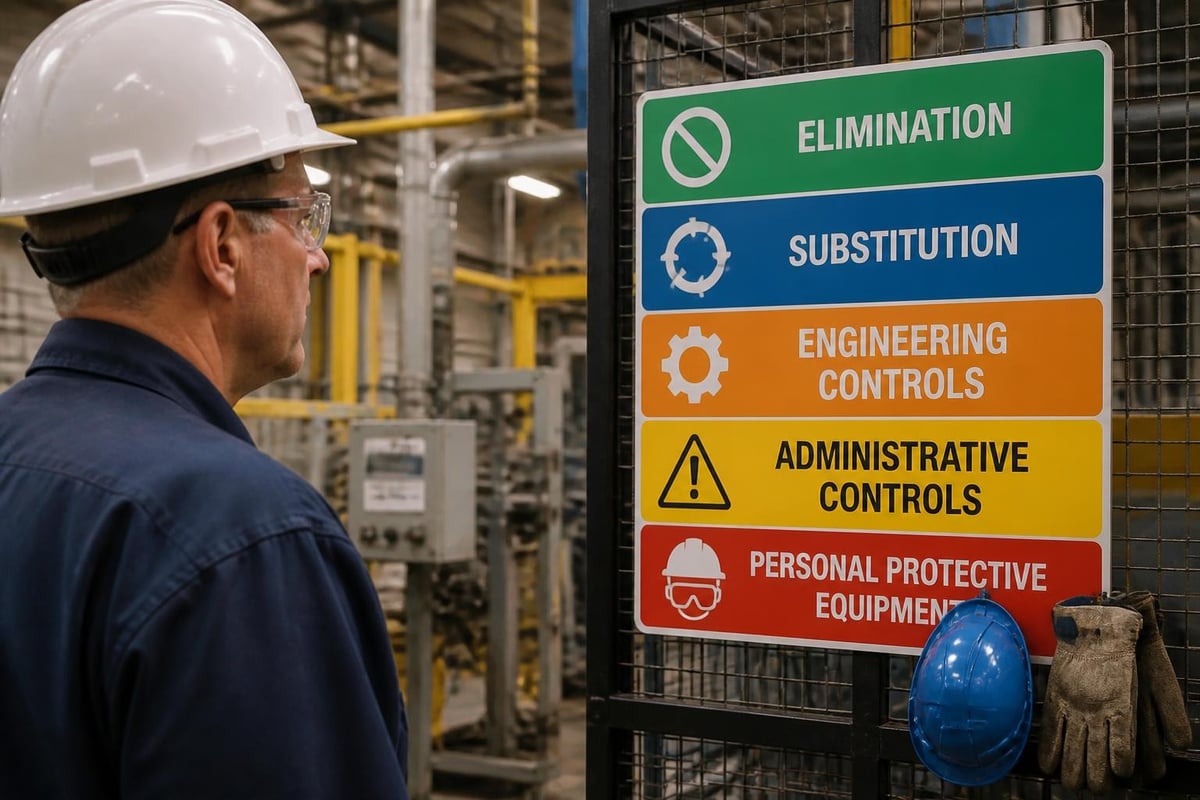
The hierarchy of hazard controls places warning signs in the administrative controls category, near the bottom of the effectiveness hierarchy. Whilst important, they should never substitute for eliminating hazards or implementing engineering controls where feasible.
For example, a manufacturing facility might address electrical hazards through multiple layers:
- Engineering control: Enclosed electrical panels with interlocks
- Administrative control: Lockout/tagout procedures
- Warning sign: High voltage hazard identification
- Personal protective equipment: Insulated gloves and arc-rated clothing
This layered approach ensures that if individuals miss or ignore the warning sign, additional protections remain in place. Warning signage serves as a critical reminder and information source but should not bear sole responsibility for preventing incidents.
Maintenance and Lifecycle Management
Even the most strategically placed and well-designed warning sign loses effectiveness when damaged, faded, or obscured. Establishing robust maintenance protocols ensures continued performance throughout the sign's operational life.
Inspection and Replacement Protocols
Regular inspections should verify:
- Physical condition (cracks, deformation, corrosion)
- Color retention and visibility
- Text and symbol legibility
- Mounting security
- Freedom from obstructions
- Lighting adequacy (for illuminated or reflective signs)
Environmental exposure accelerates degradation. Outdoor signs face UV radiation, temperature extremes, precipitation, and wind loading. Chemical environments may attack sign materials and coatings. Manufacturers typically provide expected service life estimates based on exposure conditions, but actual performance varies.
Replacement triggers include:
- Color fading beyond 50% of original saturation
- Physical damage affecting message clarity
- Retroreflectivity falling below minimum standards (roadway signs)
- Mounting failure or instability
- Outdated information or pictograms
Proactive replacement before complete failure prevents gaps in hazard communication. Budget allocation for sign maintenance demonstrates organizational commitment to safety and regulatory compliance.
Training and Cultural Reinforcement
The technical aspects of a warning sign matter little if workers do not understand or heed its message. Comprehensive safety training incorporates warning sign recognition, interpretation, and appropriate response protocols.
Effective Training Approaches
Initial safety orientation should cover the organization's warning sign system, explaining color codes, common pictograms, and expected responses to various warnings. Periodic refresher training addresses new signs, updates to standards, and reinforces proper interpretation.
Site-specific training proves particularly valuable. Walking through actual work areas whilst discussing installed warning signs creates stronger mental associations than classroom instruction alone. This contextual learning helps workers recognize signs quickly and respond appropriately under actual working conditions.
Organizations with multilingual workforces face additional challenges. Whilst standardized pictograms help overcome language barriers, supplementary text should appear in all relevant languages. Training must verify that all workers, regardless of primary language, understand critical warnings.
Specialized Applications Across Industries
Different industries face unique hazard profiles requiring specialized warning sign applications. Understanding sector-specific requirements ensures appropriate selection and deployment.
Construction and Industrial Settings
Construction sites present constantly changing hazard landscapes. Temporary warning signs must be deployed and relocated as work progresses. Common warnings address excavations, overhead work, confined spaces, and heavy equipment operation. Durability requirements differ from permanent installations, though visibility standards remain equally critical.
Manufacturing facilities require extensive machinery warnings, often mandated by equipment regulations. First aid equipment locations and emergency eyewash stations must be clearly marked with appropriate signage, ensuring quick access during emergencies.
Healthcare and Laboratory Environments
Healthcare settings demand specialized biological hazard warnings, radiation alerts, and patient safety notifications. Biohazardous waste containers require clear labeling to prevent improper handling and exposure incidents.
Laboratories combine chemical, biological, and physical hazards in compact spaces. Comprehensive warning sign systems address storage areas, equipment hazards, and emergency response requirements. Material Safety Data Sheet (MSDS) information often supplements standard warning signs for chemical hazards.
Public Spaces and Commercial Facilities
Retail environments, office buildings, and public venues require warning signs that communicate effectively to diverse populations with varying safety awareness levels. Floor condition warnings (wet floors, uneven surfaces) represent the most common applications, though electrical rooms, mechanical spaces, and roof access points require appropriate hazard identification.
Accessibility considerations become paramount in public settings. Warning signs must comply with building codes and disability accommodation requirements, ensuring all individuals receive adequate hazard notification regardless of physical or sensory limitations.
Effective warning sign deployment combines standardized design principles, strategic placement, regulatory compliance, and ongoing maintenance to create reliable hazard communication systems. These critical safety tools work best when integrated with comprehensive safety programs that include engineering controls, administrative procedures, and appropriate personal protective equipment. SafetySignsForSale provides the complete range of warning signs, safety equipment, and expert guidance needed to establish robust workplace safety systems that protect your workforce and ensure regulatory compliance across all operational environments.